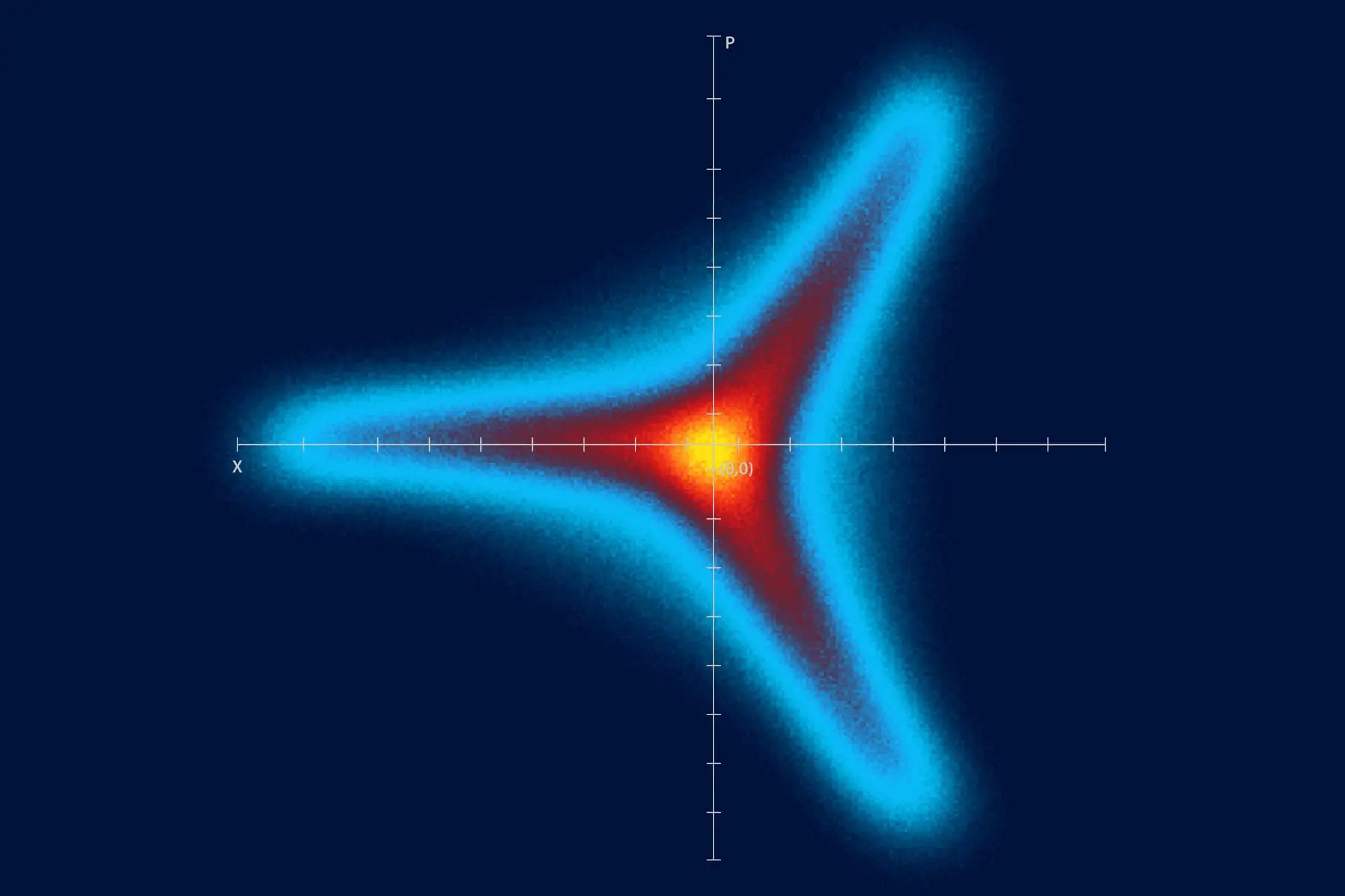
Researchers at the University of Waterloo’s Engineered Quantum Systems Laboratory have generated and detected entangled photon triplets in superconducting parametric cavities, a feat achieved using QuantWares Crescendo-S TWPA. This marks the first observation of tripartite entanglement in a non-Gaussian microwave field, opening new avenues for quantum communication, computing, and sensing. The experiment, conducted within the Institute for Quantum Computing, involved producing entangled photon triplets through third-order spontaneous down-conversion and detecting these weak signals with ultra-low noise amplification, validating the triplet states through Wigner negativity and genuine tripartite non-Gaussian entanglement.
The University of Waterloo’s Engineered Quantum Systems Laboratory (EQSL) within the Institute for Quantum Computing has established itself as a leader in the field of Quantum Optics. The laboratory focuses on microwave quantum optics, utilizing superconducting quantum circuits to produce and study novel quantum states of light. This research is pivotal for advancing quantum communication, computing, and sensing technologies. The EQSL’s work in generating entangled photon triplets in superconducting parametric cavities exemplifies their commitment to pushing the boundaries of quantum optics. This process, known as third-order spontaneous down-conversion, involves transforming a single high-energy photon into three entangled photons. These entangled photon triplets represent highly nonclassical states of light, which are essential for developing advanced quantum technologies. The EQSL’s experiments in this area have demonstrated the practical feasibility of harnessing these states for various quantum applications. The laboratory’s ongoing research in continuous variable quantum information and analog quantum simulation further underscores its role in advancing the field of Quantum Optics. By integrating advanced technologies and methodologies, the EQSL continues to contribute to developing next-generation quantum architectures and fault-tolerant systems.
Generating entangled photon triplets is a cornerstone of the Engineered Quantum Systems Laboratory’s research in Quantum Optics. This process, termed third-order spontaneous down-conversion, occurs within superconducting parametric cavities. A single high-energy photon is converted into three entangled photons, creating highly nonclassical states of light. These entangled photon triplets are crucial for advancing quantum communication, computing, and sensing technologies. The experimental setup involves precise control and measurement of these quantum states, requiring sophisticated superconducting quantum circuits. The successful generation of these triplets marks a critical step in the development of practical quantum technologies, as they serve as fundamental resources for various quantum information processes.
The detection of entangled photon triplets presents substantial challenges due to their weak signals. Conventional amplifiers introduce noise that can obscure the photons’ signatures, making detection difficult. To address this, the research team employed a near-quantum-limited traveling-wave parametric amplifier (TWPA) from QuantWares. This amplifier, known as the Crescendo-S TWPA, provides the ultra-low noise amplification necessary for detecting these weak quantum signals. The integration of this technology enabled the researchers to observe the signature properties of the triplet states, including Wigner negativity and genuine tripartite non-Gaussian entanglement. This observation was the first of its kind in a non-Gaussian microwave field, demonstrating the feasibility of continuous-variable quantum information science. The use of the Crescendo-S TWPA was instrumental in achieving these results, as it provided the required noise suppression and wide bandwidth necessary for high-fidelity detection.
Ultra-Low Noise Detection
The detection of entangled photon triplets in quantum optics necessitates ultra-low noise amplification. Conventional amplifiers often introduce excessive noise, which can mask the delicate signatures of these quantum states. To circumvent this issue, the Engineered Quantum Systems Laboratory (EQSL) at the University of Waterloo employed a near-quantum-limited traveling-wave parametric amplifier (TWPA) from QuantWares. The Crescendo-S TWPA is designed to provide the requisite ultra-low noise levels essential for high-fidelity detection of weak quantum signals. This amplifier’s integration into the experimental setup was crucial for observing the distinctive properties of the triplet states, including Wigner negativity and genuine tripartite non-Gaussian entanglement. The Crescendo-S TWPA’s ability to suppress noise across a broad range of frequencies enabled the detection of these states over a wider spectrum than previously possible. This capability is vital for advancing continuous-variable quantum information science, as it allows for more precise and reliable measurements of quantum states. The amplifier’s performance in reducing averaging time further accelerates experimental workflows, making the exploration of novel quantum phenomena more practical. By achieving these ultra-low noise levels, the Crescendo-S TWPA facilitated the first-ever observation of tripartite entanglement in a non-Gaussian microwave field, validating the potential of entangled photon triplets for quantum communication, computing, and sensing applications. The amplifier’s role in this process underscores the importance of advanced noise suppression techniques in the field of quantum optics.
Validating Triplet States
The validation of triplet states in quantum optics hinges on the precise detection of entangled photon triplets. This process involves observing specific quantum properties that confirm the presence of these highly nonclassical states. One of the key indicators is Wigner negativity, a characteristic that signifies the quantum nature of the entangled states. The detection of Wigner negativity in the experimental setup at the University of Waterloo’s Engineered Quantum Systems Laboratory (EQSL) was achieved through the integration of advanced amplification technologies. The Crescendo-S traveling-wave parametric amplifier (TWPA) from QuantWares played a crucial role in this detection. Its near-quantum-limited performance ensured that the weak signals of the entangled photon triplets were amplified without introducing excessive noise. This capability was essential for observing the subtle quantum properties of the triplet states, including genuine tripartite non-Gaussian entanglement. The amplifier’s ability to suppress noise across a wide bandwidth allowed for the detection of these states over a broader range of frequencies, enhancing the fidelity of the measurements. This precise detection is vital for advancing continuous-variable quantum information science, as it enables more accurate and reliable characterization of quantum states. The use of the Crescendo-S TWPA in this context demonstrates the importance of ultra-low noise amplification in the field of quantum optics, facilitating the exploration of novel quantum phenomena and paving the way for practical applications in quantum communication, computing, and sensing.
Implications for Quantum Research
The successful generation and detection of entangled photon triplets in non-Gaussian microwave fields has direct implications for the advancement of quantum optics. This achievement validates the feasibility of continuous-variable quantum information science, demonstrating that entangled photon triplets can serve as robust resources for quantum communication, computing, and sensing. The ability to harness these highly nonclassical states of light is crucial for developing next-generation quantum technologies. The research conducted at the Engineered Quantum Systems Laboratory (EQSL) at the University of Waterloo has shown that these entangled states can be generated and detected with high fidelity, paving the way for practical applications in quantum-enhanced metrology, error correction, and secure quantum communication networks.
The integration of advanced amplification technologies, such as the Crescendo-S traveling-wave parametric amplifier (TWPA) from QuantWares, has been instrumental in achieving these results. The near-quantum-limited performance of the Crescendo-S TWPA ensures that weak quantum signals can be amplified without introducing excessive noise, which is essential for detecting the subtle properties of entangled photon triplets. This capability enables more precise and reliable measurements of quantum states, facilitating the exploration of novel quantum phenomena. The amplifier’s ability to suppress noise across a wide bandwidth allows for the detection of these states over a broader range of frequencies, enhancing the overall sensitivity of the experimental setup. This precision is vital for advancing continuous-variable quantum information science, as it allows researchers to better understand and manipulate quantum states for various applications.
Building on these findings, the EQSL will continue to expand its work in continuous variable quantum information and analog quantum simulation. The successful validation of these nonclassical states opens new opportunities in quantum-enhanced metrology, error correction, and secure quantum communication networks. As the field of quantum optics moves toward practical applications, the ability to generate and detect these states will be crucial for developing next-generation quantum architectures and fault-tolerant systems. This research bridges the gap between experimental quantum optics and scalable quantum computing, contributing to the ongoing development of quantum technologies.
More information
External Link: Click Here For More