The article explores the role of a superconducting transmon qubit in quantum machine learning and photon counting. Based on Josephson junctions, a transmon qubit is a versatile device used in various applications like microwave photon detection and entangled photon emission. The article details the complex process of fabricating and characterizing a transmon qubit, highlighting its use in a 3D cavity for quantum machine learning and photon detection. The authors also discuss a new microwave photon detection scheme and the potential of 3D architectures for hosting the transmon qubit. The future of transmon qubits in quantum technologies looks promising, with potential applications in various fields.
What is the Role of a Transmon Qubit in Quantum Machine Learning and Photon Counting?
The article discusses using a superconducting transmon qubit in a 3D cavity for quantum machine learning and photon counting applications. A transmon qubit is a type of superconducting qubit that is based on Josephson junctions (JJs). These junctions are versatile superconducting devices that can be used for various cutting-edge applications such as microwave photon detection, parametric amplification, and entangled photon emission. The transmon qubit is the most widely used superconducting qubit due to its simple design and solid performance.
The transmon qubit comprises a small JJ shunted by large capacitors to minimize the charge noise. The best transmon performances in terms of coherence time now approach 500 µs. Different designs have been proposed to exceed transmon performances, including the 0 π-qubit, the fluxonium, or the unimon. However, these designs usually have much more complex circuits or control schemes compared to the transmon, and a clear superiority has not been established yet.
The design and characterization of the transmon are of crucial importance in the field of quantum technologies to enable qubit-based pioneering applications. The authors of the article report on the use of a superconducting transmon qubit in a 3D cavity for quantum machine learning and photon detection applications.
How is a Transmon Qubit Fabricated and Characterized?
The fabrication and characterization of a transmon qubit are complex processes that involve several steps. The article’s authors provide a detailed description of the simulation framework and the experimental measurement of important parameters such as the dispersive shift and the qubit anharmonicity.
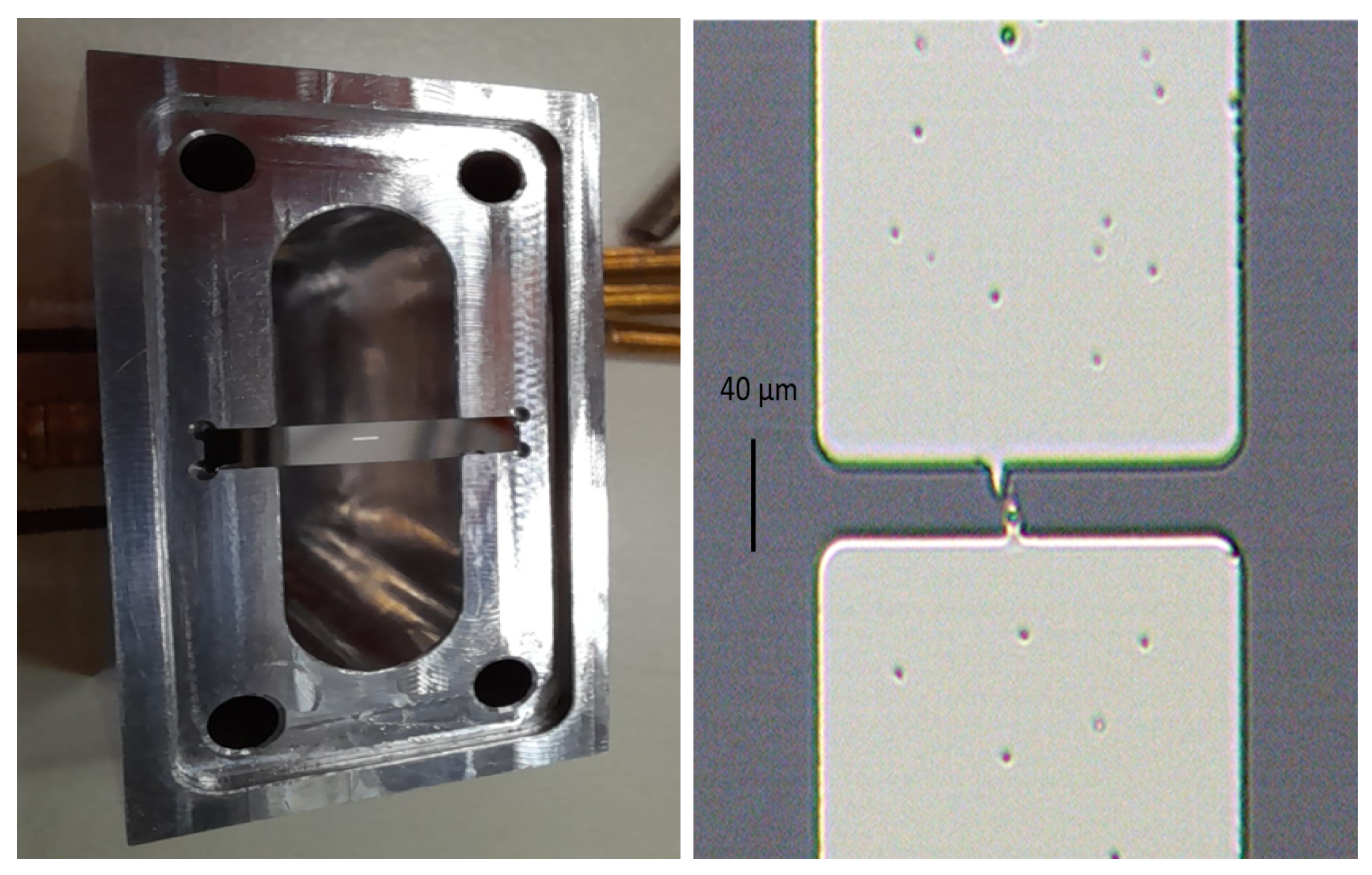
The transmon qubit is fabricated using a small Josephson junction shunted by large capacitors. This design minimizes the charge noise, a major source of decoherence in superconducting qubits. The performance of the transmon qubit is characterized by measuring its coherence time, which is the time during which the qubit maintains its quantum state. The best transmon performances in terms of coherence time now approach 500 µs.
The authors also discuss the use of a 3D cavity for hosting the transmon qubit. 3D architectures have several advantages, particularly for applications such as photon detection that do not require a large number of qubits. Dielectrics surfaces are generally much lossier than bulk cavities, and Al cavities can reach up to 10 ms photon lifetime, independent of the stored power and down to the single photon level.
What are the Applications of a Transmon Qubit in Quantum Machine Learning?
The authors report on a Quantum Machine Learning application implemented on a single-qubit device to fit the u-quark parton distribution function of the proton. Quantum Machine Learning is a new field that combines machine learning and quantum physics to develop quantum algorithms that can solve complex problems more efficiently than classical algorithms.
The use of a transmon qubit in a 3D cavity for quantum machine learning applications is a promising development in the field of quantum technologies. The authors provide a detailed description of the Quantum Machine Learning application implemented on a single-qubit device. This application involves fitting the u-quark parton distribution function of the proton, which is a complex problem that requires significant computational resources.
The authors also discuss the potential of the transmon qubit for other quantum machine learning applications. The transmon qubit’s simple design and solid performance make it a promising candidate for implementing quantum algorithms that can solve complex problems more efficiently than classical algorithms.
How is a Transmon Qubit Used in Photon Counting?
The authors present a new microwave photon detection scheme based on two qubits coupled to the same 3D resonator. This scheme could, in principle, decrease the dark count rate, favoring applications like axion dark matter searches.
Photon counting is a crucial technique in various fields, including quantum communication, quantum cryptography, and quantum computing. The use of a transmon qubit in a 3D cavity for photon counting applications is a promising development in the field of quantum technologies.
The authors provide a detailed description of the new microwave photon detection scheme based on two qubits coupled to the same 3D resonator. This scheme could potentially decrease the dark count rate, which is the rate of false counts in a photon detector. This development could favor applications like axion dark matter searches, which require highly sensitive and accurate photon detectors.
What is the Future of Transmon Qubits in Quantum Technologies?
The authors conclude that the design and characterization of the transmon qubit are of crucial importance in the field of quantum technologies. The transmon qubit’s simple design and solid performance make it a promising candidate for various qubit-based pioneering applications, including quantum machine learning and photon counting.
The authors also highlight the potential of 3D architectures for hosting the transmon qubit. These architectures have several advantages, particularly for applications that do not require a large number of qubits. The authors suggest that superconducting microwave cavities coupled to one or more anharmonic elements in the circuit quantum electrodynamics architecture are being explored for hardware-efficient encoding of logical qubits.
The future of transmon qubits in quantum technologies looks promising, with potential applications in various fields, including quantum machine learning, photon counting, and quantum computing. The authors suggest that further research and development are needed to fully realize the potential of transmon qubits in these applications.
Publication Date: 2024-02-11
Authors: A. D’Elia, Boulos Alfakes, Anas Alkhazaleh, Leonardo Banchi et al.
Source: Applied sciences
DOI: https://doi.org/10.3390/app14041478