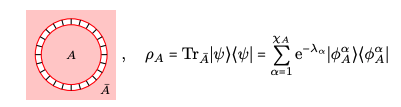
The behaviour of matter at the quantum level frequently reveals phases exhibiting unusual properties, distinct from conventional states. Researchers are increasingly focused on symmetry-protected topological (SPT) phases, which are characterised by robust edge states arising from the interplay between symmetry and topology. These phases, while lacking the exotic quasiparticles of other topological states, present a unique challenge in identification, relying on subtle indicators of their underlying order. A team led by Chao Xu from the Institute for Advanced Study, Tsinghua University, and including Yunlong Zang, Yixin Ma, Yingfei Gu, and Shenghan Jiang from the Kavli Institute for Theoretical Sciences, Chinese Academy of Sciences, has now demonstrated a novel diagnostic tool for these phases. Their work, entitled “Diagnosing 2D symmetry protected topological states via mixed state anomaly”, reveals that the signature of a topological phase extends beyond the energy spectrum and is also encoded within the reduced density matrix, a measure of quantum information describing a subsystem. This mixed state anomaly offers a new pathway to characterise SPT phases in two dimensions, potentially revealing long-range order even when time-reversal symmetry is present.
Recent research details characteristics of symmetry-protected topological (SPT) phases, states of matter distinguished by unique behaviour at their boundaries and a fundamental connection between their bulk properties and the behaviour of states located at their edges. These phases, unlike conventional materials, exhibit robustness against local perturbations due to the protection afforded by underlying symmetries. Researchers demonstrate that anomalies, previously observed in the energy spectrum of these phases, also manifest within their mixed states – a description of quantum systems incorporating statistical mixtures of possible states. This provides an additional, and potentially more versatile, method for identifying topological phases. The study concentrates on two-dimensional SPT phases and reveals that symmetry-twisted mixed states exhibit a topological contribution to the disorder parameter, exceeding the expected area law. This deviation signals the presence of topological order, a property indicating the existence of non-trivial quantum entanglement and robust edge states.
The research establishes that the mixed state anomaly functions as a diagnostic tool complementary to spectral analysis, allowing researchers to uncover topological signatures beyond those apparent in the energy spectrum alone. Conventional spectral analysis examines the allowed energy levels of a system, while the mixed state anomaly probes the statistical properties of the system when it exists in a probabilistic combination of states. Researchers demonstrate that topological order within SPT phases is not solely a property of the bulk material, but is also encoded in the quantum information contained within its mixed states. This subtle encoding, revealed through the mixed state anomaly, offers a refined understanding of the relationship between symmetry, topology, and quantum entanglement in these exotic states of matter. The work builds upon the Li-Haldane conjecture, which links spectral anomalies – unusual features in the energy spectrum – to the behaviour of edge states, and extends its principles to encompass a broader range of observable phenomena.
Furthermore, the presence of time-reversal symmetry, a fundamental
Furthermore, the presence of time-reversal symmetry, a fundamental symmetry in physics relating to the direction of time, induces a long-range order within these phases, akin to spontaneous symmetry breaking. Spontaneous symmetry breaking occurs when a system’s underlying symmetry is not reflected in its lowest energy state, leading to emergent phenomena. This suggests a deeper connection between topological order and conventional phases of matter, potentially bridging the gap between these seemingly disparate areas of condensed matter physics. Researchers demonstrate that the mixed state anomaly is not limited to two-dimensional systems, suggesting its broader applicability to a wider range of topological phases and materials. Ongoing investigation focuses on exploring the relationship between the mixed state anomaly and other known signatures of topological order, such as edge states – conducting states existing at the boundary of the material – and boundary currents, aiming to establish a comprehensive framework for characterizing and classifying SPT phases.
🗞 Diagnosing 2D symmetry protected topological states via mixed state anomaly
🧠 DOI: https://doi.org/10.48550/arXiv.2506.13096