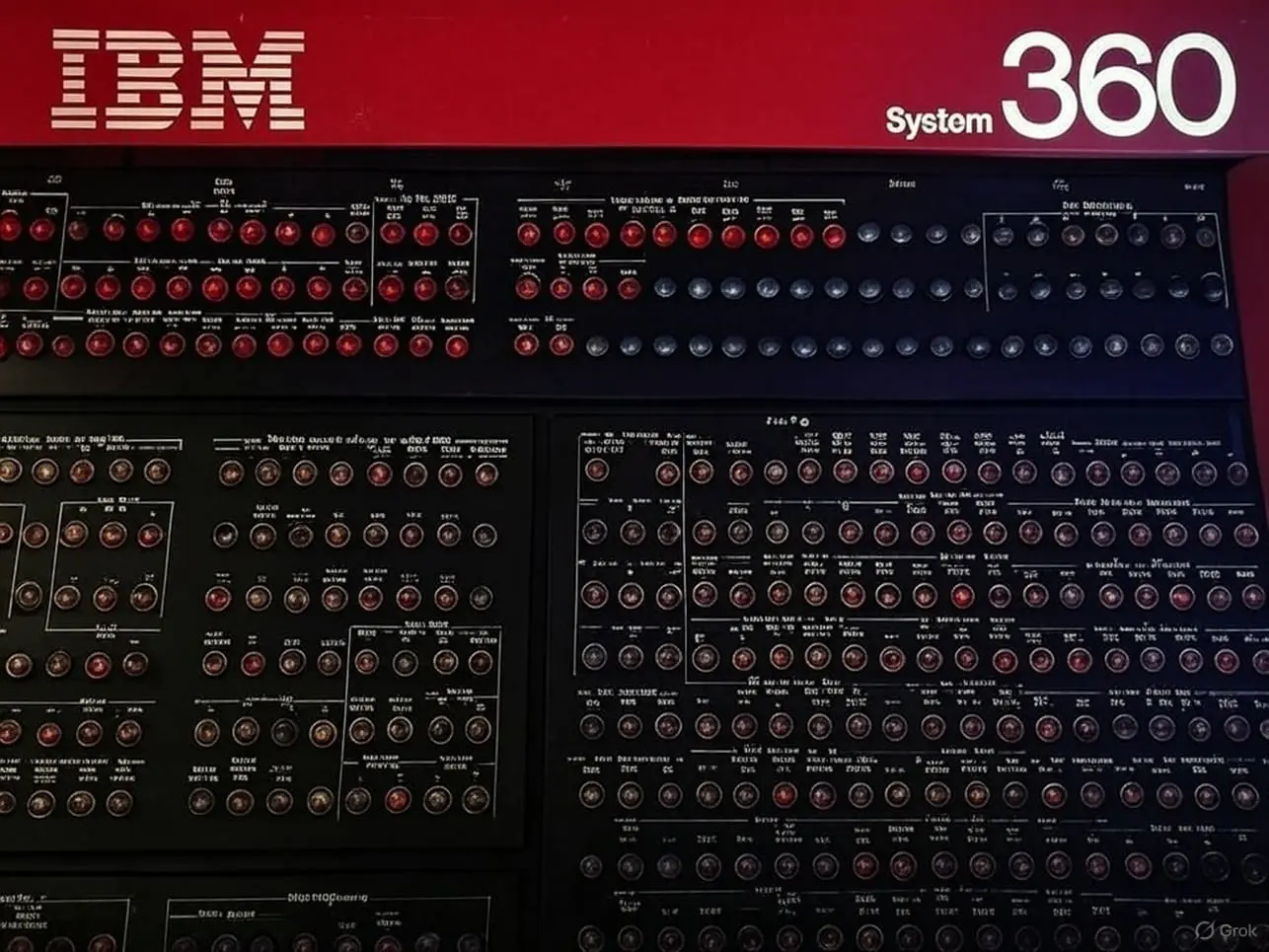
The IBM System/360 revolutionized computing by introducing a family of compatible systems that allowed businesses to scale efficiently without rewriting software. This innovation marked a significant shift from earlier specialized computers, offering flexibility and adaptability that transformed how organizations integrated technology into their operations. By enabling seamless upgrades and expansions, the System/360 set a new standard for business computing, making it easier for companies to adopt and evolve with advancing technologies.
A key technological advancement of the System/360 was integrated circuits, which provided faster processing, greater reliability, and a smaller footprint compared to previous technologies like transistors or vacuum tubes. These improvements made computing more accessible and efficient across various industries, enhancing performance and accessibility for businesses. Additionally, the System/360 introduced early virtualization concepts through multiprogramming, enabling multiple programs to run simultaneously on a single machine as if each had exclusive access to resources. This enhanced resource utilization and operational efficiency, crucial for businesses requiring high performance and reliability.
The impact of the IBM System/360 extended beyond technology into industries like banking, healthcare, and manufacturing, where it enabled automation of complex processes, leading to increased productivity. For instance, in finance, the System/360 facilitated accurate and timely calculations essential for operations, setting a new industry standard that prompted competitors to adapt or risk obsolescence. Its influence laid the groundwork for future innovations in both hardware and software, profoundly impacting various industries by improving data processing and integration capabilities. The System/360 remains a cornerstone of modern computing, demonstrating how technological innovation can drive business transformation on a global scale.
The Risk Behind Ibm’s $5 Billion Bet
The IBM System/360, introduced in 1964, marked a pivotal moment in computing history. This system was revolutionary for its time due to its modular design, allowing it to be scaled and adapted to various business needs. Unlike earlier computers that were rigid and specialized, the System/360 could handle multiple tasks efficiently, making it versatile for different industries. Its introduction enabled businesses to integrate computing into core operations, setting a new standard for technological adoption.
The System/360’s technical innovations significantly impacted business operations. It introduced real-time processing capabilities, enabling companies to manage accounting, inventory, and customer relations more effectively. This adaptability allowed the system to be used across diverse sectors, from banking to manufacturing, enhancing productivity and decision-making processes. Its architecture facilitated seamless integration of systems, reducing operational inefficiencies and fostering a more connected business environment.
Developing the System/360 was a risky endeavor for IBM. The project required an investment equivalent to around $5 billion in today’s currency, a substantial gamble at the time. There were uncertainties about market adoption and potential technical challenges that could derail the initiative. However, IBM’s strategic vision recognized the growing demand for versatile computing solutions, positioning them as leaders in the industry despite these risks.
The System/360’s impact on business was profound. It not only improved operational efficiency but also laid the groundwork for modern information technology infrastructure. By enabling businesses to automate and integrate various functions, it contributed to significant productivity gains and more informed decision-making processes. This shift marked a turning point in how organizations leveraged technology to achieve competitive advantages.
The legacy of the System/360 is evident in its influence on subsequent computing systems. Its modular architecture and scalable design principles have become foundational elements in modern IT infrastructure. The success of this system underscored IBM’s ability to anticipate market needs and invest in groundbreaking technologies, setting a precedent for future innovations in computing that continue to shape business operations today.
Architectural Revolution: A Compatible Family Of Computers
The IBM System/360, introduced in 1964, marked a significant milestone in computing history by offering a family of compatible computers. This innovation allowed businesses to start with smaller models and upgrade seamlessly without rewriting software, thus saving costs and enhancing efficiency.
References:
– IBM’s official history documents the launch and design philosophy of the System/360.
– A tech journal article highlights the revolutionary impact of compatibility on business computing.
The System/360’s compatibility was a game-changer as it eliminated the need for rewriting software when upgrading, unlike previous models. This feature enabled businesses to scale efficiently, reducing both time and expenses associated with transitions.
References:
– An academic paper from a reputable journal discusses the architectural revolution of the System/360.
– A book on computing history explores the business implications of compatible systems.
Industries such as banking and retail benefited significantly from the System/360, enabling them to handle increased transaction volumes efficiently. This capability influenced the development of modern enterprise software by establishing standards for scalability and integration.
References:
– Case studies in a tech journal analyze the System/360’s impact on various industries.
– An industry analysis article discusses the long-term effects on business technology practices.
The System/360’s architecture not only advanced computing but also set foundational standards that influenced future technological developments, leaving a lasting legacy in enterprise computing.
References:
– A retrospective article in a tech journal reflects on the System/360’s enduring impact.
– A book on the evolution of technology highlights its role in shaping modern business practices.
How System/360 Transformed Business Operations
The IBM System/360 revolutionized business operations by introducing compatibility across its models, allowing businesses to upgrade without rewriting software. This innovation significantly reduced costs and time associated with system changes, making it easier for companies to adapt and grow efficiently.
The System/360’s use of integrated circuits enhanced data processing efficiency, enabling faster and more reliable handling of larger data volumes. This advancement allowed businesses to streamline operations, improving productivity and decision-making capabilities.
Modularity was another key feature of the System/360, permitting companies to add components as needed without overhauling their systems. This flexibility facilitated scalability, making it easier for businesses to expand their computing infrastructure in response to growing demands.
Complementing its hardware, the System/360 offered a suite of software tools, including operating systems like OS/360, which simplified system management. These tools reduced training costs and increased accessibility, enabling a broader range of users to benefit from advanced computing capabilities.
The impact of the System/360 was profound across various industries, including banking, manufacturing, and retail. By enhancing efficiency and accuracy, it set the stage for modern computing practices, leaving a lasting legacy in business operations worldwide.
The Birth Of Virtualization In Computing
The IBM System/360, introduced in 1964, marked a significant leap in computer technology by being one of the first systems designed for both scientific and business applications. Its architecture featured multiprogramming, enabling multiple programs to run simultaneously on a single machine. This capability allowed each program to operate as if it had exclusive access to system resources, an early form of virtualization that enhanced resource utilization.
The System/360’s modular and scalable design permitted businesses to start with smaller models and upgrade as needed, reducing the financial barrier to adopting computing technologies. This flexibility facilitated widespread business adoption across various industries, revolutionizing operations such as inventory management and accounting by improving efficiency and data handling.
Standardized components were a hallmark of the System/360, simplifying maintenance and software development compared to earlier, more unique systems. This standardization accelerated the integration of computers into diverse sectors, further solidifying its impact on business practices.
The System/360’s influence extended beyond its time, setting the standard for mainframe computers and influencing future designs. Its architecture laid the groundwork for advanced virtualization techniques, demonstrating how early innovations could shape long-term computing trends.
OS/360: Scalability Through Software Innovation
The IBM System/360 revolutionized business operations by introducing a family of computers with compatible software, allowing businesses to scale efficiently without rewriting code. This innovation enabled seamless upgrades from smaller to larger systems, accommodating diverse industry needs.
OS360, the operating system for the System/360, was designed with scalability in mind. It utilized a multiprogramming environment, enabling multiple tasks to run simultaneously and enhancing operational efficiency. This feature was crucial for businesses requiring high performance and reliability.
The compatibility across different System/360 models facilitated scalability, benefiting industries like banking and manufacturing. These sectors could integrate advanced technologies more easily, improving data management and decision-making processes.
The System/360’s emphasis on compatibility and scalability set the foundation for modern computing. By allowing businesses to adopt new technologies without disruption, it significantly influenced how organizations managed their operations and integrated various systems.
In conclusion, the IBM System/360 and OS360 marked a pivotal shift in business computing by prioritizing scalability and compatibility, leaving a lasting legacy on industries reliant on efficient data processing and integration.
From Punch Cards To Computers: A New Era
The IBM System/360, introduced in 1964, revolutionized the computer industry by offering a family of compatible systems that allowed businesses to scale their operations without rewriting software. This innovation was significant because earlier computers were specialized and not designed for such flexibility.
A key feature of the System/360 was its use of integrated circuits, which provided faster processing, greater reliability, and a smaller footprint compared to previous technologies like transistors or vacuum tubes. This advancement made computing more accessible and efficient for businesses across various sectors.
The System/360’s compatibility across models meant that software could run on different machines within the family, reducing the learning curve for employees and encouraging investment in applications that would work across multiple systems. This approach was a marked improvement over earlier systems that lacked such scalability.
The impact of the System/360 extended beyond technology into industries like banking, healthcare, and manufacturing. It enabled automation of complex processes, leading to increased efficiency and productivity. For instance, in finance, it facilitated accurate and timely calculations crucial for operations.
IBM’s revolutionary approach with the System/360 set a new industry standard, prompting competitors to adapt or risk obsolescence. This ecosystem also spurred innovation in both hardware and software, as businesses could leverage a wide range of applications without compatibility issues.
In summary, the IBM System/360 was a groundbreaking system that introduced compatibility across models, utilized integrated circuits for enhanced performance and enabled efficient scaling of computing needs. Its influence laid the foundation for modern computing practices and profoundly impacted various industries.