

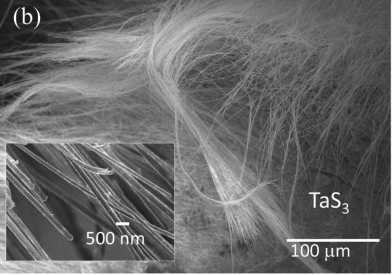
Superconductivity, the ability of a material to conduct electricity with zero resistance, holds immense promise for technological advancement, and researchers continually seek materials exhibiting this property at higher temperatures and under more practical conditions. Mathew Pollard, Visakha Ho, and Clarissa Wisner, along with colleagues at Missouri University of Science and Technology, have now synthesised high-quality tantalum disulfide (TaS2) nanowires that demonstrate significantly enhanced superconducting properties. The team’s work reveals a dramatic increase in both the superconducting transition temperature and the upper critical field, the magnetic field strength above which superconductivity is destroyed, compared to bulk TaS2, a result attributed to the unique behaviour of electrons confined within the one-dimensional nanowire structure. This breakthrough not only provides a new platform for investigating fundamental superconductivity in reduced dimensions, but also opens exciting possibilities for exploiting these confinement-driven effects in future technological applications
TaS₃ to TaS₂ Nanowire Conversion and Superconductivity
This research details the creation, characterization, and superconducting properties of tantalum disulfide (TaS₂) nanowires, produced by converting tantalum trisulfide (TaS₃) nanowires. The process involves vacuum annealing, which successfully transforms TaS₃ nanowires into TaS₂ nanowires while preserving their one-dimensional structure. These resulting TaS₂ nanowires exhibit superconductivity, a state where electrical resistance vanishes, at a critical temperature of approximately 3. 6 K. The study confirms the successful conversion, verifies the high crystalline quality and structure of the nanowires, and characterizes their superconducting behavior, including the strength of the superconducting state in magnetic fields and evidence of robust pinning of magnetic flux lines. Superconductivity at nanoscale dimensions presents unique opportunities for developing advanced electronic devices and sensors, and this work contributes to the growing field of nanoscopic superconductivity.
The team demonstrates that TaS₃ nanowires can be reliably converted into TaS₂ nanowires without compromising their nanoscale dimensions. Detailed analysis confirms the resulting nanowires are highly crystalline and adopt the hexagonal 2H-TaS₂ phase, a crucial structural arrangement for superconductivity. Measurements reveal a clear superconducting transition at approximately 3. 6 K, indicating the onset of zero electrical resistance, and highlight strong vortex pinning effects, suggesting potential applications in advanced superconducting devices. The 2H-TaS₂ phase is a layered material where tantalum atoms are sandwiched between sulfur layers; this layered structure is conducive to superconductivity due to the enhanced electron-phonon coupling. Vortex pinning, a phenomenon where magnetic flux lines are immobilised within the superconducting material, is vital for maintaining superconductivity in the presence of magnetic fields and is a key consideration for practical applications.
The experimental process begins with TaS₃ nanowires and tantalum powder sealed within a quartz tube. This setup is crucial as the tantalum powder acts as a sulfur source, facilitating the conversion of TaS₃ to TaS₂ through a controlled sulfur loss process during annealing. Heating this assembly under vacuum initiates the conversion process, transforming the starting material into the desired TaS₂ nanowires. The vacuum environment is essential to prevent oxidation and maintain the stoichiometry of the materials. Scanning electron microscopy (SEM) images confirm that the one-dimensional morphology of the nanowires is maintained throughout the conversion, demonstrating the process’s effectiveness in preserving the nanoscale structure. X-ray diffraction (XRD) analysis confirms the successful phase transformation, revealing a distinct hexagonal structure characteristic of TaS₂. Temperature-dependent resistance measurements demonstrate a sharp drop in resistance for the TaS₂ nanowires at around 3. 6 K, clearly indicating the superconducting transition. This transition temperature is consistent with bulk TaS₂ measurements, suggesting that the nanoscale dimensions do not significantly alter the intrinsic superconducting properties.
Applying magnetic fields suppresses superconductivity, as expected, and analysis of these measurements allows determination of the upper critical field, which decreases linearly with increasing temperature. The upper critical field represents the maximum magnetic field strength a superconductor can withstand before losing its superconducting properties. This parameter is crucial for designing superconducting devices that operate in high magnetic field environments. Measurements of the magnetic response of the nanowires further confirm the superconducting transition and reveal strong vortex pinning effects, evidenced by a characteristic “fishtail” effect in the magnetization loop. The fishtail effect arises from the interplay between the Lorentz force on the vortices and the pinning forces, indicating a strong pinning landscape within the nanowires. Analysis of the alternating current susceptibility and direct current magnetization provides further confirmation of the superconducting transition. The team observed a sharp diamagnetic response at around 3. 6 K, a hallmark of superconductivity, and confirmed the superconducting state with zero-field-cooled and field-cooled magnetization curves. These curves demonstrate a clear bifurcation, indicating the presence of a superconducting state and the effectiveness of the vortex pinning. The pronounced flux jumps and fishtail effect observed in the magnetization loop at 2 K provide strong evidence for robust vortex pinning, which is crucial for applications requiring high-field superconductivity. This robust pinning suggests that these TaS₂ nanowires could be promising candidates for applications in superconducting magnets and high-field electronic devices.
🗞 Enhanced Superconductivity and Vortex Dynamics in One-Dimensional TaS2 Nanowires
🧠 DOI: https://doi.org/10.48550/arXiv.2507.15792


