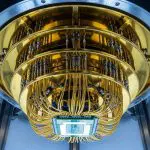
SpinQ is spearheading a drive to integrate quantum computing directly into STEM classrooms, recognizing the rapidly growing need for a quantum-literate workforce. As industries like finance and healthcare increasingly harness quantum power, a critical talent gap is widening – but early exposure in education offers a solution. This movement isn’t just about new technology; it’s about fostering “a deep understanding of quantum principles through hands-on experience, thereby preparing students for the jobs of tomorrow.” SpinQ’s affordable, user-friendly hardware, like the Gemini series, is designed to make abstract quantum concepts tangible, moving beyond theoretical learning and paving the way for a quantum-enabled future starting in 2026.
SpinQ Devices Democratize Quantum Access for STEM Education
The burgeoning field of quantum computing is rapidly transitioning from theoretical research to practical application, creating an urgent demand for a workforce equipped to navigate this new technological landscape. Addressing this need requires a fundamental shift in STEM (Science, Technology, Engineering, and Mathematics) education, moving beyond conceptual understanding to hands-on experience. Companies like SpinQ are actively reshaping this learning environment, providing access to quantum hardware and software previously confined to high-budget research facilities. Universities and schools are increasingly recognizing the value of integrating quantum computer use, not only to enrich curriculum but also to enhance student employability.
Understanding concepts like superposition and entanglement is swiftly becoming as crucial as classical programming in numerous fields. SpinQ’s portable quantum computers enable students to directly engage with these complex ideas, transforming abstract theory into tangible reality. This focus on experiential learning aligns with modern educational methodologies, proven to boost retention and deepen comprehension. Traditional quantum computing labs, historically requiring multi-million-dollar investments, presented an insurmountable barrier for most educational institutions.
SpinQ has circumvented this obstacle by miniaturizing nuclear magnetic resonance (NMR) technology, creating affordable, portable devices. “Traditionally, quantum computers were multi-million-dollar systems housed in specialized labs, inaccessible to most schools,” explains the company, highlighting the impact of this innovation. Their Gemini Mini, for instance, is significantly cheaper than industrial systems while still offering a genuine platform for learning fundamental quantum principles. SpinQ’s product line, encompassing the Gemini Mini, Triangulum, and GeminiLab, caters to diverse educational levels, offering between 2 and 2+ qubits and features ranging from basic operation to full pulse control.
This hardware is supported by a comprehensive software ecosystem, including the SpinQit programming framework and cloud platforms, providing a seamless transition from coding to execution. Beyond the technology itself, SpinQ delivers ready-to-use lesson plans, tutorials, and case studies, dramatically reducing the onboarding time for educators new to quantum technology. Real-world implementations demonstrate the impact of this approach. Harbin Institute of Technology (Shenzhen) has integrated SpinQ’s Triangulum computers into undergraduate and graduate programs, with students conducting research on quantum entropy and error correction.
Similarly, Shenzhen Middle School and Gezhi High School have established quantum computing centers where students as young as 16 are running algorithms like quantum teleportation simulations, leading to “increased engagement in physics classes.” SpinQ’s commitment extends to global competitions, such as the “SpinQ Cup” Quantum Computing Challenge Camp, fostering a worldwide community of quantum learners. Looking ahead, quantum computing is poised to become a standard component of computer science curricula globally within the next decade, potentially opening doors to AI-driven personalized learning and interdisciplinary studies.
Hands-On Learning with Quantum States and Algorithms
The abstract nature of quantum mechanics presents a significant hurdle for educators, but a growing emphasis on experiential learning is providing a powerful solution. Traditionally, students grapple with concepts like superposition and entanglement through theoretical frameworks alone, often hindering genuine comprehension. However, direct engagement with quantum hardware is proving transformative, allowing learners to move beyond passive absorption and actively explore the bizarre yet powerful rules governing the quantum realm. For example, running a simple algorithm on a real quantum processor helps students grasp phenomena like interference more effectively than simulations alone.
This shift isn’t simply about replacing lectures with lab time; it’s about fundamentally altering how quantum principles are understood. SpinQ’s devices, such as the Gemini series, are designed for this purpose—they provide a physical platform for experiments, turning passive learning into an active discovery process. This approach aligns with modern educational theories that emphasize experiential learning, leading to higher retention rates and deeper understanding. Curriculum development is adapting to leverage this capability, with strategies tailored to different educational levels.
High school programs can introduce superposition using analogies like “Schrödinger’s cat,” then reinforce the concept with practical demonstrations using SpinQ’s Gemini Mini to explore basic quantum gates. At the undergraduate level, the integration of quantum computing into computer science or physics degrees is gaining momentum. Courses are incorporating algorithms like Deutsch-Jozsa or Grover’s algorithm, with labs utilizing SpinQ’s Triangulum desktop device for more complex experimentation. Advanced students and researchers benefit from tools like SpinQ’s GeminiLab, which offers pulse-level control, ideal for thesis work on quantum control or error correction.
Collaboration with industry partners further enhances learning by providing real-world context, such as applying quantum machine learning to datasets. To make these complex ideas accessible, educators are employing relatable analogies. Superposition, for instance, is often compared to a spinning coin existing as both heads and tails until measured, with SpinQ’s visual software illustrating this multi-state existence. Entanglement is described as a “spooky connection” where measuring one qubit instantly affects another, even at a distance, and can be demonstrated with Bell state experiments on portable devices.
Interference is explained using wave analogies, demonstrating how quantum states can constructively or destructively interfere to amplify correct answers in algorithms. Practical lab exercises, ranging from a “Hello World” quantum program to building quantum random number generators, further solidify understanding. “With SpinQ’s tools, students can code this in Python using the SpinQit framework and run it on real hardware,” demonstrating the power of direct application. SpinQ has emerged as a key enabler of quantum education by making powerful tools accessible and affordable.
SpinQ’s innovation lies in miniaturizing nuclear magnetic resonance (NMR) technology into cost-effective, portable devices. “This democratization allows institutions worldwide to bring quantum computing into classrooms without massive investments.” The Gemini Mini, for example, is priced orders of magnitude lower than industrial systems, yet provides an authentic platform for learning quantum principles.
Hands-on experimentation with quantum computers bridges this gap by allowing learners to visualize and manipulate quantum states.
SpinQ
Integrating Quantum Computing Across STEM Curriculum Levels
The burgeoning field of quantum computing demands a workforce prepared to navigate its complexities, prompting a necessary overhaul of STEM education. While once relegated to theoretical physics, quantum principles are rapidly transitioning into practical applications, necessitating a shift from abstract learning to hands-on engagement. Companies are now focused on providing the tools to facilitate this transition, offering solutions that move beyond traditional lecture-based instruction. Curriculum development is key to successful integration, with strategies varying by educational level.
At the high school level, foundational concepts can be introduced through relatable analogies; for example, superposition can be explained using “the famous ‘Schrödinger’s cat’ thought experiment,” then reinforced with practical application on devices like the SpinQ Gemini Mini to demonstrate basic quantum gates. Quantum mechanics, often counterintuitive, benefits immensely from hands-on experimentation. SpinQ’s devices are specifically designed for this purpose, transforming passive learning into an active, discovery-driven process, which aligns with modern educational theories emphasizing experiential learning and improved retention. To avoid overwhelming students, core quantum concepts must be presented with accessible analogies.
Successful implementations at institutions like Harbin Institute of Technology and Shenzhen Middle School demonstrate the positive impact of this approach, fostering engagement and nurturing the next generation of quantum scientists. The “SpinQ Cup” Quantum Computing Challenge Camp further expands this reach, fostering a global community of learners and showcasing the practical applications of quantum knowledge.
Overcoming the Barrier: From Multi-Million Dollar Labs to Accessible Desktops Traditionally, quantum computers were multi-million-dollar systems housed in specialized labs, inaccessible to most schools.
SpinQ
Bridging the Quantum Talent Gap with Early Exposure
The global quantum computing market is projected for exponential growth, demanding experts capable of not just understanding, but applying quantum algorithms, and the solution, experts say, lies in proactive educational reform. Institutions are beginning to recognize that the skills needed to navigate this new technological landscape must be cultivated far earlier than postgraduate studies. The urgency stems from a widening gap between the speed of quantum advancement and the availability of a skilled workforce. This isn’t simply about introducing a new technology; it’s about building a foundational understanding of quantum mechanics through direct engagement.
This emphasis on hands-on experience addresses a key challenge in quantum education: the counterintuitive nature of the subject matter. Quantum mechanics often proves difficult to grasp through traditional lectures and textbooks alone. Hands-on experimentation, utilizing tools like SpinQ’s devices, allows students to visualize and manipulate quantum states, transforming abstract theories into tangible realities. At the undergraduate level, courses can incorporate quantum algorithms like Deutsch-Jozsa, utilizing desktop devices for more complex experimentation. SpinQ’s commitment extends beyond hardware, encompassing a complete ecosystem.
They provide not only reliable, portable quantum computers, but also intuitive software like SpinQit for algorithm development and simulation, alongside ready-to-use lesson plans and tutorials. This holistic approach reduces the onboarding time for educators unfamiliar with the intricacies of quantum technology. Students are actively engaged in research, with the center publishing joint work on quantum algorithms. This isn’t just about preparing students for future careers; it’s about equipping them with the skills to shape a quantum-enabled world.
The quantum computing revolution is no longer a distant frontier confined to research labs; it is rapidly becoming an integral part of our technological landscape.