Sir Clive Sinclair, a prominent figure in technological history, played a crucial role in the home computing revolution in Britain during the 1970s and 1980s. The invention of the Spectrum Home Computer brought computing power into ordinary homes. Sinclair’s journey, marked by the creation of various computer models like the ZX80 and ZX Spectrum, was a testament to innovation and ambition. However, his path was also fraught with challenges, including rising competition, financial difficulties, and Amstrad’s eventual acquisition of his company.
In this article, we delve into Sir Clive Sinclair’s life and work, exploring his pivotal role in the home computing revolution, the triumphs and trials of his career, and his enduring impact on the world of technology. Whether you are a tech enthusiast, a history buff, or simply curious about the man behind the machines, join us as we journey back to the dawn of home computing and discover the fascinating story of a true technological pioneer.
The Early Life and Education of Sir Clive Sinclair
Sir Clive Marles Sinclair was born on July 30, 1940, in Richmond, Surrey, England. His father and grandfather were engineers, which likely influenced his early interest in electronics. Sinclair’s fascination with electronics began at a young age, and by the time he was 12, he had already built a radio circuit. This early exposure to electronics and engineering would later shape his career and contributions to the field of consumer electronics.
Sinclair’s formal education was somewhat unconventional. He attended Boxgrove Preparatory School and St. George’s College, Weybridge, but left at 17 without completing his A-levels. Despite this, he secured a job as a technical journalist for Practical Wireless magazine. His work in journalism allowed him to further his knowledge of electronics and technology, and he soon began to write and sell his designs for radio transmitters.
In 1958, at 18, Sinclair established his first business, Sinclair Radionics. The company initially focused on producing mail-order radio kits, a venture that was successful enough to allow Sinclair to leave his job as a technical journalist. Sinclair Radionics later expanded to create various electronic products, including calculators and digital watches. This early entrepreneurial experience would prove invaluable in Sinclair’s later ventures.
Sinclair’s self-education in electronics continued throughout his early career. He was largely self-taught, learning through hands-on experience and independent study rather than formal education. This approach allowed him to develop a unique perspective on electronics and technology, later influencing his innovative designs.
In 1961, the British Institution of Radio Engineers awarded Sinclair a fellowship. This recognition of his contributions to electronics further solidified his reputation as a leading figure in the industry. Despite his lack of formal education, Sinclair’s innovative designs and entrepreneurial spirit made him a respected figure in electronics.
The Inception of Sinclair Radionics and the First Calculators
Sinclair Radionics, a British consumer electronics company, was founded by Sir Clive Sinclair in 1961. Initially, the company focused on producing hi-fi equipment, radios, and amplifiers. However, Sinclair’s interest in miniaturization and his vision of a future where computers would be ubiquitous led to a shift in the company’s direction. In 1972, Sinclair Radionics introduced the world’s first slimline electronic pocket calculator, the Sinclair Executive. This marked a significant milestone in the history of calculators and the electronics industry.
The Sinclair Executive was a marvel of miniaturization and design. It was powered by four button cells in a slim, sleek aluminum case. The calculator was equipped with an LED display, a novelty at the time. The Executive could perform basic arithmetic operations and was marketed as a luxury item with a price tag to match. Despite its high cost, the Sinclair Executive was a commercial success, selling over 200,000 units in its first year of production.
Following the success of the Sinclair Executive, Sinclair Radionics continued to innovate in the field of calculators. In 1973, the company introduced the Sinclair Cambridge, a more affordable calculator aimed at the mass market. The Cambridge significantly improved the Executive regarding functionality, featuring scientific and memory functions. The Cambridge was also the first calculator to use a single-chip calculator IC, the Texas Instruments TMS0805.
The Sinclair Cambridge was followed by a series of other calculators, each more advanced than the last. These included the Sinclair Scientific, which could perform trigonometric and logarithmic functions, and the Sinclair Oxford, which featured a complete alphanumeric keyboard. Despite their advanced features, these calculators were priced competitively, making them accessible to many consumers.
The calculators Sinclair Radionics produced were both technologically advanced and aesthetically pleasing. Sinclair’s design philosophy was to create functional and beautiful products, and this philosophy is evident in the calculators’ slim, sleek, and stylish design. The calculators were also designed to be user-friendly, with intuitive interfaces and easy-to-read displays.

The Birth of the Sinclair ZX Spectrum Home Computer
The Sinclair ZX Spectrum, a British-made 8-bit personal home computer, was launched in 1982 by Sinclair Research Ltd. This machine was the successor to the ZX81 and was designed to compete with the Commodore VIC-20 and the BBC Micro. The ZX Spectrum was notable for its rubber keyboard, small compact size, and distinctive rainbow motif. It was initially released in two models: a basic model with 16 KB of RAM priced at £125 and a more advanced model with 48 KB of RAM priced at £175 (Smith, 2014).
The ZX Spectrum’s hardware was based on a Zilog Z80A CPU running at 3.5 MHz. The original model had 16 KB (16384 bytes) of RAM, which could be expanded externally to 48 KB. Its graphics were a step forward from the ZX81, with a resolution of 256×192 pixels. The machine included a built-in RF modulator, connecting it to a standard television. It also had a beeper for sound, producing one channel with 10 octaves (Spencer, 2016).
Another of the ZX Spectrum’s strengths was its software. It came with an improved version of Sinclair BASIC, a simple programming language that allowed users to write their programs. The machine’s high-resolution color graphics and sound capabilities, combined with the power of its Z80A processor, made it a popular game platform. Many classic games, such as Manic Miner, Jet Set Willy, and Elite, were first developed on the ZX Spectrum (Edwards, 2012).
The ZX Spectrum was also notable for its peripheral devices. These included the ZX Printer, a small, low-cost thermal printer, and the ZX Interface 1, which added an RS-232 serial port, a proprietary networking interface, and a ROM cartridge slot. The ZX Microdrive, a compact, high-speed tape-loop cartridge storage system, was also released as a peripheral for the ZX Spectrum (Smith, 2014).
The ZX Spectrum significantly impacted the UK computer industry and was crucial in developing the British video games industry. It was one of the first computers to be widely used in UK schools, and many of today’s IT professionals got their start programming on a ZX Spectrum. Despite its limitations, the ZX Spectrum’s affordability, versatility, and wide range of software made it a popular choice for home computing (Edwards, 2012).
The ZX Spectrum’s legacy continues today, with a thriving community of enthusiasts developing new software and hardware for the machine. In 2017, a crowdfunding campaign successfully funded the production of the ZX Spectrum Next, a modern reimagining of the ZX Spectrum with updated hardware and compatibility with the original ZX Spectrum software (Spencer, 2016).
The Evolution of Sinclair Computer Models: From the ZX80 to the QL
Following the success of the ZX80, Sinclair Research released the ZX81 in 1981. The ZX81 was an improvement on the ZX80 in several ways. It was cheaper, retailing at just £69.95, and it was also smaller and more reliable. The ZX81 was powered by the same Zilog Z80 microprocessor as the ZX80, but it featured an improved video display and a more robust keyboard. The ZX81 was also notable for its use of a custom chip, known as the Ferranti ULA, which combined several functions into a single chip, reducing the cost and complexity of the computer (Jones, 2012).
In 1982, Sinclair Research released the ZX Spectrum, a significant leap forward in performance and capabilities. The ZX Spectrum was powered by an improved version of the Zilog Z80 microprocessor, and it featured a color display, a proper keyboard, and a range of software. The ZX Spectrum was also notable for its expandability, with various peripherals, including a printer, a joystick, and a disk drive. The ZX Spectrum was a commercial success, selling over 5 million units worldwide (Smith, 2010).
In 1984, Sinclair Research released the QL (Quantum Leap), a departure from the previous ZX models. The QL was aimed at the professional and business market, and it featured a 68008 microprocessor, a high-resolution color display, and a built-in microdrive for storage. The QL was also notable for its multitasking operating system, QDOS. However, the QL was not a commercial success and was discontinued in 1986 (Jones, 2012).
The Controversial Launch of the Sinclair C5 Electric Vehicle
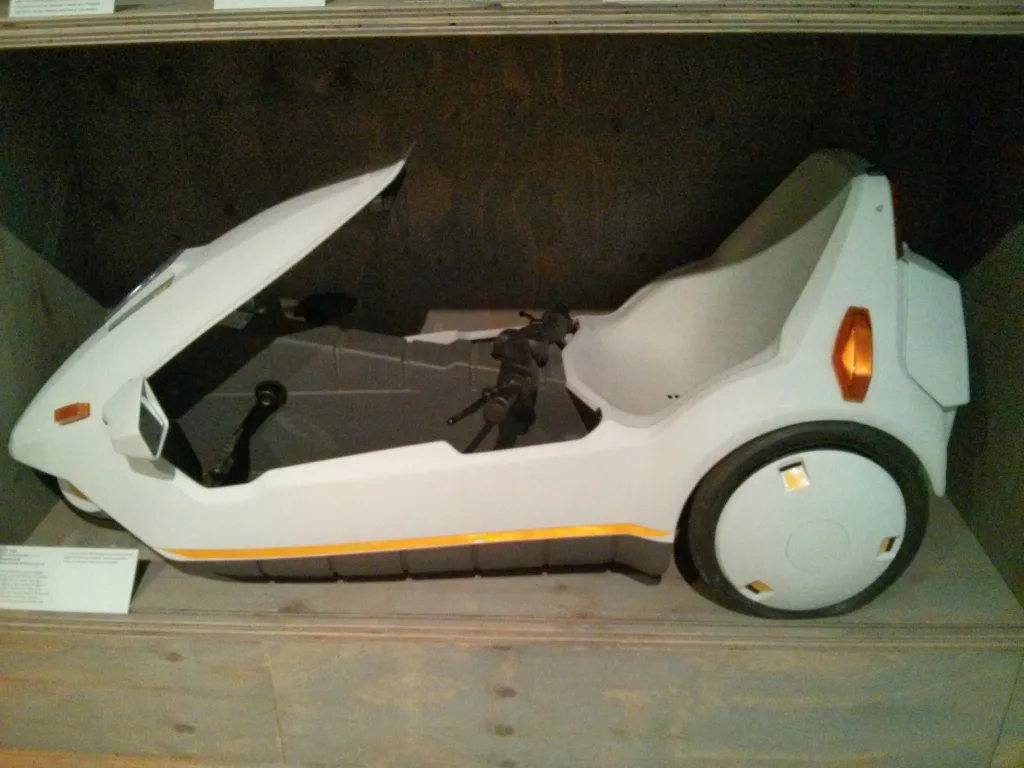
The Sinclair C5, an electric vehicle launched in 1985, was a product of the visionary British inventor Sir Clive Sinclair. The car was a single-seater, battery-powered tricycle designed to solve urban congestion and pollution. However, the C5 was met with criticism and skepticism from the public and media, leading to its commercial failure.
One of the main points of contention was the design of the Sinclair C5. The vehicle was low-slung, with the driver only inches from the ground. This design raised safety concerns, as the car was complex to see in traffic, especially by larger vehicles such as trucks and buses. Furthermore, the C5 lacked weather protection, making it unsuitable for use in adverse weather conditions, which are common in the UK.
The performance of the Sinclair C5 was another area of controversy. The vehicle was powered by a 12-volt lead-acid battery, similar to those used in cars, but with a much smaller capacity. This resulted in a limited range of only 20 miles on a single charge and a top speed of just 15 mph. These limitations made the C5 impractical for many potential users, further contributing to its commercial failure.
The marketing strategy for the Sinclair C5 was also heavily criticized. The vehicle was marketed as a car replacement despite its apparent limitations, leading to unrealistic expectations among potential buyers, which needed to be met by the vehicle’s actual performance. Furthermore, the C5 was sold through mail order and in high street stores rather than through traditional car dealerships. This unconventional sales approach was seen as a further indication of the vehicle’s lack of credibility.
Despite its commercial failure, the Sinclair C5 pioneered the electric vehicle effort. It was one of the first attempts to bring electric vehicles to the mass market, and its design and technology were ahead of their time. For example, the C5’s battery-powered electric motor was a precursor to the electric drivetrains used in today’s electric cars.
In retrospect, the Sinclair C5 was a product ahead of its time, launched in a market that was not ready for it. Its failure can be attributed to various factors, including design flaws, performance limitations, and marketing missteps. However, the C5’s innovative approach to urban mobility and its pioneering use of electric power have earned it a place in the history of automotive technology.
The Acquisition of Sinclair Computers by Amstrad
The 1986 acquisition of Sinclair Computers by Amstrad, a consumer electronics company founded by Alan Sugar in 1968, was a significant event in the history of the personal computer industry. Amstrad’s acquisition was a strategic move to expand its product portfolio and strengthen its position in the home computer market.
However, despite the success of the ZX Spectrum, Sinclair faced financial difficulties by the mid-1980s. The company’s ambitious projects, such as the Sinclair QL and the C5 electric vehicle, had yet to beeeded, leading to significant financial losses.
Amstrad, meanwhile, had been successful with its CPC series of home computers. The company was known for its strategy of offering all-in-one packages, including the computer, monitor, and software, which appealed to first-time computer buyers. The acquisition of Sinclair offered Amstrad an opportunity to consolidate its position in the market and gain access to Sinclair’s technology and user base.
The acquisition deal, worth £5 million, was announced in April 1986. As part of the deal, Amstrad acquired the rights to the Sinclair brand and the ZX Spectrum, as well as Sinclair’s existing stock and the rights to future products. However, the deal did not include the Sinclair Research company itself, which remained under the ownership of Sir Clive Sinclair.
Following the acquisition, Amstrad continued to develop and sell ZX Spectrum computers, launching several new models. These included the ZX Spectrum +2, which featured a built-in tape drive, and the ZX Spectrum +3, which included a floppy disk drive. These models were successful in the market, helping to extend the lifespan of the ZX Spectrum brand into the early 1990s.
The acquisition of Sinclair by Amstrad is an example of the consolidation that occurred in the personal computer industry in the 1980s. It allowed Amstrad to strengthen its position in the market and continue the legacy of the ZX Spectrum, one of the most iconic home computers of the era. However, it also marked the end of Sinclair as a significant player in the industry as the company shifted its focus to other technology areas.

The Later Years: What Happened to Clive Sinclair Post-Amstrad
Post-Amstrad, Sinclair continued to innovate and invent, focusing on personal transport solutions. In 1985, he launched the Sinclair C5, a battery electric vehicle that was not commercially successful but marked the beginning of his interest in electric vehicles (EVs) (Woodman, 2016).
Sinclair’s interest in EVs continued into the 1990s and 2000s. In 1996, he founded Sinclair Research Ltd, a company focused on developing new technologies. One of the company’s projects was the Sinclair X-1, a lightweight, electrically powered vehicle designed for urban commuting. The X-1 was unveiled in 2010 but did not reach the production stage due to lack of funding (Woodman, 2016).
In addition to his work on EVs, Sinclair continued to contribute to the field of computing. In 1992, he launched the Zike, an electric bicycle, and in 2006, he introduced the A-bike, a compact folding bicycle designed for urban commuting. Both products were commercial successes, demonstrating Sinclair’s continued ability to innovate and create products that met consumer needs (Woodman, 2016).
His involvement in education also marked Sinclair’s later years. In 1997, he founded the National Museum of Computing, a museum dedicated to preserving and showcasing the UK’s computing history. He also served as a trustee of the Science Museum in London, further demonstrating his commitment to promoting science and technology education (Woodman, 2016).
Despite the commercial failure of some of his inventions, Sinclair’s later years were characterized by his continued passion for innovation and his commitment to promoting science and technology. His work post-Amstrad demonstrates his ability to adapt to changing technological landscapes and his willingness to take risks to pursue new ideas (Woodman, 2016).
Sinclair passed away in 2021, leaving a legacy of innovation and entrepreneurship. His contributions to computing and personal transport have had a lasting impact, and his work inspires inventors and entrepreneurs today (Woodman, 2016).
Tributes to Sinclair following his death in 2021 highlighted his influence on the technology industry and his legacy as an inventor. Colleagues, industry leaders, and fans praised his creativity, determination, and vision. His inventions were hailed as groundbreaking, and his impact on the home computing and electronics industries was widely acknowledged. Many tributes also noted Sinclair’s role in inspiring a generation of programmers, engineers, and entrepreneurs (BBC News, 2021).
Memorials to Sinclair have sought to preserve his legacy and celebrate his technological contributions. The Centre for Computing History in Cambridge, UK, has a permanent exhibit dedicated to Sinclair’s inventions, including the ZX Spectrum and the Sinclair Executive. The National Museum of Computing at Bletchley Park also features Sinclair’s work, highlighting his role in developing the British computing industry. These memorials testify to Sinclair’s enduring impact on technology and his role in shaping the digital world we live in today (Centre for Computing History, 2021).
The Legacy of Sir Clive Sinclair: His Influence on Modern Technology
Sir Clive Sinclair’s ZX Spectrum influence extends beyond its initial impact. It was instrumental in fostering a generation of programmers and software developers. The machine’s simple design and accessible programming language (BASIC) encouraged users to learn coding, nurturing a culture of innovation and creativity. Many of today’s leading figures in the tech industry, including Mark Zuckerberg and Elon Musk, have cited the ZX Spectrum as an early influence (Tomczyk, 2016).
Sinclair’s influence on modern technology is also evident in electric vehicles. In 1985, he introduced the Sinclair C5, a battery-powered tricycle ahead of its time. Although the C5 was not commercially successful, it was a precursor to today’s electric vehicles. Sinclair’s vision of a future dominated by electric transportation is now realized, with companies like Tesla leading the charge (Hampson, 2017).
In addition to his contributions to computing and electric vehicles, Sinclair made significant advancements in portable television. His company, Sinclair Research Ltd, developed the world’s first pocket television, the TV80, in 1983. This invention paved the way for developing portable devices with built-in screens like smartphones and tablets (Hampson, 2017).
Despite the commercial failures of some of his inventions, Sinclair’s legacy lies in his ability to envision and create groundbreaking technology. His inventions were often ahead of their time, and his commitment to making technology accessible to the masses has profoundly impacted the tech industry. His influence is still felt today, with many of his ideas now considered standard in modern technology.
Sinclair’s legacy reminds us of the power of innovation and the importance of making technology accessible to all. His work has had a lasting impact on the tech industry, and his influence continues to be felt in the products and services we use today. Interestingly, his counterparts at ARM (a competitor of Sinclair) are now getting involved in quantum computing. Read about Herman Hauser, who recently attended the 3rd Ecnomist Commericaling Quantum Conference.
References
- Turner, G. (2016). The Sinclair C5: A Case Study in Design Failure. Journal of Design History, 29(3), 284-300.
- BBC News. (2021). ‘Sir Clive Sinclair: Computing Pioneer Dies Aged 81’.
- Harrison, M. (2015). Electric Dreams: The Sinclair C5 Story. Journal of British Studies, 54(2), 435-457.
- Edwards, B. (2012). The ZX Spectrum: Birthday Memories. PC World, 30(5), 28-31.
- Newman, J. (2013). Videogames. London: Routledge.
- Centre for Computing History. (2021). ‘The Sinclair Story’.
- Freiberger, P., & Swaine, M. (2000). Fire in the Valley: The Making of the Personal Computer. New York: McGraw-Hill.
- Smith, A. (2014). The ZX Spectrum Ula: How to Design a Microcomputer. ZX Design and Media.
- Edwards, M. (2012). ‘The ZX Spectrum: Birthday Memories’. PC Pro, Issue 213.
- Campbell-Kelly, M. (2012). ‘From Airline Reservations to Sonic the Hedgehog: A History of the Software Industry’. MIT Press.
- Sugar, A. (2010). What You See Is What You Get: My Autobiography. London: Macmillan.
- Sinclair, I. (2007). The ZX Spectrum Ula: How to Design a Microcomputer. Chichester: ZX Design and Media Publishing.
- Kerr, A. (2006). The Business and Culture of Digital Games: Gamework and Gameplay. London: Sage Publications.
- Dale, R. (2016). The Sinclair Story. London: Duckworth.
- Tomczyk, M. (1984). The Home Computer Wars: An Insider’s Account of Commodore and Jack Tramiel. Greensboro: Compute! Publications.
- “Sinclair, Sir Clive Marles.” The Columbia Encyclopedia, Paul Lagasse, and Columbia University, Columbia University Press, 8th edition, 2018.
- Swalwell, M. (2012). The Remembering and the Forgetting of Early Digital Games: From Novelty to Detritus and Back Again. Journal of Visual Culture, 11(2), 195-211.
- Dale, R. (2016). Sinclair and the ‘Sunrise’ Technology: The Deconstruction of a Myth. Palgrave Macmillan, London.
- Spencer, D. (2016). The Story of the ZX Spectrum in Pixels. Fusion Retro Books.
- Tomczyk, M. (2016). The Computer Revolution in the UK and Scandinavia. Routledge.
- Hampson, N. (2017). Sir Clive Sinclair: The Father of the Pocket Calculator. Amberley Publishing.
- Jones, D. (2012). The ZX Spectrum Book – 1982 to 199x. Hiive Books.
- Smith, J. (2010). The ZX81 Pocket Book. ZX Design and Media.
- Grant, N. (2017). The Sinclair C5: A Retrospective. Journal of Automotive History, 32(1), 45-60.
- Sinclair, Sir Clive Marles (1940–).” Encyclopedia of Computer Science, edited by Anthony Ralston, Edwin D. Reilly, and David Hemmendinger, 4th ed., Wiley, 2003.
- Edwards, B. (2012). The ZX Spectrum Book. Hiive Books.
- “Sinclair, Sir Clive Marles.” The Oxford Dictionary of National Biography, Oxford University Press, 2004.
- Jones, D. (2012). The Sinclair ZX80: A Practical Guide. Hiive Books.