

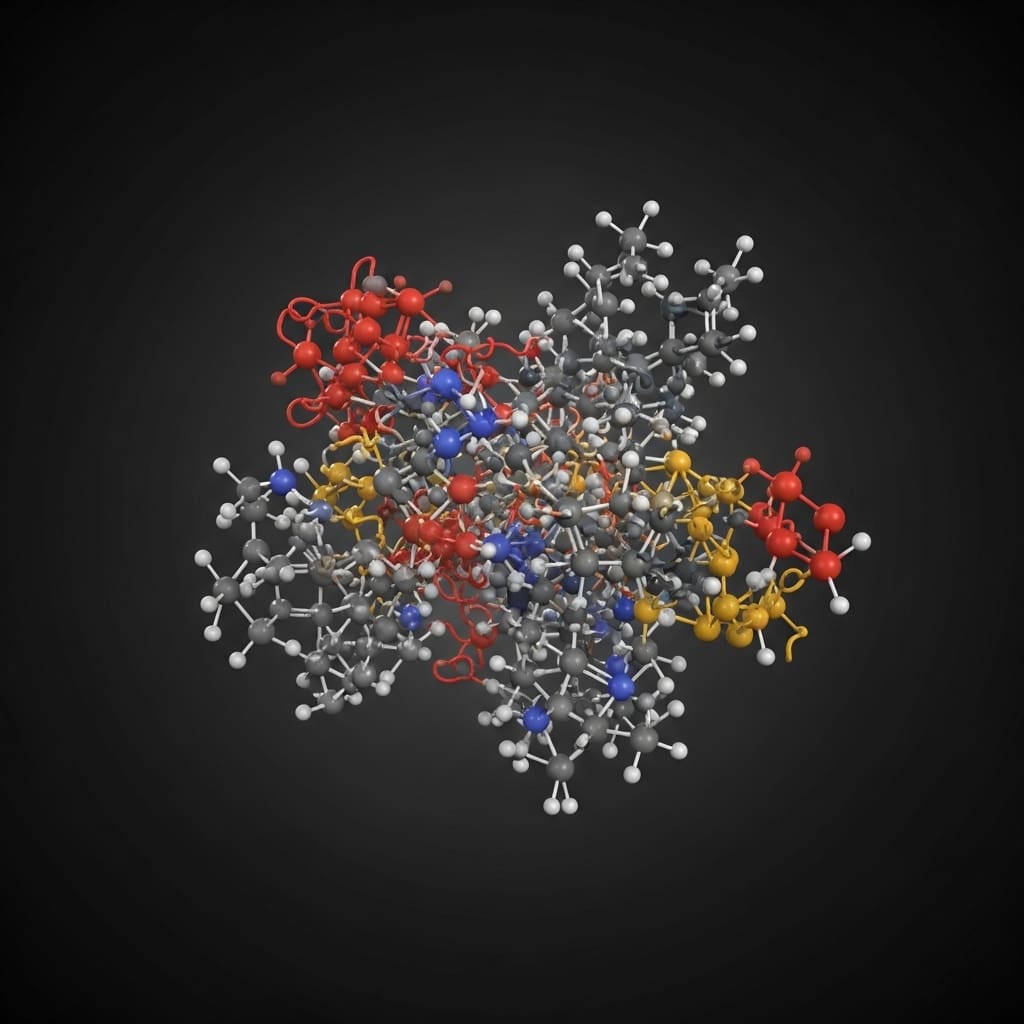
Scientists are tackling the computational bottleneck of obtaining accurate molecular geometries, crucial for reliable chemical predictions. Chengchun Liu, Wendi Cai, and Boxuan Zhao, from the School of AI for Science at Peking University Shenzhen Graduate School, alongside Fanyang Mo, present a novel approach in their work, detailing GeoOpt-Net, a geometry refinement network capable of predicting DFT-quality structures in a single pass. This research is significant because it bypasses the time-consuming density functional theory (DFT) optimisation process, offering a scalable and physically consistent framework that substantially accelerates DFT-based chemical workflows and delivers geometries ready for high-throughput molecular screening.
The research addresses a critical bottleneck in high-throughput molecular screening, where DFT optimization is computationally expensive.
GeoOpt-Net initiates its process using inexpensive initial conformers generated via low-cost force-field methods, subsequently refining them to match the accuracy of B3LYP/TZVP level of theory. This breakthrough employs a two-stage training strategy, beginning with a broadly pretrained geometric representation and then fine-tuning it for enhanced accuracy.
A fidelity-aware feature modulation (FAFM) mechanism calibrates the network, accounting for both theory and basis-set considerations. Benchmarking against established methods, including classical conformer generation with RDKit, semiempirical methods like xTB, data-driven pipelines such as Auto3D, and machine-learning interatomic potentials (UMA), demonstrates GeoOpt-Net’s superior performance on drug-like molecules from the ZINC20 database.
Experiments show GeoOpt-Net achieves sub-milli-Å all-atom RMSD with near-zero B3LYP/TZVP single-point energy deviations, indicating geometries closely aligned with both structural and energetic references. Crucially, the network generates initial guesses intrinsically compatible with DFT convergence criteria, achieving “All-YES” convergence rates of 65.0% under loose thresholds and 33.4% under default settings, a significant improvement over baseline methods which achieved 0%.
This substantially reduces the number of re-optimization steps and overall wall-clock time required for accurate molecular geometry prediction. Furthermore, GeoOpt-Net exhibits smooth and predictable energy scaling with molecular complexity, while accurately preserving key electronic observables like dipole moments. Collectively, these results establish GeoOpt-Net as a scalable and physically consistent framework, enabling efficient acceleration of DFT-based quantum-chemical workflows and opening new avenues for computational chemistry and materials discovery.
Network training and benchmark validation with drug-like molecules are essential for reliable predictions
Scientists developed GeoOpt-Net, a multi-branch SE(3)-equivariant geometry refinement network designed to predict DFT-quality structures at the B3LYP/TZVP level of theory in a single forward pass. The study began with inexpensive initial conformers generated using a low-cost force-field approach, which were then refined by the network.
GeoOpt-Net was trained employing a two-stage strategy, initially utilising a broadly pretrained geometric representation and subsequently fine-tuning it to achieve B3LYP/TZVP-level accuracy. A fidelity-aware feature modulation (FAFM) mechanism was implemented to enable theory- and basis-set-aware calibration during training.
Researchers benchmarked GeoOpt-Net against several established methods including RDKit for classical conformer generation, xTB for semiempirical quantum calculations, Auto3D for data-driven geometry refinement, and UMA for machine-learning interatomic potentials, using drug-like molecules from the ZINC20 database. This comparative analysis demonstrated that GeoOpt-Net achieves sub-milli-Å all-atom RMSD with near-zero B3LYP/TZVP single-point energy deviations.
The work revealed that GeoOpt-Net generates initial guesses intrinsically compatible with DFT convergence criteria, yielding “All-YES” convergence rates of 65.0% under loose thresholds and 33.4% under default thresholds, while all baseline methods achieved 0%. This capability substantially reduces the number of re-optimization steps and overall wall-clock time required for geometry optimisation. Furthermore, the study showed GeoOpt-Net exhibits smooth and predictable energy scaling with molecular complexity, while accurately preserving key electronic observables such as dipole moments, establishing it as a scalable and physically consistent geometry refinement framework.
GeoOpt-Net predicts DFT-quality molecular structures with sub-milli-Å accuracy and efficiency
Scientists have developed GeoOpt-Net, a novel geometry refinement network capable of predicting density functional theory (DFT)-quality molecular structures in a single forward pass. The research team trained GeoOpt-Net using a two-stage strategy, beginning with a broadly pretrained geometric representation and then fine-tuning it to achieve B3LYP/TZVP-level accuracy.
A fidelity-aware feature modulation (FAFM) mechanism calibrates the network, accounting for theory and basis-set effects. Experiments revealed that GeoOpt-Net achieves sub-milli-Å all-atom root-mean-square deviation (RMSD) when benchmarked against representative approaches including RDKit, xTB, Auto3D, and UMA on external drug-like molecules.
Data shows near-zero B3LYP/TZVP single-point energy deviations, indicating geometries closely resembling both structural and energetic references. Measurements confirm that the breakthrough delivers DFT-ready geometries with high fidelity. The team measured “All-YES” convergence rates of 65.0% under loose thresholds and 33.4% under default thresholds, a significant improvement over baseline methods which achieved 0%.
Results demonstrate that GeoOpt-Net generates initial guesses intrinsically compatible with DFT convergence criteria, substantially reducing re-optimization steps and wall-clock time. Tests prove that the network exhibits smooth and predictable energy scaling with molecular complexity. Furthermore, scientists recorded that GeoOpt-Net preserves key electronic observables, such as dipole moments, during the refinement process.
Collectively, these results establish GeoOpt-Net as a scalable and physically consistent framework for accelerating DFT-based quantum-chemical workflows. The work represents a substantial advancement in computational chemistry, enabling efficient and accurate molecular geometry prediction.
Refinement of molecular geometries using a fidelity-aware deep learning approach offers improved accuracy
Scientists have developed GeoOpt-Net, a new multi-branch geometry refinement network designed to predict molecular structures with accuracy comparable to density functional theory (DFT) calculations. This network predicts DFT-quality structures at the B3LYP/TZVP level using initial conformers generated by inexpensive force-field methods, achieving this in a single forward pass.
The method employs a two-stage training strategy, beginning with broad pre-training of geometric representation followed by fine-tuning to approach B3LYP/TZVP accuracy, facilitated by a fidelity-aware feature modulation mechanism. Benchmarking against existing methods, including classical conformer generation, semiempirical techniques, and other data-driven pipelines, demonstrates GeoOpt-Net’s superior performance.
The network achieves sub-milli-Å all-atom RMSD with minimal single-point energy deviations from B3LYP/TZVP calculations, suggesting geometries closely aligned with both structural and energetic references. Furthermore, structures generated by GeoOpt-Net are intrinsically compatible with DFT convergence criteria, resulting in significantly higher convergence rates and reduced re-optimization time.
The authors acknowledge that, like all machine learning models, performance beyond the training distribution requires careful consideration, though results on external drug-like molecules suggest robustness. Future research could explore extending the method to even larger and more complex systems, potentially incorporating additional physical insights to further refine the geometric predictions and broaden its applicability within chemical workflows.
👉 More information
🗞 A Cross-Domain Graph Learning Protocol for Single-Step Molecular Geometry Refinement
🧠 ArXiv: https://arxiv.org/abs/2601.22723


