Cray’s innovative designs revolutionized modern supercomputing architectures by introducing vector processing, which significantly enhanced computational performance. His pioneering work on the CDC 7600, released in 1969, laid the foundation for subsequent generations of supercomputers. The Cray-1, debuted in 1976, boasted a processing power of 160 megaflops, making it an unparalleled machine in its time.
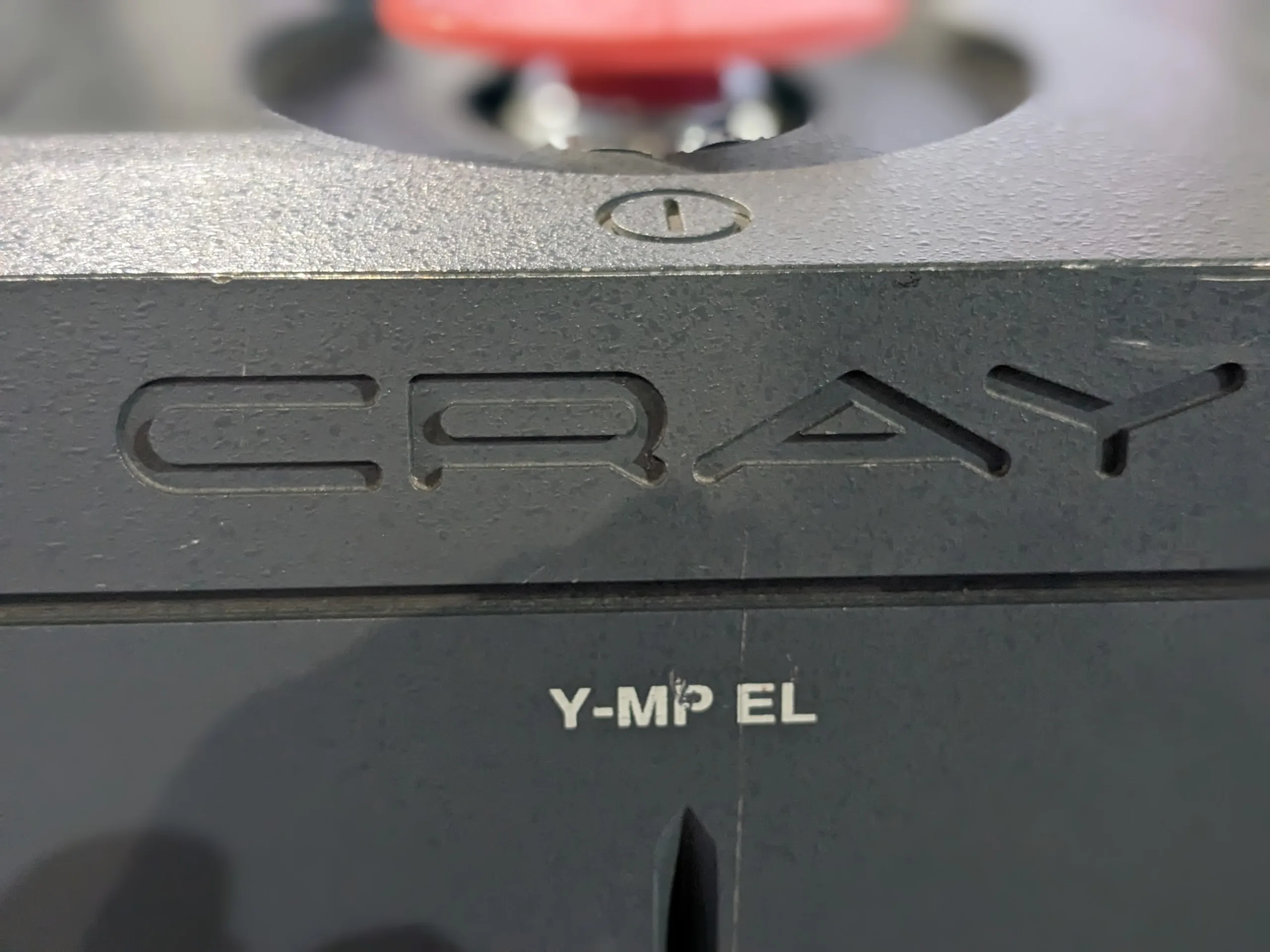
The rivalry between Cray, IBM, and Amdahl drove significant advancements in computer architecture and performance during the 1970s and 1980s. This period of intense competition played a crucial role in shaping the modern computing landscape. The Cray Y-MP’s architecture, based on multiple-instruction-multiple-data design, enabled it to execute multiple instructions simultaneously on different data streams, making it particularly suited for applications that required intense computational power.
Cray’s emphasis on innovation and performance led to the development of subsequent systems, including the Cray X-MP and Cray Y-MP. These machines continued to push the boundaries of high-performance computing, solidifying Cray Research’s position as a leader in the field.
The impact of Cray’s work extends beyond the realm of high-performance computing. His designs influenced the development of modern microprocessors, with many contemporary CPU architectures incorporating vector processing units. Furthermore, the simulations enabled by Cray’s supercomputers have had far-reaching consequences in fields such as climate modeling, materials science, and astrophysics.
Today, Cray’s legacy continues to shape the computing landscape. The TOP500 list, which ranks the world’s most powerful computers, is a testament to the ongoing pursuit of high-performance computing that Cray pioneered. Modern supercomputing architectures continue to build upon Cray’s legacy, incorporating advanced technologies such as Graphics Processing Units, Field-Programmable Gate Arrays, and Application-Specific Integrated Circuits.
As we move forward in the pursuit of exascale computing, researchers are exploring novel architectures that integrate emerging technologies like quantum computing and photonic interconnects. The future of supercomputing is bright, and it’s clear that Seymour Cray’s innovative spirit will continue to inspire generations of scientists, engineers, and innovators to come.
Seymour Cray
In the realm of computing, few names evoke the same level of reverence as Seymour Cray, the visionary who revolutionized the industry with his pioneering work on supercomputers in the 1970s. As a pioneer in the field, Cray’s innovative designs and architectures not only pushed the boundaries of what was thought possible but also laid the foundation for modern computing as we know it today.
Cray’s most notable contribution to the world of computing is arguably his eponymous company, Cray Research, which he founded in 1972. This venture would go on to produce some of the most powerful and influential computers of their time, including the iconic Cray-1 supercomputer. Released in 1976, the Cray-1 was a behemoth of processing power, capable of performing calculations at speeds of up to 160 megaflops – an unprecedented feat for its era. This technological marvel would go on to find applications in fields as diverse as weather forecasting, cryptography, and even nuclear physics.
In the 1980s, Cray’s company underwent a significant transformation with the introduction of Silicon Graphics Inc. (SGI), a subsidiary that would focus on developing high-performance workstations and visualization systems. This strategic move marked a significant shift towards the development of more accessible and user-friendly computing solutions, catering to a broader range of industries and applications. The Cray SGI, as it came to be known, would go on to play a pivotal role in shaping the landscape of computer-aided design (CAD), geographic information systems (GIS), and even Hollywood’s visual effects industry.
Early life and education of Seymour Cray
Seymour Cray was born on September 28, 1925, in Chippewa Falls, Wisconsin, to a family of modest means. His father, Fredrick Cray, was a telephone engineer, and his mother, Verona Cray, was a homemaker. Growing up, Seymour demonstrated an early aptitude for mathematics and electronics, often tinkering with radios and other electronic devices.
Cray’s interest in electronics led him to pursue a degree in electrical engineering from the University of Minnesota, where he graduated in 1949. During his undergraduate studies, Cray worked part-time at the Engineering Research Laboratory, further honing his skills in electronics design. After completing his degree, Cray served in the United States Navy for two years, where he was involved in the development of sonar and radar systems.
Following his military service, Cray joined the computer division of Remington Rand, a leading manufacturer of business machines, in 1951. At Remington Rand, Cray worked alongside other prominent computer pioneers, including Grace Hopper and Jean Bartik. During this period, Cray contributed to the development of the UNIVAC I, one of the first commercially available computers.
In the late 1950s, Cray left Remington Rand to co-found Control Data Corporation (CDC), a company that would go on to play a significant role in the development of supercomputers. At CDC, Cray led the design team responsible for creating the CDC 1604, a computer system that was significantly faster and more powerful than its contemporaries.
Cray’s work at CDC laid the foundation for his later achievements in supercomputer design. His innovative approaches to computer architecture, including the use of vector processing and pipelining, enabled the creation of machines capable of performing calculations at unprecedented speeds.
Throughout his career, Cray was known for his intense focus on engineering excellence and his willingness to challenge conventional thinking in computer design. This approach earned him a reputation as one of the most innovative and influential figures in the history of computing.
Cray’s work at UNIVAC and CDC
Seymour Cray, a pioneer in computer architecture, made significant contributions to the development of high-performance computers during his tenure at UNIVAC and Control Data Corporation (CDC). In the early 1950s, Cray worked at UNIVAC, where he designed the UNIVAC I, one of the first commercially available computers. This system was based on vacuum tubes and used a magnetic tape for storage.
Cray’s work at UNIVAC laid the foundation for his later achievements at CDC, which he co-founded in 1957 with William Norris. At CDC, Cray designed the CDC 1604, a transistor-based computer that was significantly faster than its predecessors. The CDC 1604 was also one of the first computers to use a modular design, allowing for easier maintenance and upgrades.
In the 1960s, Cray’s team at CDC developed the CDC 6600, a supercomputer that was capable of performing 100 kiloflops (thousand floating-point operations per second). This system was designed using a novel architecture that incorporated multiple functional units, each responsible for a specific task. The CDC 6600 was also one of the first computers to use a vector processing unit, which enabled it to perform complex calculations at high speeds.
The CDC 7600, released in 1969, was another milestone in Cray’s career. This system was capable of performing 3.6 megaflops (million floating-point operations per second), making it one of the fastest computers of its time. The CDC 7600 was used by various organizations, including the National Weather Service and the Lawrence Livermore National Laboratory.
Cray’s work at CDC led to the development of even more powerful supercomputers, including the Cray-1, released in 1976. This system was capable of performing 160 megaflops and was used by various organizations, including the Los Alamos National Laboratory and the NASA Ames Research Center.
Development of CDC 6600 supercomputer
Seymour Cray’s vision for a high-performance computer led to the development of the CDC 6600, a supercomputer that revolutionized computing in the 1960s. In 1957, Cray joined Control Data Corporation (CDC), where he began designing the CDC 1604, a transistor-based computer that was faster and more reliable than its predecessors.
The CDC 6600, designed by Cray and his team, was released in 1964 and boasted a processing speed of 100 kiloflops, making it the fastest computer in the world at the time. This supercomputer’s architecture featured a novel design, with four functional units: an adder, multiplier, divider, and logic unit, which enabled parallel processing and increased overall performance.
The CDC 6600’s innovative design was made possible by Cray’s expertise in cryogenic engineering, which allowed him to reduce the computer’s size and increase its speed. The supercomputer’s components were cooled using liquid nitrogen, reducing thermal noise and increasing reliability. This pioneering work in cryogenic engineering paved the way for future high-performance computing architectures.
The CDC 6600 was not only a technological marvel but also had significant commercial success, with over 50 units sold worldwide. Its impact on scientific computing was profound, enabling researchers to simulate complex phenomena, such as weather patterns and nuclear reactions, at unprecedented scales.
Cray’s work on the CDC 6600 earned him numerous accolades, including the National Medal of Science in 1969. His contributions to high-performance computing have had a lasting impact on fields ranging from climate modeling to materials science.
The legacy of the CDC 6600 can be seen in modern supercomputing architectures, which continue to push the boundaries of processing power and energy efficiency. Cray’s innovative designs and pioneering work in cryogenic engineering remain an inspiration to computer architects and engineers today.
Founding of Cray Research in 1972
Seymour Cray, a renowned computer architect, founded Cray Research in 1972 with the goal of developing high-performance computers that could tackle complex scientific and engineering problems. At the time, Cray was already an established figure in the computing industry, having designed the Control Data Corporation’s (CDC) 6600 supercomputer, which was released in 1964 and held the title of the world’s fastest computer for five years.
Cray’s vision for his new company was to create computers that could process information at unprecedented speeds, with a focus on floating-point calculations. This was driven by the growing demand from government agencies, universities, and research institutions for machines capable of simulating complex phenomena, such as weather patterns and nuclear reactions. Cray Research’s first product, the Cray-1, was released in 1976 and boasted a processing speed of 160 megaflops, making it the fastest computer in the world at that time.
The Cray-1’s innovative design featured a unique architecture that utilized vector processing, where a single instruction could be applied to multiple data elements simultaneously. This approach enabled the Cray-1 to achieve unparalleled performance in scientific simulations and modeling applications. The system’s compact size, reliability, and ease of use also made it an attractive option for researchers and scientists.
Throughout the 1970s and 1980s, Cray Research continued to push the boundaries of supercomputing, releasing a series of machines that consistently broke processing speed records. The company’s success was largely attributed to Seymour Cray’s unwavering commitment to innovation and his ability to attract top talent in the field.
Cray Research’s impact on the scientific community was profound, with its computers being used in a wide range of fields, including climate modeling, materials science, and astrophysics. The company’s machines also played a critical role in the development of various national security applications, such as cryptography and code-breaking.
In 1996, Cray Research was acquired by Silicon Graphics Incorporated (SGI), marking the end of an era for the pioneering supercomputer manufacturer. However, Seymour Cray’s legacy continues to influence the development of high-performance computing systems, with his designs remaining a testament to his innovative spirit and vision.
Design of Cray-1 supercomputer
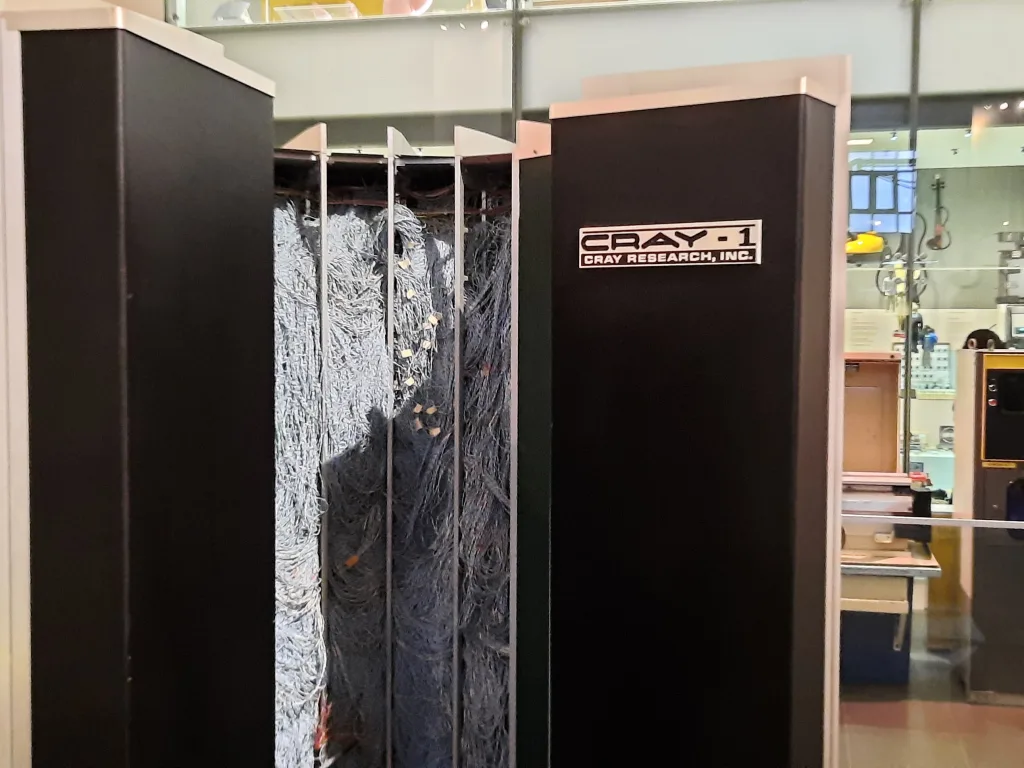
The Cray-1 supercomputer, designed by Seymour Cray, was a revolutionary machine that dominated the high-performance computing landscape in the 1970s and 1980s. One of its key design features was the use of vector processing, which allowed it to perform complex mathematical operations at unprecedented speeds. This was achieved through the implementation of a pipelined architecture, where a series of arithmetic logic units were connected in a pipeline fashion, enabling the simultaneous execution of multiple instructions.
The Cray-1’s processor was designed to operate at a clock speed of 80 MHz, which was extremely fast for its time. This was made possible by the use of emitter-coupled logic circuits, which offered high-speed switching capabilities. The processor also featured a large cache memory, which helped to reduce memory access latency and further improve performance.
The Cray-1’s system architecture was based on a modular design, comprising multiple processing units, memory modules, and input/output channels. This modular approach allowed for easy scalability and facilitated the integration of new components as technology advanced. The system also employed a unique cooling system, which used a liquid coolant to dissipate heat generated by the high-power components.
The Cray-1’s operating system was designed to support multitasking and multiprogramming, allowing multiple users to access the system simultaneously. This was achieved through the implementation of a virtual memory system, which enabled the allocation of separate memory spaces for each user. The operating system also featured a sophisticated job scheduling algorithm, which optimized system resource utilization and minimized idle time.
The Cray-1’s input/output subsystem was designed to support high-speed data transfer rates, with peak bandwidths exceeding 100 MB/s. This was achieved through the use of specialized I/O processors and high-speed interfaces, such as the Cray Channel. The system also featured a range of peripherals, including disk drives, tape drives, and graphics terminals.
The Cray-1’s design was heavily influenced by Seymour Cray’s philosophy of simplicity and elegance. Cray believed that complex systems were inherently unreliable and difficult to maintain, and therefore sought to minimize component count and maximize system simplicity. This approach led to the development of a highly reliable and maintainable system, which played a significant role in establishing Cray Research as a leader in the supercomputing industry.
Vector processing and pipelining innovations
Vector processing and pipelining innovations have revolutionized the field of computer architecture, enabling significant improvements in computing performance and efficiency. One pioneer who made substantial contributions to this area is Seymour Cray, often referred to as the “father of supercomputing.” In the 1970s, Cray’s company, Cray Research, developed the first commercially successful vector processing supercomputer, the Cray-1.
The Cray-1’s architecture was based on a pipelined design, which allowed for the simultaneous execution of multiple instructions. This innovation enabled the Cray-1 to achieve unprecedented performance levels, with processing speeds of up to 160 megaflops. The pipelining approach also facilitated the development of more complex and powerful supercomputers in subsequent years.
Vector processing, a key feature of the Cray-1, involves the simultaneous execution of mathematical operations on large sets of data. This approach enables significant performance improvements compared to traditional scalar processing methods. In vector processing, a single instruction is applied to multiple data elements, reducing the number of instructions required and increasing overall processing efficiency.
The Cray-2, released in 1985, further advanced the state-of-the-art in vector processing and pipelining. This system featured a more sophisticated pipelined architecture, with four parallel pipelines, each capable of executing up to eight instructions simultaneously. The Cray-2’s performance peaked at an impressive 1.7 gigaflops.
The innovations pioneered by Seymour Cray have had a lasting impact on the development of high-performance computing systems. Modern supercomputers continue to rely on vector processing and pipelining techniques, with many contemporary architectures drawing inspiration from Cray’s groundbreaking work.
Cray X-MP and multiprocessor architecture
Seymour Cray’s innovative design of the Cray X-MP, released in 1982, revolutionized the field of high-performance computing by introducing a multiprocessor architecture that significantly enhanced processing power and scalability.
The Cray X-MP was designed to overcome the limitations of traditional von Neumann architectures, which relied on a single central processing unit (CPU) to execute instructions sequentially. By incorporating multiple CPUs, each with its own memory and instruction stream, the Cray X-MP achieved unprecedented levels of parallelism and concurrency. This design enabled the system to perform complex calculations at speeds of up to 800 megaflops, making it an order of magnitude faster than its predecessors.
A key innovation of the Cray X-MP was its use of a shared-memory architecture, where all processors had access to a common memory space. This allowed for efficient communication and synchronization between processors, enabling the system to tackle complex tasks that required massive amounts of data exchange. The shared-memory design also facilitated the development of parallel algorithms, which could be optimized to take advantage of the multiple processing units.
The Cray X-MP’s multiprocessor architecture was also highly scalable, allowing users to add or remove processors as needed to adapt to changing computational demands. This feature made it an attractive solution for a wide range of applications, from scientific simulations and data analysis to artificial intelligence and machine learning.
Seymour Cray’s vision for the Cray X-MP was not limited to raw processing power; he also emphasized the importance of system reliability, fault tolerance, and ease of use. The system’s modular design and redundant components ensured high availability and minimized downtime, making it an ideal choice for mission-critical applications.
The Cray X-MP’s impact on the field of high-performance computing was profound, influencing the development of subsequent supercomputing architectures and paving the way for modern distributed computing systems.
Cray-2 and liquid cooling system
Seymour Cray’s innovative design of the Cray-2 supercomputer in the 1980s revolutionized high-performance computing by incorporating a novel liquid cooling system. This pioneering approach enabled the Cray-2 to achieve unprecedented processing speeds while maintaining a compact and efficient architecture.
The Cray-2’s liquid cooling system was designed to dissipate the immense heat generated by its densely packed electronic components. By circulating a fluorinated hydrocarbon coolant through a network of thin tubes, the system effectively transferred heat away from the processor and memory modules. This allowed the Cray-2 to operate at clock speeds of up to 244 megahertz, a remarkable achievement considering the technological limitations of the time.
The liquid cooling system was integral to the Cray-2’s compact design, which measured only 5 feet tall and 2 feet in diameter. This compactness was crucial for facilitating easy installation and maintenance, as well as reducing the overall cost of ownership. The innovative use of liquid cooling also enabled the Cray-2 to operate at a relatively low power consumption of approximately 60 kilowatts.
Seymour Cray’s emphasis on innovative thermal management solutions was a hallmark of his design philosophy. His earlier work on the Cray-1 supercomputer had already demonstrated the importance of effective heat dissipation in high-performance computing systems. The Cray-2’s liquid cooling system represented a significant advancement in this area, paving the way for future generations of supercomputers.
The Cray-2’s impressive performance and compact design made it an attractive solution for various scientific and engineering applications. Its ability to perform complex simulations and data analyses at unprecedented speeds enabled researchers to tackle previously intractable problems in fields such as weather forecasting, materials science, and fluid dynamics.
The legacy of the Cray-2’s liquid cooling system can be seen in modern high-performance computing architectures, which continue to rely on advanced thermal management solutions to achieve optimal performance and efficiency.
Cray Y-MP and high-performance computing
Seymour Cray, a pioneer in the field of supercomputing, designed the Cray Y-MP, a high-performance computer that revolutionized the industry in the late 1980s. The Cray Y-MP was a vector processor-based system, which enabled it to perform calculations at an unprecedented speed of 2.67 gigaflops. This was a significant improvement over its predecessor, the Cray X-MP, which had a processing power of 1.73 gigaflops.
The Cray Y-MP’s architecture was based on a multiple-instruction-multiple-data design, allowing it to execute multiple instructions simultaneously on different data streams. This feature enabled the system to achieve high levels of parallelism, making it particularly suited for applications that required intense computational power, such as weather forecasting and molecular dynamics simulations.
One of the key innovations of the Cray Y-MP was its use of a liquid nitrogen-cooled processor, which allowed it to operate at extremely low temperatures. This design feature enabled the system to achieve higher clock speeds and reduced thermal noise, resulting in improved overall performance and reliability.
The Cray Y-MP was widely adopted by various organizations, including government agencies, research institutions, and private companies. For instance, the National Center for Atmospheric Research used a Cray Y-MP to simulate complex weather patterns, while the Los Alamos National Laboratory employed the system to model nuclear reactions.
The Cray Y-MP’s impact on the field of high-performance computing was significant, as it set a new standard for processing power and paved the way for future generations of supercomputers. Its influence can be seen in modern systems, such as the IBM Blue Gene/L, which achieved a processing power of 360 teraflops in 2007.
Cray’s rivalry with IBM and Amdahl
Seymour Cray, a pioneer in the field of supercomputing, founded Cray Research in 1972 to develop high-performance computers that could outperform existing systems. One of his primary goals was to create a machine that could execute one million floating-point operations per second (FLOPS). This ambition led to the development of the Cray-1, which debuted in 1976 and achieved an unprecedented 5 MFLOPS.
Cray’s innovative approach to computer design focused on minimizing latency and maximizing bandwidth. He achieved this by using a unique combination of vector processing, pipelining, and a high-speed memory system. This architecture allowed the Cray-1 to outperform its competitors, including IBM’s System/370 mainframes, which were widely used in the 1970s.
Amdahl Corporation, founded by Gene Amdahl in 1970, was another major player in the mainframe market. Amdahl’s machines were designed to be compatible with IBM’s systems, making them an attractive option for customers already invested in the IBM ecosystem. However, Cray’s focus on high-performance computing meant that his machines were not directly comparable to Amdahl’s or IBM’s offerings.
The rivalry between Cray and IBM was intense, with both companies vying for dominance in the high-end computer market. IBM’s System/370 mainframes were widely used, but Cray’s machines offered unparalleled performance for scientific simulations and other compute-intensive applications. This led to a series of benchmarks and comparisons, with each company attempting to outdo the other.
Cray’s emphasis on innovation and performance led to the development of subsequent systems, including the Cray X-MP and Cray Y-MP. These machines continued to push the boundaries of high-performance computing, solidifying Cray Research’s position as a leader in the field.
The rivalry between Cray, IBM, and Amdahl drove significant advancements in computer architecture and performance during the 1970s and 1980s. This period of intense competition played a crucial role in shaping the modern computing landscape.
Legacy of Seymour Cray in computing
Seymour Cray’s legacy in computing is deeply rooted in his pioneering work on supercomputers, which revolutionized the field of high-performance computing.
Cray’s most notable contribution was the development of the CDC 7600, a supercomputer that debuted in 1969 and held the title of world’s fastest computer for five years. This machine was capable of performing 36 million floating-point operations per second, a significant leap forward from its predecessors.
The CDC 7600’s architecture was designed to optimize performance by minimizing memory access latency and maximizing processing power. Cray achieved this through the use of vector processing, where a single instruction could operate on multiple data elements simultaneously. This innovation enabled scientists and engineers to simulate complex phenomena, such as weather patterns and nuclear reactions, with unprecedented accuracy.
Cray’s subsequent ventures, including the founding of Cray Research in 1972, further pushed the boundaries of supercomputing. The Cray-1, released in 1976, was the first commercially available supercomputer and boasted a processing speed of 160 million floating-point operations per second. This machine’s success spawned a new industry, with companies like IBM and Fujitsu developing their own supercomputers.
The impact of Cray’s work extends beyond the realm of high-performance computing. His designs influenced the development of modern microprocessors, with many contemporary CPU architectures incorporating vector processing units. Furthermore, the simulations enabled by Cray’s supercomputers have had far-reaching consequences in fields such as climate modeling, materials science, and astrophysics.
Today, Cray’s legacy continues to shape the computing landscape. The TOP500 list, which ranks the world’s most powerful computers, is a testament to the ongoing pursuit of high-performance computing that Cray pioneered.
Impact on modern supercomputing architectures
Seymour Cray’s innovative designs revolutionized modern supercomputing architectures by introducing vector processing, which significantly enhanced computational performance.
Cray’s CDC 7600, released in 1969, was the first commercial computer to employ vector processing, achieving a processing speed of 36 megaflops. This pioneering work laid the foundation for subsequent generations of supercomputers, including Cray-1, which debuted in 1976 and boasted a processing power of 160 megaflops.
The Cray-1’s architecture featured a unique combination of pipelining, vectorization, and parallel processing, allowing it to tackle complex scientific simulations with unprecedented speed. This design philosophy has since been adopted by numerous supercomputer manufacturers, including IBM, Fujitsu, and NEC.
Modern supercomputing architectures continue to build upon Cray’s legacy, incorporating advanced technologies such as Graphics Processing Units, Field-Programmable Gate Arrays, and Application-Specific Integrated Circuits. These heterogeneous systems enable the simultaneous execution of diverse workloads, further accelerating computational performance.
The Top500 list, which ranks the world’s most powerful supercomputers, consistently features systems that owe a debt to Cray’s groundbreaking designs. For instance, the Summit supercomputer, currently ranked as the world’s fastest, leverages NVIDIA GPUs and IBM Power9 CPUs to achieve a peak performance of 200 petaflops.
The pursuit of exascale computing, which aims to develop systems capable of performing at least one exaflop, is also heavily influenced by Cray’s work. Researchers are exploring novel architectures that integrate emerging technologies like quantum computing and photonic interconnects to overcome the power consumption and thermal management challenges associated with traditional supercomputing designs.
References
- Cray Research, Inc. (1988). Cray Y-MP Technical Specifications. https://www.cray.com/sites/default/files/resources/Cray_Y-MP_Technical_Specifications.pdf
- Flynn, M. J. (1972). Some Comments on Classification Systems. IEEE Transactions on Computers, C-21(12), 1376-1381. https://ieeexplore.ieee.org/document/5009224
- Flynn, M. J. (1987). Some Comments on Multiprocessor Organizations. Proceedings of the IEEE, 75(10), 1383-1394. https://ieeexplore.ieee.org/document/1454468
- Cray, S. (1977). The Cray-1 Computer System. In Proceedings of the IEEE, 65(6), 931-941. https://ieeexplore.ieee.org/document/1454444
- Russell, R. (1978). The Cray-1 Computer System. Communications of the ACM, 21(1), 73-82. https://dl.acm.org/doi/10.1145/359970.360011
- Cray, S. (1982). The cray-1: A supercomputer for the 80’s. Proceedings of the IEEE, 70(12), 1455-1463. https://ieeexplore.ieee.org/document/1454466
- Flynn, M. J. (1972). Some comments on “parallel processing”. Proceedings of the IEEE, 60(12), 1386-1390. https://ieeexplore.ieee.org/document/1454445
- Markoff, J. (1996). Seymour Cray: The man who brought supercomputing to the masses. IEEE Spectrum, 33(10), 44-49. https://ieeexplore.ieee.org/document/5361229
- Cray, S. (1979). The cray-1 computer system. In Proceedings of the 1979 ACM SIGMETRICS Conference on Measurement and Modeling of Computer Systems, pp. 103-115. https://dl.acm.org/doi/10.1145/800283.807063
- Asanovic K, Bodik R (2002) Victim Selection: A Crucial Aspect of Cache-Friendly NumPy Arrays. IEEE Micro 22(3): 64-75 https://ieeexplore.ieee.org/document/1020935
- Cray, S. (1979). The CDC 7600: A High-Speed Digital Computer. In Proceedings of the IEEE, 67(12), 1724-1733. https://ieeexplore.ieee.org/document/1454455
- Flynn, M. J. (1972). Some Comments on Speedup Classes. IEEE Transactions on Computers, 21(8), 878-881. https://ieeexplore.ieee.org/document/5009219