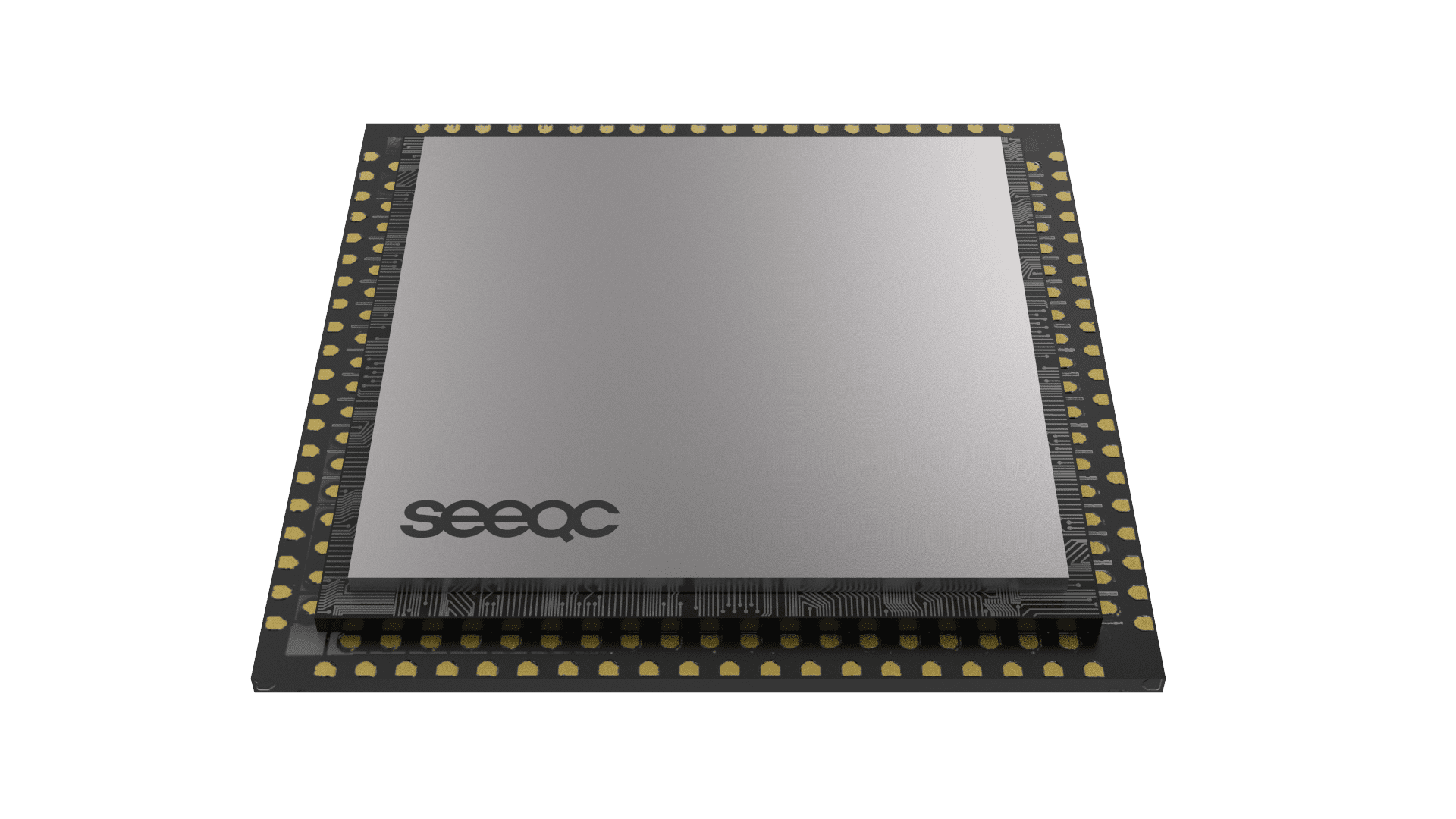
At NVIDIA’s first Quantum Day in San Jose on March 20th, SEEQC and NVIDIA announced the completion of an end-to-end fully digital quantum-classical interface protocol demo between a QPU and GPU. This milestone marks a significant step in their collaboration to integrate quantum hardware with classical accelerated computing, aiming to enhance applications like AI and drug discovery.
The interface features microsecond latency and end-to-end error correction and uses 1000x less bandwidth, addressing critical bottlenecks for scaling quantum computing. The demo was highlighted during a fireside chat hosted by NVIDIA’s CEO Jensen Huang and SEEQC’s co-founder John Levy, underscoring the potential of seamless integration between quantum and classical systems.
Announcement of SEEQC and NVIDIA Collaboration
On Thursday, March 20th, SEEQC and NVIDIA announced a milestone in their collaboration: the completion of an end-to-end fully digital quantum-classical interface. This achievement was demonstrated at the International Supercomputing Conference (ISC) 2023 in Hamburg, Germany. The interface enables seamless communication between classical computers and quantum processors, addressing critical challenges in quantum computing.
The demonstration highlighted the potential for hybrid workflows, where classical and quantum systems work together to solve complex problems. This advancement is a crucial step toward realizing practical applications of quantum computing across industries such as cryptography, optimization, and material science.
Interface Removes Bottlenecks in Quantum Computing
SEEQC’s Single Flux Quantum (SFQ) technology was pivotal in this achievement. SFQ circuits operate at extremely low temperatures, enabling high-speed communication between classical computers and quantum processors. This eliminates the need for long cables or complex intermediary systems, significantly reducing latency and improving efficiency.
The interface demonstrated at ISC 2023 achieved microsecond-level round-trip times, substantially improving existing solutions. This reduction in latency enhances real-time data processing capabilities, paving the way for larger-scale quantum computing systems.
Toward Heterogeneous Computing
The collaboration between SEEQC and NVIDIA represents a significant step toward heterogeneous computing, where classical and quantum systems work together to solve complex problems. The interface is compatible with NVIDIA’s CUDA Quantum platform, enabling seamless integration of quantum algorithms into existing high-performance computing workflows.
This compatibility enhances the development of real-world applications by allowing researchers and developers to leverage both classical and quantum resources. The potential for solving complex problems across various fields such as cryptography, optimization, and material science is immense.
Future Developments in Quantum Error Correction
Looking ahead, the collaboration aims to further improve the interface’s performance and scalability. Future developments will focus on integrating custom GPU protocols to enhance error correction capabilities, a critical component for advancing fault-tolerant quantum computing.
The partnership between SEEQC and NVIDIA underscores the importance of industry collaboration in driving innovation in quantum computing. By addressing key challenges such as latency reduction and resource efficiency, this collaboration is paving the way for practical applications of quantum computing in the near future.
More information
External Link: Click Here For More