Rigetti Computing has launched its new 84-qubit Ankaa-3 system, a quantum computer with a broad hardware redesign enabling superior performance. The company has achieved a 99.5 percent median two-qubit gate fidelity milestone with this system.
According to Dr. Subodh Kulkarni, Rigetti’s CEO, the remarkable performance of Ankaa-3 reinforces the company’s leadership in the superconducting quantum computing field. David Rivas, Rigetti’s CTO, notes that the team has worked hard to introduce new innovative ways to increase the system’s performance.
The Ankaa-3 system is now available to partners via the Rigetti Quantum Cloud Services platform and will be coming to Amazon Braket and Microsoft Azure in 2025. This development is a significant step forward for quantum computing, with potential applications in various fields. Rigetti has collaborated with institutions such as the Superconducting Quantum Materials and Systems Center led by Fermilab to achieve these advancements.
Introduction to Rigetti Computing’s Ankaa-3 System
Rigetti Computing, Inc., a company specializing in full-stack quantum-classical computing, has announced the public launch of its 84-qubit Ankaa-3 system. This new flagship quantum computer features an extensive hardware redesign that enables superior performance. The Ankaa-3 system is now available to partners via the Rigetti Quantum Cloud Services platform and will be coming to Amazon Braket and Microsoft Azure in the first quarter of 2025. Users will be able to operate these higher fidelity and universal iSWAP gates for a wide range of algorithmic research, with a median gate time of 72 nanoseconds.
The Ankaa-3 system continues to feature Rigetti’s scalable, industry-leading chip architecture with 3D signal delivery while incorporating major enhancements to key technologies. Leveraging the company’s full-stack expertise and in-house quantum foundry capabilities, Ankaa-3 has achieved remarkable performance, reinforcing Rigetti’s position in the superconducting quantum computing field. The company believes that superconducting quantum computing is the winning modality for high-performance quantum computers due to their many advantages, including fast gate speeds and well-established manufacturing processes.
Developing the Ankaa-3 system is a significant step towards achieving fault tolerance in quantum computing. Rigetti’s teams have worked hard to introduce new, innovative ways to increase the system’s performance, constructing computing systems with capabilities that have not been seen before. The company is committed to finding ways to put these systems to practical use, working closely with partners to achieve this goal.
Technical Enhancements of the Ankaa-3 System
The Ankaa-3 chip has several technical enhancements contributing to its higher fidelity and performance. These include an improved qubit chip, Josephson junction fabrication with Alternating-Bias Assisted Annealing (ABAA), and precise control and flexible gate architecture. The qubit chip has been overhauled, leading to improved coherence, and the circuit layout has been optimized to minimize qubit losses and take advantage of the new higher-coherence process.
The use of ABAA allows for precise qubit frequency targeting, which enables better execution of two-qubit gates and increases in yield, which contribute to higher fidelity. The chip-wide optimization of qubit and tunable coupler frequencies produces fewer unwanted qubit-qubit interactions, and real-time, in-hardware pulse pre-compensation produces gates with lower incoherent errors.
Future Plans and Roadmap
Rigetti plans to introduce the next generation of its modular system architecture while continuing to increase fidelities in 2025. By mid-year 2025, the company expects to release a 36-qubit system based on four 9-qubit chips tiled together, with a targeted 2x reduction in error rates from the current level. By the end of 2025, the company expects to release a system with over 100 qubits with a targeted 2x reduction in error rates from the current level.
The company’s roadmap is ambitious, and its ability to deliver on its performance goals is supported by its strong financial position, with approximately $225 million of cash, cash equivalents, and available for sale investments and no debt. The remarkable performance of Ankaa-3 reinforces Rigetti’s leadership in the superconducting quantum computing field, and the company is confident in its ability to continue delivering on its roadmap.
Conclusion
The launch of Rigetti Computing’s Ankaa-3 system marks a significant milestone in the development of superconducting quantum computing. The system’s technical enhancements, including improved qubit chip, Josephson junction fabrication with ABAA, and precise control and flexible gate architecture, contribute to its higher fidelity and performance. With its strong financial position and ambitious roadmap, Rigetti is well-positioned to continue delivering on its performance goals and leading the way in the superconducting quantum computing field.
The potential applications of Ankaa-3 are vast, and the company’s commitment to finding ways to put these systems to practical use is crucial. As the journey towards fault tolerance continues, Rigetti’s construction of computing systems with capabilities that have not been seen before will be an important step towards achieving this goal. The future of quantum computing looks promising, and Rigetti Computing is at the forefront of this exciting and rapidly evolving field.
Impact on the Quantum Computing Industry
The launch of Ankaa-3 has significant implications for the quantum computing industry as a whole. The system’s higher fidelity and performance will enable researchers and developers to explore new applications and use cases, driving innovation and advancement in the field. The availability of Ankaa-3 on cloud platforms such as Amazon Braket and Microsoft Azure will also make it more accessible to a wider range of users, further accelerating the development of quantum computing.
The success of Ankaa-3 is also likely to impact the adoption of superconducting quantum computing technology positively. As one of the leading modalities in the field, superconducting quantum computing has many advantages, including fast gate speeds and well-established manufacturing processes. Demonstrating Ankaa-3’s capabilities will help reinforce the position of superconducting quantum computing as a leading approach in the field.
The Company’s focus on improving qubit fidelity has resulted in enhancements across the technology stack:
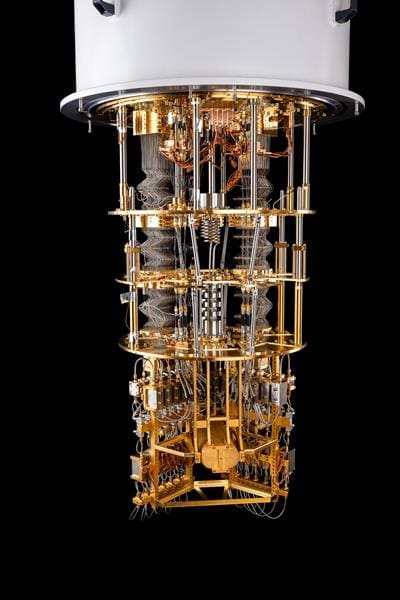
- All new cryogenic hardware design – Reducing the amount of metal at the refrigerator’s coldest stage increases efficiency and reduces the cost per qubit. Superior thermalization and magnetic/environmental shielding also improve system performance. This new design enables scaling up to thousands of qubits.
- Improved qubit chip – Rigetti overhauled its qubit chip, improving coherence. Through its collaboration with the Superconducting Quantum Materials & Systems Center (SQMS) led by Fermilab, Rigetti implemented a metal deposition method for qubit circuitry with a higher T1 baseline — which indicates the lifetime of a qubit. The circuit layout was also optimized to minimize qubit losses and take advantage of the new higher-coherence process.
- Josephson junction fabrication with Alternating-Bias Assisted Annealing (ABAA) – The Ankaa-3 chip features the hallmarks of Rigetti’s Ankaa-class chip architecture with a square lattice of qubits and tunable couplers. The 84-qubit chip’s Josephson junctions are manufactured using Rigetti’s novel ABAA technique. ABAA allows for precise qubit frequency targeting, which enables better execution of two-qubit gates and increases in yield, both of which contribute to higher fidelity.
- Precise control and flexible gate architecture – Rigetti has invested heavily in the control technologies underpinning its QPUs. Chip-wide optimization of qubit and tunable coupler frequencies produces fewer unwanted qubit-qubit interactions, and real-time, in-hardware pulse pre-compensation produces gates with lower incoherent errors. Rigetti has also developed a robust calibration process for highly expressive square-root-iSWAP-like gates while solving some of the compilation challenges associated with their practical usage, resulting in an nQA-oriented gate set with significantly lower error rates.
Overall, the launch of Rigetti Computing’s Ankaa-3 system is an important milestone in the development of quantum computing, and its impact will be felt across the industry. As the field continues to evolve and advance, it will be exciting to see how Ankaa-3 and other systems like it contribute to the growth and adoption of quantum computing technology.
External Link: Click Here For More