A groundbreaking study published in the Proceedings of the 9th World Congress on Recent Advances in Nanotechnology (RAN24) has unveiled a promising solution to detecting X-rays at room temperature, paving the way for a lightweight radiation detector that could revolutionize space missions. The rGO-FET based device, developed by researchers from Dayananda Sagar University, Bangalore, India, boasts exceptional light weight, linear response with increasing X-ray energy and current, and rapid rise and fall times of 0.25 s and 0.15 s, respectively. This innovative detector has the potential to accurately detect radiations like X-rays and Gamma rays in high flux environments, making it an ideal candidate for scientific exploratory missions. With its ability to operate at room temperature, this device could significantly improve space mission efficiency, accuracy, and safety, opening up new space exploration and research possibilities.
In recent years, the development of a reduced graphene oxide-based X-ray detector for space applications has been a topic of interest. A team of researchers from Dayananda Sagar University and the Indian Space Research Organization (ISRO) has made significant progress in this area, as evident from their paper presented at the 9th World Congress on Recent Advances in Nanotechnology.
The researchers, led by Anshika G, Shruthi G, Koushal V, Kruthika S M, Radhakrishna V, and Baishali G, have developed a lightweight radiation detector that can detect X-rays at room temperature. This is a significant achievement, as most radiation detectors require cryogenic temperatures to function.
The team used a modified Hummers method to synthesize graphene oxide from graphite flakes, which was then reduced using hydroiodic acid fumes followed by low-temperature treatment. Material characterization using X-ray diffraction and Raman spectroscopy confirmed the reduction of graphene oxide to reduced graphene oxide (rGO). The synthesized rGO was then integrated into a back-gate field-effect transistor architecture.
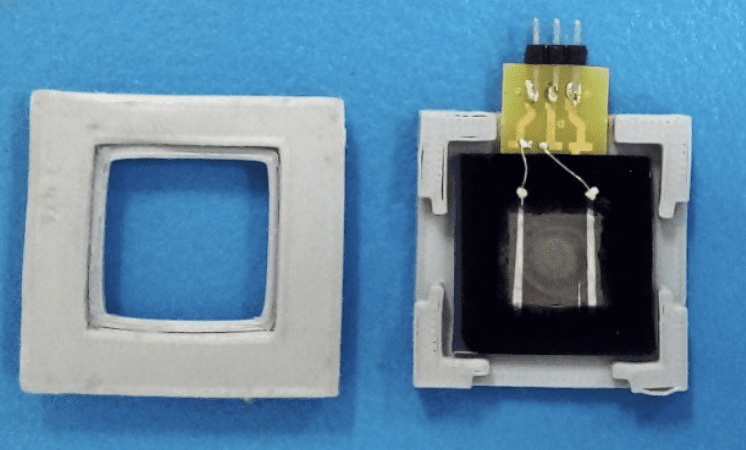
The electrodes of the field-effect transistor were made using thin-film deposition technique, and the detector was housed inside a simple packaging setup. The device showed promising response with X-rays of energy 2040 KeV at room temperature, with various incoming fluxes of X-ray photons. The response curve of the device demonstrated linear response with increasing X-ray energy and current.
The team’s findings have significant implications for space exploration, as a lightweight portable radiation detector can find application in scientific exploratory missions. Graphene and its derivatives, such as rGO, show excellent mechanical and electrical properties, making them suitable for fabricating light-weight portable devices.
Publication details: “Development of a Reduced Graphene Oxide-Based X-Ray Detector for Space Applications”
Publication Date: 2024-04-01
Authors: G Anshika, Govindaraju Shruthi, V. Koushal, S M Kruthika, et al.
Source: Proceedings of the World Congress on Recent Advances in Nanotechnology
DOI: https://doi.org/10.11159/icnnfc24.106