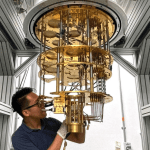
Three research projects involving QuEra Computing, a leader in neutral-atom quantum computing, have advanced to Phase Two of Wellcome Leap’s Quantum for Bio Challenge. This prestigious program focuses on developing biology and healthcare applications that will benefit from emerging quantum computers. The projects, led by top institutions such as Harvard University, MIT, and the University of Nottingham, aim to harness the power of quantum computing to tackle complex scientific fields like drug discovery and biological processes.
QuEra’s neutral-atom quantum computers offer a promising path to large-scale, fault-tolerant quantum computing. The company’s technology has been publicly accessible since November 2022 and is built to integrate seamlessly with classical computing infrastructure. Key individuals involved in the projects include Jonathan Hirst, a Royal Academy of Engineering Chair in Emerging Technologies, and Nathan Gemelke, co-founder and Chief Technology Strategist at QuEra Computing.
The three projects focus on using quantum computing to accelerate drug discovery, simulate biological processes, and analyze protein interactions related to diseases like Alzheimer’s and Parkinson’s. As the teams move into Phase Two, they will perform large-scale classical simulations of their developed algorithms, paving the way for demonstrating the practical impact of quantum algorithms in real-world applications.
Quantum Computing for Healthcare and Biology Applications: A Leap Forward
The intersection of quantum computing and healthcare has the potential to revolutionize medicine. Recently, three research projects involving QuEra Computing advanced to Phase Two of Wellcome Leap’s Quantum for Bio Challenge, a prestigious program focused on developing biology and healthcare applications that can benefit from emerging quantum computers. This milestone demonstrates the significance of QuEra’s neutral-atom quantum computing contributions in complex scientific fields.
The Quantum for Bio Challenge: A Brief Overview
Wellcome Leap’s Quantum for Bio Challenge is a multidisciplinary program aimed at identifying, developing, and demonstrating biology and healthcare applications that can harness the power of quantum computers expected to emerge in the next three to five years. Up to $40 million in research funding is being awarded to teams, with up to $10 million in challenge prizes available at the end of the program for successful proof-of-concept demonstrations on quantum devices with a clear path to scaling.
Phase One: Quantum Algorithm Development
The focus of Phase One was quantum algorithm development. The technical progress and deliverables were evaluated and tracked by the Wellcome Leap Quantum for Bio Program Director and an expert internal technical team. Eight teams from the original 12 advanced to Phase Two, demonstrating significant advances for human health within defined target resources.
Phase Two: Large-Scale Simulations
The focus of Phase Two is large-scale simulations of developed algorithms using classical high-performance computing (HPC). To complete Phase Two, teams will perform a classical HPC simulation of their quantum algorithm for 30 to 40 qubits and compare the results to those obtained by standard classical approaches for respective applications. All teams must identify and secure quantum computing expertise to bridge the gap between theoretical research and impactful medical breakthroughs.
QuEra Computing: A Leader in Neutral-Atom Quantum Computing
QuEra Computing is a pioneer in commercializing quantum computers using neutral atoms, widely recognized as a highly promising quantum computing modality. Based in Boston and built on pioneering research from Harvard University and MIT, QuEra operates the world’s largest publicly accessible quantum computer, available over a major public cloud and for on-premises delivery.
Three Transformative Projects
Three projects have advanced to Phase Two of the Quantum for Bio Challenge, leveraging QuEra Computing’s neutral-atom quantum computing expertise:
- Accelerating Drug Discovery Using Programmable Quantum Simulation: Led by Harvard University, MIT, and QuEra, this project aims to develop and scalably implement quantum simulation algorithms that can accelerate computer-aided drug discovery.
- Quanta-Bind: Demystifying Proteins: This project, led by qBraid, with partners MIT, University of Chicago, North Carolina A&T, Argonne National Lab, and QuEra, aims to harness the potential of quantum computing for analyzing biological processes to improve human health.
- Demonstrating Quantum Computing for Myotonic Dystrophy: Led by a team including Jonathan Hirst, this project will demonstrate how quantum computing can tackle the crucial task of drug discovery for myotonic dystrophy, a genetic condition that causes progressive muscle weakness and wasting.
The Future of Healthcare: A Quantum Leap
As these projects progress, they have the potential to revolutionize the field of medicine. By bridging the gap between theoretical quantum research and impactful medical breakthroughs, QuEra Computing and its collaborators are poised to accelerate the discovery of new drugs and unravel the complexities of human health at an unprecedented scale.
External Link: Click Here For More