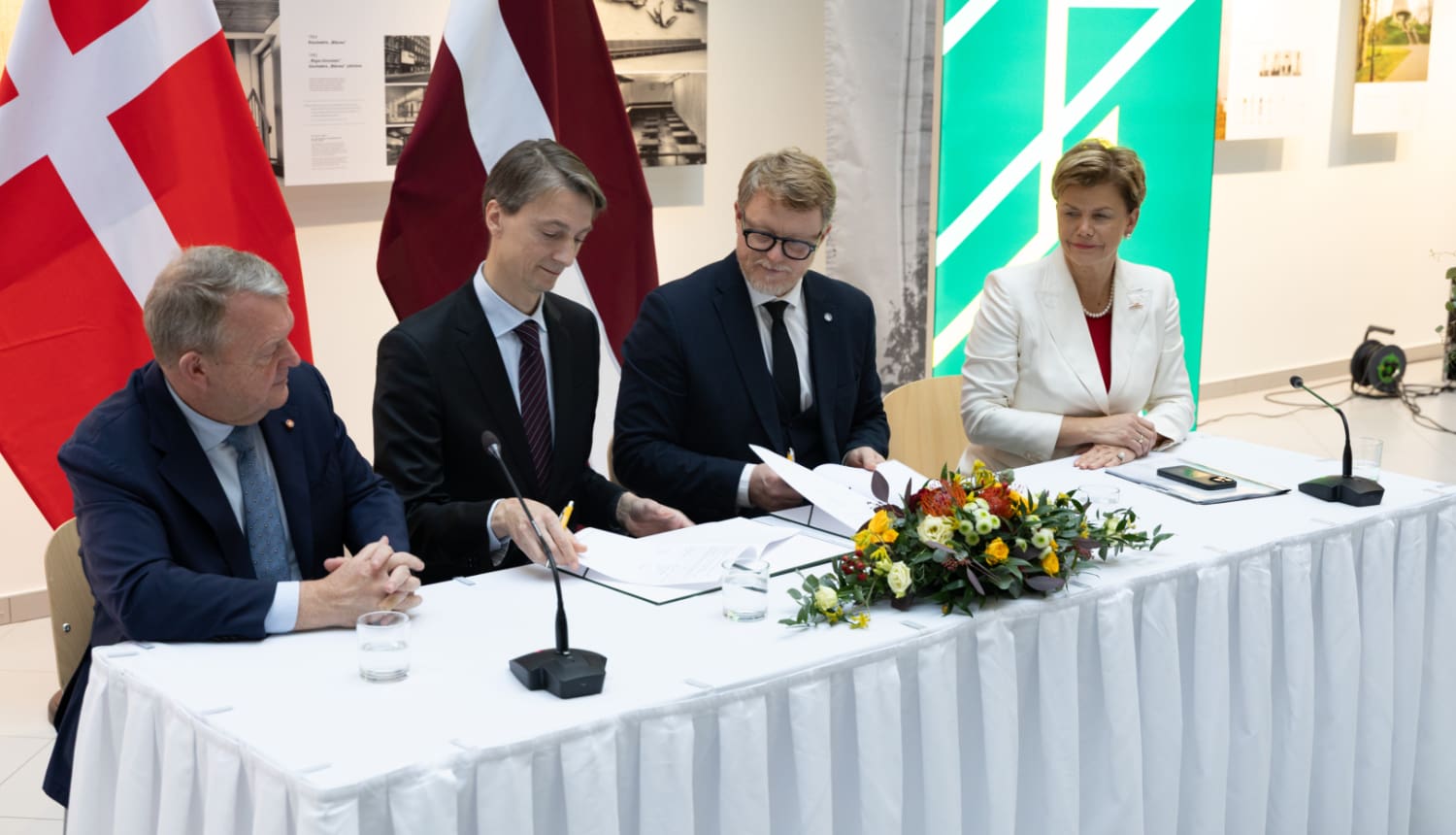
The future of secure communication and technological innovation took a significant leap forward today as Riga Technical University and the Niels Bohr Institute formalized a groundbreaking partnership. Signed in the presence of Latvian and Danish Foreign Ministers, this Memorandum of Understanding will foster collaboration in the rapidly evolving field of quantum technologies, a domain poised to reshape industries from finance to defense.
This alliance isn’t just about scientific advancement; it solidifies Latvia and Denmark’s position at the forefront of the EU’s Quantum Internet Strategy and promises to accelerate the development of critical technologies, including enhanced security measures against emerging hybrid threats and independent navigation systems, in an increasingly complex geopolitical landscape.
Latvia & Denmark Future Collaboration
Latvia’s burgeoning expertise in quantum technologies, specifically in the development of quantum algorithms, sensors, and communications, forms the bedrock of this strengthened partnership with Denmark, promising not only scientific advancement but a tangible boost to regional security. The assertion that up to 20% of the world’s quantum algorithms originate from Latvian professors underscores a disproportionately significant contribution from a nation rapidly establishing itself as a quantum hub. This isn’t merely theoretical prowess; Latvia’s implementation of a national quantum-secure communication network represents a pioneering step within the Baltic states and a practical demonstration of its commitment to safeguarding critical infrastructure. The collaboration with the Niels Bohr Institute will focus on translating these advancements into real-world applications, extending beyond fundamental research to encompass practical projects and commercialization, a key priority highlighted by Foreign Minister Braže.
A crucial aspect of this collaboration lies in addressing vulnerabilities in critical infrastructure, particularly regarding navigation and communication. The ability to maintain independent navigation capabilities in the face of GPS interference, vital for both civilian and military applications, and proactively predict and mitigate threats to undersea cables are paramount concerns in the current geopolitical climate. These capabilities, bolstered by quantum-enhanced sensing and communication, directly address emerging hybrid threats and enhance Latvia and Denmark’s collective resilience. The partnership also aims to capitalize on Latvia’s hosting of QIP 2026, the world’s largest annual Quantum Information Processing Conference, to further solidify its position as a leading center for quantum research and attract international collaboration. Furthermore, the alignment of Latvian and Danish efforts within the EU Quantum Internet Strategy and NATO frameworks underscores a commitment to a unified approach to quantum security.
The discussion between Foreign Ministers Braže and Rasmussen extended beyond quantum technologies to encompass broader regional security concerns, including Denmark’s contributions to NATO’s multinational brigade in Ādaži and its support for Ukraine, demonstrating a holistic approach to safeguarding the Baltic region. This collaboration, therefore, isn’t isolated to scientific pursuits; it is intricately linked to a broader strategy of strengthening collective defense capabilities and fostering a more secure and resilient future for both nations and their allies, positioning them at the forefront of innovation and security in the evolving technological landscape. The focus on practical application, coupled with Latvia’s established strengths and Denmark’s contributions to regional security, creates a synergistic relationship poised to deliver significant advancements in quantum technology and its strategic implications.