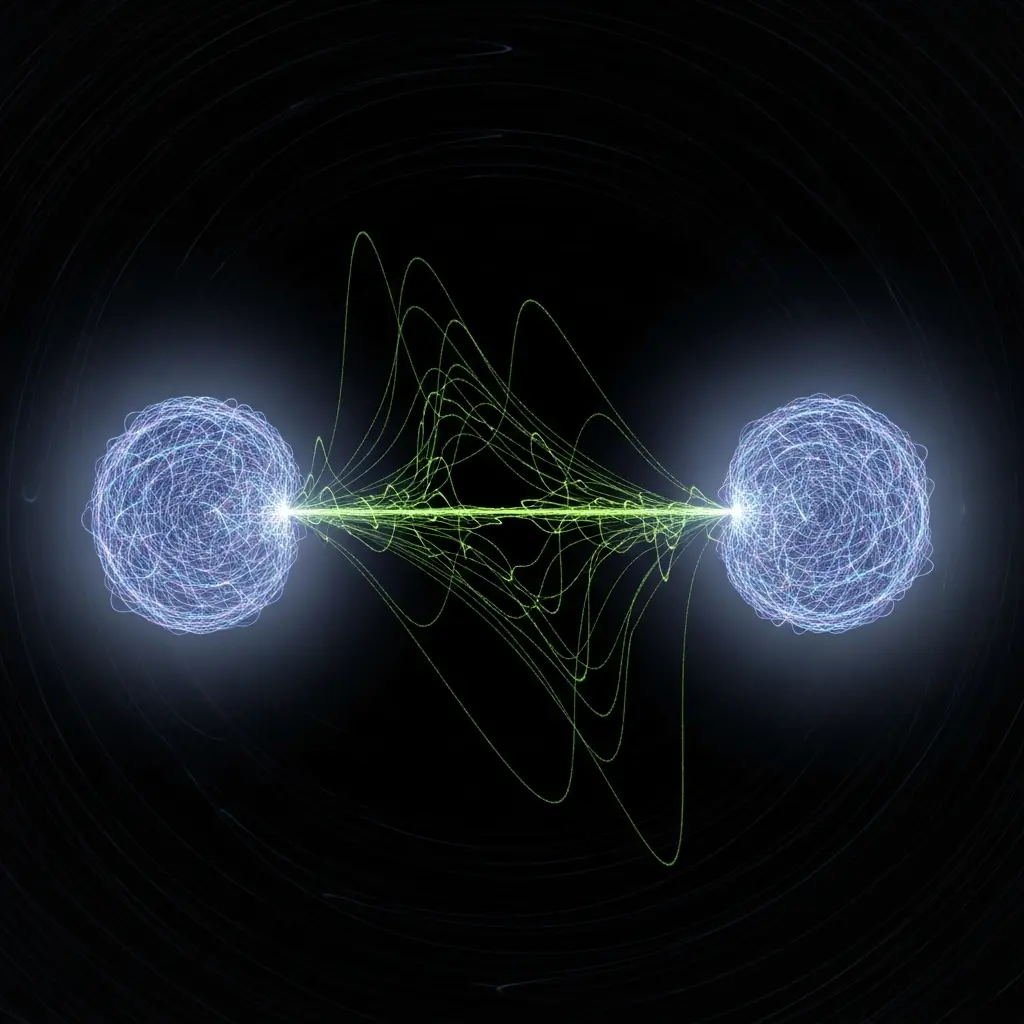
Energy Teleportation, a revolutionary concept enabling the harnessing of vacuum energy via entanglement and classical communication, faces significant hurdles in real-world application. M. Y. Abd-Rabbou, Irfan Siddique (University of Chinese Academy of Sciences), and Saeed Haddadi (Institute for Research in Fundamental Sciences) , alongside Cong-Feng Qiao et al , tackle the problem of scalability in gapped many-body systems, where energy extraction is typically limited to minuscule distances. Their research, focused on the one-dimensional anisotropic XY model, demonstrates that a novel hierarchical repeater architecture, utilising heralded entanglement and purification, dramatically improves the feasibility of long-range Quantum Energy Teleportation. Crucially, this innovative approach shifts resource scaling from exponential to polynomial, proving , for the first time , that activating vacuum energy over arbitrary distances is physically possible and computationally tractable, opening doors for remote control and resource distribution rather than net energy gain.
Initially, researchers rigorously characterised a monolithic measurement-induced strategy, revealing that while bulk Projective measurements could theoretically induce long-range couplings, the associated thermodynamic costs diverge exponentially and success probabilities vanish. This analysis highlighted the inherent limitations of direct measurement approaches for extending QET range, as the energy required to maintain fidelity rapidly exceeds the energy that can be retrieved. By strategically segmenting the communication channel, the team effectively decoupled the extraction distance from the limitations of ground-state correlation lengths.
Experiments show this architecture fundamentally alters the operational resource scaling, transitioning from an impractical exponential requirement to a manageable polynomial one. The study establishes a comprehensive blueprint for scalable long-range QET, detailing the complete implementation of this protocol and showcasing its versatility across various physical systems, including cold-atom ensembles, continuous-variable systems, and microwave domains. By optimising network topology and minimising entanglement consumption, the team ensures a polynomial resource overhead, making long-range energy extraction thermodynamically viable. This work represents a paradigm shift in quantum energy networks, offering a robust and scalable solution. c. ) + γ(c† jc† j+1 + h. c. ) i + 2h N X j=1 c† jcj.
This quadratic form is pivotal, as it demonstrates the system’s ground state is a fermionic Gaussian state, allowing all ground-state properties to be efficiently computed using the covariance matrix formalism. Researchers then established the magnitude of two-point correlations between the sender and receiver as the primary resource for QET, rigorously deriving the asymptotic behavior of the longitudinal correlation function, Cxx(N) = ⟨g|σx 1 σx N|g⟩, where |g⟩ is the ground state. The team expressed the two-spin operator as σx 1 σx N = A1 N−1 Y l=1 (i Al Bl) . AN, where Aj = c† j+cj and Bj = i(c† j−cj) are Majorana operators, and evaluated the expectation value using Wick’s theorem, reducing the problem to computing the Pfaffian of a matrix of two-point contractions.
This simplification yielded a determinant of an (N −1)×(N −1) Toeplitz matrix T, defined as Cxx(N) = (−1)N−1 det(T). Analysis of the system’s excitation spectrum, given by εk = 2 p (h −cos k)2 + (γ sin k)2, revealed a finite energy gap ∆= 2(h−1) at k = 0 in the paramagnetic phase (h 1), suppressing low-energy fluctuations and dictating the decay behavior of ground-state correlations. The study demonstrated that the correlation magnitude decays exponentially with distance N, as |Cxx(N)| ∼e−N/ξ, where ξ is the correlation length, derived as ξ−1 = ln h + p h2 + γ2 −1 1 + γ.
Vacuum energy activation via polynomial scaling
Scientists have achieved a breakthrough in energy teleportation (QET), demonstrating a scalable protocol for activating local vacuum energy at arbitrary distances. The research addresses a fundamental limitation of gapped many-body systems, the exponential clustering of ground-state correlations, by introducing a hierarchical repeater architecture. The team meticulously characterised a measurement-induced strategy, initially finding that bulk projective measurements, while theoretically capable of inducing long-range couplings, were rendered impractical due to exponentially diverging costs and vanishing success probabilities. Results demonstrate a dramatic improvement in time and energy costs when compared to standard and monolithic protocols.
Further analysis of the final output, presented in Figure 8, reveals the thermodynamic efficiency and average extractable energy. The study establishes that only the full repeater architecture systematically addresses the exponential barriers of time, fidelity, and probability, providing a truly scalable and physically viable blueprint for long-range QET. Table I summarises the asymptotic scaling laws, highlighting the polynomial scaling of the repeater protocol for time, energy, efficiency, and final yield, unlike the exponential scaling observed in the other approaches.,.
Hierarchical Repeaters Enable Long-Range Quantum Teleportation by mitigating
By segmenting the total distance into manageable links and connecting them via entanglement swapping, the team circumvented the prohibitive costs associated with direct, monolithic approaches to long-range entanglement. The authors acknowledge that the success of this protocol relies on the availability of quantum memories capable of storing entangled qubits with high fidelity for durations exceeding the entanglement generation time. Future research directions could explore optimising the parameters of the repeater architecture, such as segment length and purification protocols, to further reduce resource requirements. While this work doesn’t offer a pathway to limitless energy, it represents a significant theoretical advance, demonstrating a pathway towards practical long-range quantum communication and control applications.
👉 More information
🗞 Scalable Repeater Architecture for Long-Range Quantum Energy Teleportation in Gapped Systems
🧠 ArXiv: https://arxiv.org/abs/2601.18327