The pursuit of more efficient artificial intelligence increasingly focuses on architectures that mimic the brain’s inherent processing capabilities, combining the temporal efficiency of neuromorphic computing with the computational power of quantum mechanics. Researchers are now exploring methods to integrate these distinct approaches, overcoming limitations inherent in existing models that rely on classical memory and training techniques. A team led by Jiechen Chen, Bipin Rajendran, and Osvaldo Simeone, all from the Centre for Intelligent Information Processing Systems at King’s College London, details a novel approach in their paper, “Stochastic Quantum Spiking Neural Networks with Quantum Memory and Local Learning”. Their work proposes a stochastic quantum spiking neuron model utilising multi-qubit circuits to create a spiking unit with internal memory, enabling probabilistic spike generation and a hardware-friendly local learning rule that circumvents the need for conventional backpropagation. This fusion of neuromorphic and quantum principles aims to create modular, scalable, and trainable spiking neural networks suitable for implementation on dedicated hardware.
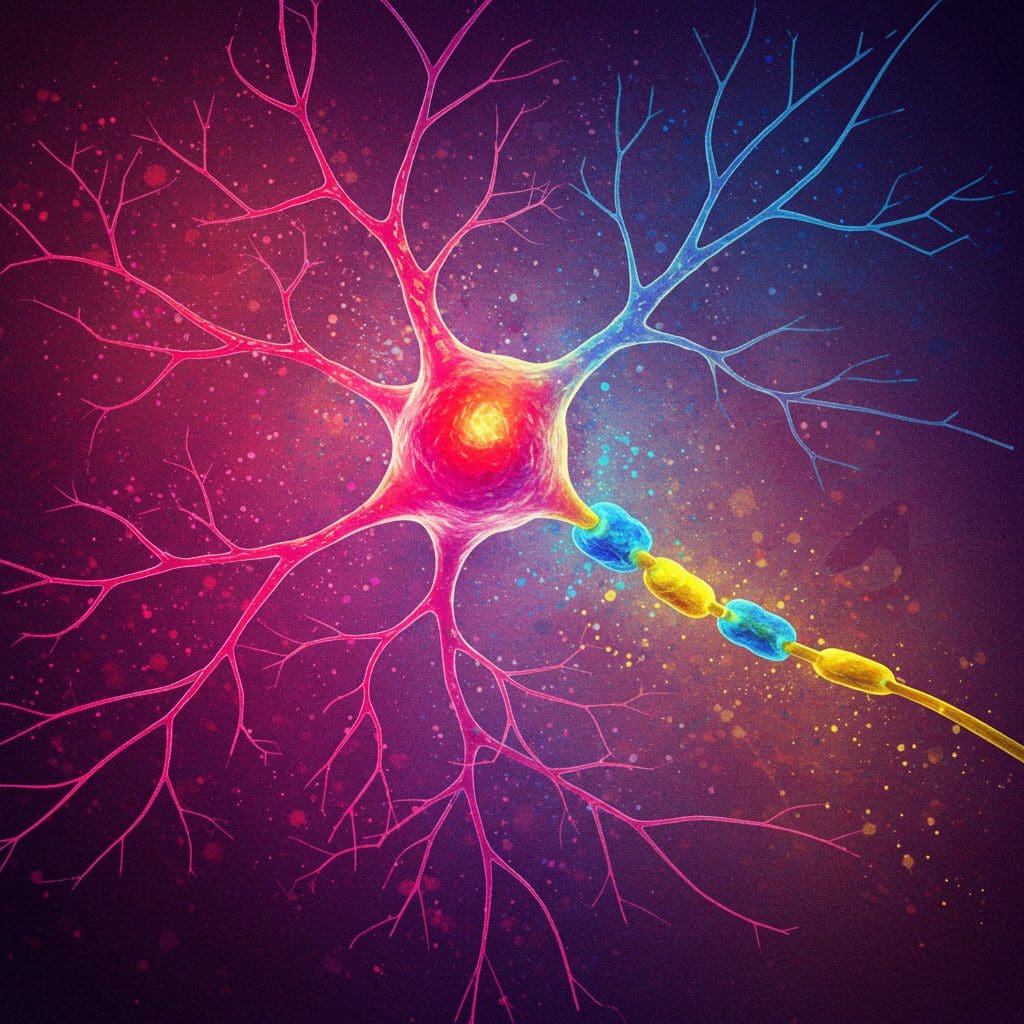
The stochastic quantum-inspired spiking neural network (SQSNN) represents a departure from conventional computational models, integrating concepts from quantum mechanics with the energy efficiency observed in biological neural systems. Unlike artificial neural networks reliant on continuous values, SQSNN utilises spiking neurons, which communicate via discrete pulses, mirroring the behaviour of neurons in the brain. A key innovation lies in the implementation of multi-qubit memory within each spiking neuron, enabling probabilistic processing with a single pass and potentially reducing computational demands compared to traditional spiking neural networks.
Energy efficiency stems from event-driven processing, a characteristic of biological systems in which neurons activate only when they receive sufficient input. This contrasts with conventional computing, which consumes power regardless of activity. The network’s architecture, therefore, aims to minimise unnecessary computations, offering a potential advantage in power-constrained applications.
Training SQSNN employs a local learning rule, meaning each neuron adjusts its parameters based on local information, eliminating the need for computationally expensive global backpropagation, a standard technique in deep learning. This simplification is particularly advantageous for implementation on neuromorphic hardware, specialised chips designed to mimic the structure and function of the brain. To address the non-differentiability of spiking signals – spikes are discrete events and therefore lack a continuous gradient – a surrogate gradient method is used, approximating the gradient to facilitate learning.
Performance is quantified using a cross-entropy loss function, which measures the difference between the network’s predicted spike rates and the desired outputs. This metric provides a robust measure of accuracy and guides the optimisation of network parameters during training. Initial results demonstrate promising performance on benchmark datasets, achieving high accuracy in image recognition tasks.
Future research concentrates on a detailed quantification of the gains in accuracy, latency, and energy efficiency achieved by SQSNN compared to existing architectures. Investigating the network’s resilience to noise and its capacity to generalise to previously unseen data are also crucial areas of exploration. The modular and scalable design of SQSNN positions it as a potential building block for large-scale, energy-efficient artificial intelligence systems capable of processing complex, time-varying data streams, with potential applications in robotics, computer vision, and natural language processing.
👉 More information
🗞 Stochastic Quantum Spiking Neural Networks with Quantum Memory and Local Learning
🧠 DOI: https://doi.org/10.48550/arXiv.2506.21324