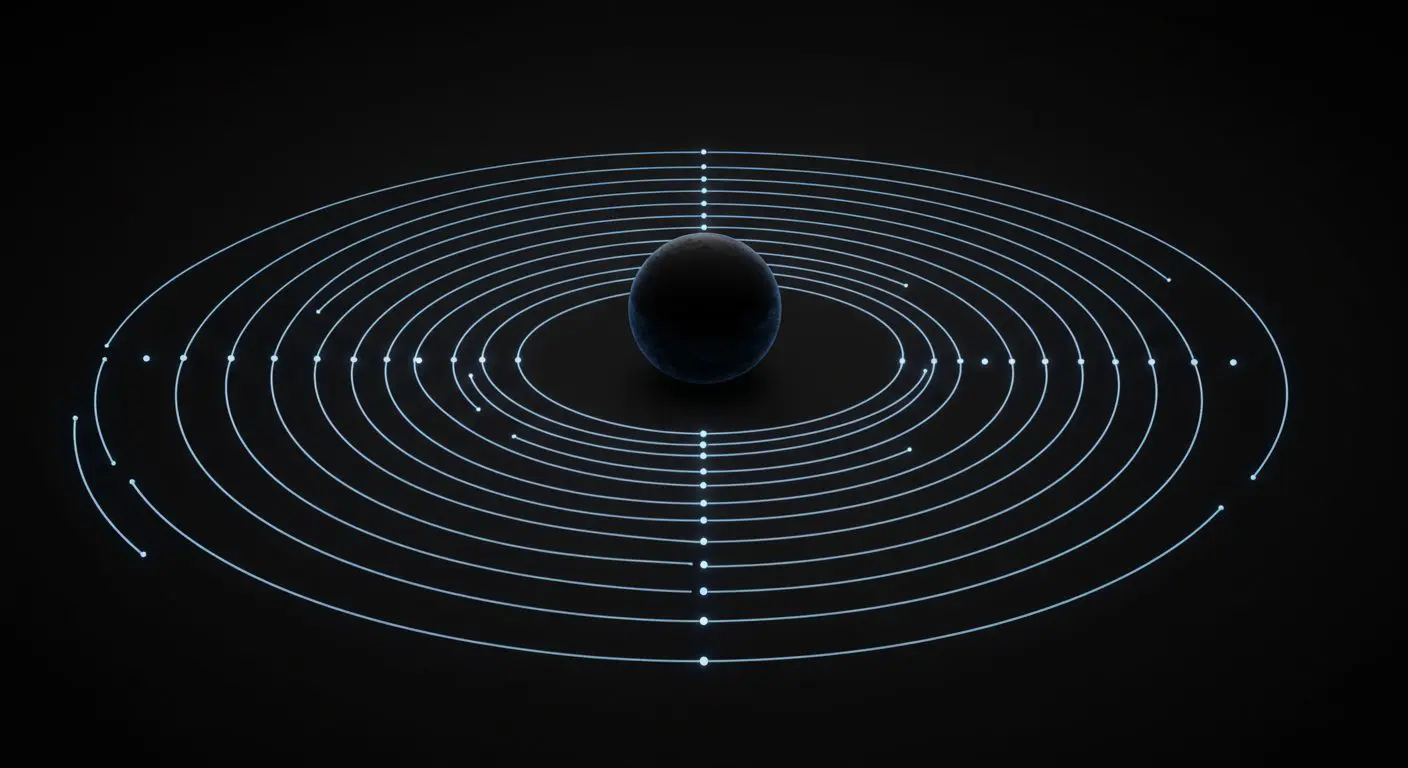
Recent progress in tabletop experiments offers the opportunity to demonstrate, for the first time, that gravity is not fully described by classical physics. Current experimental proposals, such as generating gravitationally induced entanglement, can currently be explained using the Newtonian potential, a simplification consistent with weak gravitational fields. This limits the ability to draw firm conclusions about the fundamental nature of gravity itself.
Quantum Gravity’s Measurable Experimental Consequences
This work aims to move beyond the standard Newtonian picture of gravity and explore genuinely quantum effects, specifically identifying measurable consequences that could confirm a quantum theory of gravity. Researchers are not simply seeking theoretical consistency, but predictions that can be tested through carefully designed experiments. They employ an effective field theory approach, treating general relativity as a valid approximation at low energies and adding quantum corrections to account for fluctuations at a fundamental level. This allows them to make predictions without a complete theory of quantum gravity.
Central to this approach is the stress-energy tensor, which describes the distribution of energy and momentum in spacetime, and the Hamiltonian, representing the total energy of the system. By manipulating these concepts, researchers identify quantum corrections to the gravitational interaction. Mathematical techniques, such as Gaussian approximations, simplify complex calculations, while understanding decoherence, the loss of quantum properties, is crucial for interpreting experimental results. The team also investigates concepts like the Schwinger term, a quantum correction to energy density. The research focuses on calculating corrections to gravity that extend beyond the Newtonian formula, deriving a modified Hamiltonian that incorporates these quantum effects.
The goal is to identify effects large enough to be detected in experiments, particularly those related to decoherence and subtle corrections to the gravitational force. This work isn’t purely theoretical; it’s designed to guide the development of experiments using levitated nanoparticles, optomechanical techniques, and precision measurements to search for deviations from classical gravity. This research is significant because it attempts to move beyond theoretical discussions and towards experimental verification of quantum gravity. By identifying measurable effects and bridging the gap between theory and experiment, it offers the potential for breakthroughs in our understanding of gravity and the quantum world. While the work is highly technical and the predicted effects are likely small, it represents a crucial step towards testing fundamental physics at the quantum level.
Delocalized Sources Reveal Quantum Gravity Signatures
Researchers have identified two novel effects within linearised quantum gravity that offer more substantial evidence for testing whether gravity is inherently quantum. These findings address a key challenge, as observing gravitationally induced entanglement alone is insufficient to prove quantum gravity due to the possibility of classical explanations. The team demonstrates that existing proposals rely on assumptions about gravity acting as a mediator, which are difficult to verify experimentally, and that the Newtonian limit can explain entanglement without invoking quantum features. The breakthrough centers on analyzing scenarios using delocalized sources of gravity and examining their gravitational interaction.
Researchers found that when two quantum sources are widely separated, their interaction deviates from classical predictions, suggesting a need for a quantum description of gravity. Furthermore, they investigated a scenario involving a source and a moving test particle, revealing that a quantum property known as the commutator between the gravitational field and its momentum appears in the relative phase accumulated during time evolution, a phenomenon not predicted by classical gravity. This discovery is significant because it contrasts with the expectation that such quantum properties are only relevant at extremely high energy scales, indicating that quantum effects may be observable in more accessible regimes. Observing either of these effects, the interaction of delocalized sources or the phase shift due to the commutator, would provide a crucial test of the quantum nature of gravity, opening a new window for exploring quantum effects in gravitational systems and potentially revolutionising our understanding of the universe.
Quantum Gravity Effects From Source Interactions
This research presents new theoretical predictions derived from linearised quantum gravity, identifying two specific effects that could provide stronger evidence for the quantum nature of gravity than existing experimental approaches. The team demonstrates that interactions between quantum sources of gravity, particularly those in wide Gaussian states, cannot be explained using the classical Newton potential or any known classical gravity theory. Furthermore, they predict a unique quantum property, the commutator, between the gravitational field and its momentum, which manifests as an additional phase shift when a quantum source interacts with a test particle. These findings are significant because current experiments aiming to detect quantum gravity effects often rely on the Newtonian approximation, limiting the conclusions that can be drawn about gravity’s fundamental nature. By identifying effects independent of the Newtonian potential and graviton emission, this work offers pathways to design experiments that more directly probe the quantum aspects of gravity. While demonstrating these effects experimentally will be challenging, the predictions are crucial for planning a new generation of tabletop experiments capable of testing quantum gravity in a broader and more definitive way.
🗞 Quantum Effects in Gravity Beyond the Newton Potential from a Delocalized Quantum Source
🧠 DOI: http://link.aps.org/doi/10.1103/hl1c-t8z9