
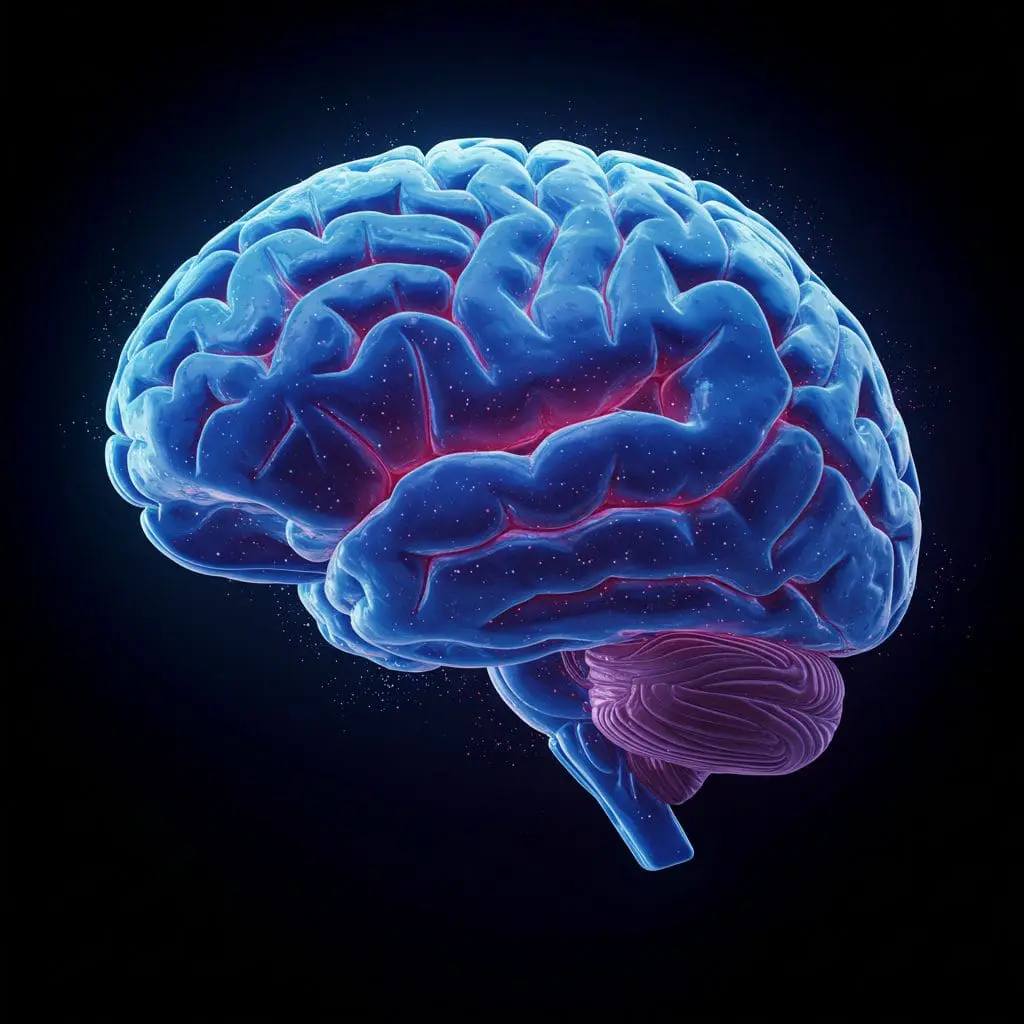
The exploration of quantum mechanics in relation to consciousness is intriguing yet speculative. Quantum mechanics governs particles like electrons and photons, introducing concepts such as probabilities and wave functions. The observer effect suggests that measurement alters particle states, leading some to speculate about consciousness influencing reality at a quantum level. However, this idea faces significant skepticism within the scientific community.
The Orchestrated Objective Reduction (Orch OR) hypothesis by Roger Penrose and Stuart Hameroff proposes that microtubules in brain neurons maintain quantum states affecting consciousness. Despite its appeal, challenges remain, particularly regarding maintaining quantum coherence in the brain’s warm, wet environment—a process known as decoherence.
Experimental attempts to test these ideas have encountered difficulties. While some studies suggest human intention could affect quantum states, replication issues raise doubts about reliability. Physicists like Eugene Wigner and David Deutsch hold differing views on consciousness’s role in quantum mechanics. Testing these ideas empirically is challenging due to the subjective nature of consciousness and individual variability.
Mainstream physicists generally reject this view, with experiments suggesting such a link not widely validated. This remains more of a philosophical discussion than a scientific one at present, highlighting the need for further research to bridge the gap between theory and evidence.
The Role Of Observation In Quantum States
The exploration of quantum mechanics in relation to consciousness presents a fascinating yet complex interplay between physics and philosophy. At its core, quantum mechanics describes the behavior of particles at an infinitesimal scale, where phenomena like superposition allow particles to exist in multiple states simultaneously until observed. This concept challenges classical notions of reality, suggesting that observation might influence the state of particles.
The Copenhagen interpretation posits that the act of measurement collapses a particle’s wave function into a definite state, introducing the observer effect. While this doesn’t necessarily imply consciousness itself causes collapse, it does raise questions about the role of awareness in physical processes. Schrödinger’s cat thought experiment vividly illustrates this paradox, highlighting how quantum states can exist in superposition until observed.
Quantum entanglement, where particles remain interconnected regardless of distance, has led some to speculate about non-local aspects of consciousness. However, theories like Penrose and Hameroff’s Orch-OR model, which links quantum processes in microtubules to consciousness, face skepticism due to a lack of empirical verification. The scientific community remains divided on these ideas, with many favoring alternative interpretations such as the many-worlds theory, which eliminates the need for collapse or an observer effect.
In experiments like the double-slit experiment, particles exhibit different behaviors when observed versus unobserved, leading some to suggest consciousness influences reality. Yet, most physicists attribute this to measurement disturbances rather than consciousness itself. This distinction underscores the importance of distinguishing between philosophical musings and scientifically verifiable claims.
Ultimately, while theories proposing a link between quantum mechanics and consciousness offer intriguing possibilities, they remain controversial and lack robust empirical support. Different interpretations of quantum mechanics lead to varying conclusions about consciousness’s role, emphasizing the need for critical evaluation and further research in this area.
Consciousness As The Collapse Mechanism
The exploration of quantum mechanics and consciousness presents an intriguing hypothesis: that consciousness might influence the behavior of particles at the quantum level. This idea is rooted in the concept of wave function collapse, where a particle’s position becomes defined upon measurement. The Copenhagen interpretation suggests that this collapse occurs due to measurement, potentially involving consciousness. However, alternative interpretations, such as the many-worlds theory, propose that all outcomes occur without collapse, challenging the necessity of consciousness.
The hypothesis faces significant challenges, particularly in scientific testing. While experiments demonstrate quantum effects using non-conscious detectors, this undermines the argument for consciousness-induced collapse. The role of any interaction, not necessarily conscious observation, suggests that environmental or system interactions might suffice for collapse.
Efforts to integrate quantum mechanics into neuroscience aim to explain brain functions, though these remain speculative without concrete evidence. The references cited, including works by Roger Penrose and foundational quantum texts, provide a basis but may lack recent developments. Thus, while the hypothesis is compelling, it remains unproven and controversial within the scientific community.
In summary, the idea that consciousness causes wave function collapse is an intriguing yet unverified proposition. It faces theoretical and experimental challenges, with alternative explanations and lack of consensus highlighting the need for further research.
Neuronal Quantum Coherence And Cognition
Proponents argue that quantum processes within the brain could provide a physical basis for subjective experience, while critics maintain that such claims lack empirical support and are often speculative.
One prominent theory is the Orchestrated Objective Reduction (Orch-OR) model proposed by Roger Penrose and Stuart Hameroff. This hypothesis suggests that consciousness arises from quantum computations occurring in microtubules within neurons. According to this model, these quantum states could survive long enough to influence neural activity, potentially explaining phenomena like perception and decision-making.
However, significant challenges remain. Quantum coherence is highly sensitive to environmental interference, a process known as decoherence. In the brain’s warm, wet environment, maintaining the delicate quantum states required for Orch-OR seems implausible. Critics argue that such conditions would lead to rapid disruption of any potential quantum processes, rendering them irrelevant to cognition.
Despite these challenges, some researchers continue to explore the possibility of quantum effects in biological systems. For instance, studies on photosynthesis and bird navigation have demonstrated that quantum coherence can play a role in certain biological processes. While these findings do not directly support quantum consciousness, they highlight the potential for quantum phenomena to influence complex systems under specific conditions.
Recent experimental work has attempted to test aspects of the Orch-OR hypothesis by examining the behavior of microtubules under controlled conditions. While some studies have reported evidence of quantum-like effects, others have failed to replicate these results, leaving the validity of the theory in question. As such, while the idea of quantum mechanics providing a physical basis for consciousness remains fascinating, it continues to be met with skepticism and requires further rigorous investigation.
Microtubule Quantum Computing In The Brain
Roger Penrose and Stuart Hameroff proposed the theory of microtubule-based quantum computing in the brain as part of their Orchestrated Objective Reduction (Orch-OR) theory. This theory suggests that microtubules within neurons maintain quantum states that influence consciousness. However, this hypothesis faces significant skepticism due to challenges such as maintaining quantum coherence in the brain’s warm and wet environment, a process known as decoherence.
Microtubules, integral components of the cell’s cytoskeleton, are primarily involved in structural support and intracellular transport. Their proposed role in quantum computing remains speculative, with no concrete experimental evidence supporting this theory. The idea that tubulin proteins within microtubules act as qubits is largely theoretical and lacks empirical backing.
Further scrutiny arises from the lack of clear connection between electromagnetic fields in the brain and consciousness, particularly in relation to quantum mechanics. Most neuroscientists instead focus on classical physics explanations, emphasizing neural networks and information processing as the basis for consciousness.
While the Orch-OR theory offers an intriguing perspective, it remains largely unproven. The scientific community predominantly relies on empirical evidence from classical physics models, which, despite not fully explaining consciousness, are more widely accepted. Thus, while the quantum consciousness hypothesis continues to be explored, it remains a topic of significant debate and skepticism within the scientific community.
Empirical Challenges And Testing Frameworks
The exploration of quantum mechanics in relation to consciousness presents an intriguing yet challenging field of study. Quantum mechanics, which governs the behavior of particles like electrons and photons, introduces concepts such as probabilities and wave functions. The observer effect, where measurement alters particle states, has led some to speculate that consciousness might influence reality at a quantum level.
However, this notion is met with skepticism. While experiments suggest human intention could affect quantum states, replication issues raise doubts about reliability. Physicist Eugene Wigner proposed consciousness in quantum measurement, but others like David Deutsch argue against it, viewing observers as part of the quantum system.
Considering consciousness as a physical process aligns with materialism, where mind arises from physical processes. Testing these ideas empirically is difficult due to the subjective nature of consciousness and individual variability. Some researchers use random number generators to test intention’s influence, but methodological issues and statistical concerns undermine these studies.
In conclusion, while the connection between quantum mechanics and consciousness is captivating, it lacks rigorous empirical support. Mainstream physicists generally reject this view, with experiments suggesting such a link not widely validated. This remains more of a philosophical discussion than a scientific one at present.