

The pursuit of higher-temperature superconductivity continually drives materials science, and recent attention has focused on iron-based superconductors exhibiting multiple superconducting phases. Wei, Qiang Hou, and Jiajia Feng, along with colleagues at various institutions, investigate the critical current density in iron selenide-based materials, uncovering a surprising relationship between superconductivity and subtle changes in material composition. Their work reveals three distinct peaks in current-carrying capacity within the two superconducting phases, with particularly sharp increases occurring at the boundaries between different material states. This discovery not only enhances understanding of how superconductivity arises in these complex materials, but also suggests the potential for a hidden ordered phase beneath the superconducting dome, opening new avenues for exploring the fundamental limits of current flow and potentially leading to more efficient superconducting technologies.
The team investigated how this current-carrying capacity behaves near quantum critical points, transitions between different quantum states of matter, employing experimental techniques to measure magnetic properties and critical current density under varying conditions. This improvement stems from the suppression of vortex pinning, a phenomenon that typically limits the current-carrying capacity of superconductors. By tuning the material close to a quantum phase transition, the researchers effectively reduced the density of pinning centres, enabling a more efficient flow of superconducting current. The findings reveal a strong correlation between proximity to the quantum critical point and the magnitude of the critical current density enhancement, providing valuable insights into the fundamental physics of high-temperature superconductivity and offering a pathway for developing advanced superconducting materials with improved performance. Manipulating the critical current density near quantum critical points opens possibilities for designing more efficient superconducting devices, such as high-field magnets and lossless power transmission lines.
FeSe Crystal Growth and Resistivity Measurements
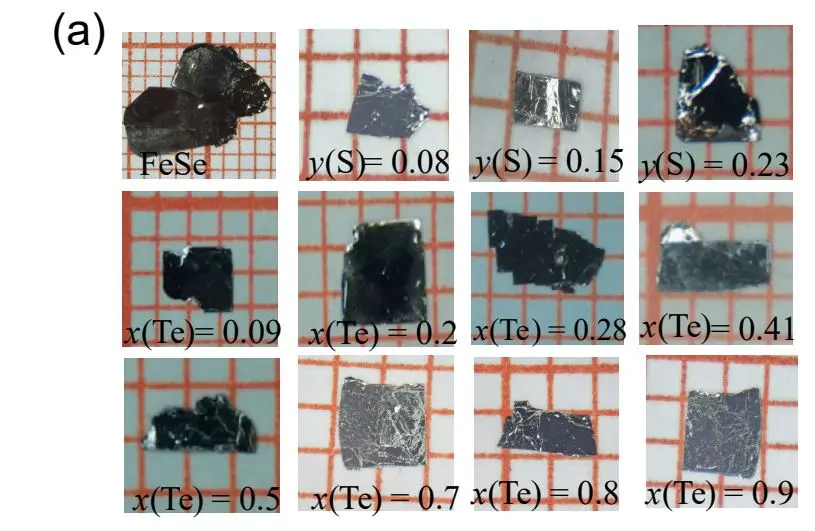
To investigate the interplay between two superconducting regions and their associated spin density wave order in FeSe, the researchers grew high-quality single crystals of FeSe using a self-flux method with a precise iron-to-selenium ratio. These crystals, measuring approximately 1x1x0. 2 mm³, underwent thorough characterisation using x-ray diffraction to confirm their structural integrity and phase purity. Electrical resistivity measurements, performed using a standard four-probe technique down to 0. 4 K and under magnetic fields up to 9 Tesla, allowed the team to measure resistance as a function of temperature. Magnetic susceptibility measurements, conducted using a superconducting quantum interference device under similar conditions, fully characterised the material’s magnetic properties. Raman spectroscopy, employing a 532nm laser, probed the lattice dynamics and identified structural phase transitions, while Lorentz transmission electron microscopy directly observed the spin density wave order and its spatial modulation at both 300 K and 10 K.
Superconducting Current Density in Iron Selenides
The research presents a comprehensive investigation of the transport properties of iron-based materials, specifically FeSe compounds doped with tellurium or sulfur. The study explores how these materials behave under different temperatures and magnetic fields, crucial for understanding their superconducting properties and potential applications. The data shows that critical current density generally decreases with increasing magnetic field, and that different compositions exhibit different values and field dependencies, suggesting that composition influences the superconducting properties. The curves demonstrate typical behaviour for type-II superconductors, with a gradual decrease in critical current density as the field increases. Resistance measurements reveal that all samples transition from a metallic state at high temperatures to a superconducting state at low temperatures, with the superconducting transition temperature suppressed by the application of a magnetic field. A phase diagram showing the normalised critical current density as a function of normalised magnetic field and temperature provides a visual representation of the superconducting region and how it is affected by temperature and magnetic field, demonstrating that the composition of FeSe can be tuned to modify the superconducting properties.
Dual Nematicity Drives Superconducting Current Peaks
Researchers have successfully mapped the superconducting properties of iron-based materials, specifically FeSe compounds doped with tellurium or sulfur, revealing the existence of two distinct superconducting regions, each linked to a unique nematic critical point. A key finding is the observation of three peaks in the critical current density within these superconducting regions, with particularly sharp increases occurring at the boundaries of the nematic phases for both tellurium and sulfur-doped materials. The team investigated the factors influencing this enhanced current carrying capacity, exploring the roles of vortex pinning and quantum critical fluctuations. Their results demonstrate that quantum critical fluctuations play a crucial role in modulating the critical current density, establishing a clear relationship between critical fluctuations and superconductivity and providing initial evidence for the potential existence of a further, underlying critical point. Future research will likely focus on clarifying the role of structural domains and further exploring the nature of the potential underlying critical point.
🗞 Boost of critical current density near quantum critical points in FeSe-Based superconductors with two superconducting domes
🧠 ArXiv: https://arxiv.org/abs/2511.19050


