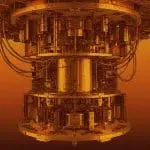

Rigetti’s Novera systems democratize quantum research access, enabling hands-on development of next-generation quantum technologies
The quantum computing industry reached a significant milestone this week as Rigetti Computing announced $5.7 million in purchase orders for two complete quantum computing systems, signaling a fundamental shift from cloud-based quantum access toward on-premises research capabilities. The orders for Rigetti’s 9-qubit Novera quantum processing units represent more than commercial success—they demonstrate quantum computing’s evolution from exclusive laboratory curiosities to practical research tools accessible to a broader scientific and industrial community.
The customers exemplify the expanding quantum ecosystem: an Asian technology manufacturing company seeking to develop internal quantum expertise and benchmark their own quantum technologies, and a California-based applied physics and artificial intelligence startup pursuing quantum hardware and error correction research. These diverse applications reflect quantum computing’s transition from pure research toward practical technology development across multiple industries and geographic regions.
Rigetti’s Novera systems represent a carefully engineered solution to one of quantum computing’s most persistent challenges: providing researchers with direct, hands-on access to quantum hardware for fundamental studies of qubit behavior, control system optimization, and algorithm development. Unlike cloud-based quantum computing services that provide remote access to shared systems, on-premises quantum computers enable researchers to modify experimental parameters, implement custom calibration protocols, and develop novel quantum control techniques impossible with restricted cloud access.
The 9-qubit configuration of the Novera systems might seem modest compared to IBM’s recent demonstrations of quantum computers with hundreds of qubits, but this specification reflects sophisticated understanding of quantum research requirements. For fundamental quantum computing research, manageable qubit counts enable comprehensive characterization of quantum phenomena without the overwhelming complexity of large-scale systems. Researchers can systematically study quantum entanglement patterns, optimize quantum gate implementations, and develop error mitigation strategies using systems small enough to analyze exhaustively.
The Ankaa-class architecture underlying the Novera systems incorporates several advanced design elements that distinguish it from earlier quantum processor generations. The square lattice arrangement of qubits provides each quantum bit with direct connections to multiple neighbors, enabling efficient implementation of two-qubit quantum gates essential for quantum algorithm execution. This connectivity pattern contrasts with linear qubit arrangements that limit algorithmic flexibility and require complex routing protocols for quantum circuits involving distant qubits.
Tunable couplers represent a particularly sophisticated aspect of the Ankaa architecture. Traditional fixed-coupling quantum processors suffer from always-on interactions between adjacent qubits, creating unwanted crosstalk that degrades quantum computation fidelity. Tunable couplers enable dynamic control over qubit-qubit interactions, allowing researchers to activate two-qubit gates when needed while isolating qubits during single-qubit operations and idle periods. This capability proves essential for implementing high-fidelity quantum circuits and studying fundamental limits of quantum coherence.
The complete system integration provided with Novera purchases addresses practical barriers that have historically limited quantum computing research access. Quantum processors require dilution refrigerators capable of achieving temperatures below 10 millikelvin—colder than interstellar space—to maintain the superconducting states essential for quantum operation. The control electronics must provide precise microwave pulses timed to femtosecond accuracy while filtering electromagnetic interference that could destroy fragile quantum states. Integrating these components requires expertise spanning quantum physics, cryogenic engineering, and high-frequency electronics.
Dr. Subodh Kulkarni, Rigetti’s CEO, emphasized the research implications: “The Novera QPU continues to be chosen and trusted by national labs and researchers across the world to advance quantum computing technology R&D.” This trust reflects not only technical capabilities but also the comprehensive support infrastructure necessary for productive quantum research, including calibration protocols, software development tools, and applications programming interfaces.
The research applications enabled by systems like Novera span fundamental and applied quantum computing domains. Understanding qubit operation involves characterizing quantum coherence times, measuring noise sources, and optimizing fabrication processes to improve quantum processor performance. Control system optimization requires developing machine learning algorithms that automatically calibrate quantum gates, implement error correction protocols, and adapt to time-varying environmental conditions that affect quantum system behavior.
Gate design and characterization research addresses one of quantum computing’s most critical challenges: implementing quantum operations with sufficiently high fidelity to enable practical quantum algorithms. Quantum circuit optimization techniques that minimize gate counts and reduce circuit depth become essential for maximizing quantum algorithm performance within the constraints of current quantum hardware capabilities.
Decoherence mitigation research focuses on extending quantum coherence beyond fundamental material limits through active error correction, dynamical decoupling, and environmental engineering approaches. As quantum systems scale toward the thousands of qubits required for practical quantum advantage, understanding and controlling decoherence becomes increasingly critical for maintaining quantum information integrity throughout extended computations.
Algorithm development benefits enormously from direct hardware access that enables researchers to optimize quantum software for specific hardware characteristics. Quantum algorithm implementations must account for limited qubit connectivity, finite gate fidelities, and time-varying noise processes that affect algorithm performance in ways that classical simulations cannot fully capture.
The manufacturing approach behind Novera systems also signals quantum computing’s industrial maturation. Rigetti’s Fab-1 facility represents the industry’s first dedicated quantum device manufacturing operation, providing controlled production environments optimized for superconducting quantum processor fabrication. This specialization enables reproducible device characteristics and quality control protocols essential for commercial quantum computing deployment.
Superconducting quantum processors like those in the Novera systems rely on Josephson junctions—ultra-thin insulating barriers between superconducting electrodes that exhibit quantum mechanical tunneling effects. These junctions must be fabricated with nanometer precision to achieve consistent electrical characteristics, requiring advanced lithography techniques and contamination-free processing environments. The ability to manufacture such devices reliably at commercial scale represents a significant technological achievement.
The Asian technology manufacturing customer’s interest in benchmarking their own quantum technologies reflects the global competitive dynamics driving quantum computing development. As countries and companies recognize quantum computing’s strategic importance for future technological advantage, internal quantum capabilities become essential for maintaining competitive positions in industries ranging from pharmaceuticals to financial services.
The California startup’s focus on quantum error correction research addresses perhaps the most critical challenge facing quantum computing’s transition toward practical applications. Current quantum processors suffer from error rates that limit computation depth and algorithm complexity. Quantum error correction promises to enable arbitrarily long quantum computations by encoding logical quantum information across multiple physical qubits and actively correcting errors as they occur.
However, implementing practical quantum error correction requires understanding error patterns specific to particular quantum hardware architectures, developing efficient error syndrome detection protocols, and optimizing classical processing algorithms that interpret error measurements and implement corrections. This research demands direct hardware access to characterize error processes and validate error correction implementations under realistic experimental conditions.
The timing of these purchases reflects quantum computing’s accelerating commercial trajectory. As hybrid quantum-classical optimization applications demonstrate practical advantages for specific problem classes, organizations increasingly seek internal quantum capabilities to explore application opportunities and develop competitive advantages.
The on-premises deployment model offers several advantages over cloud-based quantum access for serious research applications. Researchers gain unlimited access to quantum hardware for extended experimental programs, can implement custom calibration and control protocols, and maintain complete data security for proprietary research programs. These capabilities prove essential for developing quantum technologies that may provide future competitive advantages.
The upgradeable nature of the Novera systems provides additional value by enabling customers to scale their quantum capabilities as research programs mature and funding permits. Rather than requiring complete system replacement, modular upgrade paths allow organizations to expand qubit counts and add advanced features while preserving existing infrastructure investments and research continuity.
Looking forward, the success of systems like Novera could accelerate quantum computing’s transition from specialized research tool to broadly accessible technology platform. As more organizations gain hands-on quantum experience through on-premises systems, the community of researchers capable of advancing quantum technologies expands, potentially accelerating progress toward practical quantum advantage.
The international scope of Rigetti’s customer base also highlights quantum computing’s global character. Unlike some emerging technologies that remain concentrated in specific geographic regions, quantum computing research and development span continents, with significant programs in North America, Europe, and Asia. This geographic distribution could accelerate quantum technology advancement through diverse research approaches and competitive dynamics.
The $5.7 million scale of these orders, while significant for Rigetti, represents a tiny fraction of the billions of dollars flowing into quantum computing research and development worldwide. However, the commercial viability of complete quantum computing systems at this price point suggests that quantum research capabilities may become accessible to mid-sized organizations and specialized research programs that could not justify larger investments.
As quantum computing continues its evolution from laboratory curiosity toward transformative technology, milestones like Rigetti’s Novera orders provide concrete evidence of progress toward broader quantum adoption. The ability to purchase complete, upgradeable quantum computing systems removes barriers that have historically limited quantum research to elite institutions, potentially democratizing access to one of the most promising technologies for future scientific and commercial advancement.