

Quantum computing signifies a transformative leap in computational capability. It harnesses the principles of quantum mechanics to solve complex problems beyond the reach of classical computers. As the field rapidly advances, the demand for specialized knowledge and skills in quantum computing has surged. The below highlights sponsored quantum computing courses.
Quantum Courses
This article comprehensively lists 29 online courses offering rigorous quantum computing courses. Each course is meticulously designed to equip learners with a deep understanding of quantum theory, algorithm development, and practical application in quantum systems. Detailed information is provided, including course descriptions, prerequisites, completion requirements, and associated fees, to guide prospective students in selecting the most suitable program for their educational and professional goals.
Brilliant: Practice Quantum Computing

This course provides a hands-on introduction to quantum computing and comprises 33 lessons. Learn more on practical applications of quantum computing, allowing learners to build quantum algorithms directly in their browser using a simulated quantum computer. Covering essential topics like qubits, superposition, entanglement, and quantum gates, the course is designed for those with a basic understanding of linear algebra. By the end of the course, students are expected to write their first quantum code and gain a solid foundation in quantum computation.
Go to Brillant: Practice Quantum Computing
edX MicroMasters: Quantum Technology: Computing and Sensing.
This 8-month MicroMasters program on edX offered by Purdue University focuses on quantum computing and sensing, requiring 6-9 hours of study per week. Students will explore cutting-edge quantum technologies, including ultra-precision detectors and sensors, and gain hands-on experience with quantum computing. The course covers the design and integration of quantum detectors, quantum networking, and the engineering challenges of quantum computation, making it accessible with minimal prerequisites. The entire program costs approximately USD 4,275.
Go to edX MicroMasters in Quantum Technology: Computing and Sensing
PurdueX: Applied Quantum Computing I: Fundamentals
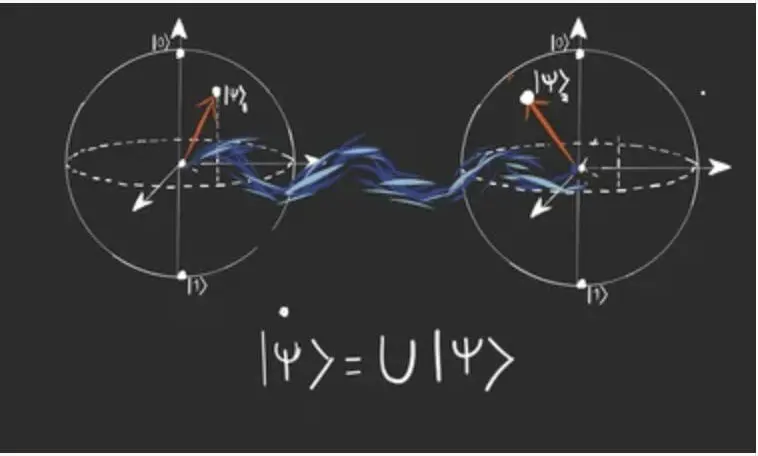
This introductory course, part of a series from Purdue University on edX, provides a comprehensive foundation in quantum mechanics principles as they apply to quantum computing. It covers essential topics such as gate-based quantum computing, quantum errors and correction, adiabatic quantum computing, and quantum machine learning. Designed with minimal prerequisites, the course aims to develop a physical and intuitive understanding of quantum information processing models, from fundamentals to hardware and software. It is a prerequisite for the subsequent courses in the series, making it essential for learners aiming to delve deeper into quantum computing.
Go to PurdueX: Applied Quantum Computing I: Fundamentals
PurdueX: Applied Quantum Computing II: Hardware
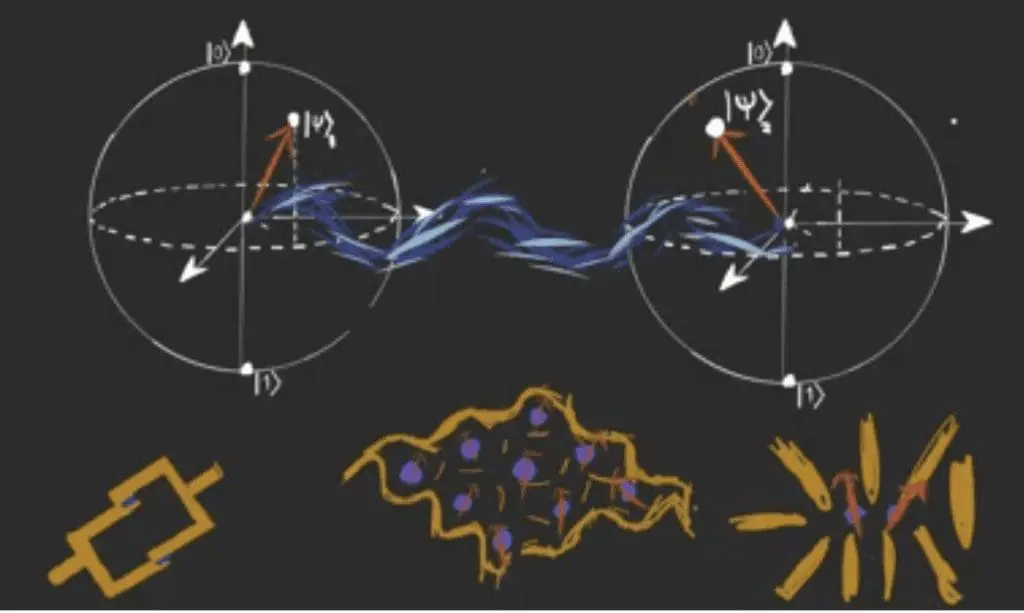
This is the second course in Purdue University’s Quantum Computing series on edX, focusing on the hardware aspects of quantum information processing. Over five weeks, with a commitment of 7-8 hours per week, students will explore how the fundamental quantum phenomena introduced in the first course are realized across various material platforms. The course delves into qubits’ definition, manipulation, interconnection in different systems, inherent challenges, and error sources. Specifically, the students will learn more about superconductors, atom/ion traps, and spin-based systems. This course is ideal for engineering and natural sciences students and professionals aiming to develop or utilize quantum technologies.
Go to PurdueX: Applied Quantum Computing II: Hardware
PurdueX: Applied Quantum Computing III: Algorithm and Software
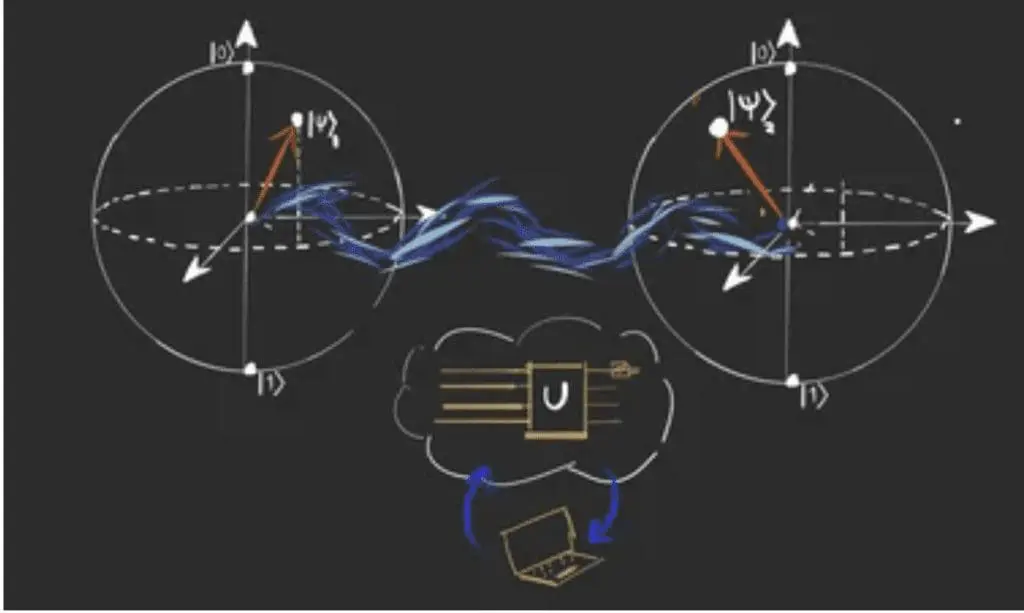
The final course in Purdue University’s Quantum Computing series on edX, this 5-week program requires 7-8 hours of study per week and focuses on quantum algorithms and software. Students will learn to implement domain-specific quantum algorithms on current quantum hardware, building on the fundamental concepts and hardware knowledge gained in the previous courses. The curriculum covers key algorithms like the quantum Fourier transform, Shor’s algorithm for factorization, and recent developments in quantum machine learning, optimization, and simulation. A highlight of the course is the hands-on experience with near-intermediate scale quantum (NISQ) computers, using cloud-based access to run quantum programs.
Go to PurdueX: Applied Quantum Computing III: Algorithm and Software
DelftX: Architecture, Algorithms, and Protocols of a Quantum Computer and Quantum Internet

This 6-week, self-paced course from Delft University of Technology, offered through edX, comprehensively explores the architecture and operation of quantum computers and the quantum internet. With a time commitment of 6-8 hours per week, students will delve into the fundamentals of quantum algorithms, error-correction techniques, microarchitectures, compilers, and programming languages specific to quantum computing. Additionally, the course covers the protocols necessary for building a quantum internet. The program aims to equip students with a deep understanding of how large-scale quantum computers can be controlled and operated and the foundational technologies driving the development of quantum computing and networking.
Go to DelftX: Architecture, Algorithms, and Protocols of a Quantum Computer and Quantum Internet
EPFLx: Cavity Quantum Optomechanics

This advanced 6-week course, offered by the École Polytechnique Fédérale de Lausanne (EPFL) through edX, focuses on the interaction between light and mechanical systems—a field known as optomechanics. With a significant time commitment of 10-20 hours per week, the course is designed for those interested in theoretical and practical aspects of cavity optomechanics. Students will explore the physics of mechanical and optical resonators, the radiation pressure force, and the optomechanical interaction, both from classical and quantum perspectives.
The course also provides the tools and techniques for designing and conducting optomechanical experiments. Taught by a network of 14 partners from 12 universities and two industries across Europe, this course is ideal for researchers and professionals aiming to deepen their understanding of this cutting-edge field.
Go to EPFLx: Cavity Quantum Optomechanics
CheckPoint: Check Point Jump Start: Quantum Management
This short, 1-week course by Check Point is designed to introduce new customers to the fundamentals of managing Check Point Quantum Network Security products. Participants will learn to install and configure essential components such as Gaia, SmartConsole, and various security blades. The course covers the setup of advanced threat prevention features, including HTTPS Inspection, Autonomous Threat Prevention, and IDA Blade. This course will equip its users to handle the most sophisticated cyber threats using Check Point’s Quantum Security Gateways, renowned for their industry-leading threat prevention capabilities across networks, cloud environments, data centers, and IoT devices.
Go to CheckPoint: Check Point Jump Start: Quantum Management
PurdueX: Fundamentals of Nanoelectronics, Part B: Quantum Transport
This 4-week course, part of the nanoHUB-U project by Purdue University and the National Science Foundation, offers an in-depth exploration of quantum transport in nanoelectronic devices. Students will learn advanced topics such as the Tight-binding Method, Non-Equilibrium Green’s Function (NEGF) Method, and Spin Transport. The course builds on the fundamentals covered in Part A and delves into how these principles apply to nanoscale devices, which are integral to modern technology, including the billions of smartphone transistors. This program is designed to transcend disciplines, making cutting-edge nanotechnology accessible to students across various fields of science and engineering.
Go to PurdueX: Fundamentals of Nanoelectronics, Part B: Quantum Transport
DelftX: Fundamentals of Quantum Information
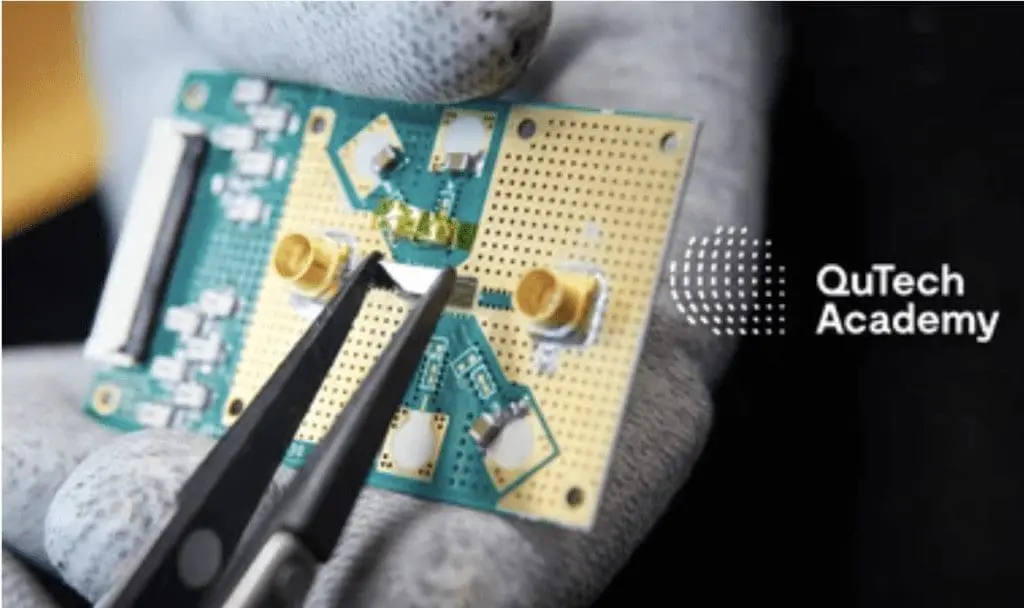
This 4-week, self-paced course from Delft University of Technology explores the foundational concepts of quantum information, a key element in the second quantum revolution. Unlike classical information based on bits, quantum information is processed through qubits. The course delves into the abstract representation and manipulation of quantum information via quantum circuits, introducing single and multi-qubit gates, basic algorithms, and protocols such as quantum state teleportation, superdense coding, and entanglement swapping. Students will also explore quantum gate sets, their universality, and the practical application of these concepts using the Quantum Inspire simulator.
The course concludes with a discussion on quantum supremacy and noisy-intermediate scale quantum (NISQ) computing, making it ideal for those looking to deepen their understanding of quantum computing and its underlying principles.
Go to DelftX: Fundamentals of Quantum Information
UBCx: Introduction to Quantum Computing

This 10-week, self-paced course from the University of British Columbia offers an accessible introduction to the intricate world of quantum computing. Students will explore fundamental concepts such as qubits, quantum gates, and quantum algorithms and gain hands-on experience by building quantum simulators and writing programs to implement concepts like quantum entanglement and teleportation. Participants will learn to develop and debug quantum modules and gain an intuitive understanding of how qubits operate using simulations and practical tools like Python, Scratch, IBM Circuit Composer, and Qiskit.
Go to UBCx: Introduction to Quantum Computing
UChicagoX: Introduction to Quantum Computing for Everyone

This five-week introductory course from the University of Chicago is designed for novices and requires only introductory algebra. It provides an accessible entry into the world of quantum computing, focusing on the technology’s future impacts and the fundamental quantum phenomena that drive it. The course begins by exploring computational problems that classical computers struggle to solve, followed by an intuitive introduction to key quantum information science concepts. Students will learn individual quantum operations through both symbolic and mathematical representations, including some introductory linear algebra.
Go to UChicagoX: Introduction to Quantum Computing for Everyone
UChicagoX: Introduction to Quantum Computing for Everyone 2
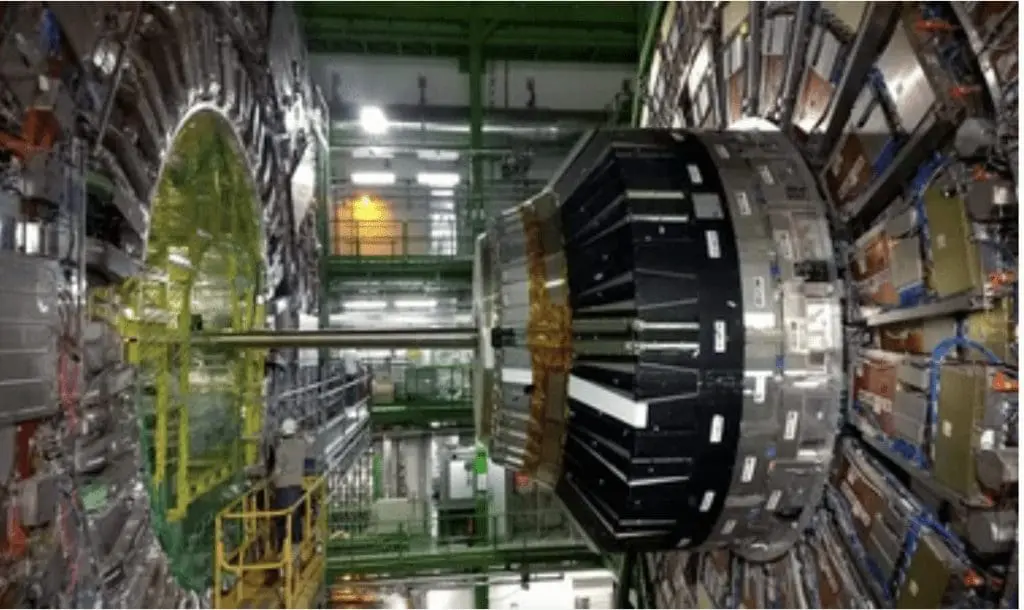
This 5-week, self-paced course continues “Introduction to Quantum Computing for Everyone 1” and dives deeper into the mathematical foundations and programming techniques essential for quantum computing. Students will learn the necessary linear algebra concepts that underpin practical quantum algorithms, building confidence through practice with individual and small sequences of quantum operations. The course also introduces students to programming with Qiskit, a tool used for IBM’s cloud-based quantum computers, and covers several critical quantum algorithms.
Go to UChicagoX: Introduction to Quantum Computing for Everyone 2
PurdueX: Introduction to Quantum Science & Technology
This 17-week course from Purdue University introduces students to the fundamentals of quantum science and its technological applications. The program covers key differences between quantum and classical mechanics, the mathematical description of quantum phenomena, and the role of wave functions in quantum systems. Students will also learn to interpret quantum signatures in experimental data and tackle engineering challenges in quantum computing and communication. Practical tasks using Microsoft Azure Quantum provide hands-on experience, making this course ideal for engineers and scientists seeking to deepen their knowledge of quantum technologies.
Go to PurdueX: Introduction to Quantum Science & Technology
PurdueX: Introduction to Quantum Transport

This five-week course introduces the non-equilibrium Green’s function (NEGF) method, essential for understanding quantum effects in nanoscale and spintronic devices. Students will cover key topics such as the Schrödinger equation, tight-binding model, bandstructure, and NEGF equations without prior knowledge of quantum mechanics. The course includes three proctored exams and is part of the Purdue MicroMasters® program in Nanoscience and Technology, with the option to apply credits toward a Purdue MSECE degree.
Go to PurdueX: Introduction to Quantum Transport
UChicagoX: Quantum Computer Systems Design I: Intro to Quantum Computation and Programming
This 4-week course introduces the fundamental design principles of modern quantum computer systems. Students will learn to use IBM Qiskit software tools to write and execute simple quantum programs on cloud-accessible quantum hardware. Key topics include the basics of quantum computing, the Bloch Sphere, quantum gates, and the execution of medium-sized algorithms for NISQ computers. The course also covers quantum processor microarchitecture, quantum program compilation, and qubit memory management.
Go to UChicagoX: Quantum Computer Systems Design I: Intro to Quantum Computation and Programming
UChicagoX: Quantum Computer Systems Design II: Principles of Quantum Architecture
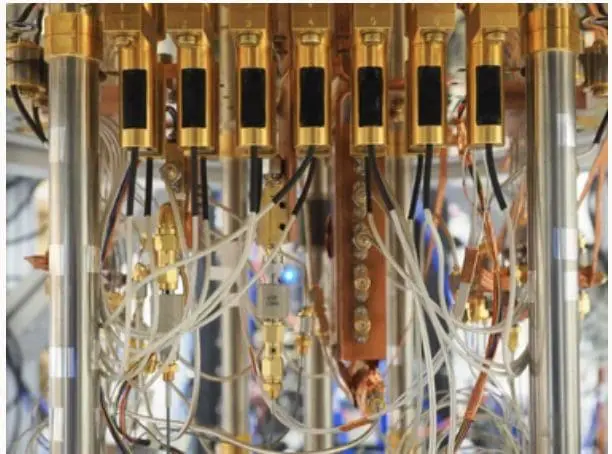
This 4-week course builds on foundational concepts in quantum computing by diving deeper into the design principles of quantum computer systems. Students will use IBM Qiskit to write and execute quantum programs on cloud-accessible hardware, focusing on quantum gates, the Bloch Sphere, and quantum teleportation. The course also covers medium-sized algorithms for NISQ computers, quantum processor microarchitecture, and qubit memory management.
Go to UChicagoX: Quantum Computer Systems Design II: Principles of Quantum Architecture
UChicagoX: Quantum Computer Systems Design III: Working with Noisy Systems

This 4-week course focuses on the challenges and strategies for working with noisy quantum systems, a critical aspect of today’s quantum computer systems. Students will learn to use IBM Qiskit to write and execute quantum programs on cloud-accessible hardware, addressing the complexities introduced by noise in quantum computations. Topics include quantum gate execution, NISQ algorithms, quantum processor microarchitecture, and techniques for managing qubit memory. By the end of the course, students will have a deeper understanding of how to design and optimize quantum systems that must operate in noisy environments, equipping them with valuable skills for advancing in quantum software development.
Go to UChicagoX: Quantum Computer Systems Design III: Working with Noisy Systems
UBCx: Quantum Computing for Your Classroom 10-12

This 4-week, self-paced course is designed for educators looking to introduce quantum computing into their high school physics and computer science classrooms. The course aims to bridge the gap between cutting-edge quantum research and classroom education by providing practical activities and knowledge that can be easily integrated into existing curricula. Educators will explore the history and evolution of computation, the fundamentals of classical and quantum computing, and how quantum phenomena like superposition and entanglement can be used in computation. By the end of the course, teachers will be equipped with the tools and understanding to bring this emerging technology to their students, preparing them with future-proof skills for tomorrow’s world.
Go to UBCx: Quantum Computing for Your Classroom 10-12
PurdueX: Quantum Detectors and Sensors

This 17-week course provides an in-depth exploration of quantum detectors and sensors, focusing on designing and analyzing devices that capture maximum information at the quantum limit. Students will learn about quantum metrology and the role of quantum noise, gaining a deep understanding of state-of-the-art quantum sensors. The course emphasizes the practical application of these technologies in fields like machine learning, autonomous navigation, and communication systems.
Go to PurdueX: Quantum Detectors and Sensors
GeorgetownX: Quantum Mechanics
This 18-week course is designed to teach the fundamentals of quantum mechanics with a focus on quantum sensing, tailored for students preparing for the second quantum revolution. Unlike traditional quantum mechanics courses that require extensive high-level math, this course takes a representation-independent approach, emphasizing conceptual understanding and operator manipulations. The course is ideal for physicists, chemists, engineers with a calculus and math methods background, and freshmen and modern physics students. By the end of the course, students will be equipped to relate quantum concepts to real-world experiments and understand advanced quantum technologies like those used in gravitational wave observatories.
Go to GeorgetownX: Quantum Mechanics
GeorgetownX: Quantum Mechanics for Everyone

This 6-week course offers an accessible introduction to the fundamental concepts of quantum mechanics, requiring no advanced math skills beyond basic arithmetic. Recognized as one of the best online courses by Class Central and a finalist for the 2018 edX Prize, it teaches quantum theory in a way that retains the depth of the material without oversimplification. Students will explore quantum mysteries like the two-slit experiment, quantum seeing in the dark, and photon bunching effects. By the end of the course, students will understand quantum particles, probability theory, spin manipulation, and the fundamental quantum mysteries that underpin modern physics. This course is ideal for anyone curious about quantum mechanics and its fascinating phenomena.
Go to GeorgetownX: Quantum Mechanics for Everyone
StanfordOnline: Quantum Mechanics for Scientists and Engineers 1

This 9-week course provides a comprehensive introduction to quantum mechanics, tailored for students and professionals with a college-level physical science or engineering background. While quantum mechanics has traditionally been of interest primarily to physicists and chemists, its principles are now crucial in materials science, nanotechnology, electronic devices, and photonics. The course is designed to be accessible to various science and engineering disciplines, making it an ideal starting point for anyone looking to understand and apply quantum mechanics in various technological and scientific contexts.
Go to StanfordOnline: Quantum Mechanics for Scientists and Engineers 1
StanfordOnline: Quantum Mechanics for Scientists and Engineers 2

This 9-week course builds on the foundations of “Quantum Mechanics for Scientists and Engineers 1,” covering advanced topics and their applications in modern science and technology. Students will delve into core concepts such as spin, identical particles, the quantum mechanics of light, quantum information basics, and interpretations of quantum mechanics. The course also explores how quantum mechanics is expressed and utilized in contemporary practice. Designed for those with a background equivalent to a junior or senior college-level quantum mechanics course, this program prepares students to understand and apply quantum mechanics across various current applications, offering a solid foundation for further advanced studies.
Go to StanfordOnline: Quantum Mechanics for Scientists and Engineers 2
UTokyoX: Quantum Mechanics of Molecular Structures
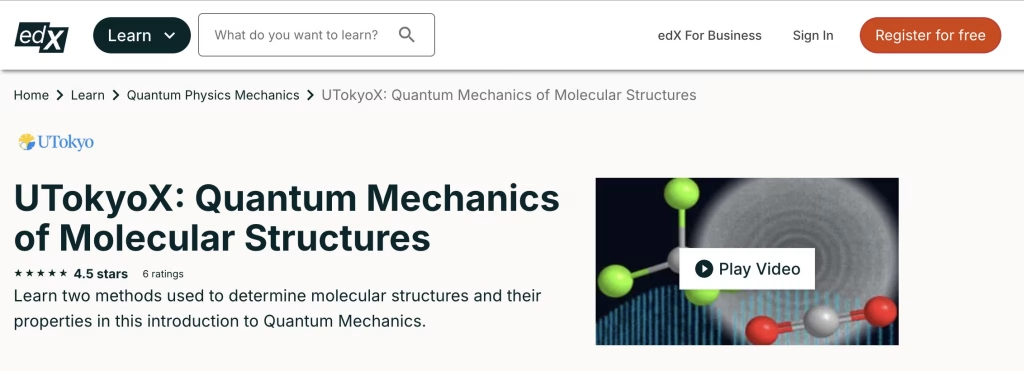
This course introduces two essential methods used to determine the geometrical structure of molecules: molecular spectroscopy and gas electron diffraction. Over six weeks, students will explore how light, electric waves, and accelerated electron beams can reveal detailed information about molecular structures. The course covers electron motions, vibrational motions of nuclei, and rotational motions of molecules, culminating in understanding how electron diffraction patterns provide insights into molecular geometry. By the end of the course, students will gain a deeper understanding of how molecular vibrations influence the determination of molecular structures, equipping them with the knowledge to apply these techniques in chemistry.
Go to UTokyoX: Quantum Mechanics of Molecular Structures
UQx: Quantum Technologies for Decision Makers
This 4-module course is designed for strategic decision-makers seeking to understand and leverage quantum technologies in sensing, communication, and computing. As quantum science and engineering rapidly evolve, this course helps participants grasp the underlying principles to make informed decisions about resource allocation and innovation. The course features insights from world-renowned quantum scientists and practical approaches from industry practitioners, enabling learners to develop a quantum strategy tailored to their organization.
Go to UQx: Quantum Technologies for Decision Makers
DelftX: The Hardware of a Quantum Computer
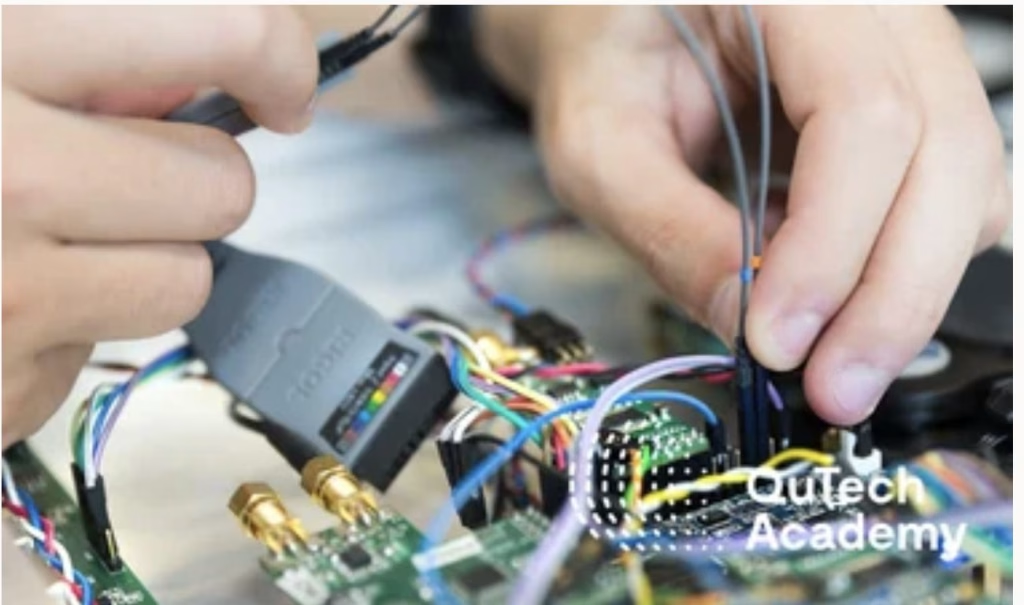
This course, offered by the Delft University of Technology through QuTech, delves into the hardware aspects of quantum computers and the quantum internet, exploring the technologies driving the transition to a quantum information era. After reviewing fundamental concepts like qubits and ket notation, the course focuses on the different methods for building qubits, emphasizing the four types that QuTech specializes in topological qubits, spin qubits, superconducting qubits, and NV center qubits. Designed as a journey of discovery, the course encourages active participation and discussion through forums, making it ideal for those interested in the latest advancements in quantum technology.
Go to DelftX: The Hardware of a Quantum Computer
DelftX: The Quantum Internet and Quantum Computers: How Will They Change the World?
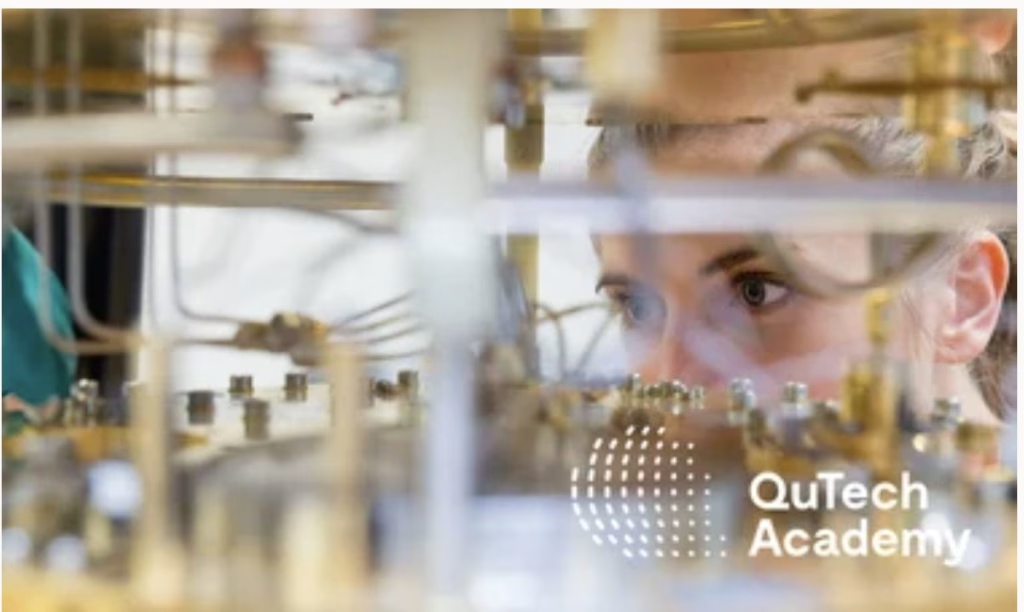
This six-week Delft University of Technology course offers a foundational understanding of quantum computing and the quantum internet. Participants will explore core concepts such as qubits, superposition, and entanglement and examine the potential impact of these technologies across various fields, including quantum chemistry, machine learning, encryption, and secure communication.
Go to DelftX: The Quantum Internet and Quantum Computers: How Will They Change the World?
IsraelX: Topological Quantum Matter
This advanced course delves into the theory and experiments surrounding topological states of matter, such as the quantum Hall effect, topological insulators, superconductors, and semimetals. Over nine units, students will explore theoretical and experimental aspects, focusing on the physical concepts rather than technical details. Key topics include the Integer and Fractional Quantum Hall Effects, Topological Superconductivity, Topological Insulators, and Gapless Topological Phases like Dirac and Weyl semimetals. The course also covers tools for predicting topological materials, the abstract concept of Topological Order, and relevant experimental techniques. This course is ideal for those looking to deepen their understanding of topological quantum matter and its applications in modern physics.
Go to IsraelX: Topological Quantum Matter
So, whether you’re a beginner or an advanced learner, these courses cover everything from foundational quantum mechanics to cutting-edge quantum technologies. Engaging with these programs will equip you with the knowledge and skills needed to stay at the forefront of this rapidly evolving field, preparing you for the exciting opportunities that quantum computing promises to bring.