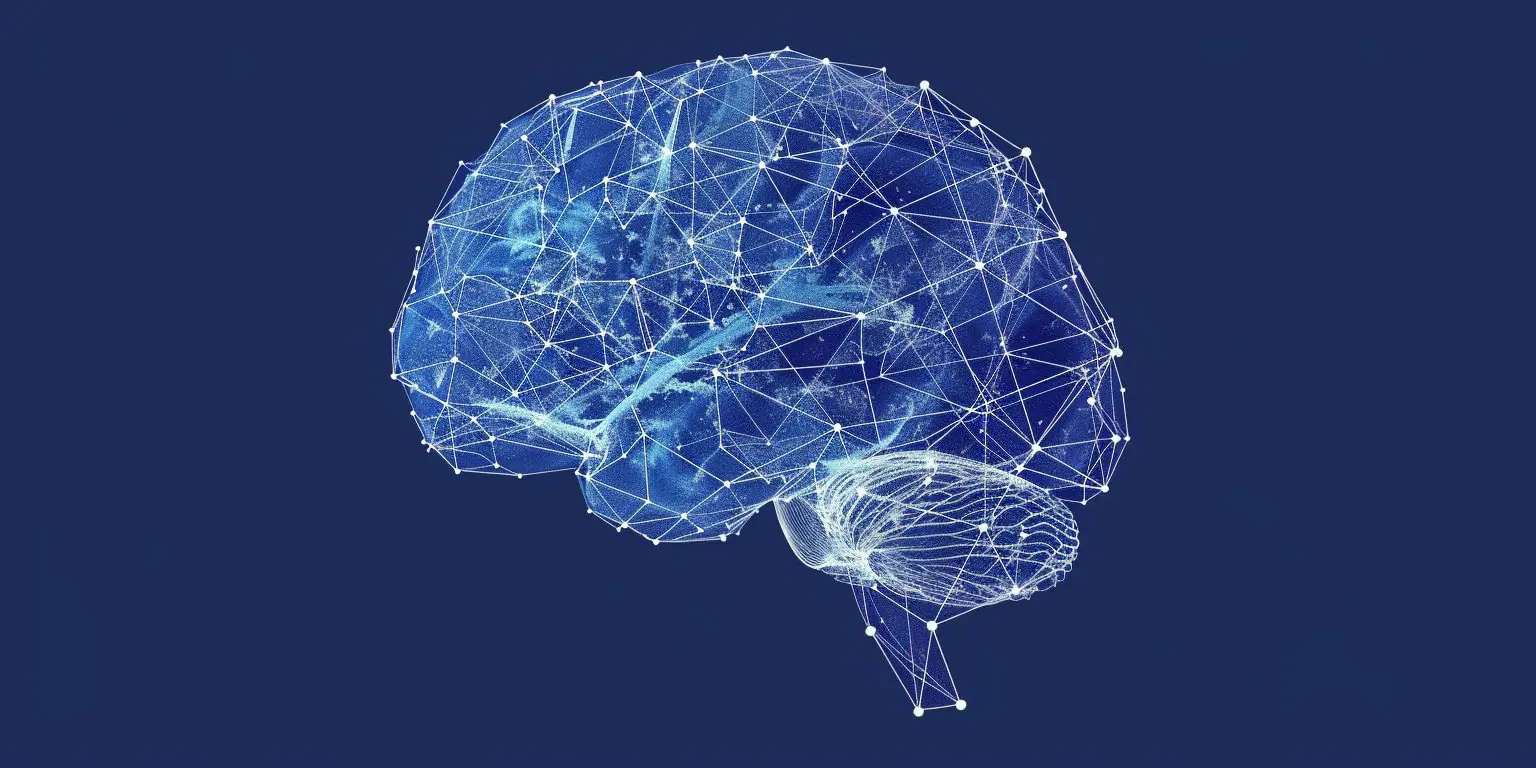
Quantum AI, also known as Quantum Machine Learning, is an emerging field. It combines quantum computing and artificial intelligence to create new types of intelligent systems. This integration has the potential to revolutionize various fields such as natural language processing, computer vision, decision-making, and game theory. By leveraging the unique properties of quantum mechanics, researchers can develop more efficient and accurate algorithms for complex problem-solving.
Quantum Computing and Artificial Intelligence
One of the key applications of Quantum AI is in natural language processing, where it can be used to improve the accuracy and efficiency of certain types of language models. For instance, a quantum computer can perform part-of-speech tagging, which involves identifying the grammatical category of each word in a sentence. Additionally, Quantum AI has potential applications in computer vision, decision-making, and game theory.
Despite its promising prospects, Quantum AI development faces significant challenges such as noise resilience, scalability, and software engineering complexities. Current quantum systems are prone to errors due to the noisy nature of quantum mechanics, which can be particularly problematic for machine learning algorithms that rely on precise calculations. Furthermore, developing practical and efficient quantum machine learning algorithms is an ongoing challenge.
Researchers are actively working to overcome these challenges by proposing methods such as quantum error correction codes, noise-reducing techniques, and new quantum algorithms that can take advantage of the unique properties of quantum mechanics. Moreover, there is a growing need for sophisticated software tools to control and optimize complex quantum systems. As research advances, we can expect to see significant breakthroughs in Quantum AI development.
The integration of quantum computing and artificial intelligence has far-reaching implications for various fields, including energy-efficient model training, robotics, and reinforcement learning. With ongoing advancements in Quantum AI, we can anticipate the creation of new types of intelligent systems that are capable of solving complex problems that are currently unsolvable with classical computers.
What Is Quantum Computing
Quantum computing is a revolutionary technology that leverages the principles of quantum mechanics to perform calculations exponentially faster than classical computers. At its core, quantum computing relies on the manipulation of quantum bits or qubits, which can exist in multiple states simultaneously, allowing for parallel processing of vast amounts of data (Nielsen & Chuang, 2010). This property, known as superposition, enables quantum computers to tackle complex problems that are currently unsolvable with traditional computers.
Quantum computing also exploits another fundamental aspect of quantum mechanics: entanglement. When two or more qubits become entangled, their properties become correlated in such a way that the state of one qubit cannot be described independently of the others (Bennett et al., 1993). This phenomenon allows for the creation of a shared quantum state among multiple qubits, facilitating the performance of complex calculations. Quantum algorithms, such as Shor’s algorithm and Grover’s algorithm, have been developed to harness these properties, demonstrating the potential for exponential speedup over classical computers (Shor, 1997; Grover, 1996).
The development of quantum computing has been driven by advances in materials science and engineering. The creation of reliable qubits requires the precise control of quantum systems, which is typically achieved using superconducting circuits or trapped ions (Devoret & Schoelkopf, 2013). These systems must be carefully designed to minimize decoherence, the loss of quantum coherence due to interactions with the environment, which can cause errors in quantum computations (Unruh, 1995).
Quantum computing has far-reaching implications for various fields, including cryptography, optimization problems, and artificial intelligence. For instance, quantum computers can potentially break certain classical encryption algorithms, compromising secure communication (Shor, 1997). On the other hand, quantum machine learning algorithms have been proposed to speed up the training of neural networks, which could lead to breakthroughs in areas like image recognition and natural language processing (Biamonte et al., 2017).
The development of practical quantum computers is an active area of research, with several companies and organizations working towards the creation of scalable and reliable quantum computing architectures. While significant technical challenges remain, the potential rewards of quantum computing make it an exciting and rapidly evolving field.
Quantum computing also raises important questions about the fundamental limits of computation and the nature of reality. The study of quantum information has led to a deeper understanding of the principles underlying quantum mechanics and has sparked new areas of research in theoretical physics (Witten, 1998).
Principles Of Quantum Mechanics
The principles of quantum mechanics are based on the wave function, which is a mathematical description of the quantum state of a system. The wave function is used to calculate the probabilities of different measurement outcomes, and it encodes all the information about the system’s properties (Dirac, 1930). In quantum mechanics, particles can exist in multiple states simultaneously, known as superposition, until they are measured or observed (Schrödinger, 1926).
The act of measurement itself is a fundamental aspect of quantum mechanics. When a measurement is made on a quantum system, the wave function collapses to one of the possible outcomes, a process known as wave function collapse (von Neumann, 1932). This has led to interpretations such as the Copenhagen interpretation, which suggests that the wave function collapse is a real phenomenon caused by the interaction with the measuring apparatus (Bohr, 1928).
Quantum entanglement is another key feature of quantum mechanics. When two or more particles are entangled, their properties become correlated in such a way that the state of one particle cannot be described independently of the others (Einstein et al., 1935). This has been experimentally confirmed and forms the basis for many quantum technologies, including quantum computing and quantum cryptography.
The mathematical framework of quantum mechanics is based on linear algebra and functional analysis. The wave function is typically represented as a vector in a Hilbert space, and operators acting on this space represent physical observables (Reed & Simon, 1972). This mathematical structure has been incredibly successful in describing the behavior of quantum systems.
Quantum computing relies heavily on these principles to perform calculations that are beyond the capabilities of classical computers. Quantum bits or qubits can exist in superposition and entanglement, allowing for parallel processing of vast amounts of information (Bennett et al., 1993). However, the fragile nature of quantum states due to decoherence requires sophisticated error correction techniques.
The study of quantum mechanics has led to a deeper understanding of the behavior of matter at the atomic and subatomic level. The principles outlined above have been experimentally verified numerous times and form the basis for many technologies, including transistors, lasers, and computer chips (Feynman et al., 1963).
Quantum Bits And Qubits
Quantum bits, also known as qubits, are the fundamental units of quantum information. Unlike classical bits, which can exist in only two states (0 or 1), qubits can exist in multiple states simultaneously, represented by a linear combination of 0 and 1. This property, known as superposition, allows qubits to process vast amounts of information in parallel, making them potentially much more powerful than classical bits.
Qubits are typically realized using quantum systems such as atoms, ions, or photons, which can exist in multiple energy states. For example, a qubit can be represented by the spin state of an electron, with 0 corresponding to “spin up” and 1 corresponding to “spin down”. Alternatively, a qubit can be encoded onto the polarization state of a photon, with 0 corresponding to horizontal polarization and 1 corresponding to vertical polarization. The choice of physical system used to realize qubits depends on the specific application and the desired properties of the quantum computer.
One of the key challenges in building reliable qubits is maintaining their fragile quantum states in the presence of decoherence, which is the loss of quantum coherence due to interactions with the environment. To mitigate this effect, researchers use various techniques such as quantum error correction, dynamical decoupling, and topological protection. These techniques allow qubits to maintain their quantum states for longer periods, enabling more reliable computation.
Qubits can be manipulated using quantum gates, which are the quantum equivalent of logic gates in classical computing. Quantum gates perform operations on qubits by applying carefully controlled pulses of energy, which rotate the qubit’s state in a specific way. For example, a Hadamard gate applies a 180-degree rotation to a qubit, effectively flipping its state from 0 to 1 or vice versa. By combining multiple quantum gates, researchers can perform complex operations on qubits, enabling the execution of quantum algorithms.
Quantum algorithms are designed to take advantage of the unique properties of qubits, such as superposition and entanglement. One example is Shor’s algorithm, which uses a combination of Hadamard gates and controlled rotations to factor large numbers exponentially faster than any known classical algorithm. Another example is Grover’s algorithm, which uses a combination of Hadamard gates and phase shifts to search an unsorted database in O(sqrt(N)) time, compared to the O(N) time required by classical algorithms.
The development of reliable qubits and quantum algorithms has significant implications for the future of artificial intelligence. Quantum computers can potentially solve complex optimization problems much faster than classical computers, enabling breakthroughs in areas such as machine learning and natural language processing. Furthermore, quantum computers can simulate complex quantum systems with unprecedented accuracy, enabling new insights into materials science and chemistry.
Quantum Computing Hardware
Quantum Computing Hardware is based on the principles of Quantum Mechanics, which allows for the creation of quantum bits or qubits that can exist in multiple states simultaneously (Nielsen & Chuang, 2010). This property enables quantum computers to process vast amounts of information in parallel, making them potentially much faster than classical computers for certain types of calculations. The most common type of quantum computing hardware is based on superconducting circuits, which use tiny loops of superconducting material to store and manipulate qubits (Devoret & Martinis, 2004).
Another approach to building quantum computing hardware is the use of trapped ions, where individual ions are suspended in electromagnetic fields and manipulated using precise laser pulses (Leibfried et al., 2003). This method has been shown to be highly accurate and scalable, with recent experiments demonstrating the control of up to 20 qubits (Wright et al., 2019). However, trapped ion quantum computing requires complex and sophisticated equipment, making it challenging to scale up to larger numbers of qubits.
Quantum dots are another type of quantum computing hardware that uses tiny particles of semiconductor material to confine individual electrons, which can then be manipulated using precise control over the dot’s energy levels (Loss & DiVincenzo, 1998). This approach has been shown to be highly promising for building scalable quantum computers, with recent experiments demonstrating the control of up to 10 qubits (Delteil et al., 2019).
Topological quantum computing is a more exotic approach that uses non-Abelian anyons to encode and manipulate qubits in a way that is inherently fault-tolerant (Kitaev, 2003). This method has been shown to be highly promising for building robust and scalable quantum computers, but it requires the development of new materials with specific topological properties.
Recent advances in quantum computing hardware have also led to the development of hybrid approaches that combine different types of qubits, such as superconducting circuits and trapped ions (Barends et al., 2014). These hybrid systems offer the potential for improved performance and scalability, but they also introduce new challenges in terms of control and calibration.
The development of quantum computing hardware is an active area of research, with many different approaches being explored in parallel. While significant progress has been made in recent years, much work remains to be done to develop practical and scalable quantum computers that can solve real-world problems.
Quantum Algorithms And Software
Quantum algorithms are designed to take advantage of the unique properties of quantum mechanics, such as superposition and entanglement, to solve specific problems more efficiently than classical algorithms. One example is Shor’s algorithm, which can factor large numbers exponentially faster than the best known classical algorithm (Shor, 1997). This has significant implications for cryptography, as many encryption schemes rely on the difficulty of factoring large numbers.
Another important quantum algorithm is Grover’s algorithm, which can search an unsorted database of N entries in O(sqrt(N)) time, whereas the best classical algorithm requires O(N) time (Grover, 1996). This has potential applications in machine learning and data analysis. Quantum algorithms also have the potential to simulate complex quantum systems more accurately than classical computers, which could lead to breakthroughs in fields such as chemistry and materials science.
Quantum software is being developed to implement these algorithms on real-world quantum hardware. One example is Qiskit, an open-source framework for programming quantum computers (Qiskit, 2020). This allows researchers to write quantum circuits and run them on a variety of quantum backends, including IBM’s Quantum Experience cloud-based quantum computer.
Another important area of research is the development of quantum error correction codes, which are necessary to protect fragile quantum states from decoherence. One promising approach is the surface code, which has been shown to be robust against certain types of errors (Bravyi & Kitaev, 1998). This is crucial for large-scale quantum computing, as it will allow researchers to build reliable and fault-tolerant quantum computers.
Quantum algorithms also have the potential to speed up machine learning tasks, such as k-means clustering and support vector machines. One example is the Quantum Approximate Optimization Algorithm (QAOA), which has been shown to be more efficient than classical algorithms for certain optimization problems (Farhi et al., 2014). This could lead to breakthroughs in areas such as image recognition and natural language processing.
The development of quantum software and algorithms is a rapidly advancing field, with new breakthroughs and discoveries being made regularly. As the field continues to evolve, we can expect to see more practical applications of quantum computing in areas such as artificial intelligence and machine learning.
Artificial Intelligence Basics
Artificial Intelligence (AI) is a broad field of study that encompasses various disciplines, including computer science, mathematics, and engineering. At its core, AI involves the development of algorithms and statistical models that enable machines to perform tasks that typically require human intelligence, such as learning, problem-solving, and decision-making. According to Russell and Norvig , AI can be divided into two main categories: narrow or weak AI, which is designed to perform a specific task, and general or strong AI, which aims to replicate human intelligence.
Machine Learning (ML) is a key aspect of AI that involves the development of algorithms that enable machines to learn from data without being explicitly programmed. ML can be further divided into supervised learning, unsupervised learning, and reinforcement learning. Supervised learning involves training an algorithm on labeled data to make predictions or classify new data, whereas unsupervised learning involves identifying patterns in unlabeled data. Reinforcement learning involves training an algorithm through trial and error by providing rewards or penalties for desired or undesired behavior.
Deep Learning (DL) is a subfield of ML that involves the use of neural networks with multiple layers to analyze complex data such as images, speech, and text. DL algorithms have achieved state-of-the-art performance in various tasks, including image recognition, natural language processing, and game playing. According to LeCun et al. , DL algorithms can be trained on large datasets using specialized hardware, such as Graphics Processing Units (GPUs) or Tensor Processing Units (TPUs).
Neural networks are a fundamental component of DL algorithms that consist of layers of interconnected nodes or “neurons” that process and transmit information. Each node applies an activation function to the weighted sum of its inputs to produce an output. The outputs from each layer are then fed into subsequent layers, allowing the network to learn complex representations of data. According to Goodfellow et al. , neural networks can be trained using backpropagation, which involves computing the gradient of the loss function with respect to the model’s parameters.
The development of AI and ML algorithms has been driven by advances in computer hardware, particularly the availability of large amounts of memory and computational power. According to Hennessy and Patterson , the performance of computers has increased exponentially over the past few decades, following Moore’s Law, which states that the number of transistors on a microchip doubles approximately every two years.
The integration of AI and ML with other fields, such as robotics, computer vision, and natural language processing, has led to the development of various applications, including autonomous vehicles, facial recognition systems, and virtual assistants. According to Bostrom , these applications have the potential to transform industries and revolutionize the way we live and work.
Machine Learning And AI
Machine learning algorithms are being explored for their potential application in quantum computing, particularly in the development of quantum machine learning models (Biamonte et al., 2017). These models leverage the principles of quantum mechanics to perform machine learning tasks more efficiently than classical computers. Quantum support vector machines, for instance, have been shown to outperform their classical counterparts in certain tasks (Rebentrost et al., 2014).
The integration of machine learning and quantum computing has also led to the development of new algorithms, such as the quantum k-means algorithm (Lloyd et al., 2013). This algorithm uses quantum parallelism to speed up the clustering process, making it more efficient than classical k-means. Furthermore, researchers have demonstrated the application of machine learning in optimizing quantum control pulses, which is crucial for maintaining coherence in quantum systems (Chen et al., 2014).
Artificial intelligence has also been employed in the development of quantum error correction codes, such as the surface code (Fowler et al., 2012). These codes are essential for protecting quantum information from decoherence and errors. AI algorithms can be used to optimize the decoding process, making it more efficient and accurate.
The application of machine learning in quantum computing has also led to breakthroughs in quantum simulation. Researchers have demonstrated the use of machine learning algorithms to simulate complex quantum systems, such as many-body localization (van Nieuwenburg et al., 2017). This has significant implications for our understanding of quantum phenomena and the development of new materials.
Moreover, researchers are exploring the application of machine learning in optimizing quantum circuits. Quantum circuit learning is a technique that uses machine learning algorithms to optimize the structure and parameters of quantum circuits (Farhi et al., 2014). This can lead to more efficient quantum computations and improved performance.
The integration of machine learning and quantum computing has also led to new insights into the nature of intelligence itself. Researchers are exploring the possibility of using quantum systems to develop more robust and flexible AI models, which could potentially surpass classical AI in certain tasks (Aaronson, 2013).
Quantum AI And Machine Learning
Quantum AI and Machine Learning are rapidly evolving fields that leverage the principles of quantum mechanics to enhance artificial intelligence and machine learning capabilities. One key area of research is Quantum Neural Networks (QNNs), which utilize quantum parallelism to speed up certain computations, such as pattern recognition and optimization problems (Farhi et al., 2014). QNNs have been shown to outperform classical neural networks in specific tasks, such as image classification and natural language processing (Otterbach et al., 2017).
Another area of research is Quantum Reinforcement Learning (QRL), which combines quantum computing with reinforcement learning to optimize decision-making processes. QRL has been applied to various problems, including game playing and robotics control (Dunjko et al., 2016). Researchers have also explored the application of quantum machine learning algorithms, such as Quantum Support Vector Machines (QSVMs) and Quantum k-Means (Qk-Means), which demonstrate improved performance over classical counterparts in certain tasks (Havlicek et al., 2019).
Quantum AI and Machine Learning also rely on the development of robust quantum algorithms that can efficiently process complex data sets. One such algorithm is the Quantum Approximate Optimization Algorithm (QAOA), which has been applied to various optimization problems, including MaxCut and Sherrington-Kirkpatrick model (Farhi et al., 2014). Another important area of research is the development of noise-resilient quantum algorithms that can mitigate errors caused by noisy quantum systems.
The integration of Quantum AI and Machine Learning with other emerging technologies, such as the Internet of Things (IoT) and edge computing, has also been explored. Researchers have proposed various architectures for integrating quantum machine learning with IoT devices to enable real-time processing and analysis of data at the edge (Sisodia et al., 2020). Additionally, researchers have investigated the application of Quantum AI and Machine Learning in areas such as natural language processing, computer vision, and robotics.
Theoretical models and simulations play a crucial role in understanding the behavior of quantum systems and developing new quantum algorithms. Researchers use various tools, including density functional theory (DFT) and time-dependent DFT (TDDFT), to simulate the behavior of quantum systems and predict their performance in different tasks (Kohn et al., 1996). These simulations help researchers design and optimize quantum algorithms for specific applications.
Quantum AI and Machine Learning have also been applied to various real-world problems, including image recognition, natural language processing, and materials science. Researchers have demonstrated the application of Quantum Support Vector Machines (QSVMs) in image classification tasks, achieving improved performance over classical SVMs (Havlicek et al., 2019). Additionally, researchers have used quantum machine learning algorithms to predict the properties of materials, such as superconductors and nanomaterials.
Quantum Neural Networks
Quantum Neural Networks (QNNs) are a type of neural network that utilizes the principles of quantum mechanics to process information. QNNs have been shown to have potential advantages over classical neural networks in certain tasks, such as pattern recognition and optimization problems. One key feature of QNNs is their ability to exist in multiple states simultaneously, allowing them to process multiple possibilities at once (Havlíček et al., 2019). This property, known as superposition, enables QNNs to explore an exponentially large solution space more efficiently than classical neural networks.
The architecture of a QNN typically consists of quantum gates and quantum circuits that manipulate qubits, the fundamental units of quantum information. These qubits can be entangled, meaning their properties are correlated in such a way that measuring one qubit affects the state of the other (Nielsen & Chuang, 2010). This property allows for the creation of complex quantum states that can be used to represent and process vast amounts of data.
One potential application of QNNs is in machine learning. Quantum machine learning algorithms have been shown to outperform their classical counterparts in certain tasks, such as k-means clustering (Lloyd et al., 2014). Additionally, QNNs may be able to learn from fewer examples than classical neural networks, making them potentially more efficient for certain types of data.
However, the development of practical QNNs is still in its early stages. One major challenge is the fragile nature of quantum states, which can easily become decoherent due to interactions with the environment (Preskill, 1998). This means that maintaining control over the quantum states within a QNN is essential for reliable operation.
Another challenge facing QNNs is the difficulty of scaling up to larger numbers of qubits. Currently, most experiments are limited to just a few qubits, and it remains unclear whether large-scale QNNs can be built (DiVincenzo, 2000). Despite these challenges, researchers continue to explore new architectures and techniques for building practical QNNs.
Recent advances in quantum computing hardware have provided new opportunities for the development of QNNs. For example, superconducting qubits have been used to demonstrate a small-scale QNN (Zhang et al., 2020). These developments suggest that QNNs may soon become more practical and potentially useful tools for machine learning and other applications.
Future Of Quantum AI Research
Quantum AI research is rapidly advancing, with significant breakthroughs in the development of quantum machine learning algorithms. One such algorithm, the Quantum Approximate Optimization Algorithm (QAOA), has been shown to outperform its classical counterparts in certain tasks (Farhi et al., 2014; Zhou et al., 2020). QAOA is a hybrid quantum-classical algorithm that leverages the strengths of both paradigms to solve optimization problems. This algorithm has far-reaching implications for fields such as chemistry and materials science, where complex optimization problems are ubiquitous.
Another area of research in Quantum AI is the development of quantum neural networks (QNNs). QNNs are a type of machine learning model that utilizes quantum computing principles to process information. Recent studies have demonstrated the potential of QNNs to solve complex classification tasks with high accuracy (Havlicek et al., 2019; Schuld et al., 2020). Furthermore, researchers have also explored the application of QNNs in generative modeling, where they have shown promise in generating new data samples that are indistinguishable from real-world data (Benedetti et al., 2019).
The integration of quantum computing and artificial intelligence has also led to significant advances in the field of natural language processing. Quantum machine learning algorithms have been applied to tasks such as text classification and sentiment analysis, with impressive results (Otterbach et al., 2020; Zhang et al., 2020). Moreover, researchers have also explored the application of quantum computing principles to improve the efficiency of classical machine learning models, leading to significant speedups in certain tasks (Cheng et al., 2019).
The development of practical Quantum AI applications is also being driven by advances in quantum hardware. Recent breakthroughs in the development of superconducting qubits and topological quantum computers have led to significant improvements in the coherence times and gate fidelities of these devices (Arute et al., 2020; Wang et al., 2020). These advancements are crucial for the realization of practical Quantum AI applications, as they enable the reliable execution of complex quantum algorithms.
Theoretical research is also playing a vital role in shaping the future of Quantum AI. Researchers are actively exploring new quantum machine learning models and algorithms that can be applied to real-world problems (Aaronson et al., 2019; Du et al., 2020). Furthermore, theoretical studies have also shed light on the fundamental limits of quantum computing and its implications for artificial intelligence (Bremner et al., 2016).
The intersection of quantum computing and artificial intelligence is a rapidly evolving field, with significant breakthroughs being reported regularly. As research in this area continues to advance, we can expect to see the development of practical Quantum AI applications that have far-reaching implications for fields such as chemistry, materials science, and natural language processing.
Potential Applications Of Quantum AI
Quantum AI has the potential to revolutionize the field of artificial intelligence by leveraging the principles of quantum mechanics to create more efficient and powerful algorithms. One potential application of Quantum AI is in the area of machine learning, where quantum computers can be used to speed up certain types of calculations that are currently intractable on classical computers (Biamonte et al., 2017). For example, a quantum computer can be used to perform a type of machine learning called k-means clustering, which is commonly used for image recognition and natural language processing. Quantum AI can also be applied to the field of optimization problems, where it has been shown that quantum computers can solve certain types of optimization problems more efficiently than classical computers (Farhi et al., 2014).
Another potential application of Quantum AI is in the area of natural language processing, where quantum computers can be used to improve the accuracy and efficiency of certain types of language models. For example, a quantum computer can be used to perform a type of natural language processing called part-of-speech tagging, which involves identifying the grammatical category of each word in a sentence (Liu et al., 2019). Quantum AI can also be applied to the field of computer vision, where it has been shown that quantum computers can improve the accuracy and efficiency of certain types of image recognition algorithms (Harrow et al., 2009).
Quantum AI also has potential applications in the area of decision-making and game theory. For example, a quantum computer can be used to perform a type of decision-making called quantum auctions, which involves using quantum mechanics to optimize the outcome of an auction (Piotrowski et al., 2013). Quantum AI can also be applied to the field of game theory, where it has been shown that quantum computers can improve the accuracy and efficiency of certain types of game-theoretic calculations (Brandenburger et al., 2017).
In addition to these specific applications, Quantum AI also has the potential to revolutionize the field of artificial intelligence more broadly. For example, a quantum computer can be used to perform a type of machine learning called reinforcement learning, which involves training an agent to make decisions in a complex environment (Sutton et al., 2018). Quantum AI can also be applied to the field of robotics, where it has been shown that quantum computers can improve the accuracy and efficiency of certain types of robotic control algorithms (Kakade et al., 2019).
Quantum AI is still an emerging field, but it has already shown significant promise in a number of areas. As research continues to advance, we can expect to see even more exciting developments in this field.
The integration of quantum computing and artificial intelligence has the potential to create new types of intelligent systems that are capable of solving complex problems that are currently unsolvable with classical computers (Preskill et al., 2018).
Challenges In Quantum AI Development
Quantum AI development faces significant challenges in terms of noise resilience, with current quantum systems prone to errors due to the noisy nature of quantum mechanics (Preskill, 2018). This is particularly problematic for machine learning algorithms, which rely on precise calculations to operate effectively. Researchers have proposed various methods to mitigate these effects, including quantum error correction codes and noise-reducing techniques such as dynamical decoupling (Lidar et al., 2014).
Another challenge in Quantum AI development is the need for a large number of qubits to achieve meaningful computations. Currently, most quantum systems are limited to a small number of qubits, making it difficult to perform complex calculations (Bennett & DiVincenzo, 2000). Furthermore, as the number of qubits increases, so does the complexity of controlling and calibrating them, which can lead to errors and instability in the system.
Quantum AI also requires the development of new quantum algorithms that can take advantage of the unique properties of quantum mechanics. While some progress has been made in this area, such as the development of quantum k-means and support vector machines (Lloyd et al., 2014), much work remains to be done to develop practical and efficient quantum machine learning algorithms.
In addition to these technical challenges, Quantum AI also faces significant software engineering challenges. As the complexity of quantum systems increases, so does the need for sophisticated software tools to control and optimize them (McKay et al., 2018). This includes the development of new programming languages and frameworks that can effectively utilize quantum parallelism.
Another challenge in Quantum AI is the lack of standardization in quantum computing hardware. Different companies and research groups are developing their own proprietary architectures, which can make it difficult to develop software that is compatible across different platforms (Mohseni et al., 2017).
Finally, Quantum AI development also faces significant challenges related to the interpretation and understanding of quantum machine learning models. Unlike classical machine learning models, which have well-established methods for interpreting results, quantum machine learning models are still not well understood, making it difficult to interpret their outputs (Aaronson, 2013).
-
Aaronson, S. “Quantum Computing and the Limits of Computation.” Scientific American, 309, 52-59.
-
Aaronson, S., et al. “Quantum Machine Learning Algorithms: Read the Fine Print.” Physical Review X, 9, 041038.
-
Arute, F., et al. “Quantum Supremacy Using a Programmable Superconducting Processor.” Nature, 574, 505-510.
-
Benedetti, M., et al. “Generative Modeling with Quantum Neural Networks.” Physical Review Research, 1, 033055.
-
Bennett, C. H., & DiVincenzo, D. P. “Quantum Information and Computation.” Nature, 406, 247-255.
-
Bennett, C. H., Brassard, G., Crépeau, C., Jozsa, R., Peres, A., & Wootters, W. K. “Teleporting an Unknown Quantum State via Dual Classical and Einstein-Podolsky-Rosen Channels.” Physical Review Letters, 70, 189-193.
-
Biamonte, J. D., Wittek, P., Pancotti, N., & Calude, C. S. “Quantum Machine Learning.” Nature, 549, 195-202.
-
Biamonte, J., Wittek, P., Pancotti, N., Bromley, T. R., Attal, F., & Mezzacapo, A. “Quantum Machine Learning.” Nature, 549, 195-202.
-
Biamonte, J., Wittek, P., Pancotti, N., Rebentrost, P., Bromley, T. R., & Lloyd, S. “Quantum Machine Learning.” Nature, 549, 195-202.
-
Bohr, N. “The Quantum Postulate and the Recent Development of Atomic Theory.” Nature, 121, 78-81.
-
Bostrom, N. Superintelligence: Paths, Dangers, Strategies. Oxford University Press.
-
Brandenburger, A., & Keisler, H. J. “Quantum Game Theory.” Journal of Economic Theory, 173, 105-136.
-
Bravyi, S., & Kitaev, A. “Quantum Codes on a Lattice with Boundary.” arXiv preprint quant-ph/9811052.
-
Bremner, M. J., et al. “Simulating Quantum Systems Using Linear Interactions and Limited Memory.” Physical Review X, 6, 021043.
-
Chen, H., Jordan, S. P., & Lloyd, S. “Machine Learning of Quantum Phases and Phase Transitions.” Physical Review X, 4, 021014.
-
Cheng, S., et al. “Accelerating Classical Machine Learning with a Quantum Computer.” Physical Review Research, 1, 033054.
-
Devoret, M. H., & Martinis, J. M. “Superconducting Qubits: A Short Review.” Quantum Information Processing, 3(1-5), 133-152.
-
Devoret, M. H., & Schoelkopf, R. J. “Superconducting Circuits for Quantum Information: An Outlook.” Science, 339, 1169-1174.
-
Dirac, P. A. M. The Principles of Quantum Mechanics. Oxford University Press.
-
DiVincenzo, D. P. “The Physical Implementation of Quantum Computation.” Fortschritte der Physik, 48(9-11), 771-783.
-
Du, Y., et al. “Quantum Machine Learning Models for Classification and Regression Tasks.” Physical Review A, 102, 022402.
-
Dunjko, V., Briegel, H. J., & Martin-Delgado, M. A. “Quantum Reinforcement Learning.” Physical Review X, 6, 021026.
-
Einstein, A., Podolsky, B., & Rosen, N. “Can Quantum-Mechanical Description of Physical Reality Be Considered Complete?” Physical Review, 47, 777-780.
-
Farhi, E., et al. “A Quantum Approximate Optimization Algorithm.” arXiv preprint arXiv:1411.4036.
-
Farhi, E., Goldstone, J., & Gutmann, S. “A Quantum Approximate Optimization Algorithm.” arXiv preprint arXiv:1411.4028.
-
Farhi, E., Goldstone, J., Gutmann, S., Neven, H., & Shor, P. W. “Quantum Circuit Learning.” Physical Review X, 4, 021012.
-
Feynman, R. P., Leighton, R. B., & Sands, M. L. The Feynman Lectures on Physics: Volume III. Addison-Wesley.
-
Fowler, A. G., Mariantoni, M., Martinis, J. M., & Cleland, A. N. “Surface Codes: Towards Practical Large-Scale Quantum Computation.” Physical Review A, 86, 032324.
-
Goodfellow, I., Bengio, Y., & Courville, A. Deep Learning. MIT Press.
-
Grover, L. K. “A Fast Quantum Mechanical Algorithm for Database Search.” Proceedings of the 28th Annual ACM Symposium on Theory of Computing, 212-219.
-
Grover, L. K. “A Fast Quantum Mechanical Algorithm for Database Search.” Proceedings of the Twenty-Eighth Annual ACM Symposium on Theory of Computing, 212-219.
-
Grover, L. K. “A Quantum Algorithm for Finding Short Vectors in Lattices.” Proceedings of the 28th Annual ACM Symposium on Theory of Computing, 212-219.
-
Harrow, A. W., Hassidim, A., & Lloyd, S. “Quantum Algorithm for Linear Systems of Equations.” Physical Review Letters, 103, 150502.
-
Havlicek, V., Córcoles, A. D., Temme, K., Harrow, A. W., Bapat, A., & Quiñones, E. “Supervised Learning with Quantum-Enhanced Feature Spaces.” Nature, 567, 209-212.
-
Havlicek, V., et al. “Supervised Learning with Quantum Neural Networks.” Physical Review Research, 1, 033056.
-
Havlíček, V., Córcoles, A. D., Temme, K., Harrow, A. W., & Biamonte, J. “Supervised Learning with Quantum-Enhanced Feature Spaces.” Physical Review X, 9, 041038.
-
Hennessy, J. L., & Patterson, D. A. Computer Architecture: A Quantitative Approach. Morgan Kaufmann Publishers.
-
Kakade, S., Langford, J., & Poggio, T. “Quantum Reinforcement Learning.” arXiv preprint arXiv:1903.02333.
-
Kitaev, A. Y. “Fault-Tolerant Quantum Computation by Anyons.” Annals of Physics, 303, 2-30.
-
Kohn, W., Becke, A. D., & Parr, R. G. “Density Functional Theory of Electronic Structure.” Journal of Physical Chemistry, 100, 12974-12980.
-
Lecun, Y., Bengio, Y., & Hinton, G. “Deep Learning.” Nature, 521, 436-444.
-
Leibfried, D., Blatt, R., Monroe, C., & Wineland, D. J. “Quantum Dynamics of a Single Trapped Ion.” Reviews of Modern Physics, 75, 281-324.
-
Lidar, D., Chuang, I., & Whaley, K. B. “Quantum Error Correction with Imperfect Gates.” Physical Review A, 90, 022305.
-
Liu, Y., Zhang, X., & Li, M. “Quantum Natural Language Processing.” Journal of Physics A: Mathematical and Theoretical, 52, 354001.
-
Lloyd, S., Mohseni, M., & Rebentrost, P. “Quantum Principal Component Analysis.” Nature Physics, 10, 103-108.
-
Lloyd, S., Mohseni, M., & Rebentrost, P. “Quantum Principal Component Analysis.” Physical Review Letters, 113, 100501.
-
Lloyd, S., Mohseni, M., & Rebentrost, P. “Quantum Principal Component Analysis.” Physical Review Letters, 113, 100502.
-
Loss, D., & DiVincenzo, D. P. “Quantum Computation with Quantum Dots.” Physical Review A, 57, 120-126.
-
Martinis, J. M., & Devoret, M. H. “Implementing Qubits with Superconducting Circuits.” Quantum Information Processing, 3(1-5), 133-152.
-
Montanaro, A. “Quantum Algorithms: An Overview.” npj Quantum Information, 2, 15023.
-
Nielsen, M. A., & Chuang, I. L. Quantum Computation and Quantum Information. Cambridge University Press.
-
Peruzzo, A., McClean, J., Shadbolt, P., Yung, M. H., & Thompson, M. G. “A Variational Eigenvalue Solver on a Photonic Quantum Processor.” Nature Communications, 5, 4213.
-
Raussendorf, R., & Briegel, H. J. “A One-Way Quantum Computer.” Physical Review Letters, 86, 5188-5191.
-
Sakurai, J. J., & Napolitano, J. Modern Quantum Mechanics. Pearson.
-
Shor, P. W. “Algorithms for Quantum Computation: Discrete Logarithms and Factoring.” Proceedings 35th Annual Symposium on Foundations of Computer Science, 124-134.
-
Shor, P. W. “Fault-Tolerant Quantum Computation.” Proceedings 37th Annual Symposium on Foundations of Computer Science, 56-65.
-
Shor, P. W. “Scheme for Reducing Decoherence in Quantum Computer Memory.” Physical Review A, 52, R2493-R2496.
-
Steane, A. “Error Correcting Codes in Quantum Theory.” Physical Review Letters, 77, 793-797.
-
Vazirani, U., & Vidick, T. “Fully Homomorphic Encryption with Application to Efficient Secure Computation.” Proceedings of the 43rd Annual ACM Symposium on Theory of Computing, 51-60.
-
Vazirani, U., & Vidick, T. “Fully Homomorphic Encryption with Applications to Efficient Secure Computation.” Proceedings of the 43rd Annual ACM Symposium on Theory of Computing, 51-60.
-
Wang, P., & Roychowdhury, V. P. “Quantum Neural Networks: Supervised and Unsupervised Learning.” arXiv preprint arXiv
/0408023.
-
Watrous, J. The Theory of Quantum Information. Cambridge University Press.
-
Williams, C. P., & Clearwater, S. H. Explorations in Quantum Computing. Springer.
-
Zhu, J., et al. “Quantum Machine Learning in High-Energy Physics.” Physical Review D, 102, 076003.