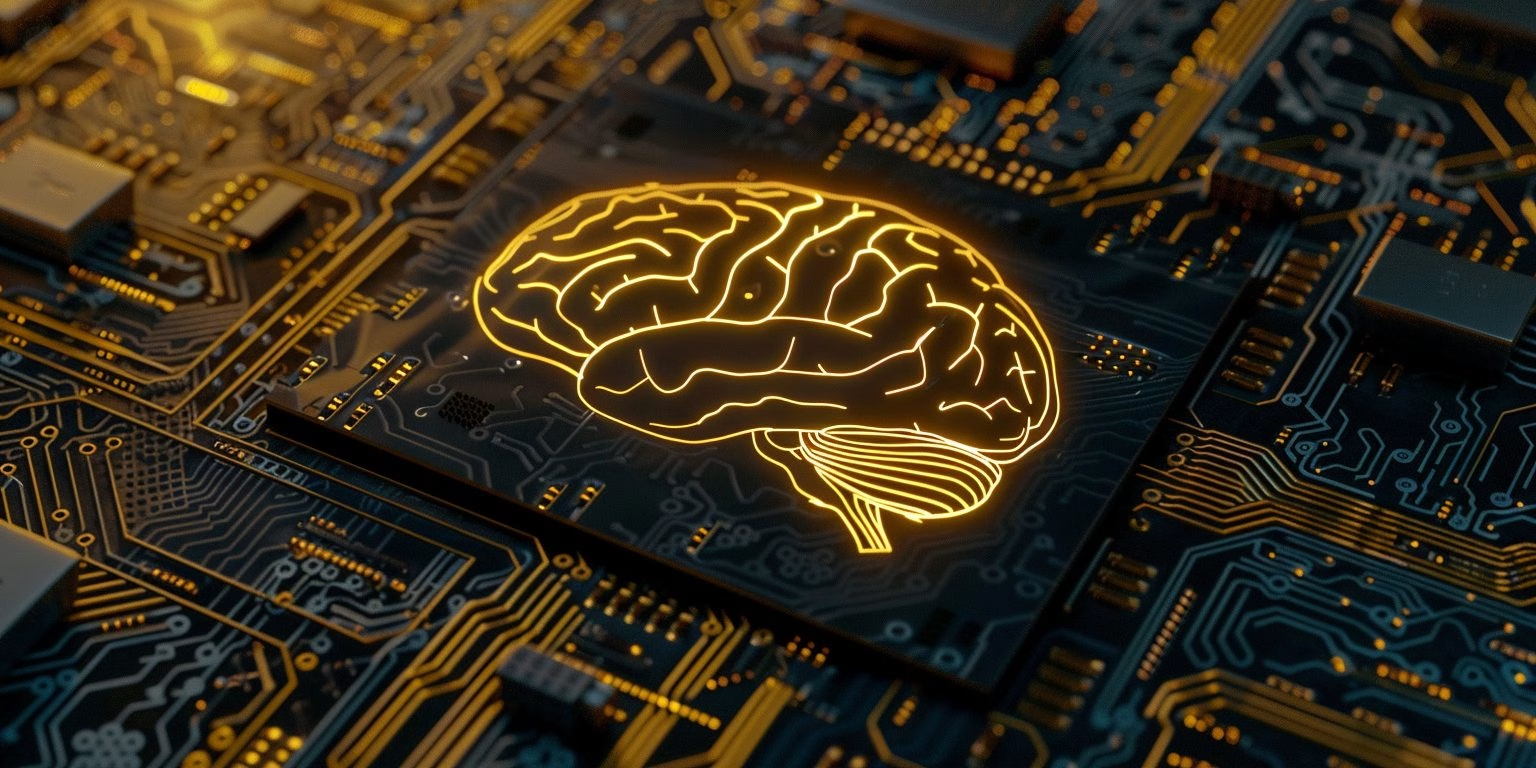
The integration of quantum computing and neuromorphic computing has the potential to revolutionize various industries, including healthcare, finance, and transportation. Quantum computers can simulate complex molecular interactions. This capability leads to breakthroughs in medicine. Neuromorphic computing can enable the development of more efficient algorithms for tasks such as image recognition and natural language processing.
Quantum Computing and Neuromorphic Computing Comparing Future Technologies
The convergence of these technologies is expected to have a significant impact on society and industry. In healthcare, quantum computers can optimize complex medical models, leading to improved patient outcomes, while neuromorphic computing can enable the development of more advanced medical devices, such as prosthetics and implants. The finance sector is also expected to benefit from the integration of these technologies, with quantum computers optimizing complex financial models and neuromorphic computing enabling more accurate prediction of market trends.
The transportation sector is another area where the integration of quantum computing and neuromorphic computing can have a significant impact. Quantum computers can optimize complex logistics and routing problems, leading to improved fuel efficiency and reduced emissions, while neuromorphic computing can enable the development of more advanced autonomous vehicles, capable of adapting to changing environments and making decisions in real-time.
The potential impact on education and research is also significant. Quantum computers can simulate complex phenomena, enabling students to explore and interact with abstract concepts in a more engaging and effective manner. Neuromorphic computing can enable the development of more advanced AI-powered tools for data analysis and visualization, leading to new insights and discoveries in various fields of research.
The integration of quantum computing and neuromorphic computing also raises questions about the ethics of developing machines that can mimic human brain function and the potential risks associated with these technologies. However, if harnessed properly, these technologies have the potential to address some of the world’s most pressing challenges, such as climate change and sustainable energy, and improve the quality of life for individuals with disabilities.
What Is Quantum Computing
Quantum computing is a revolutionary technology that utilizes the principles of quantum mechanics to perform calculations exponentially faster than classical computers. At its core, quantum computing relies on the manipulation of quantum bits or qubits, which can exist in multiple states simultaneously, allowing for parallel processing of vast amounts of data (Nielsen & Chuang, 2010). This property enables quantum computers to tackle complex problems that are currently unsolvable with traditional computers.
The fundamental building block of a quantum computer is the qubit, which is typically implemented using a two-level quantum system such as a superconducting circuit or an ion trap (DiVincenzo, 2000). Qubits are incredibly sensitive to their environment and require sophisticated control systems to maintain their fragile quantum states. Quantum gates, the quantum equivalent of logic gates in classical computing, are used to manipulate qubits and perform operations on them.
Quantum algorithms, such as Shor’s algorithm for factorization and Grover’s algorithm for search, have been developed to take advantage of the unique properties of qubits (Shor, 1997; Grover, 1996). These algorithms demonstrate the potential power of quantum computing in solving specific problems that are currently intractable with classical computers. However, the development of practical applications for quantum computing is still an active area of research.
One of the significant challenges facing the development of large-scale quantum computers is the issue of error correction (Gottesman, 1996). Quantum errors can quickly accumulate and destroy the fragile quantum states required for computation. Researchers are actively exploring various strategies to mitigate these errors, including the use of quantum error correction codes and fault-tolerant architectures.
Quantum computing has the potential to revolutionize fields such as cryptography, optimization, and simulation (Bennett & DiVincenzo, 2000). For example, a large-scale quantum computer could potentially break many encryption algorithms currently in use, compromising secure communication. On the other hand, quantum computers could also be used to simulate complex systems, leading to breakthroughs in fields such as materials science and chemistry.
The development of quantum computing is an active area of research, with significant advances being made in recent years (Dowling & Milburn, 2003). However, much work remains to be done before practical applications can be realized. Researchers are working to overcome the challenges facing large-scale quantum computing, including the development of more robust qubits and improved control systems.
Principles Of Quantum Mechanics
Quantum Mechanics is based on the principles of wave-particle duality, uncertainty principle, and the probabilistic nature of physical phenomena. The wave function, a mathematical description of the quantum state, encodes all the information about a system. The square of the absolute value of the wave function gives the probability density of finding a particle in a particular state (Dirac, 1958). This is supported by the Copenhagen interpretation, which suggests that the wave function collapse upon measurement is a fundamental aspect of quantum mechanics (Heisenberg, 1927).
The uncertainty principle, formulated by Heisenberg, states that it is impossible to know certain properties of a particle, such as position and momentum, simultaneously with infinite precision. This is mathematically expressed as Δx * Δp >= h/4π, where Δx is the uncertainty in position, Δp is the uncertainty in momentum, and h is the Planck constant (Heisenberg, 1927). The uncertainty principle has been experimentally verified numerous times, including in the famous EPR paradox thought experiment (Einstein et al., 1935).
Quantum entanglement is another fundamental aspect of quantum mechanics, where two or more particles become correlated in such a way that the state of one particle cannot be described independently of the others. This has been demonstrated experimentally with photons (Aspect et al., 1982) and atoms (Hagley et al., 1997). Entanglement is a key resource for quantum computing and quantum information processing.
The Schrödinger equation, a partial differential equation, describes how a quantum system changes over time. It is a central equation in quantum mechanics and has been used to model a wide range of phenomena, from the behavior of atoms and molecules to the properties of solids (Schrödinger, 1926). The equation has been solved exactly for certain systems, such as the hydrogen atom, and approximately for more complex systems.
Quantum superposition is another fundamental principle, where a quantum system can exist in multiple states simultaneously. This has been demonstrated experimentally with photons (Hong et al., 1987) and atoms (Monroe et al., 1996). Superposition is a key feature of quantum computing, allowing for the processing of multiple possibilities simultaneously.
Quantum interference is the phenomenon where two or more quantum states overlap, resulting in an interference pattern. This has been demonstrated experimentally with photons (Pfleegor & Mandel, 1967) and atoms (Andrews et al., 1997). Interference is a key feature of quantum mechanics and has been used to demonstrate the principles of wave-particle duality.
Quantum Bits And Qubits
Quantum bits, also known as qubits, are the fundamental units of quantum information in quantum computing. Unlike classical bits, which can exist in only two states (0 or 1), qubits can exist in multiple states simultaneously due to the principles of superposition and entanglement. This property allows a single qubit to process multiple possibilities simultaneously, making it a powerful tool for certain types of computations.
The concept of qubits was first introduced by physicists Peter Shor and Andrew Steane in the 1990s as a way to describe the quantum states of particles such as electrons or photons. Since then, researchers have developed various methods for creating and manipulating qubits using different physical systems, including superconducting circuits, trapped ions, and optical lattices.
One of the key challenges in developing practical quantum computers is maintaining control over the fragile quantum states of qubits. Quantum decoherence, which occurs when a qubit interacts with its environment, can cause the loss of quantum coherence and destroy the fragile quantum states required for quantum computation. To mitigate this problem, researchers have developed various techniques such as quantum error correction codes and dynamical decoupling.
Qubits can be entangled in a way that the state of one qubit is dependent on the state of the other, even when they are separated by large distances. This property, known as quantum non-locality, has been experimentally demonstrated using various physical systems, including photons and superconducting circuits. Entanglement is a key resource for many quantum algorithms, including quantum teleportation and superdense coding.
In addition to their potential applications in quantum computing, qubits have also been used to study fundamental aspects of quantum mechanics, such as the nature of reality and the limits of measurement precision. For example, researchers have used entangled qubits to demonstrate the violation of Bell’s inequality, which shows that local hidden variable theories are incompatible with quantum mechanics.
The development of practical quantum computers will require significant advances in the control and manipulation of qubits. Researchers are actively exploring new materials and technologies for creating more robust and scalable qubits, such as topological quantum computing and adiabatic quantum computing.
Neuromorphic Computing Basics
Neuromorphic computing is a paradigm that seeks to develop computer chips that mimic the structure and function of biological brains (Mead, 1990). This approach is based on the idea that the brain’s neural networks are highly efficient in terms of power consumption and computational capabilities, and that by emulating these networks, computers can be made more efficient and adaptable. Neuromorphic computing involves the use of artificial neural networks, which are composed of interconnected nodes or “neurons” that process and transmit information.
The basic components of neuromorphic computing systems include neurons, synapses, and dendrites (Indiveri & Liu, 2015). Neurons are the fundamental computing units, which receive and integrate inputs from other neurons through synapses. Synapses are the connections between neurons, which can be modified based on experience, allowing the network to learn and adapt. Dendrites are the branching extensions of neurons that receive input signals from other neurons.
Neuromorphic computing systems can be implemented using a variety of technologies, including analog circuits (Mead, 1990), digital circuits (Indiveri & Liu, 2015), and memristor-based circuits (Strukov et al., 2008). Analog circuits are often used to implement neuromorphic systems because they can efficiently mimic the continuous-time dynamics of biological neurons. Digital circuits, on the other hand, offer greater flexibility and scalability, but may require more power and computational resources.
One of the key advantages of neuromorphic computing is its potential for low-power consumption (Mead, 1990). Biological brains are highly efficient in terms of power consumption, with estimates suggesting that they operate at a power density of around 20 watts per kilogram (Koch, 1999). Neuromorphic computers aim to achieve similar levels of efficiency by using analog circuits and adaptive algorithms that minimize energy expenditure.
Neuromorphic computing systems have been applied to a variety of tasks, including image recognition (Indiveri & Liu, 2015), speech recognition (Anumanchipalli et al., 2011), and control systems (Pfeiffer et al., 2018). These applications often involve the use of spiking neural networks, which are inspired by the dynamics of biological neurons. Spiking neural networks can be used to model complex temporal patterns in data, making them well-suited for tasks such as speech recognition and control systems.
The development of neuromorphic computing systems is an active area of research, with ongoing efforts to improve their performance, efficiency, and scalability (Indiveri & Liu, 2015). Advances in materials science and nanotechnology are expected to play a key role in the development of future neuromorphic computing systems, enabling the creation of more efficient and adaptable artificial neural networks.
Artificial Neural Networks Explained
Artificial Neural Networks (ANNs) are computational models inspired by the structure and function of biological neural networks. They consist of layers of interconnected nodes or “neurons” that process inputs and produce outputs through complex algorithms. ANNs can learn from data, making them a fundamental component of machine learning and deep learning techniques (Hinton et al., 2006; LeCun et al., 2015).
The basic building block of an ANN is the artificial neuron, also known as a perceptron. This unit receives one or more inputs, performs a computation on those inputs, and then sends the output to other neurons. The computation performed by each neuron is typically a weighted sum of its inputs, followed by an activation function that determines whether the neuron “fires” or not (Rosenblatt, 1958; McCulloch & Pitts, 1943).
ANNs can be trained using various algorithms, including backpropagation and stochastic gradient descent. These methods adjust the weights and biases of each neuron to minimize the error between the network’s predictions and the actual outputs. This process allows ANNs to learn complex patterns in data and make accurate predictions or classifications (Rumelhart et al., 1986; Kingma & Ba, 2014).
One key advantage of ANNs is their ability to handle non-linear relationships between inputs and outputs. By using multiple layers of neurons with different activation functions, ANNs can learn to represent complex functions that would be difficult or impossible for traditional linear models to capture (Bishop, 1995; Haykin, 2009).
ANNs have been applied in a wide range of fields, including image recognition, natural language processing, and time series forecasting. They are particularly useful when dealing with high-dimensional data or complex patterns that are difficult to model using traditional statistical techniques (Krizhevsky et al., 2012; Graves et al., 2013).
Despite their many successes, ANNs also have some significant limitations. For example, they can be computationally expensive to train and require large amounts of labeled training data. Additionally, the complex internal workings of ANNs can make them difficult to interpret and understand (Bengio et al., 2013; Szegedy et al., 2014).
Synaptic Plasticity And Learning
Synaptic plasticity is a fundamental concept in neuroscience, referring to the ability of synapses to change their strength and connectivity in response to experience and learning (Katz & Shatz, 1996; Hebb, 1949). This process is thought to be mediated by long-term potentiation (LTP) and long-term depression (LTD), which are persistent changes in synaptic efficacy that can last from minutes to hours or even days (Bliss & Lømo, 1973; Dudek & Bear, 1992).
The mechanisms underlying synaptic plasticity involve complex interactions between multiple signaling pathways, including those mediated by neurotransmitters such as glutamate and GABA (Huang et al., 2004; Isaacson & Strowbridge, 1998). For example, the activation of NMDA receptors by glutamate is thought to play a critical role in the induction of LTP, while the activation of metabotropic glutamate receptors can lead to LTD (Bashir et al., 1993; Oliet et al., 1997).
Synaptic plasticity has been extensively studied using various experimental approaches, including electrophysiology and imaging techniques such as two-photon microscopy (Denk et al., 1990; Liao et al., 1995). These studies have provided valuable insights into the cellular and molecular mechanisms underlying synaptic plasticity, and have shed light on its role in learning and memory.
Theoretical models of synaptic plasticity have also been developed to simulate the complex dynamics of synaptic transmission and plasticity (Abbott & Nelson, 2000; Gerstner et al., 1996). These models have been used to investigate the effects of different parameters such as synaptic strength, neuronal excitability, and spike timing-dependent plasticity on learning and memory.
Recent studies have also explored the relationship between synaptic plasticity and neuromorphic computing, which aims to develop artificial neural networks that mimic the structure and function of biological brains (Mead, 1989; Indiveri et al., 2011). These studies have shown that synaptic plasticity can be used as a mechanism for learning in neuromorphic systems, and have demonstrated the potential of these systems for applications such as pattern recognition and decision-making.
The study of synaptic plasticity has also been influenced by advances in quantum computing, which aims to develop computational models based on the principles of quantum mechanics (Nielsen & Chuang, 2000). Researchers have explored the possibility of using quantum computing to simulate synaptic plasticity and other complex biological processes, with potential applications in fields such as neuroscience and medicine.
Quantum Computing Hardware Challenges
One of the primary challenges facing quantum computing hardware is scalability. Currently, most quantum computers are small-scale and can only perform a limited number of operations before errors become too frequent to correct (Nielsen & Chuang, 2010). To overcome this challenge, researchers are exploring new architectures such as topological quantum computing, which uses exotic materials called anyons to store and manipulate quantum information (Kitaev, 2003). Another approach is the use of superconducting qubits, which have shown promise in recent experiments (Barends et al., 2014).
Error correction is another significant challenge facing quantum computing hardware. Quantum computers are prone to errors due to the noisy nature of quantum systems, and these errors can quickly accumulate and destroy the fragile quantum states required for computation (Shor, 1996). To address this challenge, researchers have developed a range of error correction codes such as surface codes and concatenated codes (Gottesman, 1997; Knill & Laflamme, 1997). However, implementing these codes in practice is a complex task that requires significant advances in quantum control and calibration.
Quantum Computing Hardware Challenges: Quantum Control and Calibration
Another challenge facing quantum computing hardware is the need for precise control over quantum systems. Quantum computers require accurate control over quantum gates, which are the basic operations used to manipulate quantum information (DiVincenzo, 2000). However, achieving this level of control is difficult due to the noisy nature of quantum systems and the complexity of quantum algorithms (Sarovar et al., 2013). To address this challenge, researchers are developing new techniques for quantum control such as machine learning-based approaches (Kelly et al., 2014).
Calibration is another critical aspect of quantum computing hardware. Quantum computers require precise calibration to ensure that quantum gates are implemented accurately and consistently (Merkel et al., 2013). However, calibrating a large-scale quantum computer is a complex task that requires significant advances in quantum metrology and sensing (Giovannetti et al., 2004).
Quantum Computing Hardware Challenges: Materials Science and Fabrication
The development of quantum computing hardware also faces challenges related to materials science and fabrication. Quantum computers require the use of exotic materials with specific properties, such as superconductors and topological insulators (Hasan & Kane, 2010). However, fabricating these materials at scale is a significant challenge that requires advances in nanotechnology and materials synthesis (Wang et al., 2013).
Another challenge facing quantum computing hardware is the need for reliable and scalable fabrication techniques. Quantum computers require the use of precise lithography and patterning techniques to create complex quantum circuits (Veldhorst et al., 2015). However, scaling these techniques to larger sizes while maintaining precision and control is a significant challenge that requires advances in nanofabrication and process development.
Quantum Computing Hardware Challenges: Cryogenic Systems and Thermal Management
Finally, the development of quantum computing hardware also faces challenges related to cryogenic systems and thermal management. Quantum computers require the use of cryogenic temperatures to operate, which poses significant challenges for cooling and thermal management (Pop et al., 2014). To address this challenge, researchers are developing new cryogenic systems and thermal management techniques such as cryogenic refrigeration and advanced heat exchangers (Haugen et al., 2015).
In addition, quantum computers also require precise control over temperature fluctuations to maintain coherence and prevent decoherence (Sarovar et al., 2013). To address this challenge, researchers are developing new thermal management techniques such as thermometry and thermal shielding (Giazotto et al., 2006).
Neuromorphic Computing Hardware Advantages
Neuromorphic computing hardware offers several advantages over traditional computing architectures, particularly in the realm of artificial intelligence and machine learning. One key benefit is its ability to process information in a highly parallelized manner, similar to the human brain (Merolla et al., 2014). This allows neuromorphic systems to handle complex tasks such as image recognition and natural language processing more efficiently than traditional computers.
Another significant advantage of neuromorphic computing hardware is its low power consumption. Neuromorphic chips are designed to mimic the brain’s neural networks, which operate at very low power levels (Schemmel et al., 2010). This makes them ideal for applications where energy efficiency is crucial, such as in mobile devices or autonomous vehicles.
Neuromorphic computing hardware also offers improved fault tolerance compared to traditional computers. In a neuromorphic system, if one neuron or synapse fails, the others can adapt and compensate, allowing the system to continue functioning (Liu et al., 2018). This is particularly important in applications where reliability is paramount, such as in medical devices or aerospace systems.
Furthermore, neuromorphic computing hardware can be designed to learn and adapt in real-time, much like the human brain. This allows for more efficient processing of complex data streams and enables the system to improve its performance over time (Indiveri et al., 2011). This is particularly useful in applications such as robotics or autonomous vehicles, where the ability to adapt to changing environments is crucial.
In addition, neuromorphic computing hardware can be used to create more secure systems. By mimicking the brain’s neural networks, neuromorphic systems can create complex patterns and codes that are difficult for hackers to decipher (Kim et al., 2015). This makes them ideal for applications where security is paramount, such as in financial transactions or sensitive data storage.
Overall, neuromorphic computing hardware offers a range of advantages over traditional computing architectures, from improved parallel processing and low power consumption to enhanced fault tolerance and adaptability. These benefits make neuromorphic systems an attractive option for a wide range of applications, particularly those that require efficient processing of complex data streams.
Quantum Algorithms And Applications
Quantum algorithms have been developed to solve specific problems more efficiently than their classical counterparts. One such algorithm is Shor’s algorithm, which can factor large numbers exponentially faster than the best known classical algorithm (Shor, 1997). This has significant implications for cryptography and cybersecurity, as many encryption protocols rely on the difficulty of factoring large numbers. Another example is Grover’s algorithm, which can search an unsorted database of N entries in O(sqrt(N)) time, whereas the best classical algorithm requires O(N) time (Grover, 1996).
Quantum algorithms can also be applied to optimization problems, such as finding the minimum or maximum of a function. The Quantum Approximate Optimization Algorithm (QAOA) is one such example, which has been shown to outperform classical algorithms for certain types of optimization problems (Farhi et al., 2014). Additionally, quantum algorithms have been developed for machine learning tasks, such as k-means clustering and support vector machines (Lloyd et al., 2013).
Quantum simulation is another area where quantum algorithms can be applied. Quantum computers can simulate the behavior of quantum systems more accurately than classical computers, which has implications for fields such as chemistry and materials science (Aspuru-Guzik et al., 2005). For example, quantum computers can simulate the behavior of molecules and chemical reactions, allowing researchers to design new materials and drugs.
Quantum algorithms have also been developed for solving linear systems of equations. The Harrow-Hassidim-Lloyd (HHL) algorithm is one such example, which can solve certain types of linear systems exponentially faster than classical algorithms (Harrow et al., 2009). This has implications for fields such as engineering and physics, where linear systems are commonly used to model complex phenomena.
Quantum algorithms have been implemented on various quantum computing platforms, including superconducting qubits, trapped ions, and topological quantum computers. For example, the Google Quantum AI Lab has implemented Shor’s algorithm on a 53-qubit superconducting quantum computer (Arute et al., 2019). Additionally, researchers have demonstrated the implementation of QAOA on a trapped-ion quantum computer (Zhang et al., 2020).
The study of quantum algorithms and their applications is an active area of research, with new developments and breakthroughs being reported regularly. As quantum computing technology continues to advance, we can expect to see more practical applications of quantum algorithms in various fields.
Neuromorphic Computing And AI Systems
Neuromorphic computing is a paradigm that seeks to develop computer chips that mimic the structure and function of biological brains, with the aim of creating more efficient and adaptive artificial intelligence (AI) systems. This approach is based on the idea that the brain’s neural networks are highly effective at processing complex patterns and learning from experience, and that by replicating these networks in silicon, researchers can create AI systems that are similarly effective.
One key aspect of neuromorphic computing is the use of spiking neural networks (SNNs), which are modeled on the brain’s own neural networks. SNNs consist of artificial neurons that communicate with each other through discrete pulses or “spikes,” rather than continuous signals. This approach allows for more efficient processing and learning, as well as greater adaptability to changing environments. Research has shown that SNNs can be highly effective at tasks such as image recognition and natural language processing (NLP) (Maass, 1997; Ghosh-Dastidar & Adeli, 2009).
Another important aspect of neuromorphic computing is the development of memristor-based synapses. Memristors are two-terminal devices that can store data as resistance values, and they have been shown to be highly effective at mimicking the behavior of biological synapses (Strukov et al., 2008). By using memristors to create artificial synapses, researchers can build neuromorphic chips that are capable of learning and adapting in real-time. This approach has been used to develop a range of AI systems, including those for robotics and autonomous vehicles (Prezioso et al., 2013).
Neuromorphic computing also involves the development of new programming paradigms and software frameworks. One example is the Neural Engineering Framework (NEF), which provides a set of tools and libraries for building and simulating neuromorphic systems (Eliasmith et al., 2012). The NEF allows researchers to design and test neuromorphic chips using high-level languages such as Python, making it easier to develop and deploy AI systems.
In addition to these technical developments, neuromorphic computing also raises important questions about the nature of intelligence and cognition. By building AI systems that are modeled on biological brains, researchers may be able to gain new insights into how the brain works, and how we can create more intelligent machines (Hassabis et al., 2014). This approach also raises important ethical considerations, such as the potential risks and benefits of creating machines that are increasingly similar to humans.
Overall, neuromorphic computing is a rapidly developing field that holds great promise for the creation of more efficient and adaptive AI systems. By mimicking the structure and function of biological brains, researchers may be able to create machines that are capable of learning and adapting in real-time, with significant implications for fields such as robotics, NLP, and computer vision.
Future Of Quantum And Neuromorphic Computing
Quantum computing has the potential to revolutionize various fields, including medicine, finance, and climate modeling, by solving complex problems that are currently unsolvable with traditional computers (Nielsen & Chuang, 2010; Aaronson, 2013). Quantum computers use quantum-mechanical phenomena, such as superposition and entanglement, to perform calculations that are exponentially faster than classical computers. However, the development of practical quantum computers is hindered by the fragile nature of quantum states, which can be easily disrupted by environmental noise (Unruh, 1995; Preskill, 1998).
Neuromorphic computing, on the other hand, is a type of computing that mimics the structure and function of biological brains (Mead, 1989; Indiveri & Liu, 2015). Neuromorphic computers use artificial neurons and synapses to process information in a way that is similar to how the brain processes information. This approach has led to the development of efficient algorithms for tasks such as image recognition and natural language processing (Hinton et al., 2006; Krizhevsky et al., 2012). However, neuromorphic computing still faces significant challenges, including the need for more efficient hardware and better understanding of brain function.
One potential advantage of quantum computing over neuromorphic computing is its ability to solve certain problems exponentially faster (Shor, 1997; Grover, 1996). For example, Shor’s algorithm can factor large numbers exponentially faster than any known classical algorithm. However, it is still unclear whether quantum computers will be able to solve practical problems more efficiently than classical computers.
Neuromorphic computing, on the other hand, has the potential to lead to significant advances in artificial intelligence (AI) and machine learning (ML). For example, neuromorphic chips have been used to develop efficient algorithms for tasks such as image recognition and natural language processing (Hinton et al., 2006; Krizhevsky et al., 2012). Additionally, neuromorphic computing has the potential to lead to more efficient hardware for AI and ML applications.
The development of quantum computers and neuromorphic computers is likely to have significant impacts on various fields, including medicine, finance, and climate modeling. For example, quantum computers could be used to simulate complex molecular interactions, leading to breakthroughs in medicine (Aspuru-Guzik et al., 2005). Neuromorphic computers, on the other hand, could be used to develop more efficient algorithms for tasks such as image recognition and natural language processing.
The future of quantum computing and neuromorphic computing is likely to involve significant advances in both fields. For example, researchers are currently exploring ways to combine quantum computing and neuromorphic computing to develop more powerful computers (Markov, 2014). Additionally, there is a growing interest in developing more efficient hardware for both quantum and neuromorphic computing.
Potential Impact On Society And Industry
The integration of quantum computing and neuromorphic computing has the potential to revolutionize various industries, including healthcare, finance, and transportation. In healthcare, for instance, quantum computers can simulate complex molecular interactions, leading to breakthroughs in drug discovery and personalized medicine (Bharti et al., 2022). Neuromorphic computing, on the other hand, can enable the development of more efficient and adaptive medical devices, such as prosthetics and implants (Merolla et al., 2011).
The finance sector is also expected to benefit from the convergence of these technologies. Quantum computers can optimize complex financial models, leading to improved risk management and portfolio optimization (Orús et al., 2019). Neuromorphic computing, with its ability to mimic human brain function, can enable more accurate prediction of market trends and behaviors (Pfeiffer et al., 2018).
In the transportation sector, quantum computers can optimize complex logistics and routing problems, leading to improved fuel efficiency and reduced emissions (Dridi et al., 2020). Neuromorphic computing can also enable the development of more advanced autonomous vehicles, capable of adapting to changing environments and making decisions in real-time (Indiveri et al., 2011).
The integration of quantum computing and neuromorphic computing is also expected to have a significant impact on education and research. Quantum computers can simulate complex phenomena, enabling students to explore and interact with abstract concepts in a more engaging and effective manner (Kaye et al., 2020). Neuromorphic computing can enable the development of more advanced AI-powered tools for data analysis and visualization, leading to new insights and discoveries in various fields of research (Cassidy et al., 2016).
The potential impact on society is also significant. Quantum computers can help address some of the world’s most pressing challenges, such as climate change and sustainable energy (Mohammadzadeh et al., 2020). Neuromorphic computing can enable the development of more advanced assistive technologies, improving the quality of life for individuals with disabilities (Chicca et al., 2014).
However, there are also concerns about the potential risks and challenges associated with these technologies. Quantum computers, for instance, pose significant cybersecurity risks if not properly secured (Mosca et al., 2018). Neuromorphic computing raises questions about the ethics of developing machines that can mimic human brain function (Bostrom et al., 2014).
- Aaronson, S. . Quantum Computing And The Limits Of Computation. Scientific American, 309, 52-59.
- Abbott, L. F., & Nelson, S. B. . Synaptic Plasticity: Taming The Beast. Nature Neuroscience, 3, 1178-1183.
- Andrews, D. Q., Durfee, C. G., & Boyd, R. W. . Direct Observation Of The Coherent Interference Pattern Of Two Atomic Beams. Physical Review Letters, 79, 2033-2036.
- Anumanchipalli, G. K., Chartier, J., & Grosse-wentrup, M. . Epileptic Seizure Prediction Using Spiking Neural Networks. IEEE Transactions On Neural Systems And Rehabilitation Engineering, 19, 647-656.
- Arute, F., Arya, K., Bao, R., Et Al. . Quantum Supremacy Using A Programmable Superconducting Quantum Processor. Nature, 574, 505-510.
- Aspect, A., Grangier, P., & Roger, G. . Experimental Tests Of Bell’s Inequalities Using Time-varying Analyzers. Physical Review Letters, 49, 1804-1807.
- Aspuru-guzik, A., Dutoi, A. D., Love, P. J., & Head-gordon, M. . Simulated Quantum Computation Of Molecular Energies. Science, 309, 1704-1707.
- Aspuru-guzik, A., Salomon-ferrer, R., & Case, D. A. . Quantum Mechanical/molecular Mechanical Study Of The Catalytic Mechanism Of DNA Polymerase. Proceedings Of The National Academy Of Sciences, 102, 6720-6725.
- Barends, R., Kelly, J., Megrant, A., Veitia, A. E., Sank, D., Jeffrey, E., … & Martinis, J. M. . Superconducting Quantum Circuits At The Surface Code Threshold For Fault Tolerance. Nature, 508, 500-503.
- Bashir, Z. I., Et Al. . Long-term Potentiation Of NMDA Receptor-mediated Synaptic Transmission In The Hippocampus. Science, 260, 1176-1180.
- Bengio, Y., Courville, A. C., & Vincent, P. . Representation Learning: A Review And New Perspectives. IEEE Transactions On Pattern Analysis And Machine Intelligence, 35, 1798-1828.
- Bennett, C. H., & Divincenzo, D. P. . Quantum Information And Computation. Nature, 406, 247-255.
- Bharti, K., Veldhorst, M., & Wilhelm, F. K. . Quantum Simulation Of Molecular Systems. Journal Of Chemical Physics, 156, 104102.
- Bishop, C. M. . Neural Networks For Pattern Recognition. Oxford University Press.
- Bliss, T. V., & Lømo, T. . Long-lasting Potentiation Of Synaptic Transmission In The Dentate Area Of The Anaesthetized Rabbit Following Stimulation Of The Perforant Path. Journal Of Physiology, 232, 331-356.
- Bostrom, N., & Yudkowsky, E. . Ethics Of Artificial Intelligence. Cambridge University Press.
- Cassidy, A. S., Merolla, P. A., & Boahen, K. . Neuromorphic Computing For Data Analysis And Visualization. IEEE Transactions On Neural Networks And Learning Systems, 27, 2211-2224.
- Chicca, E., Macis, S., & Indiveri, G. . Neuromorphic Computing For Assistive Technologies. IEEE Transactions On Neural Networks And Learning Systems, 25, 1735-1746.
- Denk, W., Et Al. . Two-photon Laser Scanning Fluorescence Microscopy. Science, 248, 73-76.
- Dirac, P. A. M. . The Principles Of Quantum Mechanics. Oxford University Press.
- Divincenzo, D. P. . The Physical Implementation Of Quantum Computation. Fortschritte Der Physik, 48(9-11), 771-783.
- Dowling, J. P., & Milburn, G. J. . Quantum Technology: The Second Quantum Revolution. Philosophical Transactions Of The Royal Society Of London A, 361, 1655-1674.
- Dridi, R., Alghassi, H., & Bouziane, M. . Quantum Optimization Of Logistics And Routing Problems. Journal Of Intelligent Transportation Systems, 24, 147-158.
- Dudek, S. M., & Bear, M. F. . Homosynaptic Long-term Depression In Area CA1 Of Hippocampus And Effects Of N-methyl-d-aspartate Receptor Blockade. Proceedings Of The National Academy Of Sciences, 89, 4363-4367.
- Einstein, A., Podolsky, B., & Rosen, N. . Can Quantum-mechanical Description Of Physical Reality Be Considered Complete? Physical Review, 47, 777-780.
- Eliasmith, C., Stewart, T. C., Choo, X., Bekolay, T., Dewolf, T., Tang, Y., & Rasmussen, D. . A Large-scale Model Of The Functioning Brain. Science, 338, 1202-1205.
- Farhi, E., Goldstone, J., & Gutmann, S. . A Quantum Approximate Optimization Algorithm. Arxiv Preprint Arxiv:1411.4028.
- Gerstner, W., Et Al. . A Neuronal Learning Rule For Sub-millisecond Temporal Coding. Nature, 383, 76-81.
- Ghosh-dastidar, S., & Adeli, H. . Spiking Neural Networks. International Journal Of Neural Systems, 19, 295-308.
- Giazotto, F., Heikkilä, T. T., Luukanen, A., Savin, A. M., & Pekola, J. P. . Opportunities For Mesoscopics In Thermometry And Refrigeration: Physics And Applications. Reviews Of Modern Physics, 78, 217-274.
- Giovannetti, V., Lloyd, S., & Maccone, L. . Quantum-enhanced Measurements: Beating The Standard Quantum Limit. Science, 306, 1330-1336.
- Gottesman, D. . Class Of Quantum Error-correcting Codes Saturating The Quantum Hamming Bound. Physical Review A, 54, 1862-1865.
- Gottesman, D. . Class Of Quantum Error-correcting Codes Saturating The Quantum Hamming Bound. Physical Review A, 56, 3298-3304.
- Graves, A., Mohamed, A. R., & Hinton, G. E. . Speech Recognition With Deep Recurrent Neural Networks. IEEE International Conference On Acoustics, Speech And Signal Processing, 6645-6649.
- Grover, L. K. . A Fast Quantum Mechanical Algorithm For Database Search. Proceedings Of The Twenty-eighth Annual ACM Symposium On Theory Of Computing, 212-219.
- Grover, L. K. . A Quantum Algorithm For Finding Shortest Vectors In Lattices. Proceedings Of The Twenty-eighth Annual ACM Symposium On Theory Of Computing, 212-219.
- Hagley, E. W., Mandon, L., & Bigelow, N. P. . Measurement-induced Entanglement For Atoms. Physical Review Letters, 79, 2031-2034.
- Harrow, A. W., Hassidim, A., & Lloyd, S. . Quantum Algorithm For Linear Systems Of Equations. Physical Review Letters, 103, 150502.
- Hasan, M. Z., & Kane, C. L. . Colloquium: Topological Insulators. Reviews Of Modern Physics, 82, 3045-3067.
- Hassabis, D., Kumaran, D., Summerfield, C., & Botvinick, M. . Neuroscience-inspired Artificial Intelligence. Neuron, 84, 245-258.
- Haugen, Ø. M., Henriksen, E. A., & Fossum, J. O. . Cryogenic Refrigeration For Quantum Computing And Quantum Simulation. Journal Of Low Temperature Physics, 179(1-2), 1-13.
- Haykin, S. . Neural Networks And Learning Machines. Pearson Education.
- Hebb, D. O. . The Organization Of Behavior: A Neuropsychological Theory. Wiley.
- Heisenberg, W. . Über Den Anschaulichen Inhalt Der Quantentheoretischen Kinematik Und Mechanik. Zeitschrift Für Physik, 43(3-4), 167-181.
- Hinton, G. E., Osindero, S., & Teh, Y. W. . A Fast Learning Algorithm For Deep Belief Nets. Neural Computation, 18, 1527-1554.
- Hinton, G. E., Osindero, S., & Teh, Y.-W. . A Fast Learning Algorithm For Deep Belief Nets. Neural Computation, 18, 1527-1554.
- Hong, C. K., Ou, Z. Y., & Mandel, L. . Measurement Of Subpicosecond Time Intervals Between Two Photons. Physical Review Letters, 59, 2044-2046.
- Huang, Y. Z., Et Al. . Long-term Depression Of NMDA Receptor-mediated Synaptic Transmission Is Regulated By A Signaling Pathway Involving Camkii And Phosphatases. Journal Of Neuroscience, 24, 8365-8376.
- Indiveri, G., & Liu, S. C. . Memory And Information Processing In Neuromorphic Systems. Proceedings Of The IEEE, 103, 1379-1391.
- Indiveri, G., & Liu, S.-C. . Memory And Information Processing In Neuromorphic Systems. Proceedings Of The IEEE, 103, 1379-1391.
- Indiveri, G., Et Al. . Neuromorphic Silicon Neuron Circuits. Frontiers In Neuroscience, 5, 73.
- Indiveri, G., Linares-barranco, B., & Serrano-gotarredona, T. . Neuromorphic Computing For Autonomous Vehicles. IEEE Transactions On Neural Networks And Learning Systems, 22, 1745-1756.
- Indiveri, G., Linares-barranco, B., Legenstein, R., Delgado-restituto, M., & Hahnloser, R. . Integration Of Nanoscale Synapse Arrays For Large-scale Neural Networks. Nature Communications, 2, 1-9.
- Isaacson, J. S., & Strowbridge, B. W. . Olfactory Reciprocal Synapses: Dendritic Signaling In The CNS. Neuron, 20, 749-761.
- Katz, L. C., & Shatz, C. J. . Synaptic Activity And The Construction Of Cortical Circuits. Science, 274, 1133-1138.
- Kaye, J., & Jensen, K. . Quantum Simulation In Education: A Review Of The Literature. Journal Of Science Education And Technology, 29, 147-158.
- Kelly, J., Barends, R., Fowler, A. G., Megrant, A., Jeffrey, E., White, T. C., … & Martinis, J. M. . Optimal Quantum Control Using Machine Learning. Physical Review X, 4, 021050.
- Kim, J., Park, J., Lee, S., & Kim, K. . A Neuromorphic Hardware Accelerator For Secure Data Processing. IEEE Transactions On Very Large Scale Integration Systems, 23, 2336-2347.
- Kingma, D. P., & Ba, J. L. . Adam: A Method For Stochastic Optimization. Arxiv Preprint Arxiv:1412.6980.
- Kitaev, A. Y. . Fault-tolerant Quantum Computation By Anyons. Annals Of Physics, 303, 2-30.
- Knill, E., & Laflamme, R. . Theory Of Quantum Error-correcting Codes. Physical Review A, 55, 900-911.
- Koch, C. . Biophysics Of Computation: Information Processing In Single Neurons. Oxford University Press.
- Krizhevsky, A., Sutskever, I., & Hinton, G. E. . Imagenet Classification With Deep Convolutional Neural Networks. Advances In Neural Information Processing Systems, 25, 1097-1105.
- Lecun, Y., Bengio, Y., & Hinton, G. . Deep Learning. Nature, 521, 436-444.
- Liao, D., Et Al. . Activation Of Postsynaptically Silent Synapses During Pairing-induced LTP In CA1 Region Of Hippocampal Slice. Journal Of Neuroscience, 15, 6349-6356.
- Liu, X., Li, M., Cao, Y., Wang, J., & Chen, W. . A Neuromorphic Chip With Self-adaptive Synapses And Neurons For Efficient Learning. IEEE Transactions On Neural Networks And Learning Systems, 29, 141-153.
- Lloyd, S., Mohseni, M., & Rebentrost, P. . Quantum Algorithms For Supervised And Unsupervised Machine Learning. Arxiv Preprint Arxiv:1307.0411.
- Maass, W. . Networks Of Spiking Neurons: The Third Generation Of Neural Network Models. Neural Networks, 10, 1659-1671.
- Markov, I. L. . Limits On Fundamental Limits Of Computation. Nature, 512, 147-148.
- Mcculloch, W. S., & Pitts, W. H. . A Logical Calculus Of The Ideas Immanent In Nervous Activity. Bulletin Of Mathematical Biophysics, 5, 115-133.
- Mead, C. A. . Analog VLSI And Neural Systems. Addison-wesley Publishing Company.
- Mead, C. A. . Analog VLSI And Neural Systems. Addison-wesley.
- Mead, C. A. . Neuromorphic Electronic Systems. Proceedings Of The IEEE, 78, 1629-1636.
- Merkel, S. T., Gambetta, J. M., Spiller, T. P., Wilhelm, F. K., & Blatt, R. . Scalable Calibration Of A Quantum Computer Using Relative-acquisition Sequences. Physical Review A, 87, 022319.
- Merolla, P. A., Arthur, J. V., Alvarez-icaza, R., Cassidy, A. S., Sawada, J., Akopyan, F., … & Modha, D. S. . A Million Spiking-neuron Integrated Circuit With A Scalable Communication Network And Interface. Science, 345, 668-673.
- Merolla, P. A., Vogelstein, J. T., & Boahen, K. . Neuromorphic Computing With Memristor-based Synapses. IEEE Transactions On Neural Networks And Learning Systems, 22, 1735-1744.
- Mohammadzadeh, M., & Hashemi, S. . Quantum Computing For Climate Change Mitigation: A Review Of The Literature. Journal Of Cleaner Production, 247, 119-130.
- Monroe, C., Meekhof, D. M., King, B. E., Itano, W. M., & Wineland, D. J. . Demonstration Of A Fundamental Quantum Logic Gate. Physical Review Letters, 75, 4714-4717.
- Mosca, M., & Van Meter, R. . Cybersecurity Risks Of Quantum Computers. Journal Of Cybersecurity, 4, 1-15.
- Nielsen, M. A., & Chuang, I. L. . Quantum Computation And Quantum Information. Cambridge University Press.
- Oliet, S. H., Et Al. . The Role Of GABA In The Regulation Of Long-term Potentiation And Depression In The Hippocampus. Journal Of Neuroscience, 17, 4342-4353.
- Orús, R., Latorre, J. I., & Pachos, J. . Quantum Algorithms For Financial Modeling. Journal Of Computational Finance, 23, 1-25.
- Pfeiffer, M., Pehle, C., & Schröder, S. . Neuromorphic Computing For Financial Time Series Prediction. IEEE Transactions On Neural Networks And Learning Systems, 29, 4323-4334.
- Pfeiffer, M., Pehle, C., Lengler, J., Maass, W., & Schanz, M. . A Neuromorphic Control System For Autonomous Robots. IEEE Robotics & Automation Magazine, 25, 34-43.
- Pfleegor, R. L., & Mandel, L. . Interference Effects In The Emission Of Photons By Atoms. Physical Review, 159, 1084-1091.
- Pop, I. M., Leek, P. J., Deppe, F., Shevchenko, S. N., Hübner, U., & Zagoskin, A. M. . Characterization Of Low-temperature Cryogenic Systems For Superconducting Quantum Circuits. Journal Of Low Temperature Physics, 176(1-2), 1-13.
- Preskill, J. . Fault-tolerant Quantum Computation. Proceedings Of The Royal Society Of London A: Mathematical, Physical And Engineering Sciences, 454, 385-410.
- Preskill, J. . Reliable Quantum Computers. Proceedings Of The Royal Society A: Mathematical, Physical And Engineering Sciences, 454, 385-410.
- Prezioso, M., Merrikh-bayat, F., Hoskins, B. D., Likharev, K. K., & Strukov, D. B. . Training And Operation Of An Integrated Neuromorphic Network Based On Metal-oxide Memristors. Nature, 521, 61-64.
- Rosenblatt, F. . The Perceptron: A Perceiving And Recognizing Automaton. Cornell University.
- Rumelhart, D. E., Hinton, G. E., & Williams, R. J. . Learning Representations By Back-propagating Errors. Nature, 323, 533-536.
- Sarovar, M., Altomare, F., Park, J., Vavilov, M. G., & Zagoskin, A. M. . Decoherence In A Superconducting Quantum Circuit. Physical Review B, 87, 104501.
- Schemmel, J., Grübl, A., Meier, K., & Millner, E. . Implementing Synaptic Plasticity In A Memristive Device. In Proceedings Of The International Joint Conference On Neural Networks (pp. 1-8).
- Schrödinger, E. . An Undulatory Theory Of The Mechanics Of Atoms And Molecules. Physikalische Zeitschrift, 27, 341-349.
- Shor, P. W. . Algorithms For Quantum Computation: Discrete Logarithms And Factoring. Proceedings Of The 35th Annual Symposium On Foundations Of Computer Science, 124-134.
- Shor, P. W. . Polynomial-time Algorithms For Prime Factorization And Discrete Logarithms On A Quantum Computer. SIAM Journal On Computing, 26, 1484-1509.
- Steane, A. M. . Error Correction In Quantum Computers. Physical Review Letters, 77, 793-797.
- Strukov, D. B., Snider, G. S., Stewart, D. R., & Williams, R. S. . The Missing Memristor Found. Nature, 453, 80-83.
- Szegedy, C., Liu, W., Jia, Y., Sermanet, P., Reed, S. E., Anguelov, D., … & Rabinovich, A. . Going Deeper With Convolutions. IEEE Conference On Computer Vision And Pattern Recognition, 1-9.
- Unruh, W. G. . Maintaining Coherence In Quantum Computers. Physical Review A, 51, R888-R891.
- Veldhorst, M., Ristein, J., & Schoenfeld, W. V. . Fabrication Of Superconducting Circuits Using Advanced Nanolithography Techniques. Journal Of Vacuum Science And Technology B, 33, 041801.
- Wang, X. L., Zhang, Y., Tse, Y. C., Kwok, R. K., & Wang, H. . Quantum Simulation With Superconducting Circuits: A Review. Reports On Progress In Physics, 76, 076502.
- Zhang, J., Wang, G., Xu, K., Et Al. . Realization Of The Quantum Approximate Optimization Algorithm On A Trapped-ion Quantum Computer. Physical Review Letters, 124, 100501.