
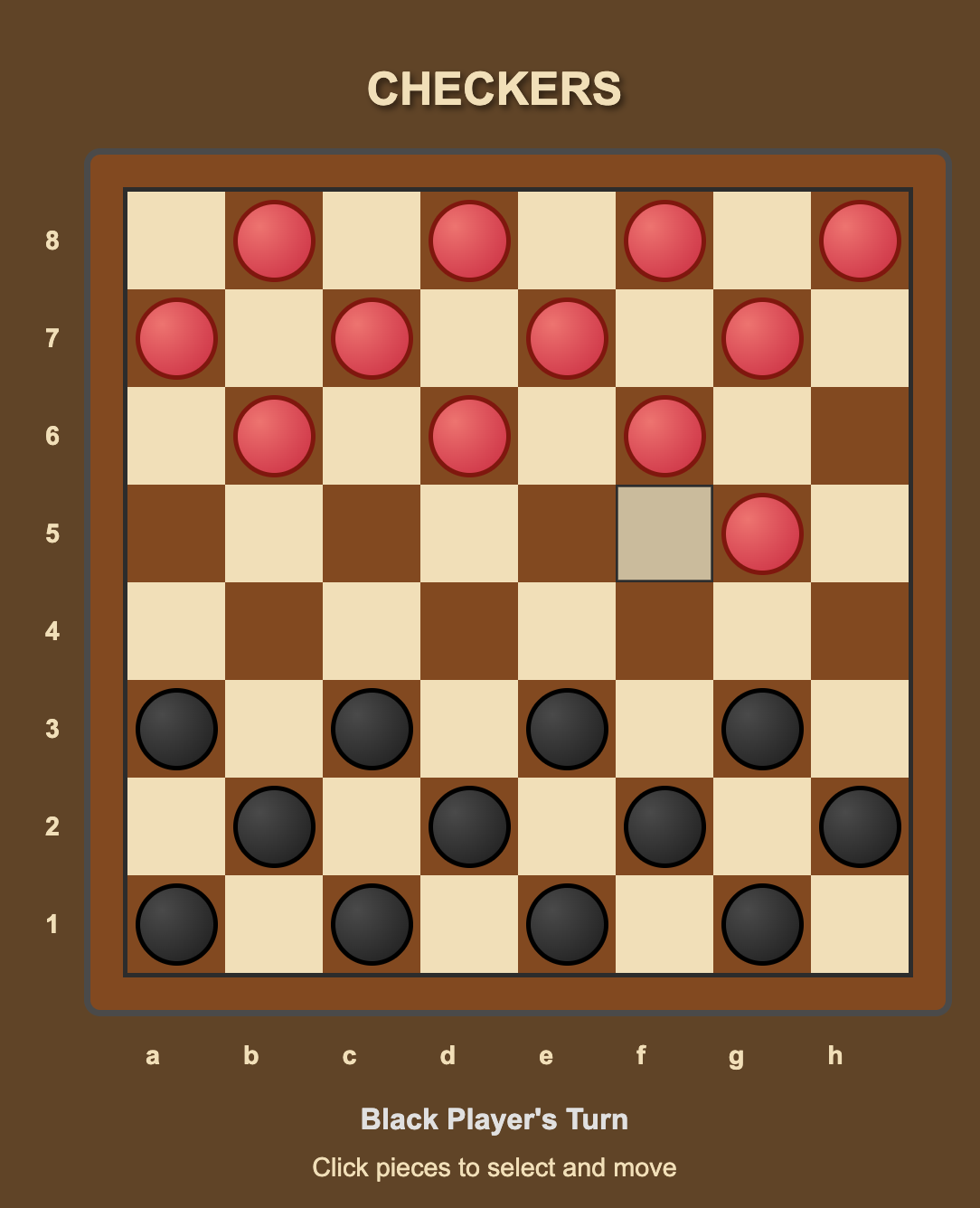
Researchers have developed a quantum version of checkers designed to help non-experts understand the mysterious world of quantum computing while simultaneously serving as a testing ground for artificial intelligence algorithms.
The game, dubbed “Cheqqers,” represents an ambitious attempt to bridge the growing gap between quantum technology’s rapid advancement and public understanding of its implications. As quantum computers edge closer to commercial viability, scientists worry that policy decisions about this transformative technology are being made by too narrow a circle of technical experts.
“It is hard for non-experts to contribute to discussions about the future of quantum technology, because they lack intuition and understanding of quantum phenomena,” the research team writes in their paper. Unlike familiar physical concepts such as gravity, quantum effects like superposition and entanglement are not encountered in daily life, making them difficult to grasp intuitively.
Graduated Learning Approach
The researchers, who have made their code open-source and launched a web version at cheqqers.com, designed the game with four distinct levels of “quantumness.” Players begin with ordinary checkers before gradually encountering quantum concepts in manageable doses.
Level zero maintains classical checkers rules entirely. Level one introduces superposition, allowing pieces to exist in multiple positions simultaneously until “measured” — whereupon they collapse to a single location based on quantum probability rules. Level two adds entanglement, creating correlated states between pieces that affect each other’s behaviour. Level three incorporates interference effects, where quantum phases can cause probabilities to increase or decrease when different parts of a superposition combine.
This tiered approach reflects growing recognition that quantum education requires careful scaffolding. Previous quantum games based on chess or tic-tac-toe proved either too complex or too simple for sustained engagement. Checkers, the researchers argue, strikes an optimal balance between accessibility and strategic depth.
Technical Implementation
The implementation poses significant computational challenges. Quantum states grow exponentially complex as more elements become entangled — a phenomenon that underlies both quantum computing’s potential power and its current limitations. Consumer computers struggle to simulate quantum systems involving more than 50 quantum bits.
The research team solved this by treating only genuinely quantum-mechanical aspects of the game state as quantum, while keeping classical elements separate. They used Google’s Cirq quantum computing framework, enabling the game to run on actual quantum computers as they become more accessible.
The user interface presents its own hurdles. Representing superposed and entangled pieces visually required innovative design choices. The team displays probability percentages in squares to show the likelihood of finding pieces there upon measurement, while connecting related pieces with blue lines to indicate quantum relationships.
AI Benchmark Results
Beyond education, quantum checkers serves as a benchmark for AI systems learning to navigate quantum environments — a capability that may prove crucial as quantum computing matures.
The researchers tested various AI agents against the game, from simple random players to sophisticated Monte Carlo Tree Search (MCTS) algorithms. Results revealed intriguing patterns: while MCTS agents consistently outperformed random players, their advantage diminished at higher quantum levels.
This degradation stems partly from increased complexity — quantum versions generate more possible moves per turn — but also from quantum mechanics’ inherent randomness, which can mask skill differences between players. The findings suggest that developing effective AI for quantum systems may require fundamentally new approaches beyond scaling up classical techniques.
Tournament results using Microsoft’s TrueSkill rating system confirmed that quantum elements genuinely alter gameplay dynamics rather than merely adding cosmetic complexity. Games lasted longer on average in quantum modes, partly because superposed pieces have lower capture probabilities, creating more defensive scenarios.
Educational and Strategic Implications
The research addresses a pressing policy challenge. Quantum computing’s potential to revolutionise fields from cryptography to drug discovery has attracted billions in government and private investment. Yet public understanding remains limited, potentially hampering informed decision-making about regulation, research priorities, and social implications.
Educational games offer one pathway to broader quantum literacy. The European Union and several national governments have identified quantum education as a strategic priority, recognising that tomorrow’s quantum workforce requires early exposure to quantum concepts.
The gaming approach also provides valuable insights into human quantum intuition development. As players advance through quantumness levels, they build mental models for phenomena that violate classical logic — skills potentially transferable to other quantum technologies.
Commercial and Research Applications
While primarily educational, quantum checkers demonstrates practical techniques applicable to commercial quantum game development. The modular architecture allowing seamless transitions between classical and quantum rules could inform business applications where quantum advantages are situational rather than universal.
The research also contributes to the emerging field of quantum artificial intelligence. As quantum computers become more powerful, understanding how to design AI systems that can exploit quantum parallelism and interference effects becomes increasingly valuable.
Future Directions
The researchers identify several expansion opportunities. Alternative checkers variants could provide quantum versions, while more sophisticated AI algorithms might better exploit quantum strategic opportunities. Visual representation of quantum phases remains an unsolved challenge that could enhance player understanding.
Perhaps most significantly, the success of quantum checkers validates graduated approaches to quantum education. Rather than overwhelming learners with quantum mechanics’ full complexity, careful introduction of concepts through familiar frameworks may prove more effective.
As quantum computing transitions from laboratory curiosity to commercial reality, tools that build public quantum intuition become increasingly valuable. Quantum checkers represents an early but promising step toward a quantum-literate society — one capable of meaningfully participating in decisions about technologies that may reshape the global economy.
🗞 Quantum Checkers: The Development and Analysis of a Quantum Combinatorial Game
🧠 DOI: https://doi.org/10.48550/arXiv.2506.05962