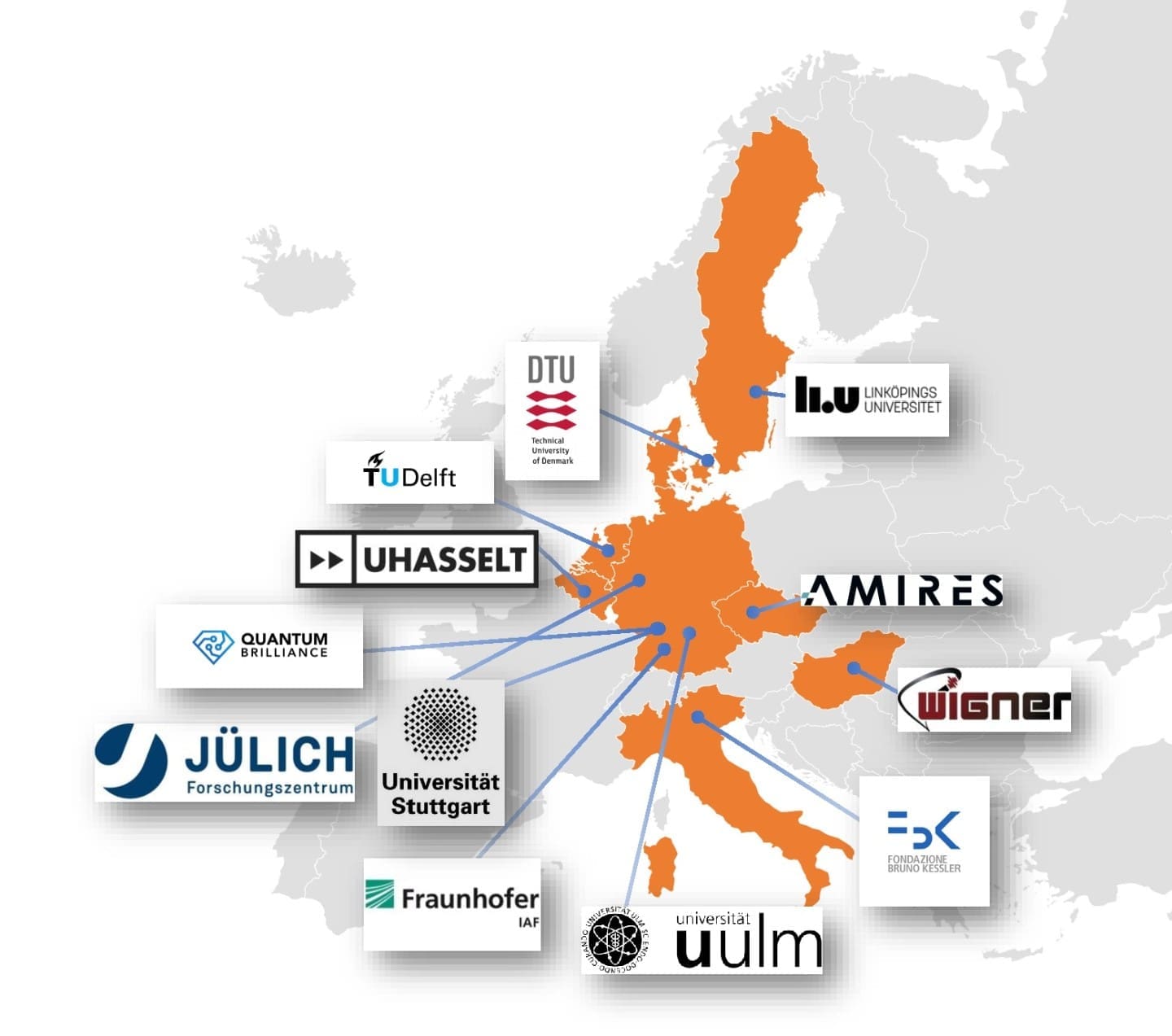
Project SPINUS, a Horizon Europe initiative, aims to develop scalable solid-state quantum computing technologies using dipolar interactions between electron spins of nitrogen-vacancy (NV) centres in diamonds. Addressing challenges such as arranging NV centres at nanometer scales and reading their states without optical resolution, the project has achieved significant progress in spin control, material synthesis, and algorithm development within its first year.
The international consortium, comprising researchers from leading European institutions, has successfully implemented controlled phase gates, developed high-quality materials, and improved simulation methods. Looking ahead, SPINUS plans to collaborate with other European quantum initiatives to advance its research goals further.
Project SPINUS Milestones in Scalable Solid-State Quantum Computing
The SPINUS project has achieved notable milestones in advancing scalable solid-state quantum computing. By leveraging dipolar interactions between electron spins of nitrogen-vacancy (NV) color centers, researchers have developed innovative methods to create solid-state qubits for both quantum simulators and computers. This approach addresses the technical challenges of arranging NV centres at minuscule distances, requiring precise control over nanometer scales.
Significant progress has been made in spin control and readout techniques. Researchers from FZJ, Ulm, and Stuttgart have successfully implemented controlled phase gates between two NVs and achieved nitrogen-spin polarization using PulsePol techniques. These advancements were complemented by submitting the first technical deliverable on Polarization Sequences to the European Commission.
Substantial improvements have also been made in material synthesis, with Linköping University leading efforts in growing high-quality, isotopically pure Silicon Carbide layers and diamond sandwich structures. These developments enhance the precision and reliability of quantum devices, which is crucial for scaling up solid-state systems.
In parallel, advancements in quantum simulators have enabled researchers to control and measure large nuclear spin networks exceeding 40 spins. The successful demonstration of dissipative phase transitions underscores the potential of these simulators for complex quantum dynamics studies.
The project has also integrated improvements in classical simulation methods and quantum algorithms, enhancing computational efficiency and accuracy. These enhancements are pivotal for optimizing quantum systems and preparing for future applications.
Looking ahead, SPINUS is strategically engaging with European quantum initiatives to leverage synergies and explore Quantum Pilot Lines within the Chips Joint Undertaking. This collaborative approach aims to accelerate progress toward large-scale quantum computing and achieving quantum advantage, reinforcing Europe’s position in the global race.
Advances in Spin Control and Readout Techniques
Researchers in the SPINUS project have made substantial progress in spin control and readout techniques. Controlled phase gates between nitrogen-vacancy (NV) centres in diamonds enable precise manipulation of electron spins, which is critical for constructing reliable solid-state qubits. PulsePol methods have been successfully implemented to achieve nitrogen-spin polarization, improving the stability and coherence of quantum states.
Improved spin detection protocols have also enhanced readout capabilities, allowing higher-fidelity measurements essential for scaling quantum systems. These advancements ensure accurate monitoring and control of individual qubits, even in densely packed arrays.
The SPINUS project has developed high-quality, isotopically pure Silicon Carbide layers and diamond sandwich structures. These materials significantly enhance the precision and reliability of quantum devices, supporting the scalability of solid-state systems. Advanced materials ensure coherence and stability as quantum devices grow more complex.
SPINUS is collaborating with European quantum initiatives to explore opportunities for transitioning laboratory successes into industrially viable solutions. By engaging with projects under the Chips Joint Undertaking, SPINUS aims to enhance the practicality of solid-state qubit systems. These partnerships support efforts to scale quantum technologies and maintain Europe’s competitive edge in global development.
Researchers in the SPINUS project have implemented controlled phase gates between nitrogen-vacancy (NV) centers in diamond, enabling precise manipulation of electron spins. These techniques are critical for constructing reliable solid-state qubits. Additionally, PulsePol methods have been used to achieve nitrogen-spin polarization, improving the stability and coherence of quantum states.
Readout capabilities have also been enhanced through improved spin detection protocols, allowing higher fidelity measurements essential for scaling quantum systems. These advancements ensure accurate monitoring and control of individual qubits, even in densely packed arrays.The SPINUS project has developed high-quality, isotopically pure Silicon Carbide layers and diamond sandwich structures. These materials enhance the precision and reliability of quantum devices, supporting the scalability of solid-state systems. Advanced materials ensure coherence and stability as quantum devices grow more complex.
SPINUS is collaborating with European quantum initiatives to explore opportunities for transitioning laboratory successes into industrially viable solutions. By engaging with projects under the Chips Joint Undertaking, SPINUS aims to enhance the practicality of solid-state qubit systems. These partnerships support efforts to scale quantum technologies and maintain Europe’s competitive edge in global development.
More information
External Link: Click Here For More