

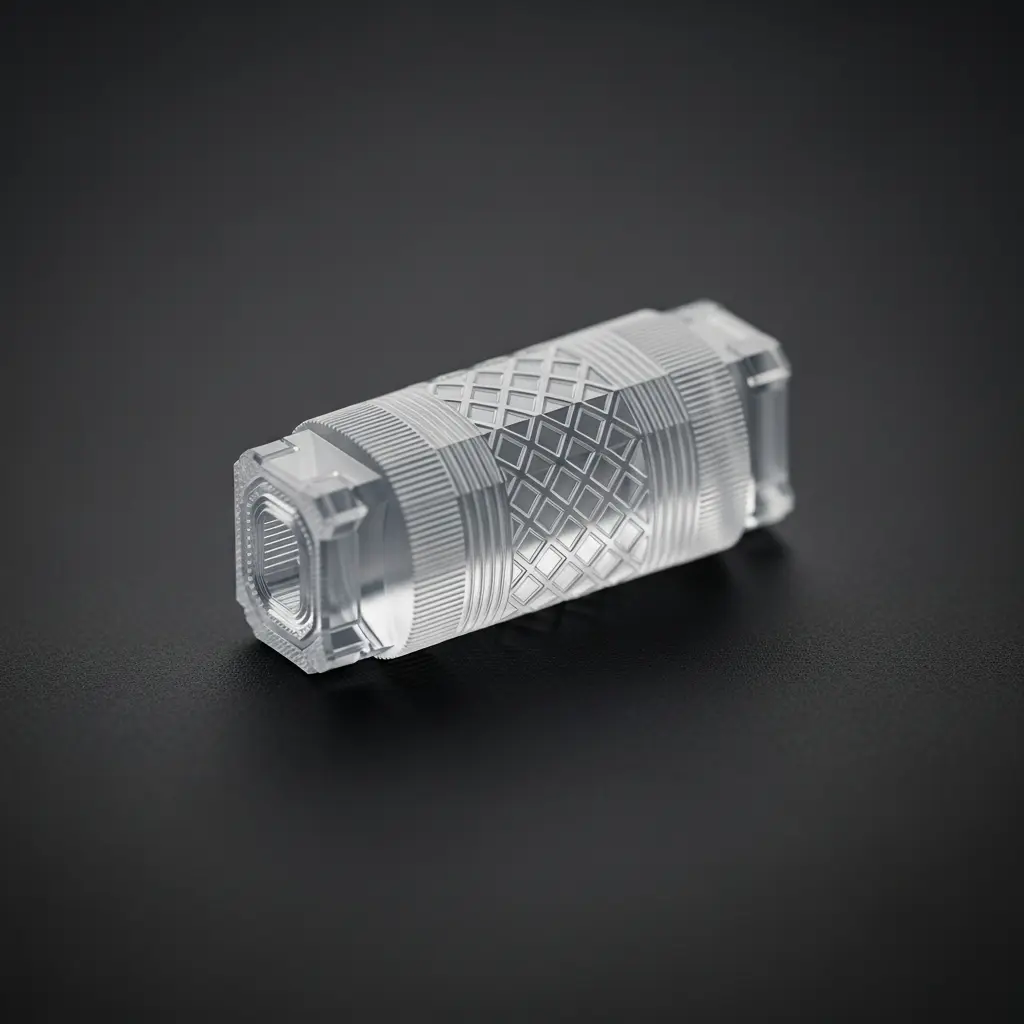
The fabrication of miniaturised piezoelectric actuators presents a significant challenge in the development of advanced optical and photonic devices. Menotti Markovic, Lucia Oberndorfer, and Tobias M. Krieger, alongside colleagues from the Research Center for Microtechnology and Johannes Kepler University, demonstrate a complete fabrication route utilising only femtosecond laser ablation to address this need. Their research details a novel process for creating single-crystal PMN-PT actuators, employing a local thinning strategy to achieve smaller device dimensions and lower operating voltages. This all-laser approach, refined through the implementation of ultraviolet wavelengths for precise cutting, promises improved strain transfer efficiency and mechanical stability. The resulting actuators represent a versatile and scalable method for next-generation technologies, particularly in areas such as semiconductor optics and integrated photonics.
Building upon prior successes in fabricating PMN-PT actuators for multiaxial strain-tuning of quantum dots, essential for generating highly entangled photon pairs, this work introduces a local thinning strategy to significantly advance device performance. This innovative approach enables the creation of smaller actuators, facilitating lower operating voltages and the potential for integrating multiple quantum light sources onto a single chip. The research details a complete fabrication chain, encompassing substrate thinning, metal layer structuring, and final device definition, all achieved through precisely controlled fs-laser processing.
Improving Actuator Edge Quality with UV Laser
A critical advancement lies in the final cutting process, where implementation of a third-harmonic ultraviolet (UV) fs-laser wavelength demonstrably improves edge quality and shape definition compared to the second harmonic (SH) wavelength utilized in previous iterations. This refined cutting technique promises to enhance the efficiency of strain transfer while simultaneously ensuring the mechanical stability vital for practical applications. The team achieved this by meticulously optimizing laser parameters for each stage of the fabrication, resulting in actuators with improved geometric precision and reduced surface defects. This precise control is crucial for maintaining the delicate balance between actuator size, performance, and reliability.
The study unveils a complete fs-laser ablation route for single-crystal PMN-PT piezoelectric actuators, establishing fs-laser fabrication as a versatile and scalable method for next-generation devices. Researchers successfully fabricated actuators with a total thickness of 300m and a side length of 5mm, while the new local thinning strategy allows for a minimum distance between actuator arms of 30m. This miniaturization is achieved without compromising the high piezoelectric constant (d33) and coupling factors inherent to PMN-PT, maintaining its exceptional sensitivity for applications in sensors and actuators. Experiments show that the combination of local thinning and UV-based cutting not only improves strain transfer efficiency but also ensures the mechanical robustness necessary for demanding applications. The work opens new avenues for advanced strain-engineering approaches in semiconductor quantum optics and integrated quantum photonics, particularly in the context of tuning quantum dot emitters to generate polarization entangled photons. This precise control over strain fields promises to unlock new possibilities in quantum information processing and advanced optical technologies.
Femtosecond Laser Fabrication of Piezoelectric Actuators
Developing Novel Femtosecond Ablation Processes
The research detailed a novel fabrication process for miniaturised piezoelectric actuators, relying entirely on femtosecond (fs) laser ablation techniques. Building upon prior successes in fabricating PMN-PT actuators for multiaxial strain-tuning of quantum dots, the study pioneered a local thinning strategy to achieve smaller device dimensions and lower operating voltages. This approach facilitates the integration of multiple light sources onto a single chip, demanding a precise and versatile fabrication chain. The complete process, from substrate thinning to metal layer structuring and final device definition, was executed using exclusively fs-laser processing steps.
A key methodological innovation involved the implementation of a third-harmonic ultraviolet (UV) fs-laser wavelength for the final cutting process. Scientists demonstrated that this UV wavelength significantly improved edge quality and shape definition when compared to the second harmonic (SH) wavelength employed in previous iterations of the technique. Experiments employed a fs-laser system to selectively ablate materials, creating intricate actuator geometries with micrometer-scale resolution. The team engineered devices with an initial thickness of 300μm and side lengths of 5mm, aiming to reduce the minimum distance between actuator arms below the previously achieved 30μm limit.
The study harnessed the unique properties of PMN-PT single crystals, known for their high piezoelectric constant (d33) and coupling factors, to create actuators capable of precise strain control. Local thinning, combined with UV-based laser cutting, not only enhanced strain transfer efficiency but also ensured the mechanical stability crucial for practical applications. This method achieves clean, defect-free surfaces, free from debris or cracks, which is vital for reliable actuator performance. The resulting fs-laser-based fabrication method establishes a versatile and scalable route for next-generation piezoelectric actuators, opening new avenues for advanced strain engineering in semiconductor optics and integrated photonics.
Femtosecond Laser Fabrication of Miniaturized Actuators
Miniaturization for Advanced Quantum Applications
Scientists achieved a breakthrough in fabricating miniaturized piezoelectric actuators using a fabrication route based entirely on femtosecond (fs) laser ablation. The research team successfully implemented a local thinning strategy, enabling the creation of smaller devices while simultaneously reducing operating voltages and facilitating on-chip integration of multiple light sources. Experiments revealed a detailed fabrication chain, encompassing substrate thinning, metal layer structuring, and precise device definition, all achieved through fs-laser processing. A critical focus was placed on the final cutting stage, where the implementation of a third-harmonic ultraviolet (UV) fs-laser wavelength demonstrably improved edge quality and shape definition when compared to previously used second harmonic (SH) wavelengths.
The work centers on lead magnesium niobate-lead titanate (PMN-PT) single crystals, materials renowned for their exceptionally high piezoelectric constant (d33) and coupling factors. Measurements confirm PMN-PT’s suitability for high-quality sensors and actuators, maintaining effective performance even at cryogenic temperatures, crucial for strain-tuning quantum dot emitters. Researchers fabricated devices with an initial total thickness of 300μm and a side length of 5mm, and the minimum distance between actuator arms was limited to 30μm using earlier techniques. The new design incorporates localized thinning of active regions, allowing for higher electric fields at the same applied voltage while maintaining mechanical stability.
Tests prove that the combination of local thinning and UV-based cutting enhances efficiency of strain transfer and ensures the mechanical stability necessary for practical applications. The breakthrough delivers a versatile and scalable method for next-generation piezoelectric actuators, paving the way for advanced strain-engineering approaches in semiconductor quantum optics and integrated quantum photonics. The fabrication process produces clean, defect-free surfaces, free from debris, cracks, or fracture points, which is critical for reliable functionality. This work establishes fs-laser fabrication as a powerful tool for creating complex actuator geometries with micrometer-scale resolution, low surface roughness, and sharp edges, ensuring repeatability and yield.
Femtosecond Laser Fabrication of Piezoelectric Actuators
Researchers have successfully demonstrated a fabrication process for miniaturized piezoelectric actuators utilising exclusively femtosecond laser processing. This new method enables the creation of smaller devices based on PMN-PT single crystals, achieved through a local thinning strategy combined with precise cutting techniques. The resulting actuators exhibit improved performance characteristics, including the potential for lower operating voltages and the possibility of integrating multiple light sources onto a single chip. The implementation of a third-harmonic ultraviolet laser wavelength during the final cutting stage proved critical, significantly enhancing edge quality and shape definition compared to previously employed second harmonic wavelengths.
This advancement promises to improve strain transfer efficiency and ensure the mechanical stability necessary for practical applications, establishing femtosecond laser fabrication as a versatile and scalable technique for next-generation actuators. The developed process offers promising new approaches for multiaxial strain-tuning, such as integrating multiple quantum emitters or achieving higher strain values in miniaturised devices. The authors acknowledge that funding supported parts of this work through several international programmes. They also note that further research is needed to fully explore the potential of these actuators in diverse applications. While the current work demonstrates successful fabrication and improved performance, the limitations of specific material properties and long-term device reliability remain areas for continued investigation.
🗞 A complete fs-laser-ablation route to miniaturized single-crystal PMN-PT piezoelectric actuators
🧠 ArXiv: https://arxiv.org/abs/2601.09476


