

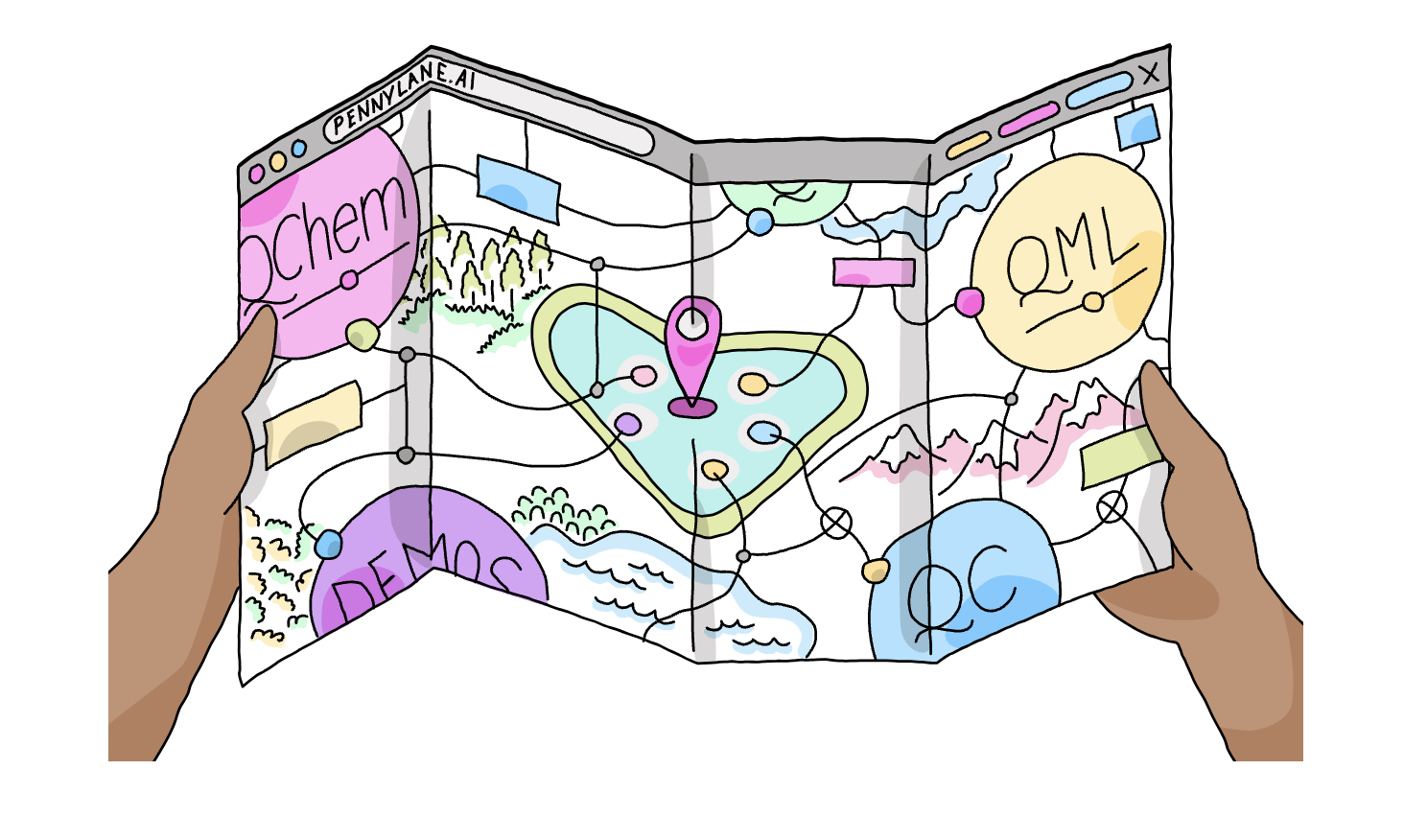
PennyLane, a quantum machine learning library, is encouraging its community to create and submit demonstrations of quantum machine learning. Users can create a tutorial using PennyLane and upload it to a source code hosting service like GitHub. The demo should include a clear title, a summary of the goal and outcome, and a list of dependencies. The community has already submitted a variety of demos, including ones on quantum convolutional neural networks, quantum multilabel classification, and quantum metric learning classifiers.
PennyLane, a cross-platform Python library for quantum machine learning, allows users to create and manipulate quantum circuits and compute gradients of quantum circuits. It provides a software architecture for autodifferentiation of quantum circuits. In addition, it provides interfaces to leading machine learning libraries, including PyTorch and TensorFlow.
The PennyLane community has been actively contributing to its development. Users can create a demonstration or tutorial using PennyLane and upload it to a source code hosting service such as GitHub, Bitbucket, or GitLab. These demonstrations are then featured on the PennyLane community page. The community has contributed a wide range of demonstrations, from quantum convolutional neural networks to quantum multilabel classification.
Contributors are encouraged to be creative with their demos, but there are a few guidelines to keep in mind. The demo should include the contributor’s name and a clear and concise title. It should also include a summary that makes clear the goal and outcome of the demo. The code should be clearly commented and explained, and all content should be original or free to reuse subject to license compatibility.
Quantum Machine Learning Demonstrations
The community has contributed a wide range of demonstrations, including quantum convolutional neural networks for multi-class classification, quantum multilabel classification with JAX, and the extension of the Deutsch-Jozsa algorithm from qubits to qutrits. These demonstrations showcase the potential of quantum machine learning in various applications.
Quantum Machine Learning Research
The community has also contributed to quantum machine learning research. For example, one demonstration implemented a quantum convolutional neural network for multi-class classification on the MNIST dataset. Another demonstration explored the extension of the Deutsch-Jozsa algorithm from qubits to qutrits within the realm of quantum computing. These contributions not only advance the field of quantum machine learning but also provide practical examples for other researchers and practitioners.
External Link: Click Here For More


