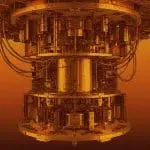

QuantWare’s 64-qubit Tenor QPU demonstrates how open quantum architecture is democratizing access to world-class quantum computing systems
In the historic halls of the University of Naples Federico II, an institution that has witnessed nearly eight centuries of scientific advancement since its founding in 1224, researchers are now operating Italy’s largest quantum computer. The system, powered by QuantWare’s 64-qubit Tenor quantum processing unit (QPU), represents more than a national milestone—it exemplifies a fundamental shift in how quantum computers are built, deployed, and accessed across the global research community.
The achievement highlights the emergence of Quantum Open Architecture (QOA), a modular approach that is transforming quantum computing from an exclusive domain of tech giants and government laboratories into a more accessible technology for universities, research institutions, and enterprises worldwide. Unlike traditional closed quantum systems that require organizations to purchase complete, integrated solutions from single vendors, the open architecture model enables institutions to assemble world-class quantum computers using specialized components from multiple suppliers.
QuantWare, a Dutch company that has emerged as the world’s highest-volume supplier of quantum processing units, delivered the Tenor QPU to Professor Francesco Tafuri’s Quantum Computing Napoli (QCN) Laboratory at the Department of Physics “Ettore Pancini.” The 64-qubit system now operational in Naples demonstrates how QOA can significantly reduce both the time and capital investment required to deploy advanced quantum computing capabilities.
“Building Italy’s largest quantum computer required a processor that was not only powerful, but commercially available and ready for integration,” explained Professor Tafuri. “QuantWare’s Tenor QPU significantly accelerated our timeline and allowed us to focus on building the system and its applications.” This approach contrasts sharply with the traditional alternatives: purchasing expensive, closed quantum systems from full-stack providers or undertaking the enormously complex task of building quantum processors from scratch.
The technical specifications of the Tenor QPU reveal the sophistication achievable through open architecture approaches. The 64-qubit processor utilizes superconducting transmon qubits, the same fundamental technology employed by industry leaders like IBM and Google, but packaged as a standalone component that can be integrated into diverse quantum computing architectures. This modularity enables research institutions to customize their quantum systems according to specific research requirements while leveraging cutting-edge processor technology developed by specialized quantum hardware manufacturers.
Superconducting quantum processors operate at extremely low temperatures, typically requiring dilution refrigerators that cool qubits to millikelvin temperatures—colder than interstellar space. At these temperatures, the superconducting circuits exhibit quantum mechanical properties essential for quantum computation, including superposition and entanglement. The engineering challenges involved in designing, fabricating, and operating such systems have historically limited quantum computer development to organizations with substantial resources and specialized expertise.
The Quantum Open Architecture model addresses these barriers by enabling specialization across the quantum computing stack. Rather than requiring each organization to develop expertise in superconducting circuit design, cryogenic engineering, control electronics, and quantum software simultaneously, QOA allows institutions to focus on their core competencies while sourcing specialized components from expert suppliers. This division of labor mirrors successful patterns in classical computing, where companies like Intel focus on processor design while others specialize in system integration, software development, or specific applications.
QuantWare’s role as a dedicated QPU supplier exemplifies this specialization trend. Founded in 2021 as a spin-out from QuTech at TU Delft, one of the world’s leading quantum research institutes, the company has rapidly scaled to serve customers in more than 20 countries. Their focus on quantum processor manufacturing has enabled them to achieve production volumes and cost efficiencies that would be difficult for organizations developing complete quantum systems internally.
The company’s VIO 3D scaling architecture represents a significant technical innovation in quantum processor design. Traditional planar quantum processor layouts face fundamental limitations in qubit connectivity and density as systems scale beyond hundreds of qubits. The VIO architecture addresses these constraints through three-dimensional chip stacking approaches that maintain high-fidelity quantum operations while enabling the massive qubit counts required for practical quantum advantage. This technology positions QuantWare to support the “MegaQubit-scale” systems that quantum optimization algorithms may require for solving real-world problems.
The Naples installation demonstrates practical benefits of the QOA approach beyond cost and timeline advantages. By assembling their quantum computer from specialized components, the University of Naples team gained deep technical understanding of each system element, enabling more effective troubleshooting, optimization, and experimental customization. This hands-on approach contrasts with closed quantum systems that typically operate as “black boxes” with limited user access to hardware-level parameters and configurations.
Educational implications of this accessibility cannot be overlooked. The University of Naples, like many research institutions worldwide, faces the challenge of training the next generation of quantum scientists and engineers. Closed quantum systems provide limited opportunities for students to understand quantum hardware fundamentals, whereas open architecture systems enable comprehensive education across the full quantum computing stack. Students working with the Naples system will gain experience in quantum processor integration, control system optimization, and application development—skills essential for advancing the field.
The success in Naples also validates the economic sustainability of the QOA model. Matt Rijlaarsdam, CEO of QuantWare, emphasized the ecosystem impact: “Through the Quantum Open Architecture, we empower the whole ecosystem to innovate and build upon our processors. This milestone shows the effectiveness of that approach: the University of Naples is now operating a quantum computer that is beyond most of the systems built by closed architecture players.”
This ecosystem approach creates positive feedback loops that accelerate quantum computing development. As more institutions deploy QOA-based systems, demand for specialized components increases, driving economies of scale that reduce costs for subsequent installations. Simultaneously, the growing base of QOA systems creates larger markets for specialized quantum software, control systems, and auxiliary components, attracting additional investment and innovation across the quantum computing supply chain.
The geographic distribution of QuantWare’s customers—spanning more than 20 countries—illustrates another advantage of the open architecture model: democratization of quantum computing access across diverse economic and technological contexts. Countries and institutions that might struggle to develop complete quantum systems internally can now participate in quantum research and development by assembling systems from specialized components. This democratization effect could accelerate global quantum computing advancement by engaging researchers worldwide in quantum algorithm development, application discovery, and hardware optimization.
International collaboration opportunities also expand under the QOA model. Research institutions using compatible open architecture components can more easily share experimental protocols, compare results, and collaborate on distributed quantum computing experiments. The standardization implicit in modular approaches facilitates reproducibility and collaboration across different laboratories and countries—essential elements for advancing quantum science.
The timing of the Naples installation aligns with broader trends toward quantum computing commercialization. As quantum computing systems transition from pure research tools to practical computational resources, organizations require more flexible, customizable, and cost-effective deployment options. The QOA model addresses these requirements while maintaining access to cutting-edge quantum processor technology.
Looking forward, the success of open architecture approaches could fundamentally reshape quantum computing industry structure. Rather than vertical integration dominating the field, specialization across quantum hardware, software, and services may emerge as the prevalent model. This shift could accelerate innovation by enabling focused development within specialized domains while reducing barriers for new market entrants with expertise in specific quantum computing components.
The implications extend beyond individual installations to national quantum computing strategies. Countries seeking to develop domestic quantum capabilities can leverage QOA approaches to establish quantum computing presence without requiring mastery of every technology component simultaneously. Italy’s largest quantum computer, powered by Dutch quantum processing technology, demonstrates how international collaboration within open architecture frameworks can accelerate national quantum development programs.
Environmental considerations also favor the QOA approach. By enabling specialized manufacturers to achieve economies of scale in component production, open architecture systems may reduce the overall energy and material resources required for quantum computer deployment. Specialized suppliers can invest in optimized manufacturing processes and recycling programs that would be economically unfeasible for organizations building small numbers of complete quantum systems.
The Naples installation represents early validation of quantum open architecture principles, but broader adoption will depend on continued development of standardization protocols, compatibility frameworks, and specialized component suppliers. The quantum computing field must navigate tensions between customization flexibility and interoperability standardization—challenges familiar from other technology domains but complicated by quantum systems’ extreme sensitivity to environmental factors and precise calibration requirements.
As quantum computing matures toward practical commercial applications, the accessibility enabled by open architecture approaches may prove essential for realizing the technology’s transformative potential. The 64-qubit system now operational at the University of Naples demonstrates that world-class quantum computing capabilities need not remain confined to a few elite institutions. Instead, modular approaches can distribute quantum computing access across diverse research communities, potentially accelerating the discovery of quantum algorithms and applications that will define the technology’s ultimate impact on science, technology, and society.
The success of Italy’s largest quantum computer thus represents more than a national achievement—it validates an architectural philosophy that could democratize access to one of the most powerful computational technologies ever developed.