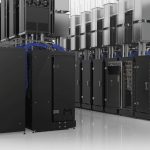
Jensen Huang, founder and CEO of NVIDIA, today announced a collaboration with Oracle to build the U. S. Department of Energy (DOE)’s largest AI supercomputer, poised to accelerate scientific discovery dramatically. The new system, named Solstice, will feature a record-breaking 100,000 NVIDIA Blackwell GPUs and support the DOE’s mission to advance AI capabilities for U.S. security, science, and energy applications. Kearns. U. S. Secretary of Energy Chris Wright highlighted this initiative as a new approach to computing partnerships, further noting that thanks to President Trump, the U. S. is bringing new computing capacity online faster than ever before.
Here are three section titles, adhering to your specifications:
The U. S. Department of Energy (DOE) is poised to receive a substantial boost in AI computing power through a collaboration between NVIDIA and Oracle. This partnership will deliver two new AI supercomputers, Solstice and Equinox, to Argonne National Laboratory, significantly enhancing the nation’s capabilities in scientific discovery and technological advancement. According to the company announcement, these systems are designed to accelerate research across a wide range of fields, from healthcare to materials science, and solidify American leadership in AI. The initiative reflects a commitment to public-private partnerships for impactful scientific progress.
Solstice will be the larger of the two systems, featuring a record-breaking 100,000 NVIDIA Blackwell GPUs and delivering unparalleled computational performance. Equinox, while smaller with 10,000 NVIDIA Blackwell GPUs, will still represent a significant increase in computing resources. Both supercomputers will be interconnected with NVIDIA networking, providing a combined 2,200 exaflops of AI performance, according to NVIDIA. Paul K. Kearns, director at Argonne National Laboratory, will oversee the integration of these systems into the laboratory’s existing research infrastructure. This new computing power will allow scientists to develop and train advanced AI models using tools such as the NVIDIA Megatron-Core library and the NVIDIA TensorRT inference software stack.
Building on this investment, the DOE aims to accelerate the development of “agentic scientists”—AI systems capable of independently driving research and discovery. This initiative, supported by NVIDIA, Argonne, and the DOE, seeks to boost R&D productivity and maximise the return on public research dollars within the next decade. Chris Wright, U. S. Secretary of Energy, emphasized that this collaboration represents a “new common sense approach to computing partnerships,” highlighting the importance of creative partnerships in winning the AI race. Furthermore, Wright noted that this effort was made possible thanks to President Trump’s commitment to securing America’s leadership in AI and science.
Record-Breaking AI Supercomputer to Accelerate Scientific Discovery
The newly announced Solstice system, powered by 100,000 NVIDIA Blackwell GPUs, represents a significant leap forward in AI computing capability for the U. S. Department of Energy (DOE). According to the company announcement, this unprecedented scale will enable researchers to tackle previously intractable scientific challenges, accelerating discovery across diverse fields. Building on this foundation, the complementary Equinox system, with 10,000 Blackwell GPUs, will further expand the DOE’s capacity for advanced AI-driven research and development. Both systems, strategically located at Argonne National Laboratory, are designed to support the development of next-generation AI models and reasoning capabilities.
The combined AI performance of Solstice and Equinox is projected to reach an impressive 2.2 exaflops, according to NVIDIA. This immense processing power will be harnessed to develop and train frontier AI models using the NVIDIA Megatron-Core library and scaled with NVIDIA TensorRT inference software. Paul K. Kearns, director at Argonne National Laboratory, will oversee the integration of these systems into the laboratory’s existing research infrastructure. This infrastructure will allow scientists to create agentic AI workflows, essentially “AI scientists” capable of automating and accelerating the scientific process. The DOE’s new public-private partnership model, incorporating industry investments, is a key component of this ambitious undertaking.
The impact of these systems extends beyond raw computing power, offering a new approach to scientific discovery according to Jensen Huang, founder and CEO of NVIDIA. He emphasized that AI is the most powerful technology of our time, and science is its greatest frontier. This collaboration, championed by the Trump Administration, aims to secure America’s leadership in AI and science, fostering innovation in areas ranging from healthcare research to materials science. Chris Wright, U. S. Secretary of Energy, stated that these systems represent a new common-sense approach to computing partnerships, promising a powerhouse for scientific and technological innovation that will drive progress for years to come.
NVIDIA and Oracle Power DOE’s Next-Generation Computing
The collaboration between NVIDIA and Oracle extends beyond simply delivering raw computing power to the Department of Energy (DOE). According to the company announcement, this partnership is structured around a new public-private model, designed to foster innovation and accelerate the deployment of cutting-edge AI infrastructure. This approach allows for industry investments and the exploration of real-world use cases, ensuring the systems address critical national priorities in security, science, and energy. The DOE intends to leverage this model to rapidly advance its AI capabilities and maintain technological leadership, building on the commitment established during the Trump Administration.
Building on this foundation, the Equinox system, featuring 10,000 NVIDIA Blackwell GPUs, represents a significant component of this initiative. While Solstice takes the lead in overall performance, Equinox will provide essential capacity for a diverse range of scientific applications. Both systems will be interconnected utilizing NVIDIA networking technologies, enabling seamless data transfer and collaborative research. Paul K. Kearns, director at Argonne National Laboratory, will oversee the deployment and operation of these systems, ensuring they meet the demanding requirements of the DOE’s research programs. The combined power of these two supercomputers will dramatically expand the scope and scale of AI-driven discovery at Argonne.
The impact of these systems extends beyond immediate computational gains. According to Jensen Huang, founder and CEO of NVIDIA, the advanced AI infrastructure will empower scientists to develop and train new frontier models and AI reasoning models. These models, built using the NVIDIA Megatron-Core library and scaled with NVIDIA TensorRT inference software, will form the backbone of agentic AI workflows for scientific discovery. This approach promises to boost R&D productivity and accelerate the pace of discovery, potentially yielding significant advancements across multiple scientific disciplines within the next decade. Chris Wright, U. S. Secretary of Energy, emphasized that this collaboration represents a new common-sense approach to computing partnerships, designed to drive innovation and maintain America’s competitive edge.
The deployment of the Solstice and Equinox supercomputers by the U. S. Department of Energy, in collaboration with NVIDIA and Oracle, marks a significant leap in AI-driven scientific discovery. This powerful infrastructure, delivering a combined 2.2 exaflops of AI performance, could enable researchers to develop and train frontier models at an unprecedented scale. For industries reliant on complex simulations and data analysis, this represents a new era of accelerated innovation and insight.
Building on this advancement, the NVIDIA, Argonne and DOE research collaborations aim to create “agentic scientists” capable of boosting R&D productivity. The implications extend beyond immediate scientific gains, potentially transforming how public research dollars are utilized and accelerating discovery within the next decade. By embracing a public-private partnership model, the DOE is establishing a framework for sustained progress and technological leadership in critical areas like security, science, and energy. This commitment to advanced computing promises to unlock solutions to complex challenges and drive impactful advancements for years to come.