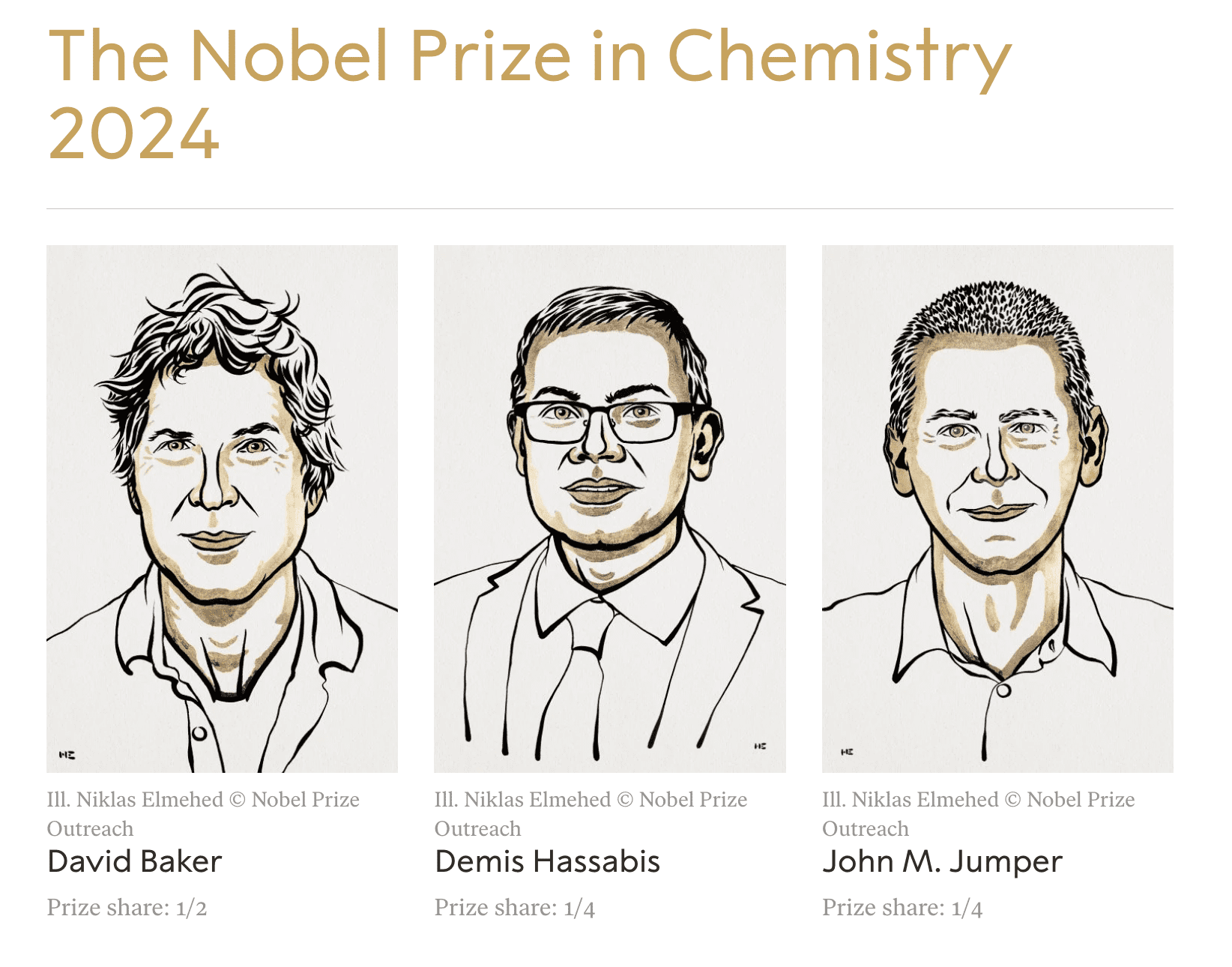
The Nobel Prize in Chemistry for 2024 has been awarded to three scientists who have made groundbreaking discoveries in the field of protein research. David Baker, a professor at the University of Washington, has been recognized for his work on computational protein design, which allows for the creation of entirely new kinds of proteins. Demis Hassabis and John Jumper, researchers at Google DeepMind, have developed an AI model called AlphaFold2 that can predict the structure of proteins from their amino acid sequences, a problem that had gone unsolved for 50 years.
These discoveries hold enormous potential for advancing our understanding of life’s chemical tools and could lead to breakthroughs in fields such as medicine, vaccine development, and environmental sustainability. The work of these scientists has opened up vast possibilities for the creation of new proteins with specific functions, and their research has already been used by millions of people around the world.
The Nobel Prize in Chemistry 2024: Unraveling the Secrets of Proteins
The Royal Swedish Academy of Sciences has awarded the Nobel Prize in Chemistry 2024 to three scientists for their groundbreaking work on proteins, life’s ingenious chemical tools. David Baker, University of Washington, Seattle, WA, USA, has been recognized “for computational protein design,” while Demis Hassabis and John M. Jumper, both from Google DeepMind, London, UK, have been awarded the prize “for protein structure prediction.” These discoveries hold enormous potential for advancing our understanding of life’s chemical reactions and driving innovations in fields such as medicine, biotechnology, and environmental science.
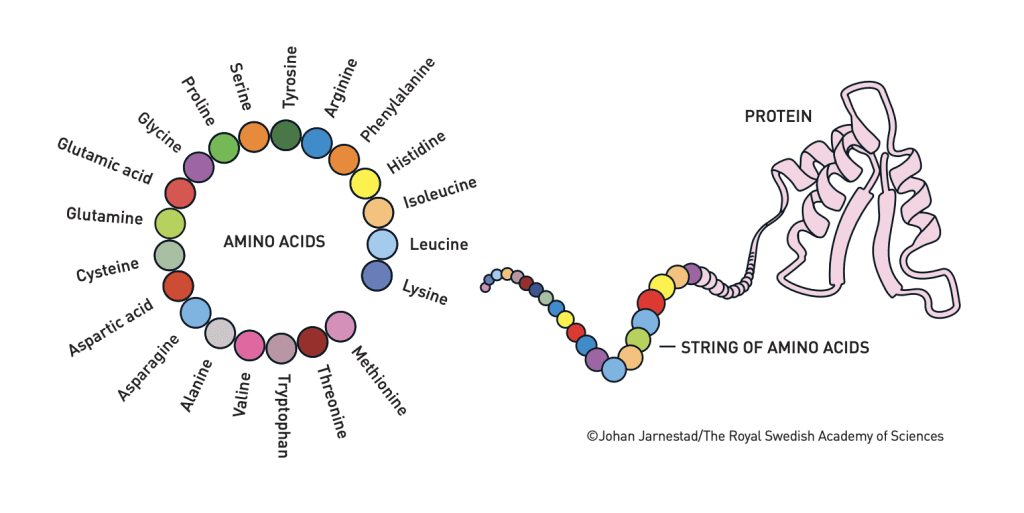
Proteins are the building blocks of life, controlling and driving all the chemical reactions that together form the basis of life. They function as hormones, signal substances, antibodies, and the building blocks of different tissues. The diversity of life testifies to proteins’ amazing capacity as chemical tools. However, understanding their structures and functions has long been a challenge for scientists.
Computational Protein Design: Building New Kinds of Proteins
David Baker’s research group has succeeded in designing entirely new kinds of proteins using the 20 different amino acids that are life’s building blocks. In 2003, Baker’s team designed a new protein that was unlike any other protein, and since then, they have produced one imaginative protein creation after another. These proteins can be used as pharmaceuticals, vaccines, nanomaterials, and tiny sensors.
Baker’s approach involves using computational methods to design proteins with specific functions. By predicting the interactions between amino acids, his team can create proteins that are tailored to perform particular tasks. This has opened up new possibilities for developing novel therapeutics, biosensors, and biomaterials.
The potential applications of Baker’s work are vast. For instance, designed proteins could be used to target specific diseases, such as cancer or Alzheimer’s disease. They could also be used to develop more efficient biofuels, clean up environmental pollutants, or even create new materials with unique properties.
Protein Structure Prediction: Solving a 50-Year-Old Problem
Demis Hassabis and John Jumper have developed an AI model called AlphaFold2, which has revolutionized the field of protein structure prediction. Since the 1970s, researchers had tried to predict protein structures from amino acid sequences, but this was notoriously difficult. However, with AlphaFold2, Hassabis and Jumper have been able to predict the structure of virtually all the 200 million proteins that researchers have identified.
AlphaFold2 uses a deep learning algorithm to analyze the amino acid sequence of a protein and predict its three-dimensional structure. This has enabled researchers to better understand how proteins function, how they interact with other molecules, and how they are affected by mutations or environmental factors.
The impact of AlphaFold2 has been immense. Researchers can now use the model to study antibiotic resistance, design new enzymes that can decompose plastic, and develop novel therapeutics. The model has also enabled researchers to analyze the structures of proteins from diverse organisms, providing insights into evolutionary relationships and the origins of life.
The Future of Protein Research: Unleashing the Power of Proteins
The discoveries recognized by the Nobel Prize in Chemistry 2024 have opened up vast possibilities for advancing our understanding of life’s chemical reactions and driving innovations in fields such as medicine, biotechnology, and environmental science. By being able to design new proteins and predict their structures, researchers can now develop novel therapeutics, biosensors, and biomaterials.
The potential applications of protein research are enormous. Proteins could be used to target specific diseases, clean up environmental pollutants, or even create new materials with unique properties. Furthermore, the ability to predict protein structures has enabled researchers to study antibiotic resistance, design new enzymes that can decompose plastic, and develop novel therapeutics.
As Heiner Linke, Chair of the Nobel Committee for Chemistry, notes, “One of the discoveries being recognized this year concerns the construction of spectacular proteins. The other is about fulfilling a 50-year-old dream: predicting protein structures from their amino acid sequences. Both of these discoveries open up vast possibilities.”
External Link: Click Here For More