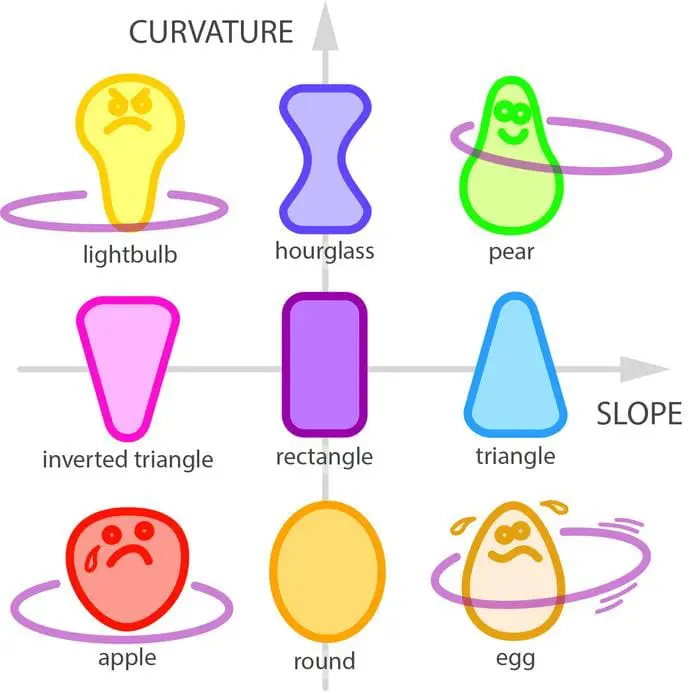
Researchers at New York University’s Courant Institute of Mathematical Sciences have unraveled the physics behind hula hooping, revealing that a person’s body shape is crucial in keeping the hoop spinning. Led by associate professor Leif Ristroph, the team used miniature robotic hula hoopers with 3D-printed bodies to test different shapes and motions.
They found that a sloping surface, similar to hips, and a curvy form, like a waist, are essential for maintaining the hoop’s momentum against gravity. Ristroph, doctoral student Olivia Pomerenk, and undergraduate Xintong Zhu conducted mathematical modeling to derive formulas that explained their results.
The study, published in the Proceedings of the National Academy of Sciences, was supported by a grant from the National Science Foundation. The findings have implications for harnessing energy and improving robotics and may also explain why some people are naturally better at hula hooping than others.
Introduction to Hula Hooping and Gravity
Hula hooping is a popular activity that people of all ages have enjoyed for decades. However, beneath its fun and playful surface, hula hooping poses some interesting questions about physics and mathematics. For instance, what keeps a hula hoop up against gravity, and are some body types better suited for hula hooping than others? A team of mathematicians from New York University’s Courant Institute of Mathematical Sciences has explored these questions and provided answers that not only shed light on the physics of hula hooping but also have implications for harnessing energy and improving robotics.
The researchers, led by Associate Professor Leif Ristroph, conducted a series of experiments using robotic hula hoopers with 3D-printed bodies of different shapes to represent human forms. These shapes were driven to gyrate by a motor, replicating the motions people make when hula hooping. High-speed video captured the movements of the hoops as they were launched on these bodies. The results showed that the exact form of the gyration motion or the cross-section shape of the body was not a critical factor in hula hooping. Instead, the key to successful hula hooping lay in the ability to maintain a hoop elevated against gravity for a significant period.
To achieve this, a special “body type” was required – one with a sloping surface as “hips” to provide the proper angle for pushing up the hoop and a curvy form as a “waist” to hold the hoop in place. This finding might explain why some people are naturally adept at hula hooping, while others seem to struggle. The researchers’ mathematical modeling of these dynamics provided formulas that explained the results, which could be applied to other areas, such as engineering innovations and improving robotic positioners.
The study’s findings have significant implications for our understanding of how shape and motion interact with gravity. By examining the subtle physics involved in hula hooping, the researchers have uncovered principles that could be used to improve the design of robotic systems and enhance their ability to harness energy from vibrations. This research demonstrates the importance of exploring everyday phenomena through the lens of mathematics and physics, as it can lead to unexpected insights and innovations.
The Physics of Hula Hooping
The physics of hula hooping is more complex than it initially seems. At its core, hula hooping involves a dynamic interplay between the hoop, the body, and gravity. The researchers found that the key to maintaining a hoop in motion around the body lies in generating a consistent and controlled gyration motion. This motion creates a centrifugal force that keeps the hoop aloft, counteracting the downward pull of gravity.
However, as the researchers discovered, not all body types are equally well-suited for hula hooping. The shape and curvature of the body play a crucial role in determining whether a person can successfully maintain a hoop in motion. A body with a sloping surface as “hips” and a curvy form as a “waist” provides the necessary angle and support to keep the hoop elevated. This finding highlights the importance of considering the interplay between shape, motion, and gravity in understanding complex phenomena like hula hooping.
The researchers’ use of mathematical modeling to derive formulas explaining the results has far-reaching implications for our understanding of dynamic systems. By applying these principles to other areas, such as robotics and engineering, it may be possible to develop more efficient and effective systems that can harness energy from vibrations and improve their overall performance. The study’s focus on the subtle physics involved in hula hooping demonstrates the value of exploring everyday phenomena through the lens of mathematics and physics.
The experiments conducted by the researchers provide a unique insight into the dynamics of hula hooping. By using robotic hula hoopers with 3D-printed bodies, the team systematically varied the shape and motion of the body, allowing them to isolate the key factors that contribute to successful hula hooping. The high-speed video capture of the hoop’s motion provided a detailed record of the dynamics involved, enabling the researchers to comprehensively understand the physics underlying this complex phenomenon.
Mathematical Modeling and Its Applications
The mathematical modeling developed by the researchers provides a powerful tool for understanding the dynamics of hula hooping. By deriving formulas that explain the results, the team has created a framework for analyzing and predicting the behavior of complex systems. This framework can be applied to a wide range of areas, from robotics and engineering to biology and physics.
The study’s focus on the subtle physics involved in hula hooping highlights the importance of considering the interplay between shape, motion, and gravity in understanding dynamic systems. The researchers’ use of mathematical modeling to derive formulas explaining the results demonstrates the value of exploring everyday phenomena through the lens of mathematics and physics. By applying these principles to other areas, it may be possible to develop more efficient and effective systems that can harness energy from vibrations and improve their overall performance.
The implications of this research extend far beyond the realm of hula hooping. The study’s findings have significant implications for our understanding of how shape and motion interact with gravity, and how these interactions can be leveraged to improve the design of robotic systems and enhance their ability to harness energy from vibrations. The researchers’ use of mathematical modeling provides a powerful tool for analyzing and predicting the behavior of complex systems, which can be applied to a wide range of areas.
The study’s authors, including Olivia Pomerenk and Xintong Zhu, have made significant contributions to our understanding of the physics and mathematics underlying hula hooping. Their work has been supported by a grant from the National Science Foundation (DMS-1847955), which has enabled them to conduct this innovative research. The study’s publication in the Proceedings of the National Academy of Sciences (DOI: 10.1073/pnas.2411588121) provides a testament to the significance and impact of this research.
Harnessing Energy from Vibrations
The study’s findings have significant implications for harnessing energy from vibrations. By understanding the subtle physics involved in hula hooping, researchers may be able to develop more efficient and effective systems that can capture and convert vibrational energy into useful forms. This could have far-reaching implications for various applications, from robotics and engineering to biology and physics.
The researchers’ use of mathematical modeling provides a powerful tool for analyzing and predicting the behavior of complex systems. By applying these principles to other areas, it may be possible to develop more efficient and effective systems that can harness energy from vibrations and improve their overall performance. The study’s focus on the interplay between shape, motion, and gravity highlights the importance of considering these factors in understanding dynamic systems.
The potential applications of this research are vast and varied. From improving the design of robotic systems to enhancing their ability to harness energy from vibrations, the study’s findings have significant implications for a wide range of areas. The researchers’ use of mathematical modeling provides a powerful tool for analyzing and predicting the behavior of complex systems, which can be applied to a wide range of applications.
The study’s authors have demonstrated the importance of exploring everyday phenomena through the lens of mathematics and physics. By examining the subtle physics involved in hula hooping, they have uncovered principles that could be used to improve the design of robotic systems and enhance their ability to harness energy from vibrations. This research highlights the value of interdisciplinary approaches to understanding complex phenomena and demonstrates the potential for innovative solutions to emerge from the intersection of mathematics, physics, and engineering.
Conclusion
In conclusion, the study of hula hooping provides a unique insight into the dynamics of complex systems. By examining the subtle physics involved in this everyday phenomenon, researchers have uncovered principles that could be used to improve the design of robotic systems and enhance their ability to harness energy from vibrations. The study’s findings have significant implications for our understanding of how shape and motion interact with gravity, and how these interactions can be leveraged to develop more efficient and effective systems.
The researchers’ use of mathematical modeling provides a powerful tool for analyzing and predicting the behavior of complex systems. By applying these principles to other areas, it may be possible to develop more efficient and effective systems that can harness energy from vibrations and improve their overall performance. The study’s focus on the interplay between shape, motion, and gravity highlights the importance of considering these factors in understanding dynamic systems.
The potential applications of this research are vast and varied, ranging from robotics and engineering to biology and physics. The study’s authors have demonstrated the importance of exploring everyday phenomena through the lens of mathematics and physics, and have uncovered principles that could be used to improve the design of robotic systems and enhance their ability to harness energy from vibrations. This research highlights the value of interdisciplinary approaches to understanding complex phenomena and demonstrates the potential for innovative solutions to emerge from the intersection of mathematics, physics, and engineering.
External Link: Click Here For More