
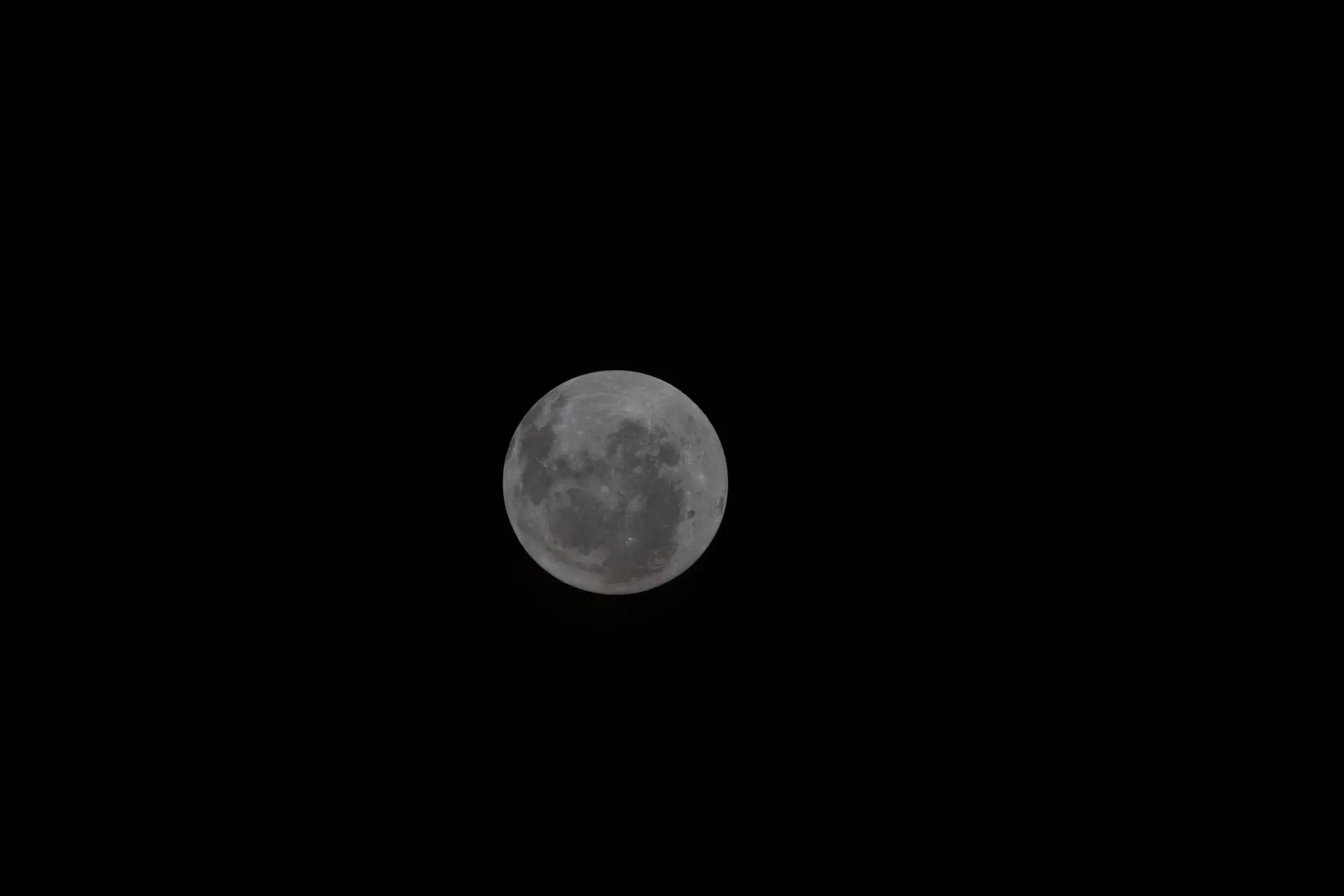
NASA has initiated the first crewed moon expedition since 1972 with the successful launch of the Artemis II mission, sending four astronauts on a 10-day journey to fly above the far side of the moon and safely return to Earth. The Orion capsule’s flight will rigorously test life support systems and will take the astronauts on a trajectory from Earth, around the moon, and back to Earth, in preparation for a sustained lunar presence, requiring substantial rocket power to overcome the challenges of deep space travel. Virginia Tech aerospace engineer Samantha Parry Kenyon explains that additional Artemis missions are likely as we move toward a sustained human presence on the moon, emphasizing the importance of deep space communication and satellite technology. This mission is particularly anticipated by lunar scientists eager to obtain live observations of the moon’s far side, a region rarely seen from Earth.
Artemis II Mission: Trajectory, Life Support, and Testing
The Artemis II mission is charting a course farther from the moon than any Apollo-era flight, but exceeding the distance of previous missions is not the primary objective. Launched with the goal of returning humans to lunar proximity for the first time since 1972, the mission has begun a 10-day journey and will take the astronauts on a trajectory from Earth, around the moon, and back to Earth. Samantha Parry Kenyon, an aerospace engineer at Virginia Tech, explains that the mission will test the life support systems of the Orion capsule and take the astronauts on a trajectory from Earth, around the moon, and back to Earth. This includes a series of orbital maneuvers designed to assess Orion’s handling characteristics before the lunar flyby.
Achieving this trajectory demands significantly more energy than reaching low Earth orbit, where the International Space Station resides; the rocket must carry sufficient fuel for all maneuvers, requiring a launch vehicle with substantial lifting capacity. Kenyon emphasizes the complexity of deep-space travel, noting that it takes more energy to reach the moon compared to low Earth orbit. Beyond propulsion, the mission confronts the challenges of the “three-body problem,” accounting for the gravitational forces of Earth, the moon, and the spacecraft itself, alongside the critical need to decelerate safely upon re-entry.
The harshness of the space environment presents further obstacles; engineers must protect both the spacecraft and its crew from extreme temperatures and damaging space radiation. Kenyon states that the space environment is harsh and complex, with complicated gravitational motion, extreme heat from the sun, and extreme cold in space. The mission offers a rare opportunity to observe the far side of the moon, a region seldom seen from Earth, providing valuable data for lunar scientists eager to gather live observations during the eclipse.
Deep Space Travel: Increased Energy and Mass Requirements
The Artemis II mission has begun a 10-day journey, exemplifying a renewed push toward deep space exploration, but achieving sustained lunar presence demands overcoming significant hurdles in propulsion and spacecraft design. Unlike missions to low Earth orbit, such as those servicing the International Space Station for the past 25 years, lunar travel necessitates substantially more energy; the rocket power required for both outbound and return maneuvers is considerable. Ensuring a safe return will take the astronauts on a trajectory from Earth, around the moon, and back to Earth, adding another layer of engineering difficulty.
It takes more energy to get to the moon as compared to low-earth orbit, which is where the International Space Station is located and where NASA has been sending astronauts for the past 25 years.
Challenges of Lunar Orbit: Three-Body Problem and Space Environment
Beyond the sheer distance, achieving stable lunar orbit presents significant challenges stemming from gravitational interactions; as Kenyon explains, the mission must account for the complicated orbits in what is known as the three-body problem, in this case, Earth, moon, and spacecraft. This isn’t simply a matter of calculating trajectories, but of predicting and mitigating the combined gravitational forces of two massive bodies, a task demanding precise orbital mechanics and constant adjustments. The complexity extends beyond orbital calculations, however, as the space environment itself poses a threat to both spacecraft and crew. Her work at Virginia Tech centers on building and testing satellites capable of withstanding these conditions, a crucial step toward ensuring the reliability of future lunar infrastructure.
The Artemis II mission will test the life support systems of the Orion capsule and will take the astronauts on a trajectory from Earth, around the moon, and back to Earth. Although it’s technically going farther than Apollo-era missions, that’s not the objective of the mission. She noted that humans have rarely observed the moon’s dark side because the moon is tidally locked with the Earth, meaning we always see the same 50 percent of it from Earth, anticipating valuable data from the astronauts’ direct observations during the flyby.
Artemis II will test the life support systems of the Orion capsule and will take the astronauts on a trajectory from Earth, around the moon, and land the astronauts back on Earth.