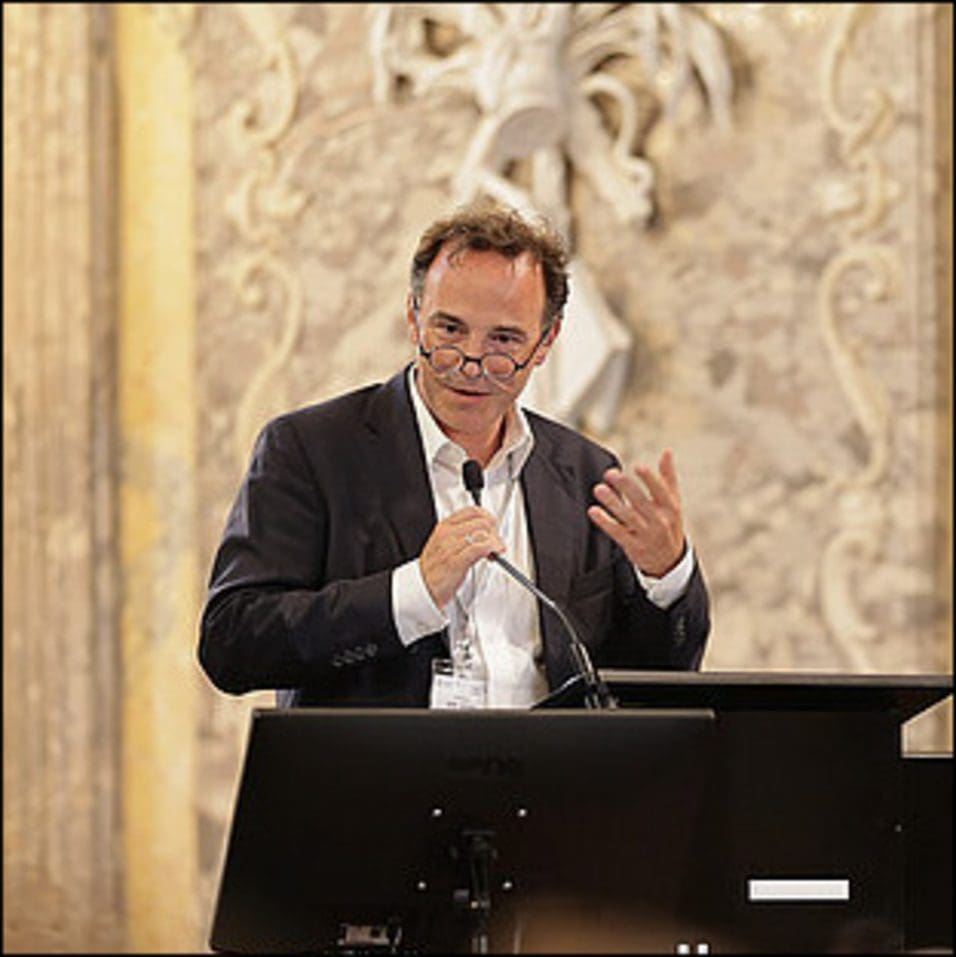
The European Physical Society (EPS) has awarded the 2025 EPS-QEOD Quantum Electronics and Optics Prize to Markus Aspelmeyer for his pioneering contributions to quantum optomechanics. Markus Aspelmeyer, Professor of Physics at the University of Vienna and Director at the Institute for Quantum Optics and Quantum Information (IQOQI), has revolutionized the field by enabling precise control of solid-state quantum systems. This breakthrough explores unprecedented regimes of macroscopic quantum phenomena, solidifying his reputation as a leader in fundamental and applied research. The award was presented today during the CLEO/Europe EQEC conferences in Munich, recognizing Aspelmeyer’s transformative work in optical physics.
Quantum Optomechanics and Its Groundbreaking Potential
Markus Aspelmeyer has received the 2025 EPS-QEOD Quantum Electronics and Optics Prize for his groundbreaking work in quantum optomechanics. This emerging field focuses on controlling solid-state quantum systems, opening doors to explore macroscopic quantum phenomena previously thought impossible. The European Physical Society (EPS) recognized his pioneering contributions to this rapidly developing area of quantum physics.
Quantum optomechanics, as championed by Markus Aspelmeyer of the University of Vienna and IQOQI of the Austrian Academy of Sciences, merges quantum mechanics with the mechanical motion of macroscopic objects. This innovative approach allows scientists to precisely manipulate and observe quantum effects in larger systems. Building on this, researchers are now able to investigate the boundary between the quantum and classical worlds with unprecedented accuracy.
The prize acknowledges the highest level of achievement in fundamental and applied optical physics research. Aspelmeyer’s work promises new possibilities for quantum sensing, information processing, and potentially even gravitational wave detection. According to the EPS, his contributions represent a significant leap forward in our understanding and control of quantum systems.
Aspelmeyer’s Visionary Contributions to Quantum Systems
Markus Aspelmeyer’s contributions extend beyond foundational quantum optomechanics to actively shaping the field’s trajectory. He pioneered explorations into macroscopic quantum phenomena, successfully demonstrating quantum entanglement between a mechanical oscillator and a single photon. This achievement, conducted at the University of Vienna, opened new avenues for investigating the boundary between the quantum and classical worlds, according to the European Physical Society (EPS).
Building on this, Aspelmeyer’s group at the Institute for Quantum Optics and Quantum Information (IQOQI) has focused on developing and implementing advanced measurement techniques. These techniques allow for the precise characterization of quantum states in mechanical systems, crucial for building functional quantum devices. The work has involved pushing the limits of sensitivity in detecting extremely weak signals, essential for quantum information processing applications.
Markus Aspelmeyer’s pioneering work in quantum optomechanics, recognized today by the European Physical Society, establishes a new control paradigm for solid-state quantum systems. This advancement could enable exploration of macroscopic quantum phenomena previously thought inaccessible, potentially reshaping our understanding of fundamental physics.
For industries reliant on precision measurement and advanced sensing, this represents a significant leap forward. Building on this foundation, the Institute for Quantum Optics and Quantum Information (IQOQI) of the Austrian Academy of Sciences, under Aspelmeyer’s direction, is poised to unlock novel applications. The implications extend beyond quantum computing to fields demanding increasingly sensitive and accurate technologies, furthering the boundaries of what’s possible with quantum control.