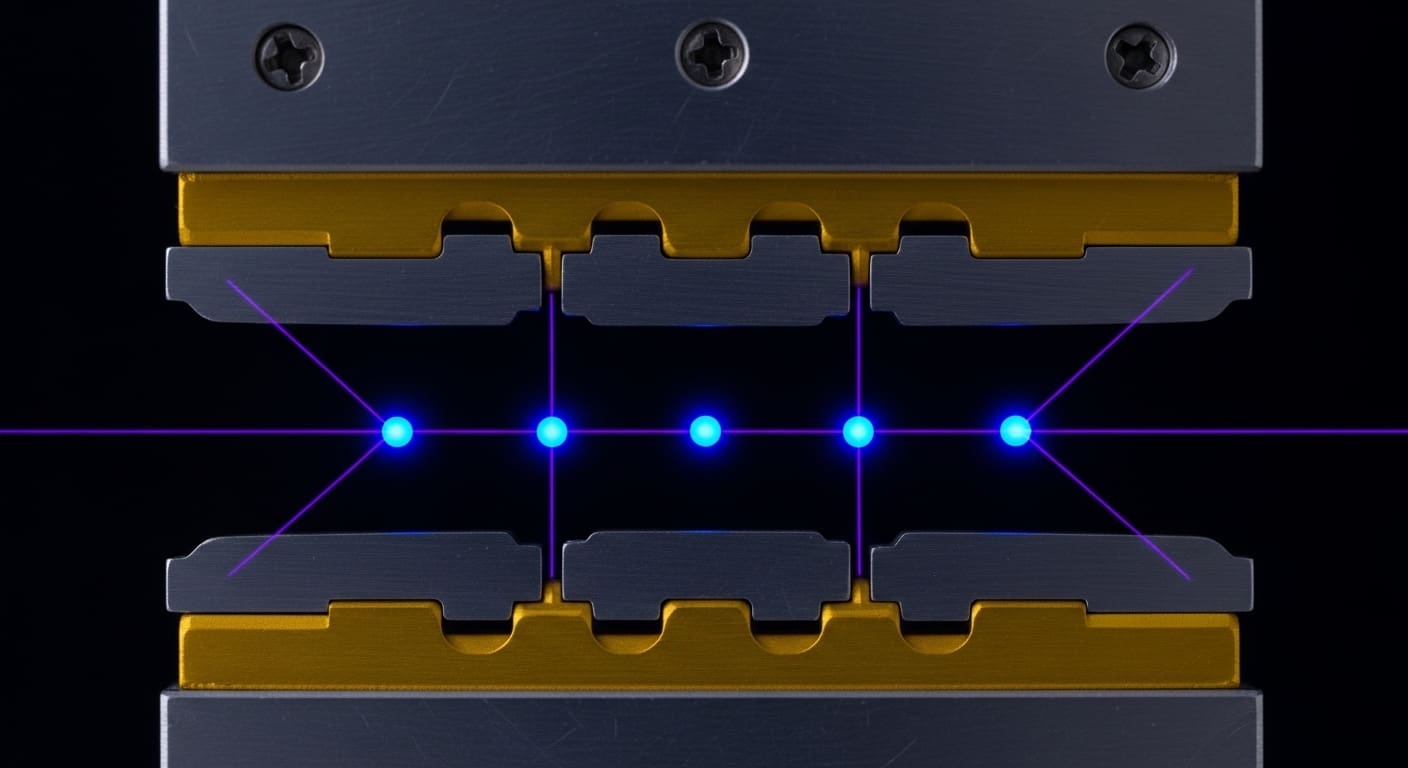
IonQ is expanding its United Kingdom presence through a new research partnership with the University of Cambridge, establishing the IonQ Quantum Innovation Centre to accelerate the commercialization of quantum technologies. The collaboration will bring IonQ’s 256-qubit system, its 6th generation chip-based architecture, and access to the company’s quantum cloud to the Cambridge campus, fostering research in quantum computing, networking, sensing, and security. This initiative is designed to expand IonQ’s intellectual property and align academic incentives with commercial outcomes, contributing to the UK’s national quantum strategy. “This agreement with Cambridge deepens IonQ’s commitment to the United Kingdom and accelerates our technology platform with novel research at one of the world’s most established physics institutions,” said Niccolo de Masi, Chairman and CEO of IonQ. “We’re proud that Cambridge is at the heart of the UK’s next computing development,” said Professor Deborah Prentice, Vice-Chancellor of the University of Cambridge. The center is expected to support talent development and translate foundational research into practical applications.
IonQ and Cambridge Launch Quantum Innovation Centre
The partnership focuses on computational power and aims to bolster the UK’s broader quantum ecosystem, complementing existing national programs like the UK National Quantum Technologies Programme and Innovate UK’s commercialization efforts. Cambridge’s established role within this ecosystem, participating in four of the nation’s five quantum technology hubs, positions it as a key driver of innovation. The University’s Cavendish Laboratory, with its legacy of producing 36 Nobel laureates in physics, will serve as a critical research base. Professor Deborah Prentice, Vice-Chancellor of the University of Cambridge, stated, “It’s not just a new facility for Cambridge — it’s one for the whole of the UK, and it will develop not only exciting new technologies but also the UK’s next generation of leaders in quantum science.” This collaboration is structured to incentivize both academic discovery and commercial success, ensuring that research translates into tangible industry impact.
Qubit System Deployment and Quantum Cloud Access
The pursuit of practical quantum computing is rapidly shifting from theoretical advancement to physical deployment, with several key players now focused on scaling access to quantum hardware. IonQ’s recent agreement with the University of Cambridge signifies a substantial step in this direction, promising to bring a 256-qubit system onto the Cambridge campus and integrate it with the company’s existing quantum cloud infrastructure. This isn’t simply about increasing qubit count; it’s about fostering a collaborative environment where researchers can explore applications across computing, networking, sensing, and security, all powered by a chip-based architecture. The initiative intends to generate significant intellectual property, shared under licensing terms designed to incentivize both academic exploration and commercial viability. Importantly, the deployment of this system is coupled with access to IonQ’s quantum cloud, enabling remote experimentation and wider participation in quantum research.
This access is particularly significant given the company’s achievement of 99.99% two-qubit gate fidelity in 2025, a benchmark in quantum computing performance. Professor Deborah Prentice, Vice-Chancellor of the University of Cambridge, stated, “It’s not just a new facility for Cambridge — it’s one for the whole of the UK, and it will develop not only exciting new technologies but also the UK’s next generation of leaders in quantum science.”
This historic agreement with Cambridge deepens IonQ’s commitment to the United Kingdom and accelerates our technology platform with novel research at one of the world’s most storied physics powerhouses.
Niccolo de Masi, Chairman and CEO of IonQ
UK Quantum Ecosystem Alignment and National Programs
IonQ’s recent partnership with the University of Cambridge extends beyond locating a 256-qubit system on campus; it’s a deliberate strategy to integrate with and bolster the existing UK quantum infrastructure. The company intends to deploy its 6th-generation chip-based system alongside access to its quantum cloud, directly supporting research and talent development in areas like quantum computing, networking, sensing, and security. This move complements established national programs such as the UK National Quantum Technologies Programme, the National Quantum Computing Centre (NQCC), and initiatives backed by Innovate UK, all focused on translating academic research into viable commercial technologies. The University of Cambridge’s established position within the national quantum network is significant, actively participating in four of the UK’s five national quantum technology hubs, connecting universities, industry, and government labs.
This collaboration is structured to align academic research incentives with commercial outcomes and long-term industry impact, generating intellectual property shared under established licensing terms. The IonQ Quantum Innovation Centre will support collaborative research programs, talent development, and industry events, creating a pathway for translating foundational research into practical applications spanning quantum hardware, chemistry, materials science, and advanced communication protocols. Professor Deborah Prentice, Vice-Chancellor of the University of Cambridge, stated, “This new and ambitious partnership is the first of its kind for a UK university.”
It’s not just a new facility for Cambridge – it’s one for the whole of the UK, and it will develop not only exciting new technologies but also the UK’s next generation of leaders in quantum science.
Professor Deborah Prentice, Vice-Chancellor of the University of Cambridge
99% Two-Qubit Gate Fidelity and System Performance
The pursuit of stable quantum computation took a significant step forward in 2025, as IonQ achieved 99.99% two-qubit gate fidelity, a new performance record. This level of accuracy, exceeding 99.5% achieved in prior generations, is crucial because even small error rates accumulate rapidly during complex calculations, quickly rendering results meaningless. Higher fidelity directly translates to the ability to perform more operations before the quantum state collapses, unlocking more sophisticated algorithms. This advance isn’t merely an incremental improvement; it’s a demonstration of IonQ’s progress in controlling and minimizing decoherence, the primary obstacle to building practical quantum computers. The company’s focus on trapped ion technology appears to be yielding results, allowing for increasingly precise manipulation of qubits. IonQ’s newest generation of quantum computers, the forthcoming IonQ Tempo, builds on this foundation, promising further gains in performance and scalability.
The implications extend beyond raw computational power; IonQ’s capabilities are being applied to real-world problems in collaboration with partners like Amazon Web Services, AstraZeneca, and NVIDIA. These collaborations are already demonstrating a 20x performance boost in areas such as drug discovery, materials science, and financial modeling. IonQ’s quantum computing services are now accessible through all major cloud providers, broadening access to this emerging technology.
We’re proud that Cambridge is at the heart of the UK’s next computing development.
Professor Deborah Prentice, Vice-Chancellor of the University of Cambridge