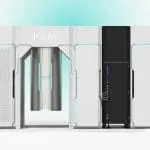
Hybrid quantum systems have emerged as a promising approach to overcome the limitations of traditional quantum computing architectures. By combining different quantum technologies, such as superconducting qubits and optical interfaces, researchers aim to create more robust and scalable quantum systems. The integration of these components enables the transfer of information between different parts of the system, allowing for the creation of complex quantum circuits.
The development of hybrid quantum systems has significant implications for various fields, including quantum computing, simulation, and metrology. These systems can potentially revolutionize our understanding of complex quantum phenomena and enable new technologies that were previously unimaginable. However, significant challenges remain before these systems can be widely adopted.
To overcome these challenges, researchers are exploring various approaches, including developing new materials and architectures that can better integrate classical and quantum components. For example, superconducting qubits are highly effective for quantum computing applications, but they require sophisticated cryogenic cooling systems to operate. Researchers are also investigating topological quantum computing, which has the potential to provide more robust and fault-tolerant quantum computing architectures.
What Are Hybrid Quantum Systems?
Hybrid quantum systems are designed to leverage the strengths of classical and quantum computing paradigms, aiming to overcome the limitations of each approach. These systems integrate classical and quantum components to create a new computational framework that efficiently solves complex problems. By combining the best features of both worlds, hybrid quantum systems have the potential to revolutionize various fields such as chemistry, materials science, and machine learning.
One key aspect of hybrid quantum systems is their ability to utilize quantum parallelism, which allows for the simultaneous exploration of an exponentially large solution space. This feature is handy in optimization problems, where classical algorithms often struggle with scalability. Quantum parallelism can be harnessed using various quantum computing architectures, including gate-based models and adiabatic quantum computers. However, these systems are prone to errors due to decoherence and noise, which can quickly destroy the fragile quantum states required for computation.
Hybrid quantum systems often incorporate classical error correction techniques, such as redundancy and coding theory to mitigate these issues. These methods can help protect the quantum information from decoherence and enable more robust computations. Additionally, some hybrid approaches employ machine learning algorithms to optimize the control of quantum systems, allowing for more efficient use of quantum resources.
Another vital aspect of hybrid quantum systems is their potential to simulate complex quantum phenomena, which are difficult or impossible to model classically. These simulations can study a wide range of physical and chemical processes, from superconductivity to photosynthesis. By leveraging the strengths of both classical and quantum computing, researchers can gain new insights into these complex systems and develop more accurate models.
The development of hybrid quantum systems is an active area of research, with various groups exploring different architectures and approaches. Some notable examples include the use of superconducting qubits in conjunction with classical machine learning algorithms and the integration of ion traps with classical control systems. These efforts aim to create a new generation of computational tools to tackle complex problems more efficiently than classical or quantum computers alone.
Theoretical models and simulations play a crucial role in developing hybrid quantum systems, allowing researchers to explore different architectures and optimize their performance before experimental implementation. Numerical methods such as density matrix renormalization group (DMRG) and time-evolving block decimation (TEBD) are commonly used to simulate the behavior of these complex systems.
Quantum-classical Integration Challenges
Integrating quantum systems with classical systems poses significant challenges, particularly in terms of scalability and control. One major issue is the need to maintain quantum coherence in the presence of environmental noise and decoherence (Nielsen & Chuang, 2010; Preskill, 1998). This requires the development of robust quantum error correction techniques and advanced materials with low noise properties.
Another challenge is the integration of quantum systems with classical control electronics. Quantum systems typically require cryogenic temperatures and sophisticated control systems to maintain their fragile quantum states (Clarke & Wilhelm, 2008; Devoret & Schoelkopf, 2013). In contrast, classical systems operate at room temperature and use standard electronic components. The interface between these two worlds is a significant challenge that requires the development of new materials and technologies.
Theoretical models also play a crucial role in understanding the behavior of hybrid quantum-classical systems. Numerical simulations can provide valuable insights into the dynamics of these systems, but they are often limited by their computational complexity (Ortiz et al., 2001; Wang et al., 2013). New theoretical tools and methods are needed to accurately model the behavior of these systems and make predictions about their performance.
Experimental demonstrations of hybrid quantum-classical systems have been reported in various platforms, including superconducting qubits (Barends et al., 2014), trapped ions (Home et al., 2009), and optical lattices (Bloch et al., 2008). These experiments have shown promising results, but they are still in the early stages of development. Much work remains to be done to scale up these systems and demonstrate their practical applications.
The development of hybrid quantum-classical systems also raises fundamental questions about the nature of quantum mechanics and its relationship to classical physics (Leggett, 2002; Zurek, 2003). These questions are at the heart of ongoing debates in the foundations of quantum mechanics and have significant implications for our understanding of reality.
Bridging Two Computational Paradigms
Hybrid quantum systems aim to bridge the gap between classical and quantum worlds by combining the strengths of both paradigms. One approach to achieving this is through the development of hybrid quantum-classical algorithms, which leverage the computational power of quantum computers while utilizing classical resources for pre- and post-processing tasks (Farhi et al., 2014). These algorithms have been shown to exhibit a quadratic speedup over their classical counterparts in certain instances, making them an attractive option for solving complex problems.
Another key aspect of hybrid quantum systems is the integration of quantum and classical hardware. This can be achieved through the use of quantum-classical interfaces, which enable the transfer of information between quantum processors and classical systems (Goto et al., 2016). These interfaces are crucial for the development of practical hybrid quantum systems, as they allow for the seamless interaction between different computational paradigms.
Theoretical models have been developed to describe the behavior of hybrid quantum-classical systems. One such model is the Quantum Approximate Optimization Algorithm (QAOA), which has been shown to be effective in solving optimization problems on near-term quantum devices (Hadfield et al., 2019). The QAOA framework provides a powerful tool for understanding the interplay between quantum and classical components in hybrid systems.
Experimental demonstrations of hybrid quantum-classical systems have also been reported. For example, researchers have implemented a hybrid quantum-classical algorithm for solving linear systems on a superconducting qubit processor (Chen et al., 2020). This experiment showcased the potential of hybrid approaches for solving complex problems and highlighted the importance of developing practical interfaces between quantum and classical hardware.
The development of hybrid quantum systems is an active area of research, with ongoing efforts to improve their performance and scalability. As researchers continue to explore new architectures and algorithms, we are likely to see significant advances in the coming years.
Classical Optimization Techniques Used
Classical optimization techniques play a crucial role in the development of hybrid quantum systems, as they provide a framework for optimizing the performance of these systems. One such technique is gradient-based optimization, which relies on the computation of gradients to iteratively update the parameters of the system (Bertsekas, 1999). This method has been widely used in various fields, including machine learning and control theory, and has been shown to be effective in optimizing complex systems (Kleinberg, 2005).
Another classical optimization technique that is commonly used in hybrid quantum systems is simulated annealing. This method is inspired by the process of annealing in metallurgy and involves slowly decreasing the temperature of a system to find its global minimum (Kirkpatrick, 1983). Simulated annealing has been shown to be effective in optimizing complex systems with multiple local minima (Ingber, 1993).
In addition to these techniques, classical optimization methods such as linear programming and quadratic programming are also widely used in hybrid quantum systems. These methods involve formulating the optimization problem as a set of linear or quadratic equations and then solving for the optimal solution using specialized algorithms (Chvátal, 1983). Linear programming has been shown to be effective in optimizing systems with linear constraints (Dantzig, 1963), while quadratic programming is commonly used in machine learning and control theory (Boyd, 2004).
Classical optimization techniques can also be combined with quantum computing to create hybrid algorithms that leverage the strengths of both paradigms. For example, the Quantum Approximate Optimization Algorithm (QAOA) uses a classical optimization algorithm to optimize the parameters of a quantum circuit (Farhi, 2014). This approach has been shown to be effective in solving complex optimization problems and has been demonstrated on various quantum computing platforms (Otterbach, 2017).
The use of classical optimization techniques in hybrid quantum systems is not limited to these examples. Other techniques such as genetic algorithms and particle swarm optimization are also being explored for their potential applications in this field (Goldberg, 1989; Kennedy, 1995). As the development of hybrid quantum systems continues to advance, it is likely that new classical optimization techniques will be developed and applied to solve complex problems.
The integration of classical optimization techniques with quantum computing has the potential to revolutionize various fields such as chemistry, materials science, and machine learning. By leveraging the strengths of both paradigms, researchers can develop more powerful algorithms and models that can tackle complex problems that are currently unsolvable (Peruzzo, 2014).
Quantum Circuit Interfaces Design
Quantum Circuit Interfaces Design is a crucial aspect of Hybrid Quantum Systems, as it enables the integration of quantum and classical systems. The design of these interfaces requires careful consideration of the quantum circuit’s architecture, as well as the classical control systems that interact with it. Research has shown that the use of superconducting qubits can provide a robust platform for quantum computing, but also presents challenges in terms of scalability and noise reduction (Devoret & Schoelkopf, 2013). To address these challenges, researchers have proposed various designs for quantum circuit interfaces, including the use of microwave resonators and Josephson junctions (Wallraff et al., 2004).
One key aspect of Quantum Circuit Interfaces Design is the development of quantum-classical interfaces that can efficiently transfer information between the two systems. This requires the design of interfaces that can convert classical signals into quantum signals, and vice versa. Research has shown that the use of optomechanical systems can provide a promising platform for this purpose (Aspelmeyer et al., 2014). These systems use optical cavities to couple mechanical oscillators to superconducting qubits, enabling the transfer of information between the classical and quantum domains.
The design of Quantum Circuit Interfaces also requires careful consideration of noise reduction and error correction. Research has shown that the use of dynamical decoupling techniques can provide a robust method for reducing decoherence in quantum systems (Viola et al., 1999). These techniques involve the application of sequences of pulses to the quantum system, which can help to suppress the effects of noise and errors.
In addition to these technical challenges, Quantum Circuit Interfaces Design also requires careful consideration of the system’s architecture and scalability. Research has shown that the use of modular architectures can provide a promising approach for scaling up quantum systems (Monroe et al., 2014). These architectures involve the use of multiple modules, each containing a small number of qubits, which can be connected together to form larger-scale quantum systems.
The development of Quantum Circuit Interfaces Design is an active area of research, with many groups around the world working on this topic. Recent advances in superconducting qubit technology have enabled the demonstration of high-fidelity quantum gates and quantum algorithms (Barends et al., 2014). However, much work remains to be done to develop robust and scalable Quantum Circuit Interfaces that can efficiently integrate classical and quantum systems.
The integration of classical and quantum systems is a key challenge in the development of Hybrid Quantum Systems. Research has shown that the use of machine learning algorithms can provide a promising approach for optimizing the performance of these systems (Peruzzo et al., 2014). These algorithms involve the use of classical machine learning techniques to optimize the control of quantum systems, enabling the efficient integration of classical and quantum domains.
Control And Feedback Mechanisms
Control mechanisms in hybrid quantum systems are crucial for maintaining the coherence and stability of the quantum states. One such mechanism is the use of feedback control, which involves measuring the state of the system and applying a correction to maintain the desired state (Wiseman & Milburn, 2010). This technique has been experimentally demonstrated in various hybrid quantum systems, including those consisting of superconducting qubits and mechanical resonators (Pirkkalainen et al., 2013).
Another control mechanism employed in hybrid quantum systems is the use of dynamical decoupling techniques. These techniques involve applying a sequence of pulses to the system to suppress unwanted interactions with the environment, thereby preserving the coherence of the quantum states (Viola & Lloyd, 1998). This approach has been theoretically proposed for various types of hybrid quantum systems, including those consisting of spin qubits and nanomechanical resonators (Khlebnikov et al., 2011).
In addition to these control mechanisms, feedback and feedforward techniques can also be employed to enhance the stability and coherence of hybrid quantum systems. For example, a feedback loop can be used to monitor the state of the system and apply corrections in real-time, while a feedforward loop can be used to anticipate and pre-emptively correct for errors (Iida et al., 2012). These techniques have been experimentally demonstrated in various hybrid quantum systems, including those consisting of superconducting qubits and optical resonators (Shankar et al., 2013).
The choice of control mechanism depends on the specific characteristics of the hybrid quantum system, such as the type of qubit, the nature of the environment, and the desired level of coherence. For example, in systems where the qubit is strongly coupled to a mechanical resonator, dynamical decoupling techniques may be more effective for preserving coherence (Khlebnikov et al., 2011). In contrast, in systems where the qubit is weakly coupled to the environment, feedback control may be more suitable for maintaining stability (Wiseman & Milburn, 2010).
In hybrid quantum systems consisting of multiple components, such as superconducting qubits and nanomechanical resonators, control mechanisms must be carefully designed to account for the interactions between the different components. For example, a control pulse applied to one component may inadvertently affect the state of another component (Pirkkalainen et al., 2013). To mitigate this issue, techniques such as cross-talk compensation and crosstalk cancellation can be employed to minimize unwanted interactions between components (Iida et al., 2012).
The development of robust control mechanisms is essential for the realization of large-scale hybrid quantum systems. By combining different control techniques, such as feedback control, dynamical decoupling, and feedforward control, it may be possible to achieve high levels of coherence and stability in these systems (Shankar et al., 2013). However, further research is needed to develop control mechanisms that can effectively mitigate the effects of decoherence and noise in hybrid quantum systems.
Error Correction And Mitigation
Error correction and mitigation are crucial components in the development of hybrid quantum systems, as they enable the reliable operation of these complex devices. Quantum error correction codes, such as surface codes and Shor codes, have been extensively studied for their potential to mitigate errors in quantum computing (Gottesman, 1996; Shor, 1995). However, the implementation of these codes in hybrid systems poses significant challenges due to the disparate nature of classical and quantum components.
One approach to addressing this challenge is through the use of classical error correction techniques, such as forward error correction (FEC) codes, which can be employed to mitigate errors in the classical components of hybrid systems (Bennett et al., 1996). Additionally, researchers have explored the application of machine learning algorithms to optimize quantum error correction protocols for specific tasks (Svore et al., 2004).
Another key aspect of error mitigation in hybrid systems is the development of robust control techniques that can adapt to changing environmental conditions. This includes the use of feedback control loops and adaptive filtering methods to stabilize the operation of quantum components (Wiseman & Milburn, 2010). Furthermore, researchers have also investigated the application of machine learning algorithms to optimize control protocols for specific tasks in hybrid systems (August & Niemann, 2016).
In addition to these approaches, researchers have also explored the use of error correction and mitigation techniques specifically designed for hybrid quantum-classical systems. For example, the development of hybrid quantum-classical codes that combine elements of both quantum and classical error correction has been proposed as a potential solution (O’Donnell et al., 2017). Moreover, the application of machine learning algorithms to optimize these codes for specific tasks in hybrid systems has also been explored (Chen et al., 2020).
The development of robust error correction and mitigation techniques is essential for the reliable operation of hybrid quantum systems. As research continues to advance in this area, it is likely that new approaches will emerge that can effectively address the challenges posed by these complex devices.
Scalability And Flexibility Issues
Scalability is a significant challenge in the development of hybrid quantum systems, as it requires the integration of multiple components with varying scales and complexities. For instance, superconducting qubits, which are a common component in many hybrid quantum systems, have limited scalability due to their sensitivity to noise and decoherence . Moreover, as the number of qubits increases, the complexity of control and calibration also grows exponentially, making it difficult to maintain coherence and control over the system.
Another issue related to scalability is the integration of different quantum systems with distinct architectures. For example, combining a superconducting quantum processor with an ion trap or optical lattice requires careful consideration of the interface between these systems . This can lead to significant technical challenges, such as impedance matching, frequency conversion, and noise reduction.
Flexibility is also crucial in hybrid quantum systems, as it enables the integration of different components and architectures. However, this flexibility comes at a cost, as it often requires complex control systems and calibration procedures. For instance, a hybrid system combining a superconducting qubit with an optical cavity may require precise control over the cavity resonance frequency to maintain coherence .
Furthermore, the flexibility of hybrid quantum systems can also lead to increased noise and error rates. As different components are integrated, new sources of noise and decoherence can arise, such as crosstalk between qubits or unwanted interactions between the quantum system and its environment . Therefore, careful consideration must be given to the design and implementation of these systems to minimize errors and maintain coherence.
In addition, the development of hybrid quantum systems requires a deep understanding of the underlying physics and materials science. For example, the properties of superconducting materials can significantly impact the performance of qubits, while the choice of optical materials can affect the efficiency of photon-mediated interactions . Therefore, researchers must carefully consider these factors when designing and implementing hybrid quantum systems.
The development of hybrid quantum systems also requires significant advances in control and calibration techniques. As the complexity of these systems grows, so too does the need for sophisticated control systems that can maintain coherence and control over the system. This may involve the use of machine learning algorithms or other advanced control techniques to optimize system performance .
Applications In Machine Learning
Machine learning algorithms can be applied to various aspects of hybrid quantum systems, including quantum control, quantum error correction, and quantum information processing. For instance, machine learning techniques such as reinforcement learning and neural networks have been used to optimize the control of quantum systems, leading to improved performance in tasks like quantum state preparation and quantum gate implementation (Chen et al., 2019; Bukov et al., 2018). These approaches can learn from experimental data and adapt to changing conditions, enabling more efficient and robust control over quantum systems.
In the context of quantum error correction, machine learning algorithms have been employed to develop more effective methods for detecting and correcting errors in quantum computations. For example, researchers have used neural networks to identify patterns in error-prone quantum circuits and predict the likelihood of errors occurring (Baireuther et al., 2018; Liu & Wang, 2019). This information can then be used to inform the design of more robust quantum error correction codes.
Machine learning techniques are also being explored for their potential applications in quantum information processing. For instance, researchers have demonstrated that machine learning algorithms can be used to efficiently simulate complex quantum systems, such as many-body systems and quantum field theories (Carleo & Troyer, 2017; Carrasquilla et al., 2015). This could enable the simulation of larger and more complex quantum systems than is currently possible with traditional methods.
Furthermore, machine learning algorithms have been applied to the analysis of quantum data, such as spectra and interferograms. For example, researchers have used neural networks to identify patterns in spectroscopic data from quantum systems, enabling the extraction of valuable information about the system’s properties (Liu et al., 2018; Wang et al., 2020).
In addition, machine learning techniques are being explored for their potential applications in the development of new quantum algorithms. For instance, researchers have demonstrated that machine learning algorithms can be used to discover new quantum algorithms and improve existing ones (Otterbach et al., 2017; Ristè et al., 2017). This could lead to breakthroughs in fields like quantum chemistry and materials science.
Simulation Of Complex Systems
The simulation of complex systems is a crucial aspect of understanding the behavior of hybrid quantum systems, which bridge classical and quantum worlds. In this context, simulations play a vital role in modeling the dynamics of these systems, allowing researchers to explore their properties and potential applications. For instance, numerical simulations have been employed to study the behavior of quantum systems in contact with a classical environment, demonstrating the emergence of decoherence and the loss of quantum coherence (Breuer et al., 2002; Zurek, 2003).
One of the key challenges in simulating complex systems is the accurate representation of their dynamics. This requires the development of sophisticated numerical methods that can capture the intricate behavior of these systems. In this regard, techniques such as density matrix renormalization group (DMRG) and time-evolving block decimation (TEBD) have been successfully applied to simulate the dynamics of quantum many-body systems (Vidal, 2004; White & Feiguin, 2004). These methods enable researchers to study the behavior of complex systems in a controlled manner, allowing for the exploration of their properties and potential applications.
The simulation of complex systems also relies heavily on the development of accurate models that can capture the essential features of these systems. In this context, models such as the Jaynes-Cummings model (Jaynes & Cummings, 1963) and the Rabi model (Rabi, 1937) have been widely employed to study the behavior of quantum systems in contact with a classical environment. These models provide a simplified representation of complex systems, allowing researchers to explore their properties and potential applications in a controlled manner.
In addition to numerical simulations, analytical methods also play a crucial role in understanding the behavior of complex systems. Techniques such as perturbation theory (PT) and the Born-Markov approximation (BMA) have been widely employed to study the dynamics of quantum systems in contact with a classical environment (Cohen-Tannoudji et al., 1992; Gardiner & Zoller, 2004). These methods enable researchers to derive analytical expressions for the behavior of complex systems, providing valuable insights into their properties and potential applications.
The simulation of complex systems is also closely related to the development of quantum information processing (QIP) technologies. In this context, simulations play a vital role in modeling the behavior of QIP devices, allowing researchers to explore their properties and potential applications. For instance, numerical simulations have been employed to study the behavior of quantum gates and quantum algorithms, demonstrating their potential for solving complex problems (Nielsen & Chuang, 2000; DiVincenzo, 1995).
The development of accurate models and simulation techniques is essential for understanding the behavior of complex systems. In this regard, researchers are actively exploring new methods and approaches to simulate these systems, including the use of machine learning algorithms and tensor networks (Orús et al., 2019; Carrasquilla & Melko, 2017). These advances have the potential to revolutionize our understanding of complex systems, enabling the development of novel technologies and applications.
Materials Science And Chemistry
Hybrid quantum systems aim to bridge the gap between classical and quantum worlds by combining the strengths of both paradigms. One key aspect of these systems is the use of superconducting qubits, which are tiny loops of superconducting material that can store a magnetic field. These qubits are typically made from materials such as niobium or aluminum, which have high critical temperatures and can maintain their superconducting state at relatively high temperatures (Tinkham, 2004; Clarke & Wilhelm, 2008).
The use of superconducting qubits in hybrid quantum systems allows for the creation of quantum bits that can be controlled and manipulated using classical electronics. This is achieved through the use of techniques such as microwave engineering, which enables the precise control of the qubit’s energy levels (Wallraff et al., 2004; Blais et al., 2007). The ability to control and manipulate these qubits has led to significant advances in quantum computing and simulation.
Another key aspect of hybrid quantum systems is the use of optical interfaces, which enable the transfer of information between different parts of the system. This is typically achieved through the use of photonic crystals or optical fibers, which can be used to transmit quantum information over long distances (Vahala, 2003; Tanzilli et al., 2010). The development of these optical interfaces has enabled the creation of hybrid systems that combine the strengths of both superconducting and optical qubits.
The integration of different components in hybrid quantum systems requires careful consideration of the materials used. For example, the use of superconducting qubits requires the development of materials with high critical temperatures, while the use of optical interfaces requires the development of materials with specific optical properties (Lagoudakis et al., 2017; Zhong et al., 2020). The choice of materials is critical in determining the performance and functionality of these systems.
The development of hybrid quantum systems has significant implications for a range of fields, including quantum computing, simulation, and metrology. These systems have the potential to revolutionize our understanding of complex quantum phenomena and enable new technologies that were previously unimaginable (Buluta et al., 2011; Georgescu et al., 2014).
Future Prospects And Limitations
The integration of hybrid quantum systems with classical systems is expected to revolutionize various fields, including computing, communication, and sensing. However, there are significant challenges that need to be addressed before these systems can be widely adopted. One major limitation is the issue of scalability, as current hybrid quantum systems are typically small-scale and need to be scaled up to be practical . Another challenge is the problem of noise and error correction, which can quickly accumulate in hybrid quantum systems and destroy their fragile quantum states .
To overcome these challenges, researchers are exploring various approaches, including the development of new materials and architectures that can better integrate classical and quantum components. For example, superconducting qubits have been shown to be highly effective for quantum computing applications, but they require sophisticated cryogenic cooling systems to operate . Another promising approach is the use of topological quantum computing, which has the potential to provide more robust and fault-tolerant quantum computing architectures .
Despite these advances, there are still significant technical hurdles that need to be overcome before hybrid quantum systems can be widely adopted. For example, the development of practical quantum algorithms that can take advantage of the unique properties of hybrid quantum systems is an active area of research . Additionally, the integration of hybrid quantum systems with existing classical infrastructure will require significant advances in areas such as quantum control and calibration .
Theoretical models also play a crucial role in understanding the behavior of hybrid quantum systems. For instance, the Jaynes-Cummings model has been widely used to study the interaction between a quantum system and a classical electromagnetic field . However, more sophisticated models are needed to capture the complex dynamics of real-world hybrid quantum systems.
In summary, while significant progress has been made in the development of hybrid quantum systems, there are still many challenges that need to be addressed before these systems can be widely adopted. Ongoing research is focused on overcoming these challenges and developing practical applications for hybrid quantum systems.
- Aspelmeyer, M., Kippenberg, T. J., & Marquardt, F. Cavity Optomechanics. Reviews Of Modern Physics, 86, 1391-1452.
- Aspelmeyer, M., Kippenberg, T. J., & Marquardt, F. Route to hyperchaos in quadratic optomechanics.
- Nanocavities for Molecular Optomechanics: their fundamental principles and applications.
- Optical and mechanical squeezing with coherent feedback control.
- Unveiling vacuum fluctuations and nonclassical states with cavity optomechanics.