On April 24, 2025, researchers led by Leo Sünkel presented a novel approach in their article Quantum Circuit Construction and Optimization through Hybrid Evolutionary Algorithms, detailing how hybrid evolutionary algorithms effectively optimized quantum circuits, achieving significant depth reduction while preserving high fidelity to target states.
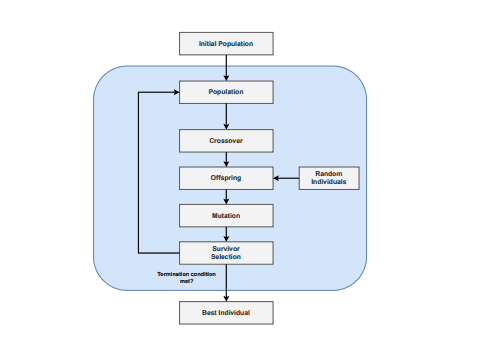
The study applies a hybrid evolutionary algorithm to minimize quantum circuit depth. Two variants are tested: one combining evolution with optimization for rotation gates and another using only mutations and crossover. The research evaluates two initialization strategies—constructing circuits from random seeds or optimizing existing target circuits—and experiments on 4- and 6-qubit circuits of varying depths. Results demonstrate that the proposed methods significantly reduce circuit depth while maintaining high fidelity to the target state.
Quantum computing promises to solve complex problems that classical computers cannot efficiently address. However, realizing this potential hinges on overcoming significant challenges in quantum circuit design—circuits being the foundational elements of quantum algorithms. Recent advancements in evolutionary algorithms, such as genetic algorithms and reinforcement learning, are providing innovative solutions to these challenges, fostering more efficient and scalable quantum computing.
The Challenge of Quantum Circuit Design
Quantum circuits consist of sequences of quantum gates that manipulate qubits to perform computations. Their design is inherently complex due to the fragility of quantum states and the necessity to minimize errors from noise and decoherence. Traditional methods often struggle to balance efficiency, accuracy, and scalability, especially as qubit numbers increase. This complexity has driven researchers to explore alternative approaches inspired by biological evolution.
Genetic algorithms, mimicking natural selection, have emerged as a promising tool for optimizing quantum circuits. By iteratively refining populations of potential solutions, these algorithms identify configurations that minimize errors while enhancing computational efficiency.
Evolutionary Approaches in Quantum Computing
One notable application is in the design of quantum feature maps, crucial components of quantum machine learning algorithms. Researchers have employed hybrid genetic optimization techniques to discover architectures that improve model performance and reduce qubit requirements, making quantum machine learning more practical.
Reinforcement learning has also been integrated into quantum circuit synthesis, enabling automated discovery of optimal gate sequences. By framing circuit design as a sequential decision-making problem, reinforcement learning explores vast solution spaces, identifying circuits that achieve desired outcomes with minimal resources. This method has proven effective in reducing circuit depth and gate counts, crucial for error-prone quantum systems.
Multi-objective optimization algorithms address competing demands in quantum circuit design, such as minimizing depth while maximizing fidelity. These algorithms balance trade-offs between different objectives, providing comprehensive solutions to complex design challenges.
Implications for the NISQ Era
As quantum computing moves toward practical applications within the Noisy Intermediate-Scale Quantum (NISQ) era, evolutionary algorithms offer significant benefits. They help optimize circuits for current hardware limitations, enhancing computational efficiency and error mitigation. This optimization is crucial for advancing quantum technologies and addressing real-world problems.
The integration of genetic algorithms and reinforcement learning into quantum circuit design represents a significant step forward in overcoming the challenges of quantum computing. These evolutionary approaches not only enhance computational efficiency but also pave the way for future advancements, making them indispensable tools in the development of practical quantum technologies.
👉 More information
🗞 Quantum Circuit Construction and Optimization through Hybrid Evolutionary Algorithms
🧠 DOI: https://doi.org/10.48550/arXiv.2504.17561