
HRL Laboratories and UCLA have been awarded a grant to advance quantum computing. The project, led by Jason Petta, a professor at UCLA, aims to scale-up silicon-based quantum processors. The team plans to embed quantum science technology onto silicon chips, allowing quantum computing to utilise existing semiconductor infrastructure. This could enable the technology to be produced at scale, a feat not yet achieved. The team will fabricate quantum circuits by isolating single electrons on a silicon chip and using the electron’s spin to encode process, and store information. The grant builds on several initiatives to expand quantum science and engineering research.
HRL Laboratories and UCLA Receive Grant for Quantum Computing Research
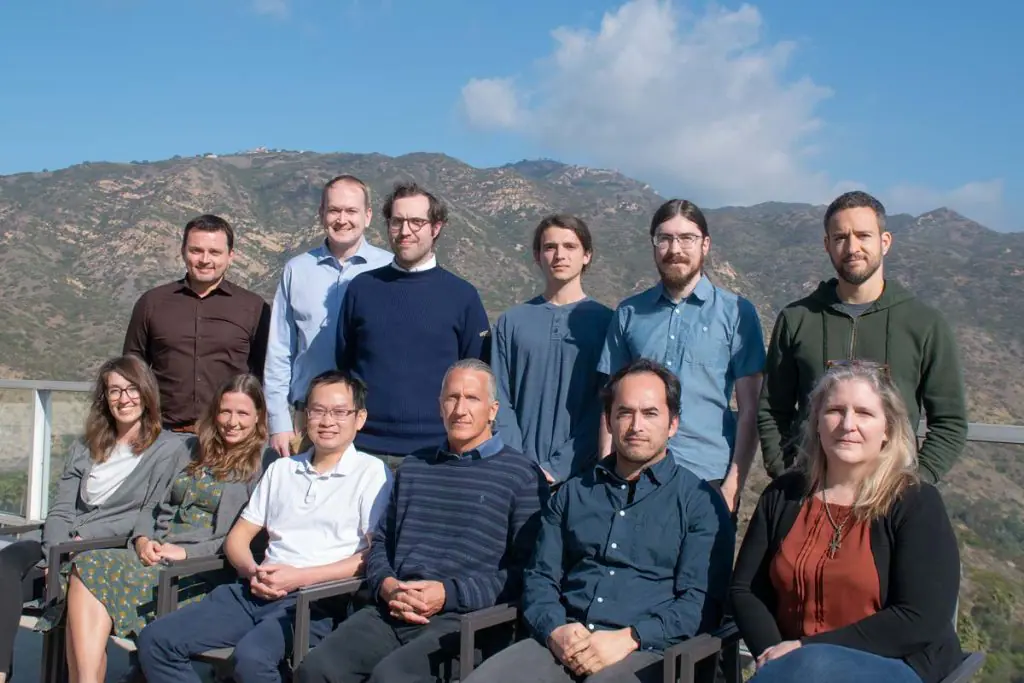
HRL Laboratories and the University of California, Los Angeles (UCLA) have been awarded a grant from the Army Research Office and the Laboratory for Physical Sciences (LPS) to advance quantum computing. The project, named Universal Control of Scaled Spin Systems (UCS3), aims to develop a working multi-qubit array using spin qubits, a promising next-generation qubit. The team, led by Jason Petta, a professor of physics and astronomy at UCLA and research center director at HRL Laboratories, will explore new realms of physics and engineering that emerge in large-scale quantum devices.
“Semiconductors are poised to end the ‘vacuum tube’ era of quantum computing,”
Jason Petta.
Scaling Up Quantum Processors
The UCS3 project aims to embed cutting-edge quantum science technology onto silicon chips, a feat that would allow quantum computing to leverage existing semiconductor infrastructure and be produced at scale. This approach is likened to the transition from bulky vacuum tubes to transistors in the early 20th century, which revolutionized electronic devices. The team believes that transitioning quantum technologies to a scalable, silicon-based platform could have similar transformative effects.
Quantum Circuits Fabrication
The team fabricates quantum circuits by isolating single electrons on a silicon chip and using the electron’s spin to encode, process, and store information. The challenge lies in fabricating tiny elements 10-50 nanometers in size on the silicon chip. Signals applied to these elements control the motion of the individual electrons and implement the quantum circuit. The collaboration between HRL and UCLA combines the reproducibility of an industrial wafer fabrication line with the agility of an academic research partner.
Expanding Quantum Science and Engineering Research
The UCS3 grant is part of a broader initiative to expand quantum science and engineering research in the greater Los Angeles area. In 2022, Boeing offered a significant gift to support UCLA faculty hiring initiatives, and UCLA launched a master’s degree program in quantum science and technology (MQST). The MQST degree program, led by Dr. Richard Ross, aims to increase the number of highly trained researchers who can contribute to the quantum workforce. The Laboratory for Physical Sciences also launched the qubits for computing foundry (QCF) program, which involves HRL and aims to distribute quantum devices to academic researchers to accelerate research progress.
The Future of Quantum Computing
The combination of state-of-the-art qubits from the QCF, a leading measurement activity in UCS3, and new workforce development programs at UCLA will both accelerate qubit science and help create the next generation of quantum talent. This concerted effort at UCLA’s division of physical sciences aims to address the growing impact quantum technology will have on society. The UCS3 project builds on a history of innovation in quantum computing, with Jason Petta and HRL Laboratories having been instrumental in the development of semiconductor qubits and silicon qubit fabrication and control.
“Achieving this would allow quantum computing to piggy-back off of existing semiconductor infrastructure and allow the technology to be produced at scale in a way that has never been done before,”
Jason Petta.
“The partnership between HRL and UCLA combines the reproducibility of an industrial wafer fabrication line with the agility of an academic research partner to enable unprecedented quantum measurements on state-of-the-art single electron spin qubits fabricated from Si/SiGe heterostructures,” said David Chow, chief scientific officer, HRL Laboratories.
“The combination of state-of-the-art qubits from the QCF, a leading measurement activity in UCS3, and new workforce development programs at UCLA will both accelerate qubit science and help create the next generation of quantum talent,” said Charles Tahan, Assistant Director for Quantum Information Science at the White House Office of Science and Technology Policy and Director of the LPS Qubit Collaboratory.
Summary
HRL Laboratories and a UCLA researcher have been awarded a grant to advance quantum computing, with the aim of scaling up silicon-based quantum processors. The project, named Universal Control of Scaled Spin Systems (UCS3), will explore new realms of physics and engineering that emerge in large-scale quantum devices, potentially revolutionising quantum computing by embedding the technology onto silicon chips, similar to the transition from vacuum tubes to transistors in the 20th century.
- HRL Laboratories and UCLA have been awarded a grant to advance quantum computing, specifically to scale-up silicon-based quantum processors.
- The project, Universal Control of Scaled Spin Systems (UCS3), is led by Jason Petta, a professor at UCLA and research centre director at HRL Laboratories.
- The team aims to embed quantum science technology onto silicon chips, which could allow quantum computing to utilise existing semiconductor infrastructure and be produced at scale.
- The process involves fabricating quantum circuits by isolating single electrons on a silicon chip and using the electron’s spin to encode, process, and store information.
- The partnership between HRL and UCLA combines industrial wafer fabrication with academic research to enable quantum measurements on single electron spin qubits.
- The UCS3 grant builds on several initiatives to expand quantum science and engineering research in Los Angeles, including a master’s degree program in quantum science and technology at UCLA.
- The project is part of a broader effort at UCLA to address the impact of quantum technology on society.
- Jason Petta has been a national leader in the earliest prototypes of semiconductor qubits, while HRL Laboratories has been developing silicon qubit fabrication and control.
“UCLA physical sciences has made a commitment to quantum research and Jason’s collaboration with HRL shows that we are on the right track,”
Miguel García-Garibay, dean of UCLA’s division of physical sciences.