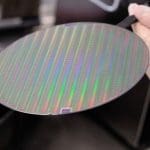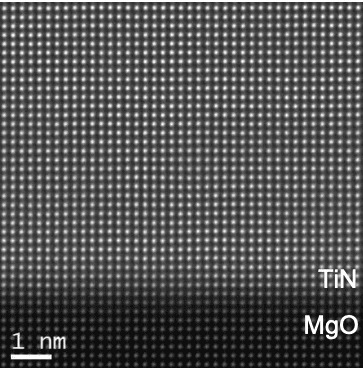
In a study published on April 15, 2025, titled Electronic transport properties of titanium nitride grown by molecular beam epitaxy, researchers demonstrated how MBE-grown TiN films achieve high residual resistivity ratios, improving superconducting coherence and offering potential advancements in quantum computing technologies.
This study demonstrates the growth of titanium nitride (TiN) thin films via molecular beam epitaxy (MBE), achieving a high residual resistivity ratio (RRR) of 15.8. A strong correlation between growth temperature and crystalline quality was observed, influencing both RRR values and lattice parameters. Superconducting properties revealed a Ginzburg-Landau coherence length of 60.4 ± 0.6 nm, surpassing typical sputtered films. First-principles calculations and experimental data provided insights into electronic structure and transport properties. Temperature-dependent Hall coefficient measurements highlighted anisotropic scattering mechanisms. These findings advance the development of nitride-based superconductors for advanced applications.
Titanium nitride (TiN) is emerging as a critical material for advancing quantum computing due to its unique electronic properties. Recent research focuses on optimizing TiN films to enhance superconductivity, essential for scalable and efficient quantum systems.
Scientists have developed advanced methods like plasma-assisted molecular beam epitaxy and atomic layer deposition to create ultra-thin TiN films. These techniques allow precise control over structure and composition, adjusting critical temperature and electronic anisotropy to minimize energy losses in quantum circuits.
Studies show that these innovative techniques result in enhanced superconducting performance. Improved critical temperatures mean TiN can maintain superconductivity at higher operational temperatures, while reduced electronic anisotropy lowers energy losses in quantum devices, supporting more reliable and efficient computations.
These advancements address key challenges in quantum computing, such as energy loss and scalability. By maintaining superconductivity at higher temperatures, they reduce the need for complex cooling systems, making quantum computers more accessible and cost-effective.
Research into TiN films represents a promising path for quantum computing advancements. Refining deposition techniques to enhance material properties brings us closer to overcoming current barriers. As these innovations progress, they could revolutionize not only quantum computing but also broader applications in electronics.
👉 More information
🗞 Electronic transport properties of titanium nitride grown by molecular beam epitaxy
🧠 DOI: https://doi.org/10.48550/arXiv.2504.11065