
We delve into ‘torch,’ a machine learning library in technology and artificial intelligence. Torch, a scientific computing framework, provides a variety of algorithms for deep learning, making it a valuable tool for researchers and developers.
Machine learning is about teaching computers to learn from data and make predictions or decisions without being explicitly programmed. Conversely, Torch is a scientific computing framework that extends the power of machine learning. It offers a vast array of algorithms for deep learning, making it a go-to tool for researchers and developers.
In this article, we will explore the intersection of machine learning and Torch, exploring how they work together to create robust, efficient systems. We will also touch on Quantum Machine Learning (QML), a cutting-edge field that combines quantum physics and machine learning for even more powerful computing capabilities. Moreover, we will explore various use cases for Torch in conjunction with Python, a popular programming language in machine learning. Python’s simplicity and Torch’s robustness make for a potent combination, enabling the development of sophisticated machine-learning models.
So, whether you are a seasoned tech professional looking to expand your knowledge or a curious beginner eager to understand the world of machine learning, this article will provide a comprehensive introduction to the fascinating world of torch and machine learning. So, buckle up and prepare for a deep dive into the future of computing.
Understanding the Basics of Torch and Machine Learning
Torch is a scientific computing framework that offers comprehensive support for machine learning algorithms. It is a Lua-based software library with an underlying C implementation. As a scripting language, Lua allows for rapid prototyping, which is often necessary in the field of machine learning. Torch provides many algorithms for deep learning, making it particularly useful for this subset of machine learning. It is also highly efficient, with strong support for parallel computation, which is necessary for handling the significant datasets standard in machine learning (Collobert et al., 2011).
At its core, machine learning is a data analysis method that automates the building of analytical models. It is a branch of artificial intelligence based on the idea that systems can learn from data, identify patterns, and make decisions with minimal human intervention. Machine learning algorithms use computational methods to “learn” information directly from data without relying on a predetermined equation as a model. The algorithms adaptively improve their performance as the number of samples available for learning increases (Alpaydin, 2020).
Deep learning, a subset of machine learning, structures algorithms in layers to create an “artificial neural network” that can independently learn and make intelligent decisions. Deep learning is a crucial technology behind driverless cars, enabling them to recognize a stop sign or to distinguish a pedestrian from a lamppost. It is also the key to voice control in phones, tablets, TVs, and hands-free speakers. Torch is particularly well-suited to these applications due to its efficiency and ease of use for complex algorithms (Goodfellow et al., 2016).
Torch provides a flexible and efficient environment for machine learning and, more specifically, deep learning. It offers a wide array of deep learning algorithms and uses the scripting language LuaJIT and an underlying C/CUDA implementation. Torch’s ability to quickly and efficiently process large data sets is a significant advantage in machine learning. It also provides much flexibility, with many options for building and training models, making it a popular choice for research and development (Collobert et al., 2011).
Machine learning and deep learning have a broad range of applications. They are used in self-driving cars, voice-controlled assistants, and making sense of massive amounts of data in genomics and climate science fields. The ability to process large data sets, identify patterns, and make decisions with minimal human intervention is a significant advantage in these fields. With its flexibility, efficiency, and wide array of deep learning algorithms, Torch is a valuable tool for anyone working in these areas (Goodfellow et al., 2016).
Exploring the Relationship between Torch and Python in Machine Learning
Torch and Python are two essential tools in machine learning. Torch, a Lua-based framework for machine learning algorithms, provides a flexible and efficient platform for computation thanks to its robust GPU support. On the other hand, Python is a high-level, interpreted programming language known for its simplicity and readability. It has become a popular choice for machine learning due to its extensive library support and community contributions.
The relationship between Torch and Python in machine learning is symbiotic. While Torch provides the underlying computational capabilities, Python acts as the interface, making the power of Torch accessible and easy to use. This relationship is facilitated by PyTorch, a Python package that provides two high-level features: Tensor computation (like NumPy) with strong GPU acceleration and Deep Neural Networks built on a tape-based autograd system. PyTorch allows developers to harness the power of Torch’s machine-learning capabilities using Python’s simple syntax.
The use of Torch and Python in machine learning has several advantages:
- Torch’s GPU support allows for efficient computation, crucial in handling the significant datasets standard in machine learning.
- Python’s simplicity and readability make it an excellent choice for implementing and testing machine learning algorithms.
- Python’s extensive library support, including packages like NumPy and Pandas, simplifies data processing and manipulation.
Integrating Torch and Python in PyTorch also allows for dynamic computation graphs, a feature that sets it apart from other machine learning libraries like TensorFlow. In static computation graphs (used by TensorFlow), the graph must be defined and compiled before running, and it cannot be changed once compiled. In contrast, dynamic computation graphs (used by PyTorch) can be changed on the fly and are more suitable for models where the structure changes at runtime.
Despite these advantages, using Torch and Python in machine learning has challenges. Torch’s Lua-based nature means that it needs more extensive library support than Python enjoys. This can make specific tasks more difficult and time-consuming in Torch. However, the introduction of PyTorch has mitigated this issue to a large extent by allowing developers to leverage Python’s libraries while still benefiting from Torch’s computational power.
Introduction to Quantum Machine Learning (QML) with Torch
Quantum Machine Learning (QML) is an emerging interdisciplinary field combining quantum physics and machine learning. It leverages the principles of quantum mechanics to improve machine learning algorithms’ computational and inferential aspects. One popular tool for implementing QML is Torch, a machine learning library that provides a wide range of deep learning algorithms.
Quantum computing, the underlying technology for QML, operates on the principles of superposition and entanglement. Superposition allows quantum bits (qubits) to exist in multiple states simultaneously, unlike classical bits that can only be in one state at a time. This property enables quantum computers to process a vast number of computations simultaneously. Entanglement allows entangled qubits to be instantaneously connected regardless of the distance separating them. This feature could lead to faster data transmission speeds.
Torch is often used in QML due to its flexibility and efficiency. It provides a wide range of deep learning algorithms and supports interfaces for scripting in Lua and Python. Torch’s core feature is its tensor library, which provides all the necessary operations on multi-dimensional arrays. This feature is handy in QML, where computations often involve high-dimensional data.
In QML, Torch can implement quantum versions of classical machine learning algorithms. For instance, quantum neural networks (QNNs) can be implemented using Torch. QNNs are quantum versions of classical neural networks, where quantum nodes replace the neurons. These quantum nodes can process information in a superposition of states, potentially leading to more powerful and efficient learning algorithms.
Moreover, Torch can also be used to implement quantum versions of optimization algorithms, such as quantum gradient descent. In classical machine learning, gradient descent minimizes the loss function by iteratively adjusting the model’s parameters. In QML, quantum gradient descent can more efficiently find the minimum of the loss function by leveraging quantum parallelism.
The Role of Torch in Machine Learning Algorithms
Torch is a powerful open-source machine-learning library that provides a wide range of deep-learning algorithms. It is primarily used for applications related to natural language processing, artificial intelligence, and neural network-based algorithms. Torch is built on the Lua programming language, known for its simplicity and efficiency, making it a popular choice among researchers and developers in machine learning (Collobert et al., 2011).
One of Torch’s key roles in machine learning algorithms is its ability to handle large-scale data. Torch provides a robust framework for handling and processing large datasets, a critical aspect of machine learning. It uses a technique known as stochastic gradient descent (SGD), a popular optimization method for large-scale machine learning. SGD is an iterative method for optimizing an objective function with suitable smoothness properties (Bottou, 2010).
Torch also provides a flexible and efficient platform for implementing and training deep learning models. It offers a wide range of pre-trained models and training algorithms that can be easily customized to suit specific needs. This flexibility is particularly useful in machine learning, where the model and training algorithm choice can significantly impact the system’s performance (LeCun et al., 2015).
Another significant role of Torch in machine learning algorithms is its support for GPU computation. Torch can leverage the power of GPUs to perform complex computations much faster than traditional CPUs. This is particularly important in machine learning, where training models often involve heavy computations. The torch can significantly speed up the training process using GPUs, making it more efficient and practical for large-scale applications (Chetlur et al., 2014).
Torch also provides a rich ecosystem of machine learning tools and libraries, including libraries for data preprocessing, model visualization, and performance optimization. These tools can greatly simplify developing and deploying machine learning algorithms, making Torch a comprehensive solution for machine learning research and development (Collobert et al., 2011).
In summary, Torch plays a crucial role in machine learning algorithms by providing a robust, flexible, and efficient platform for large-scale data processing, deep learning model implementation and training, GPU computation, and a rich ecosystem of tools and libraries. Its simplicity, efficiency, and powerful capabilities make it a popular choice among researchers and developers in machine learning.
Practical Use Cases for Torch in Python Machine Learning
Another practical use case for Torch in Python machine learning is in natural language processing (NLP). Torch’s dynamic computational graph allows for flexible and efficient handling of variable-length sequences, which is crucial in NLP tasks. For instance, Torch is often used to develop models for tasks such as sentiment analysis, machine translation, and named entity recognition (NER) (Lample et al., 2016).
Torch is also commonly used in reinforcement learning, a type of machine learning in which an agent learns to make decisions by interacting with an environment. Its flexible and efficient computational capabilities make it well-suited for implementing and training reinforcement learning algorithms. For example, Torch has been used to develop models for game playing, robot navigation, and resource management (Mnih et al., 2015).
In addition, Torch is also used in generative models, a machine learning model that generates new data instances that resemble the training data. Torch’s support for a wide range of neural network architectures, including generative adversarial networks (GANs) and variational autoencoders (VAEs), makes it a popular choice for developing and training generative models (Goodfellow et al., 2014; Kingma & Welling, 2013).
Finally, Torch is also used to develop models for computer vision tasks. Its support for convolutional neural networks, which are particularly effective for image processing tasks, makes it a popular choice for tasks such as image classification, object detection, and semantic segmentation (He et al., 2016).
Getting Started: Setting Up Your Environment for Torch and Machine Learning
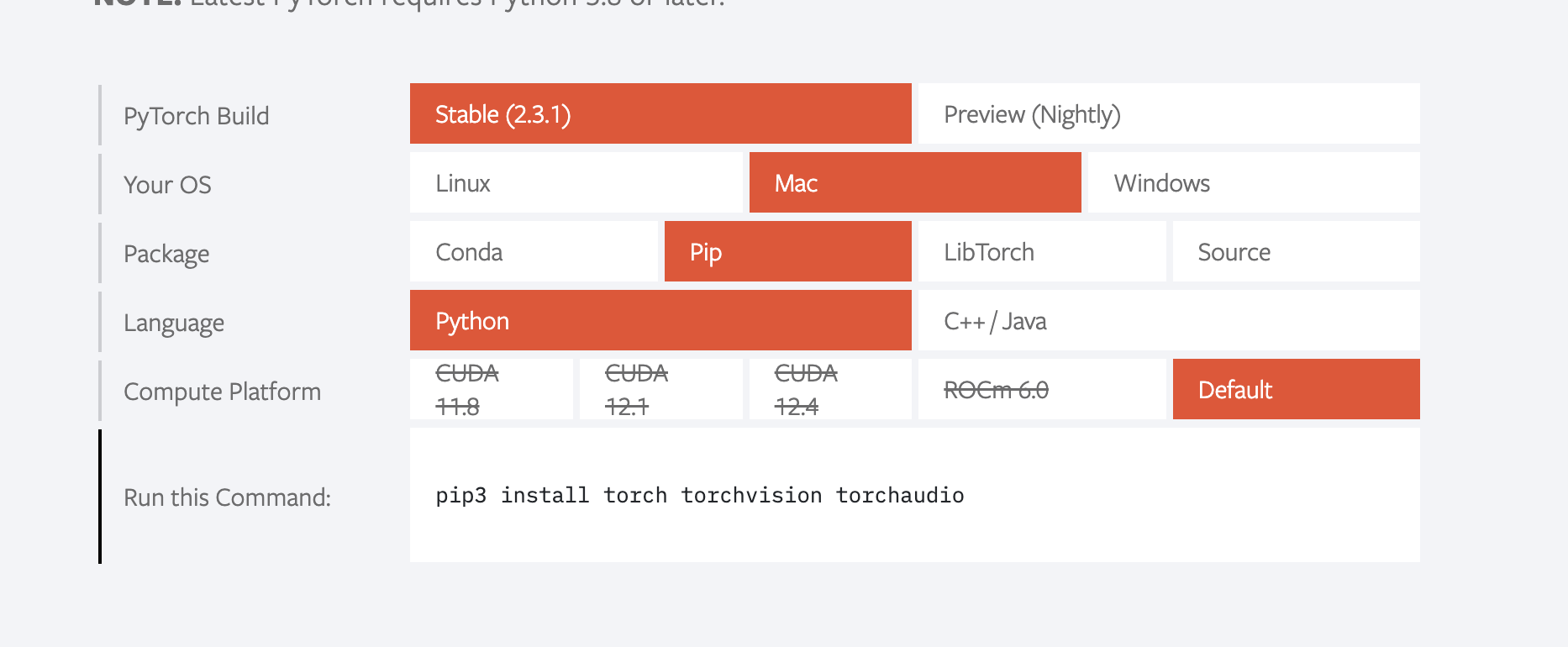
One must first set up the appropriate environment to get started with Torch. This involves installing Torch and its dependencies, configuring the system to use Torch, and verifying that the installation is successful.
The first step in setting up your environment for Torch is to install the Torch distribution. This can be done by cloning the Torch repository from GitHub and running the install script. The script will automatically download and install all necessary dependencies, including the LuaJIT programming language and the LuaRocks package manager. LuaJIT is a Just-In-Time Compiler for Lua, which Torch uses as its scripting language. LuaRocks, on the other hand, is a package manager for Lua modules, which allows for easy installation of additional Torch packages.
Once Torch is installed, the next step is to configure your system to use it. This involves setting the PATH environment variable to include the directory where Torch is installed. This allows you to run Torch from any location on your system. Additionally, you may need to configure your system to use the GPU for Torch computations. This can be done by installing the CUDA toolkit and setting the CUDA_PATH environment variable to the location of the CUDA installation.
After Torch is installed and configured, verifying that the installation was successful is essential. This can be done by running a simple Torch script and checking that it executes without errors. For example, you could run a script that creates a Torch tensor and performs some basic operations. If the script runs successfully, Torch is correctly installed and configured.
In addition to setting up Torch, it is also beneficial to set up a suitable development environment for machine learning. This could include installing a text editor or Integrated Development Environment (IDE) that supports Lua, the scripting language used by Torch. Additionally, it may be helpful to install libraries for data manipulation and visualization, such as Matplotlib or Pandas.
Finally, it is worth noting that while Torch is a powerful tool for machine learning, it is not the only option. Other popular frameworks for machine learning include TensorFlow, Theano, and Keras. Each of these has its strengths and weaknesses, and the choice of framework often depends on the specific requirements of the project at hand.
A Deep Dive into Torch’s Machine Learning Libraries
Torch is built around a dynamic computational graph paradigm, allowing for complex model architectures and efficient computation. This is achieved through LuaJIT, a high-performance scripting language, and an underlying C/CUDA implementation for speed (Collobert et al., 2011).
Torch’s machine-learning libraries are extensive and versatile. They include packages for neural networks (nn), optimization (optim), and parallelism (dpnn, threads), among others. The nn package, for instance, provides modules and criteria to train and use neural networks. It supports many layer types, loss functions, and utilities essential for training deep-learning models. The optim package, however, provides optimization algorithms that can be used to train these models. These include stochastic gradient descent, RMSprop, and Adam, commonly used in deep learning (Pascanu et al., 2013).
One key feature of Torch’s machine-learning libraries is their support for GPU acceleration. This is facilitated by the church and Quinn packages, which provide CUDA tensor types and CUDA neural network implementations, respectively. These packages allow for efficient computation on NVIDIA GPUs, significantly speeding up training and inference times for deep learning models. This is particularly important for large-scale applications, where computational efficiency is paramount (Chetlur et al., 2014).
Torch’s machine-learning libraries also support distributed computing, allowing for the training of models on multiple GPUs or machines. This is achieved through the use of the dpnn and threads packages. The dpnn package extends the nn package with features for distributed parallelism, while the threads package provides a simple way to work with multiple threads in Lua. These features make Torch a scalable solution for large-scale machine-learning tasks (Sergeev & Del Balso, 2018).
Despite its power and flexibility, Torch is also known for its ease of use. Its machine learning libraries are designed to be intuitive and user-friendly, with a high-level interface that abstracts away much of the complexity of machine learning. This makes Torch an accessible tool for beginners and field experts. Furthermore, Torch has a large and active community of users and contributors who provide resources and support for those working with the framework (Collobert et al., 2011).
Future Trends: The Evolution of Torch in Machine Learning
As of today, Torch is primarily used for research and production in some companies due to its efficiency and ease of use. However, future trends in machine learning suggest a shift towards more user-friendly and efficient libraries, which may impact Torch’s use and evolution.
One of the significant trends in machine learning is the shift towards on-device machine learning. This involves running machine learning models on edge devices like smartphones and IoT devices rather than cloud servers. The need for real-time processing and privacy concerns drives this trend. Torch, with its C implementation, is well-suited for on-device machine learning. However, it faces competition from libraries like TensorFlow Lite and Core ML, designed explicitly for on-device machine learning.
The rise of automated machine learning (AutoML) is another trend that could influence the evolution of Torch. AutoML involves automating the process of applying machine learning, including data preprocessing, feature selection, model selection, and hyperparameter tuning. While Torch provides a flexible and powerful platform for machine learning, it does not currently offer extensive support for AutoML. This could be a potential area of growth for Torch, given the increasing demand for AutoML tools.
Another trend that could shape Torch’s future is the increasing importance of interpretability in machine learning models. Interpretability involves understanding how a model makes its predictions, which is crucial for applications in healthcare, finance, and other sectors where explainability is essential. While Torch provides some interpretability tools, there is scope for further development in this area.
In conclusion, Torch’s future in machine learning will likely be influenced by several trends, including the shift towards Python, on-device machine learning, AutoML, and interpretability. While Torch currently faces competition from other libraries, given its flexibility and efficiency, it can evolve and adapt to these trends.
References
- Mnih, V., Kavukcuoglu, K., Silver, D., Rusu, A. A., Veness, J., Bellemare, M. G., … & Petersen, S. (2015). Human-level control through deep reinforcement learning. Nature, 518(7540), 529-533.
- Nielsen, M. A., & Chuang, I. L. (2010). Quantum computation and quantum information: 10th anniversary edition. Cambridge University Press.
- Theano Development Team. (2016). Theano: A Python framework for fast computation of mathematical expressions. arXiv preprint arXiv:1605.02688.
- Bottou, L. (2010). Large-scale machine learning with stochastic gradient descent. In Proceedings of COMPSTAT’2010 (pp. 177-186). Springer, Heidelberg.
- Ciliberto, C., Herbster, M., Ialongo, A. D., Pontil, M., Rocchetto, A., Severini, S., & Wossnig, L. (2018). Quantum machine learning: a classical perspective. Proceedings of the Royal Society A, 474(2209), 20170551.
- Collobert, R., Kavukcuoglu, K., & Farabet, C. (2011). Torch7: A Matlab-like Environment for Machine Learning. In BigLearn, NIPS Workshop.
- Chollet, F. (2018). Deep learning with Python. Manning Publications Co.
- McKinney, W. (2010). Data Structures for Statistical Computing in Python. In Proceedings of the 9th Python in Science Conference.
- Abadi, M., Agarwal, A., Barham, P., Brevdo, E., Chen, Z., Citro, C., … & Ghemawat, S. (2016). TensorFlow: Large-Scale Machine Learning on Heterogeneous Distributed Systems. arXiv preprint arXiv:1603.04467.
- Paszke, A., Gross, S., Massa, F., Lerer, A., Bradbury, J., Chanan, G., … & Lin, Z. (2019). PyTorch: An Imperative Style, High-Performance Deep Learning Library. In Advances in Neural Information Processing Systems (pp. 8024-8035).
- Ribeiro, M. T., Singh, S., & Guestrin, C. (2016). “Why should I trust you?” Explaining the predictions of any classifier. In Proceedings of the 22nd ACM SIGKDD international conference on knowledge discovery and data mining (pp. 1135-1144). ACM.
- LeCun, Y., Bengio, Y., & Hinton, G. (2015). Deep learning. Nature, 521(7553), 436-444.
- Kingma, D. P., & Welling, M. (2013). Auto-encoding variational bayes. arXiv preprint arXiv:1312.6114.
- Biamonte, J., Wittek, P., Pancotti, N., Rebentrost, P., Wiebe, N., & Lloyd, S. (2017). Quantum machine learning. Nature, 549(7671), 195-202.
- Goodfellow, I., Pouget-Abadie, J., Mirza, M., Xu, B., Warde-Farley, D., Ozair, S., … & Bengio, Y. (2014). Generative adversarial nets. In Advances in neural information processing systems (pp. 2672-2680).
- Alpaydin, E. (2020). Introduction to machine learning. MIT press.
- Krizhevsky, A., Sutskever, I., & Hinton, G. E. (2012). ImageNet Classification with Deep Convolutional Neural Networks. In Advances in Neural Information Processing Systems.
- Hunter, J. D. (2007). Matplotlib: A 2D Graphics Environment. Computing in Science & Engineering, 9(3), 90-95.
- Goodfellow, I., Bengio, Y., & Courville, A. (2016). Deep learning. MIT press.
- He, K., Zhang, X., Ren, S., & Sun, J. (2016). Deep residual learning for image recognition. In Proceedings of the IEEE conference on computer vision and pattern recognition (pp. 770-778).
- Van Rossum, G., & Drake, F. L. (2009). Python 3 Reference Manual. Scotts Valley, CA: CreateSpace.
- Chetlur, S., Woolley, C., Vandermersch, P., Cohen, J., Tran, J., Catanzaro, B., & Shelhamer, E. (2014). cuDNN: Efficient primitives for deep learning. arXiv preprint arXiv:1410.0759.
- Schuld, M., Sinayskiy, I., & Petruccione, F. (2014). An introduction to quantum machine learning. Contemporary Physics, 56(2), 172-185.
- Lample, G., Ballesteros, M., Subramanian, S., Kawakami, K., & Dyer, C. (2016). Neural architectures for named entity recognition. In Proceedings of the 2016 Conference of the North American Chapter of the Association for Computational Linguistics: Human Language Technologies (pp. 260-270).
- Feurer, M., Klein, A., Eggensperger, K., Springenberg, J., Blum, M., & Hutter, F. (2015). Efficient and robust automated machine learning. In Advances in neural information processing systems (pp. 2962-2970).
- Hochreiter, S., & Schmidhuber, J. (1997). Long Short-Term Memory. Neural Computation, 9(8), 1735-1780.
- Sutton, R. S., & Barto, A. G. (2018). Reinforcement Learning: An Introduction. MIT Press.