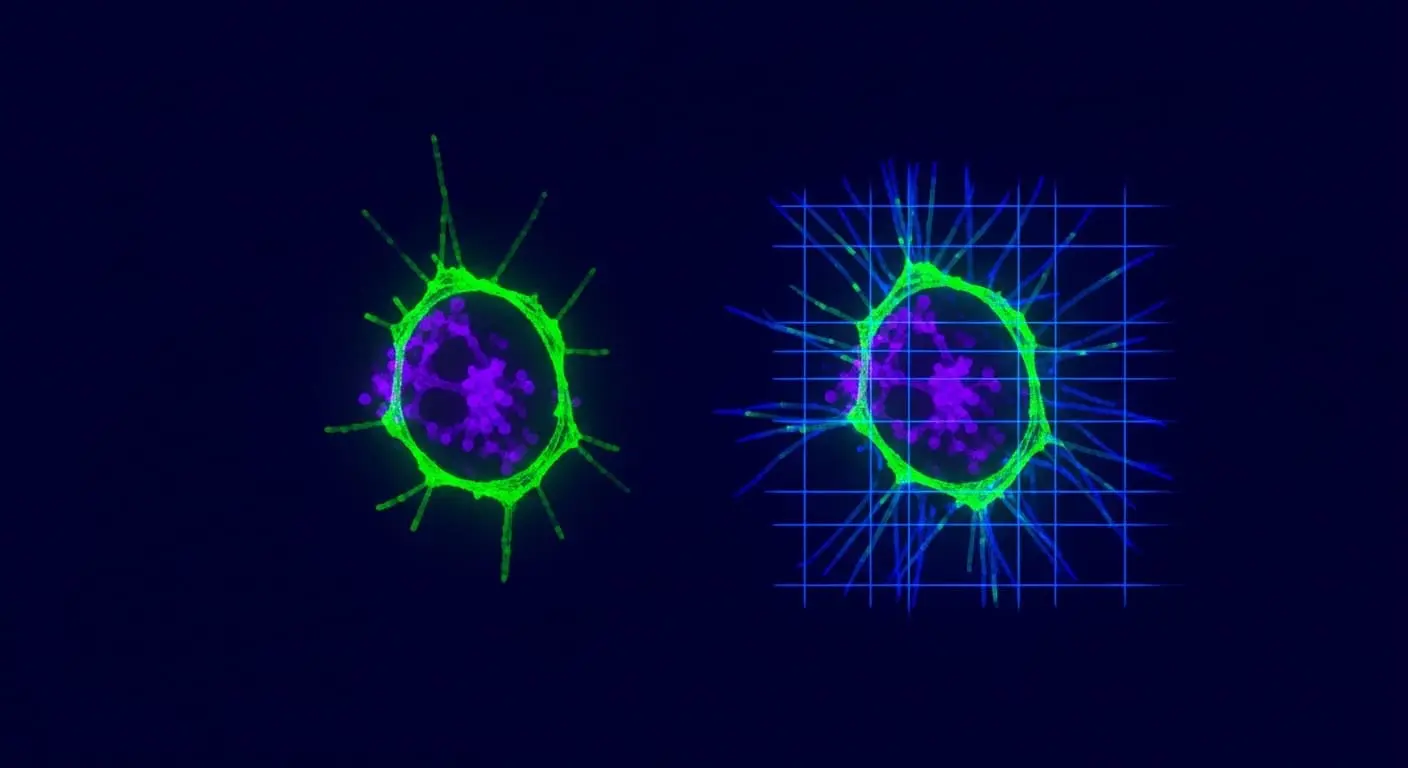
Kevin Ruck and his colleagues are applying techniques from symplectic topology to longstanding problems in quantum mechanics. A new approach using Floer theory analyses energy eigenstates in simplified quantum systems, specifically the ‘particle on a ring’ and the ‘particle in a box’. By interpreting Schrödinger equation solutions as orbits within a Hamiltonian system, the research extends Rabinowitz Floer homology to accommodate non-autonomous Hamiltonians, maintaining key compactness of relevant moduli spaces. This advancement proves the existence of energy eigenstates across a broad spectrum of exterior potentials, offering a new mathematical framework for understanding quantum behaviour.
Extending Rabinowitz Floer homology to time-dependent quantum mechanical systems
Rabinowitz Floer homology, a powerful method originating in dynamical systems, provides a means of counting closed orbits, conceptually similar to counting laps around a racetrack to determine the number of racers participating. In classical mechanics, this allows for a detailed understanding of system behaviour. Applying this technique to quantum systems where the rules of motion evolve over time, described by a ‘non-autonomous Hamiltonian’, presented a significant challenge. Traditionally, Floer homology relied on autonomous systems, those where the Hamiltonian remains constant over time. The core difficulty lies in ensuring the necessary mathematical structures, particularly ‘compactness’ of the spaces used to represent the orbits, are preserved when the Hamiltonian is time-dependent. Compactness is crucial; without it, calculations become unstable and unreliable. An extension of the definition of this homology was therefore required to accommodate these changing systems, ensuring the mathematical stability of the calculations. This involved a detailed analysis of ‘J-holomorphic curves’, solutions to partial differential equations describing how surfaces deform. These curves are analogous to the varying shapes soap bubbles take when blown with different air pressures, their geometry being sensitive to underlying parameters. Investigations focused on quantum systems, specifically the ‘particle on a ring’ and ‘particle in a box’, utilising symplectic topology, the study of geometric structures on phase space, and Floer theory to rigorously count energy eigenstates. The symplectic framework provides the geometric language needed to translate quantum mechanical problems into a topological setting, allowing for the application of powerful analytical tools. This approach differs significantly from traditional quantum mechanical treatments which often rely on operator theory and Hilbert spaces.
Rabinowitz Floer homology confirms energy eigenstate existence in time-dependent quantum systems
For the first time, Rabinowitz Floer homology extends beyond systems with constant rules of motion to those where these rules change over time, a key step previously hindering analysis of dynamic quantum systems. This extension allows confirmation of energy eigenstate existence for both ‘particle on a ring’ and ‘particle in a box’ systems when energy, E, exceeds the maximum potential, max V, a condition previously impossible to guarantee with this homology. The significance of this lies in the fact that many realistic quantum systems are not static; their potentials change over time due to external influences or internal dynamics. By interpreting solutions to the Schrödinger equation as orbits within a time-dependent Hamiltonian system, physicists can now rigorously prove the existence of these eigenstates across a wide range of exterior potentials. Specifically, the research showed that for any energy E exceeding max V, a radius can be found for the ‘ring’ and a length for the ‘box’ supporting such an eigenstate. This is not merely a theoretical confirmation; it establishes a firm mathematical foundation for understanding the behaviour of quantum particles in these simplified, yet fundamental, scenarios. The method unlocks a new pathway for understanding quantum behaviour in non-autonomous systems, detailing how the number of energy eigenstates can be calculated with greater precision. The ability to precisely determine the number of eigenstates is crucial for understanding spectral properties and predicting the system’s response to external perturbations. Furthermore, the technique provides a novel approach to studying the stability of quantum states in time-varying potentials.
Rigorous quantum verification using extended Rabinowitz Floer homology
Confirming energy levels in simplified quantum systems may seem a purely academic exercise, yet this analysis addresses a fundamental need to rigorously verify solutions to the Schrödinger equation; traditionally, physicists have relied on approximations and numerical methods. These methods, while often effective, lack the mathematical certainty provided by techniques like Floer homology. The authors acknowledge that while their extended Rabinowitz Floer homology works across a ‘big range’ of exterior potentials, the precise boundaries of this range remain undefined. This lack of specificity is a critical limitation, hindering immediate practical application and demanding further investigation to determine where the technique begins to falter. Identifying these boundaries is crucial for establishing the domain of validity of the method and ensuring its reliability in more complex scenarios. The current research provides a proof of concept, demonstrating the feasibility of the approach, but further work is needed to refine its limitations.
Acknowledging the presently undefined boundaries of its applicability does not diminish the importance of this analysis. This broadened technique confirms energy levels in fundamental quantum models, like particles confined to a ring or box, bypassing reliance on approximations. The advancement opens questions regarding the limits of this extended homology and its potential to tackle more complex quantum scenarios, prompting further research into the technique’s scalability and durability. For example, extending the method to systems with multiple particles or more complicated potential landscapes presents a significant challenge. Extending Rabinowitz Floer homology, a complex set of tools used to study solutions of equations governing physical systems, to more general scenarios represents a substantial advance in mathematical physics. Viewing solutions to the Schrödinger equation as orbits within a dynamic system allowed scientists to bypass the need for approximations traditionally used in quantum mechanics, providing a strong and mathematically sound foundation for quantum calculations. This rigorous approach has the potential to refine our understanding of quantum phenomena and pave the way for more accurate and reliable quantum technologies. The development of this technique represents a significant step towards bridging the gap between theoretical physics and rigorous mathematical analysis.
This research successfully extended Rabinowitz Floer homology to dynamic systems, allowing scientists to prove the existence of energy eigenstates for particles within a ring or box. This means calculations for these fundamental quantum models can now be performed without relying on potentially inaccurate approximations. The study demonstrates the feasibility of this approach, though the precise limits of its applicability with varying exterior potentials remain undefined. Authors suggest further investigation is needed to determine the boundaries of this technique and explore its scalability to more complex quantum systems.
👉 More information
🗞 A Floer Theoretic Approach to Energy Eigenstates on one Dimensional Configuration Spaces
🧠 ArXiv: https://arxiv.org/abs/2603.29201