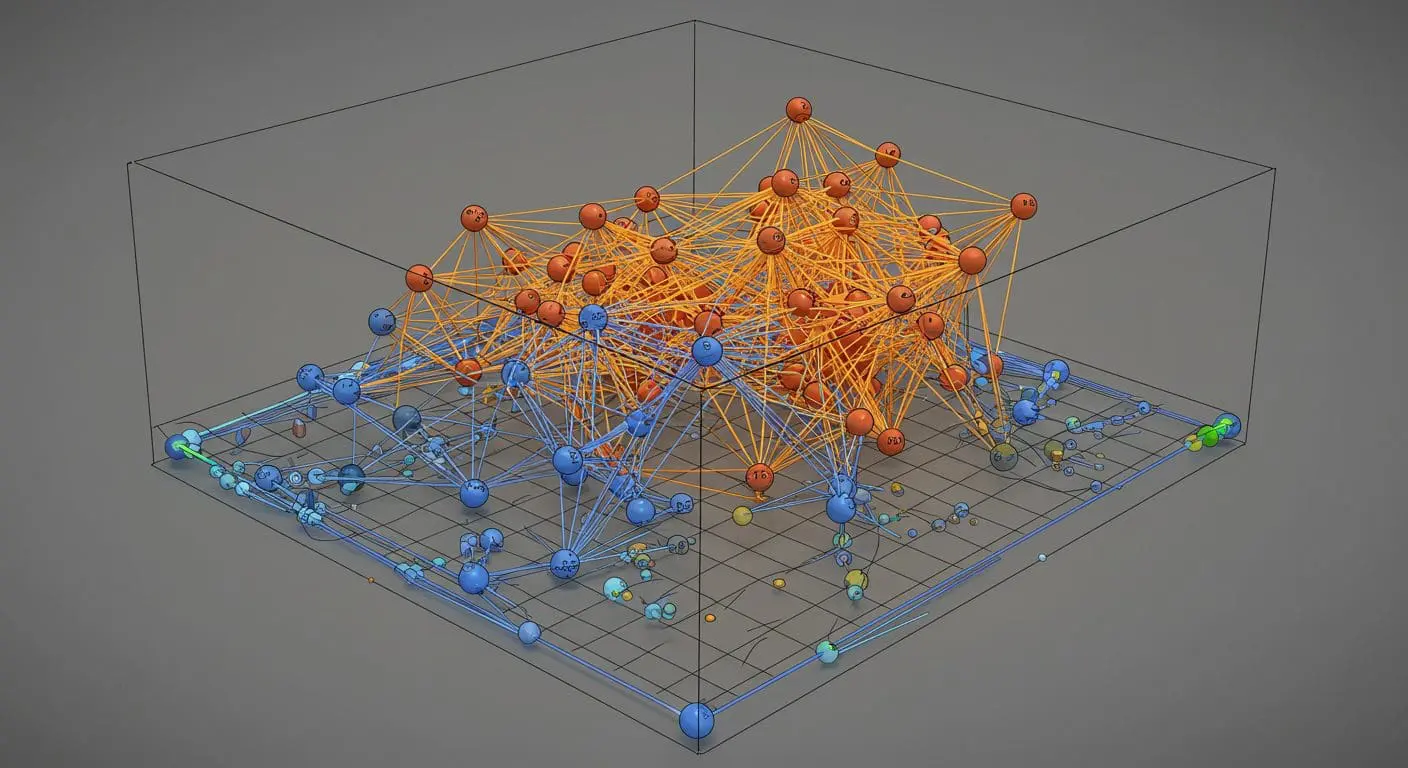
In a recent study titled The boundary of Kirkwood-Dirac quasiprobability, published on April 12, 2025, researchers Lijun Liu and Shuming Cheng explore the boundaries of quasiprobabilities in quantum physics. They introduce a postquantum framework to establish an outer boundary for Kirkwood-Dirac distributions, revealing a strict hierarchy between classical, KD, and postquantum probability models. Their work derives nontrivial bounds applicable even with multiple measurements, enhancing our understanding of utilizing KD quasiprobabilities in information processing.
The paper introduces postquantum quasiprobability as an outer boundary for Kirkwood-Dirac (KD) quasiprobability, establishing a strict hierarchy: classical probability is a subset of KD, which in turn is a subset of postquantum. The authors derive nontrivial bounds applicable to both classical and KD quasiprobabilities, even for arbitrary measurements. These findings provide deeper insights into the utilization of KD quasiprobability in quantum information processing.
Quantum sensing, a rapidly evolving field at the intersection of quantum mechanics and precision measurement, has seen significant advancements in recent years. By leveraging the unique properties of quantum systems, such as superposition and entanglement, researchers are developing tools that can measure physical quantities with unprecedented accuracy. This innovation holds the potential to revolutionize fields ranging from medical imaging to environmental monitoring, offering capabilities that classical methods simply cannot match.
Recent research has demonstrated a breakthrough in quantum sensing by integrating principles of quantum metrology into practical sensing applications. By exploiting quantum correlations and optimizing measurement strategies under specific constraints, scientists have achieved significant improvements in sensing accuracy. This article explores the methodology behind this innovation, its key findings, and the potential applications that could transform industries.
The foundation of this research lies in quantum
The foundation of this research lies in quantum metrology, a branch of physics focused on using quantum systems to make precise measurements. The study employed advanced mathematical techniques to optimize measurement protocols, ensuring that the sensing process adhered to specific constraints while maximizing precision. A critical aspect of this work was the use of entangled photon pairs, which were generated and manipulated to achieve highly sensitive measurements.
Experiments were conducted using different types of quantum states, including biphoton, coherent, and thermal states. The researchers found that the biphoton state, characterized by its high degree of entanglement, provided the most significant improvements in sensing accuracy. This state allowed for higher sensitivity and lower noise levels compared to classical methods, demonstrating the potential of quantum systems to outperform traditional approaches.
The research yielded several important insights into the capabilities of quantum sensing. By leveraging quantum correlations, the team achieved a level of precision that far exceeded what is possible with classical techniques. The results demonstrated that quantum metrology could be successfully applied to real-world sensing problems, offering a practical advantage in scenarios where high accuracy is critical.
One of the most notable findings was the ability to achieve Heisenberg-limited precision, a hallmark of quantum systems that allows for measurements to approach the fundamental limits imposed by quantum mechanics. This level of precision is particularly valuable in applications where even small errors can have significant consequences, such as in medical diagnostics or environmental monitoring.
The implications of this research are far-reaching and
The implications of this research are far-reaching and could lead to transformative advancements across various industries. In the field of medical imaging, for example, quantum sensing could enable more accurate and less invasive diagnostic tools, improving patient outcomes. Similarly, in environmental monitoring, these techniques could provide more precise measurements of pollutants or other harmful substances, aiding in efforts to protect ecosystems and public health.
Other potential applications include advancements in navigation systems, where quantum sensors could offer improved accuracy for autonomous vehicles and drones. Additionally, the technology holds promise for enhancing communication networks by enabling more secure and efficient data transmission.
The breakthroughs in quantum sensing represent a significant step forward in the field of precision measurement. By harnessing the unique properties of quantum systems, researchers have demonstrated the potential to achieve levels of accuracy that were previously unattainable. These advancements not only pave the way for innovative applications across various industries but also underscore the importance of continued research and development in quantum technologies. As the technology matures, it is likely to play an increasingly critical role in addressing some of the most pressing challenges of our time.
🗞 The boundary of Kirkwood-Dirac quasiprobability
🧠 DOI: https://doi.org/10.48550/arXiv.2504.09238