Engineers at EPFL’s Laboratory of Nanoscale Electronics and Structures (LANES) have created a groundbreaking device that can efficiently convert heat into electrical voltage at temperatures lower than outer space. This innovation could help overcome a significant obstacle to advancing quantum computing technologies, which require extremely low temperatures to function optimally.
Led by Andras Kis, the LANES team has fabricated a 2D device made of graphene and indium selenide that operates at ultra-low temperatures with efficiency comparable to current technologies at room temperature. PhD student Gabriele Pasquale notes that this work is a significant step ahead in harnessing the Nernst effect, a complex thermoelectric phenomenon that generates an electrical voltage when a magnetic field is applied perpendicular to an object with a varying temperature.
This achievement has been published in Nature Nanotechnology and holds promise for developing advanced cooling technologies essential for quantum computing at millikelvin temperatures.

Efficient Quantum Cooling with 2D Devices
The development of quantum computing technologies has been hindered by the need for extremely low temperatures to function optimally. To overcome this obstacle, researchers at EPFL’s Laboratory of Nanoscale Electronics and Structures (LANES) have created a device that can efficiently convert heat into electrical voltage at temperatures lower than outer space.
The Challenge of Quantum Cooling
Quantum bits (qubits) require cooling down to temperatures in the millikelvin range (close to -273 Celsius) to slow down atomic motion and minimize noise. However, the electronics used to manage these quantum circuits generate heat, which is difficult to remove at such low temperatures. Most current technologies must therefore separate quantum circuits from their electronic components, causing noise and inefficiencies that hinder the realization of larger quantum systems beyond the lab.
The Innovative 2D Device
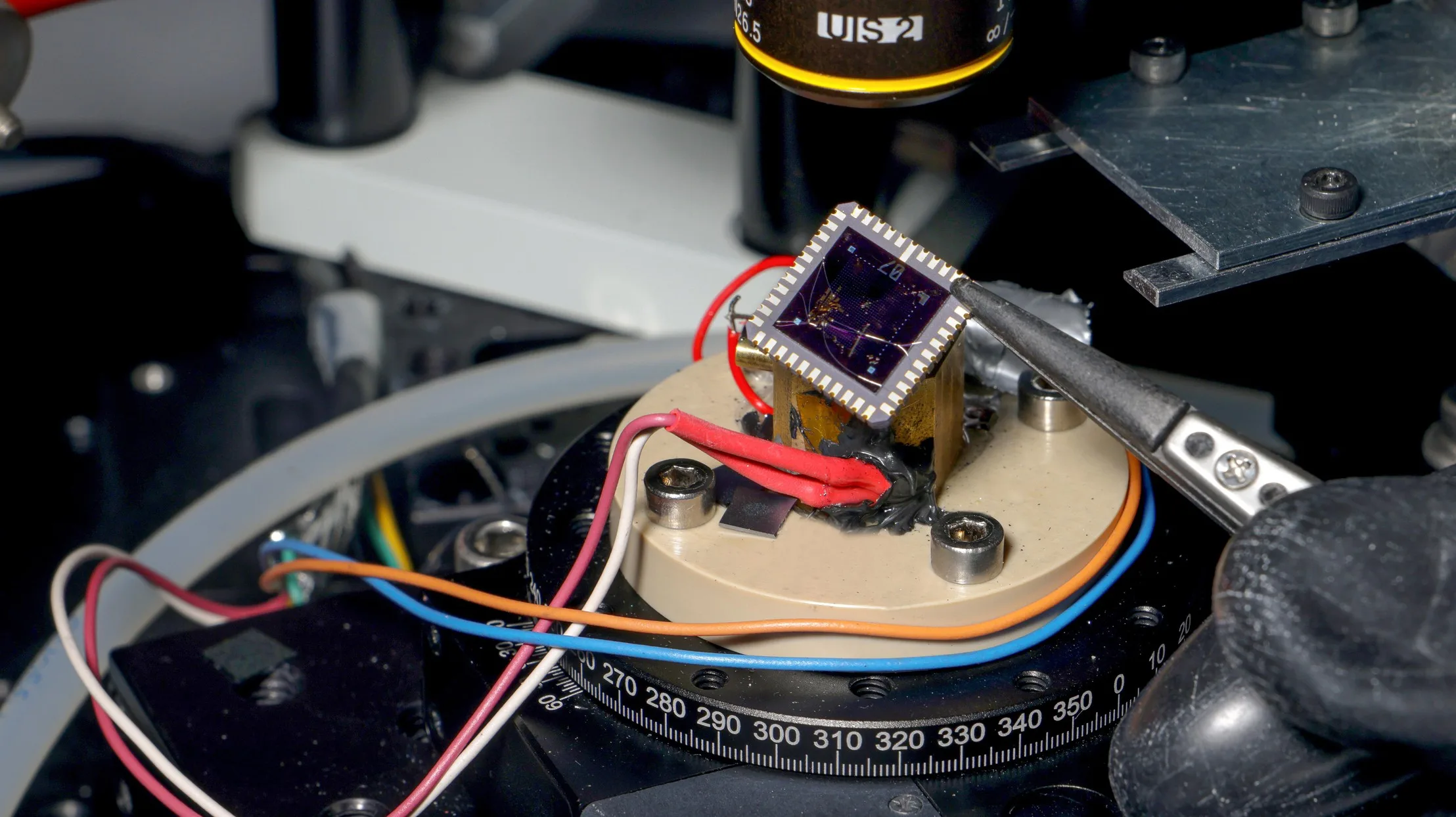
The LANES team has fabricated a device that not only operates at extremely low temperatures but does so with efficiency comparable to current technologies at room temperature. This innovative device combines the excellent electrical conductivity of graphene with the semiconductor properties of indium selenide. Only a few atoms thick, it behaves as a two-dimensional object, and this novel combination of materials and structure yields its unprecedented performance.
Harnessing the Nernst Effect
The device exploits the Nernst effect, a complex thermoelectric phenomenon that generates an electrical voltage when a magnetic field is applied perpendicular to an object with a varying temperature. The two-dimensional nature of the lab’s device allows the efficiency of this mechanism to be controlled electrically. This achievement has been published in Nature Nanotechnology.
Potential Applications
The LANES team believes their device could provide the necessary cooling for quantum computing systems, filling a critical gap in quantum technology. If integrated into existing low-temperature quantum circuits, it could revolutionize cooling systems for future technologies. The research also sheds light on thermopower conversion at low temperatures – an underexplored phenomenon until now.
Experimental Details
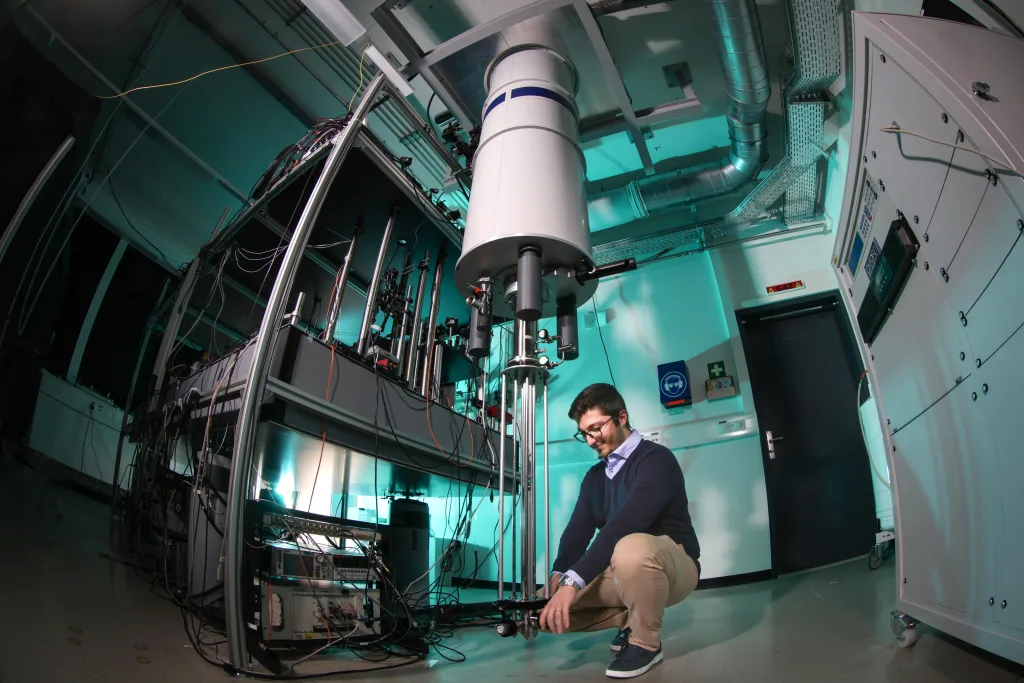
The 2D structure was fabricated at the EPFL Center for MicroNanoTechnology and the LANES lab. Experiments involved using a laser as a heat source, and a specialized dilution refrigerator to reach 100 millikelvin – a temperature even colder than outer space. Converting heat to voltage at such low temperatures is usually extremely challenging, but the novel device and its harnessing of the Nernst effect make this possible.
Future Prospects
The LANES team’s achievement represents a major advancement in nanotechnology and holds promise for developing advanced cooling technologies essential for quantum computing at millikelvin temperatures. As the field continues to evolve, it is likely that such innovative devices will play a crucial role in overcoming the significant obstacles to the advancement of quantum computing technologies.
External Link: Click Here For More