

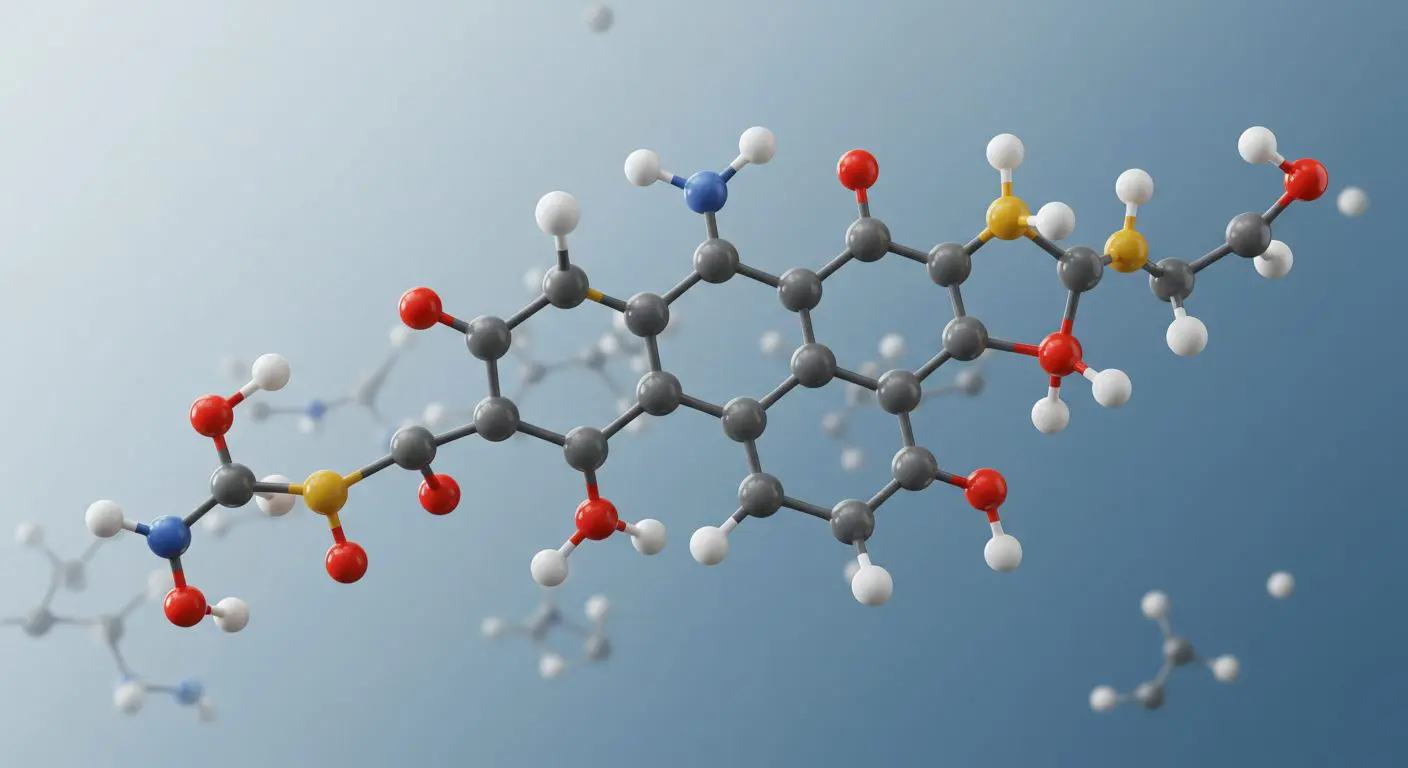
Predicting how molecules behave is crucial for advances in drug discovery and materials science, but current deep learning models often operate as ‘black boxes’, offering little insight into why a prediction is made. Roshan Balaji, Joe Bobby, and Nirav Pravinbhai Bhatt, all from the Indian Institute of Technology Madras, address this challenge by developing a new approach that focuses on the fundamental building blocks of molecules, functional groups. Their research introduces a framework that encodes molecules based on these chemical substructures, both those already known to chemists and those identified through analysis of vast molecular datasets. This method not only achieves impressive accuracy across a wide range of chemical properties, but also allows researchers to directly connect predicted behaviours to specific functional groups, offering a level of chemical interpretability previously lacking in deep learning models and promising to accelerate innovation in molecular design.
Machine Learning Predicts Molecular Drug Properties
Research increasingly focuses on applying machine learning and deep learning techniques to accelerate drug discovery and understand molecular properties. Scientists are developing methods to predict crucial characteristics of molecules, including solubility, how a drug is absorbed and metabolized, and its potential toxicity, aiding in virtual screening and predicting biological targets. Recent efforts extend to discovering new antibiotics and analyzing fragment screening data to refine drug design. Deep learning models, particularly those utilizing convolutional and graph neural networks, are central to this progress, excelling at learning complex patterns from molecular structures and representing molecules as numerical vectors.
Researchers prioritize model interpretability, developing techniques to understand why a model makes a specific prediction, and utilize multitask and transfer learning to enhance performance and efficiency. This research relies on extensive datasets, including ChEMBL, PubChem, and Tox21, with performance rigorously evaluated using metrics like ROC AUC and R-squared. Current applications include predicting inhibitors for diseases like Alzheimer’s, analyzing viral proteins like those found in SARS-CoV-2, and identifying new antibiotic candidates, demonstrating the growing reliance on computational methods for identifying and developing new medicines.
Functional Group Representation for Molecular Property Prediction
Scientists have pioneered a new framework, the Functional Group Representation (FGR), to predict molecular properties using deep learning while simultaneously enhancing chemical interpretability. This system encodes molecules based on fundamental chemical substructures, integrating established chemical knowledge and patterns discovered through data analysis. Researchers curated known functional groups and mined a large collection of molecules to identify sequential patterns, creating a comprehensive representation that translates molecular structures into a simplified, lower-dimensional space. The system leverages deep learning algorithms to automatically learn complex relationships between molecular structure and properties, moving beyond traditional methods that rely on manually designed features.
Experiments employed a diverse set of 33 benchmark datasets spanning fields like physical chemistry, biophysics, quantum mechanics, biological activity, and pharmacokinetics, demonstrating that the FGR framework achieves state-of-the-art results and surpasses existing methods in predictive accuracy. Crucially, the model’s representations align with established chemical principles, allowing researchers to directly link predicted properties to specific functional groups within a molecule, facilitating novel insights into structure-property relationships and informing rational molecular design. This represents a significant advancement toward developing high-performing, chemically interpretable deep learning models for accelerating molecular discovery.
Functional Group Representation Achieves Benchmark Performance
Researchers developed a novel molecular representation framework, the Functional Group Representation (FGR), which encodes molecules based on their fundamental chemical substructures, achieving state-of-the-art performance across 33 benchmark datasets spanning diverse scientific areas including physical chemistry, biophysics, and pharmacokinetics. This framework integrates both curated functional groups from established chemical knowledge and those mined from a large molecular corpus, effectively creating a lower-dimensional latent space for molecular representation and incorporating 2D structure-based descriptors. The core innovation lies in the model’s ability to represent molecules using interpretable structural keys, aligning with established chemical principles and facilitating a deeper understanding of the underlying factors driving molecular properties. Unlike many existing methods, the FGR framework prioritizes interpretability, enabling chemists to readily decipher predictions and validate them through laboratory experiments, while also achieving superior efficiency with a streamlined architecture and reduced parameter count. The team generated functional group vocabularies using two distinct approaches, curation from established chemistry publications and data mining from the PubChem database, demonstrating a flexible approach to knowledge integration. This work represents the first attempt to incorporate the concept of functional groups into molecular property prediction tasks, offering a chemistry-inspired representation that enhances both interpretability and prediction performance and providing a vital tool for novel molecule discovery and drug repurposing.
Functional Group Representation Improves Molecular Property Prediction
This work introduces a new framework, Functional Group Representation (FGR), for encoding molecules that enhances both the accuracy and interpretability of deep learning models used in molecular property prediction. By representing molecules based on fundamental chemical substructures, both established functional groups and those identified through data analysis, the FGR framework creates lower-dimensional representations aligned with chemical principles and achieves state-of-the-art performance across a diverse range of benchmark datasets. Crucially, the FGR framework addresses a key limitation of many existing deep learning approaches by enabling chemists to directly link predicted molecular properties to specific functional groups, facilitating a deeper understanding of structure-property relationships and supporting more informed molecular design. While the framework effectively captures functional group information, capturing the full complexity of molecular systems and long-range dependencies remains an ongoing challenge. Future research could focus on expanding the framework to incorporate more nuanced structural information and explore methods for capturing these complex interactions.
🗞 Functional Groups are All you Need for Chemically Interpretable Molecular Property Prediction
🧠 ArXiv: https://arxiv.org/abs/2509.09619


