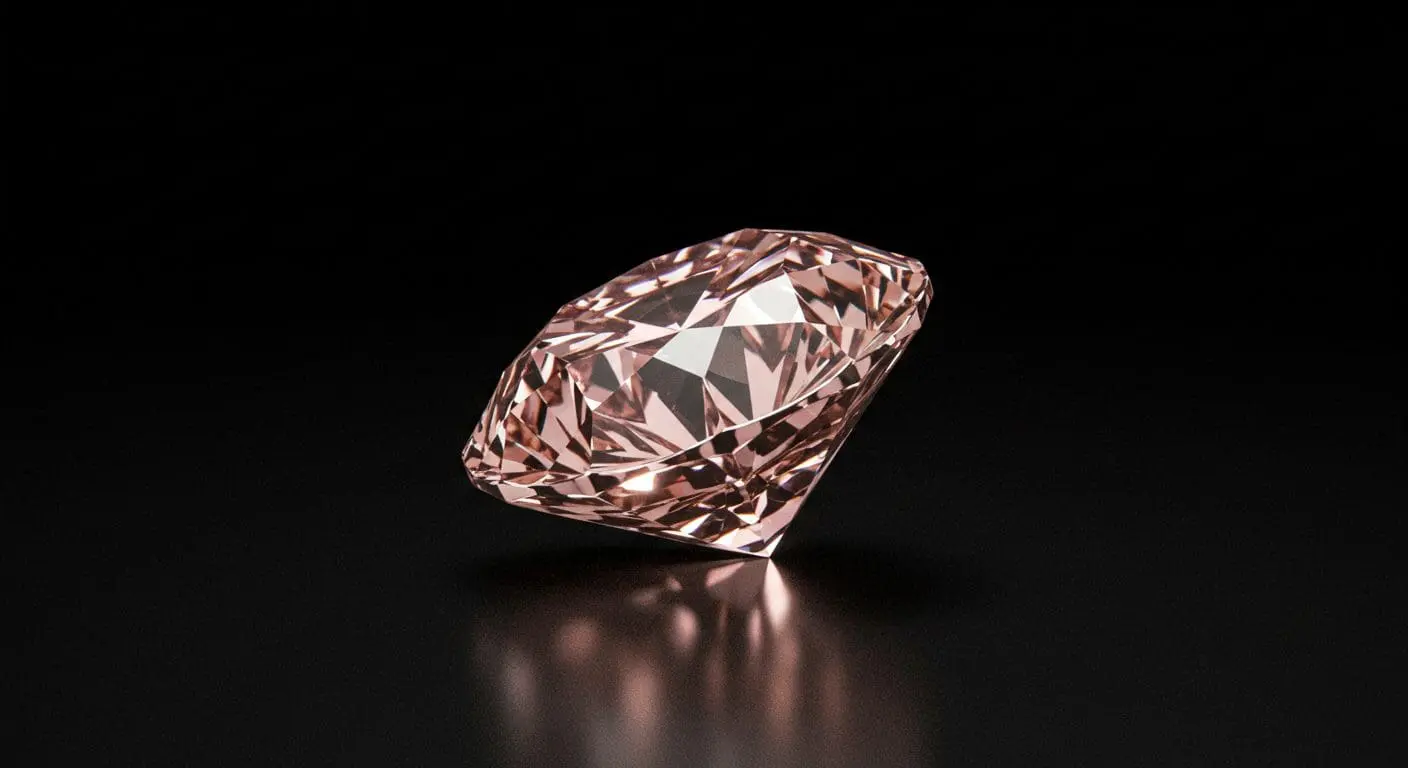
Diamond has emerged as an exceptional material for high power electronics and next generation quantum optics due to its unique properties. Researchers from Case Western Reserve University and the University of Illinois Urbana Champaign have discovered that diamonds with added boron exhibit plasmons, waves of electrons that move when light hits them, allowing electric fields to be controlled on a nanometer scale. This finding could lead to new types of biomedical and quantum optical devices, faster and more efficient than current technologies.
According to Giuseppe Strangi, professor of physics at Case Western Reserve, diamond continues to shine as a beacon for scientific and technological innovation. Mohan Sankaran, professor of nuclear plasma and radiological engineering at Illinois Grainger College of Engineering, notes that understanding how doping affects the optical response of semiconductors like diamond changes our understanding of these materials. The National Science Foundation supported the research and involved collaboration with several universities including the University of Luxembourg and Marseilles University.
Introduction to Diamond Semiconductors
Diamond, a material renowned for its exceptional hardness and transparency, has been found to possess unique properties that make it an attractive candidate for high-power electronics and next-generation quantum optics. By introducing impurities such as boron into the diamond lattice, researchers can engineer diamond to be electrically conductive, similar to metals. This process, known as doping, allows diamond to exhibit a range of interesting properties, including superconductivity and, as recently discovered, plasmonic behavior.
The discovery of plasmons in boron-doped diamonds has significant implications for the development of advanced biomedical and quantum optical devices. Plasmons are waves of electrons that move when light hits a material, allowing electric fields to be controlled and enhanced on a nanometer scale. This property is crucial for the creation of high-sensitivity biosensors, nanoscale optical devices, and improved solar cells and quantum devices. The fact that boron-doped diamonds remain optically clear, unlike metals or other doped semiconductors, makes them an ideal material for these applications.
Researchers from Case Western Reserve University and the University of Illinois Urbana-Champaign have published their findings on the plasmonic properties of boron-doped diamonds in Nature Communications. The study was led by Souvik Bhattacharya, a graduate student at Illinois, and involved collaboration with researchers from several institutions, including Case Western Reserve, the University of Luxembourg, Marseilles University, and Umeå University, Sweden. The research was supported by the National Science Foundation.
The discovery of plasmons in boron-doped diamonds is a significant advancement in the field of materials science and has the potential to pave the way for new technologies. As Giuseppe Strangi, professor of physics at Case Western Reserve, noted, “Diamond continues to shine” as a beacon for scientific and technological innovation. The unique properties of diamond make it an ideal material for exploring the full potential of materials at their most fundamental level.
Properties of Boron-Doped Diamonds
Boron-doped diamonds are created by introducing small amounts of boron into the diamond lattice. Boron, which contains one less electron than carbon, accepts electrons and creates a periodic electronic “hole” in the material. This increases the ability of the material to conduct current, making it electrically conductive. The resulting material is transparent, with a blue hue, due to the presence of boron.
The properties of boron-doped diamonds make them an attractive candidate for a range of applications. Their chemical inertness and biological compatibility mean that they can be used in contexts where other materials would be unsuitable, such as medical imaging or high-sensitivity biochips and molecular sensors. Additionally, their plasmonic properties allow for the creation of advanced biosensors and nanoscale optical devices.
The synthesis of diamonds at low pressure was first pioneered at Case Western Reserve (then Case Institute of Technology) in 1968 by faculty member John Angus. Angus also reported on the electrical conductivity of diamond doped with boron, laying the foundation for future research into the properties of boron-doped diamonds. The collaboration between researchers from multiple institutions has been instrumental in advancing our understanding of these unique materials.
The use of boron-doped diamonds in biomedical applications is particularly promising. Their biocompatibility and chemical inertness mean that they can be used to create high-sensitivity biosensors and molecular sensors, which could revolutionize medical imaging and diagnostics. Additionally, their plasmonic properties allow for the creation of advanced nanoscale optical devices, which could be used to develop new treatments for a range of diseases.
Plasmonic Behavior in Boron-Doped Diamonds
The discovery of plasmons in boron-doped diamonds is a significant advancement in the field of materials science. Plasmons are waves of electrons that move when light hits a material, allowing electric fields to be controlled and enhanced on a nanometer scale. This property is crucial for the creation of high-sensitivity biosensors, nanoscale optical devices, and improved solar cells and quantum devices.
The plasmonic behavior in boron-doped diamonds is due to the presence of boron, which creates a periodic electronic “hole” in the material. This increases the ability of the material to conduct current, making it electrically conductive. The resulting material is transparent, with a blue hue, due to the presence of boron.
The research team used a combination of experimental and theoretical techniques to study the plasmonic behavior in boron-doped diamonds. They found that the material exhibits a range of interesting properties, including high-sensitivity biosensing and nanoscale optical device creation. The team’s findings have significant implications for the development of advanced biomedical and quantum optical devices.
The use of boron-doped diamonds in quantum optics is particularly promising. Their plasmonic properties allow for the creation of advanced nanoscale optical devices, which could be used to develop new treatments for a range of diseases. Additionally, their biocompatibility and chemical inertness mean that they can be used to create high-sensitivity biosensors and molecular sensors, which could revolutionize medical imaging and diagnostics.
Applications of Boron-Doped Diamonds
The unique properties of boron-doped diamonds make them an attractive candidate for a range of applications. Their chemical inertness and biological compatibility mean that they can be used in contexts where other materials would be unsuitable, such as medical imaging or high-sensitivity biochips and molecular sensors.
One potential application of boron-doped diamonds is in the creation of advanced biosensors. Their plasmonic properties allow for the creation of high-sensitivity biosensors, which could revolutionize medical imaging and diagnostics. Additionally, their biocompatibility and chemical inertness mean that they can be used to create molecular sensors, which could be used to detect a range of diseases.
Another potential application of boron-doped diamonds is in the development of quantum optical devices. Their plasmonic properties allow for the creation of advanced nanoscale optical devices, which could be used to develop new treatments for a range of diseases. Additionally, their biocompatibility and chemical inertness mean that they can be used to create high-sensitivity biosensors and molecular sensors, which could revolutionize medical imaging and diagnostics.
The research team’s findings have significant implications for the development of advanced biomedical and quantum optical devices. As Mohan Sankaran, professor of engineering at Case Western Reserve, noted, “The discovery of plasmons in boron-doped diamonds is a significant advancement in the field of materials science.” The unique properties of diamond make it an ideal material for exploring the full potential of materials at their most fundamental level.
External Link: Click Here For More