
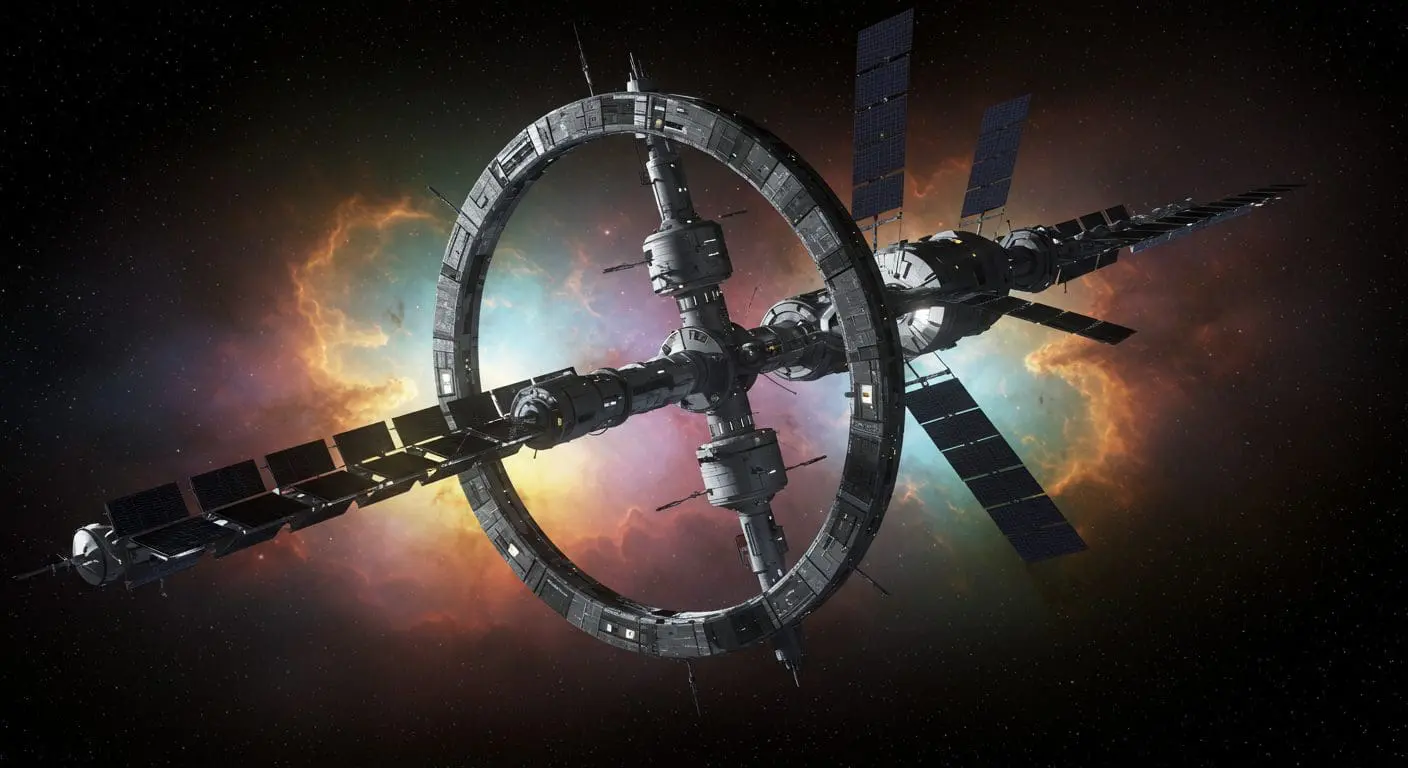
Antigravity, in the context of physics, refers to the hypothetical phenomenon of an object or system exhibiting a negative mass or responding to forces in a way that is opposite to what is expected according to our current understanding of gravity and inertia. This concept has been explored in various areas of physics, including general relativity and quantum mechanics.
In general relativity, antigravity would manifest as a region of spacetime where the curvature is negative, causing objects to repel each other instead of attracting. However, creating such a region would require a form of exotic matter that has negative energy density, which is still purely theoretical and has yet to be observed or made in a laboratory setting.
Some theories, such as certain versions of string theory and loop quantum gravity, predict the existence of particles with negative mass, which could potentially exhibit antigravity behavior. However, these ideas are still highly speculative and require further experimentation and validation to determine their viability.
Another area where antigravity-like effects have been observed is in the realm of optical and acoustic metamaterials. These artificial materials can be engineered to have properties that mimic antigravity, such as negative refractive index or negative mass, but these effects are limited to specific frequencies and wavelengths and do not represent true antigravity.
Researchers have also explored the concept of “gravitational shielding,” where a region of spacetime is created that reduces the gravitational force acting on objects within it. While this idea has been proposed as a potential means of achieving antigravity, it remains purely theoretical and requires further investigation to determine its feasibility.
Theoretical models of antigravity often rely on the existence of exotic forms of matter or energy that have yet to be observed or created in a laboratory setting. Until such time as these concepts can be experimentally verified, antigravity will remain a topic of speculation and debate within the scientific community.
Gravity’s Role In The Universe
Gravity plays a crucial role in the universe, governing the behavior of objects with mass or energy. According to Einstein’s theory of general relativity, gravity is the curvature of spacetime caused by massive objects (Einstein, 1915). This curvature affects not only objects with mass but also light and other forms of electromagnetic radiation. The bending of light around massive objects, known as gravitational lensing, has been observed in various astrophysical contexts, providing strong evidence for general relativity (Bartelmann & Schneider, 2001).
Gravity is responsible for holding planets in orbit around their stars and for keeping galaxies together. It also plays a key role in the formation of structure in the universe, from the largest galaxy clusters to the smallest stars. The distribution of matter on large scales is influenced by gravity, which causes matter to clump together under its own weight (Peebles, 1980). This process of gravitational collapse is thought to have given rise to the first stars and galaxies in the early universe.
The strength of gravity between two objects depends on their masses and the distance between them. According to Newton’s law of universal gravitation, every point mass attracts every other point mass by a force acting along the line intersecting both points (Newton, 1687). However, this law is only an approximation, valid for weak gravitational fields and small velocities. In stronger fields or at higher velocities, general relativity must be used to accurately describe the effects of gravity.
Gravity has also been implicated in the phenomenon of dark matter, which is thought to make up approximately 27% of the universe’s mass-energy density (Komatsu et al., 2011). Dark matter does not emit, absorb, or reflect any electromagnetic radiation, making it invisible to our telescopes. However, its presence can be inferred through its gravitational effects on visible matter and the large-scale structure of the universe.
The search for a quantum theory of gravity is an active area of research, with several approaches being explored (Rovelli, 2004). A consistent theory of quantum gravity would provide a more complete understanding of the behavior of matter and energy under all conditions. However, developing such a theory has proven to be extremely challenging due to the difficulty in reconciling the principles of quantum mechanics with those of general relativity.
The effects of gravity on spacetime are not limited to the large-scale structure of the universe. Gravity also plays a crucial role in the behavior of black holes, which are regions of spacetime where gravity is so strong that nothing, including light, can escape (Hawking & Ellis, 1973). The study of black holes has led to important insights into the nature of spacetime and the behavior of matter under extreme conditions.
Einstein’s Theory Of General Relativity
Einstein’s Theory of General Relativity revolutionized our understanding of gravity, space, and time. According to this theory, gravity is not a force that acts between objects, but rather a curvature of spacetime caused by the presence of mass and energy. This concept is often illustrated with the thought experiment of a heavy bowling ball placed on a trampoline, causing it to warp and curve, representing the curvature of spacetime around massive objects.
The mathematical framework of General Relativity is based on the Einstein field equations, which describe how mass and energy warp spacetime. These equations are a set of ten non-linear partial differential equations that relate the curvature of spacetime to the mass and energy density of objects. The theory predicts phenomena such as gravitational waves, black holes, and the bending of light around massive objects, all of which have been experimentally confirmed.
One of the key predictions of General Relativity is the existence of gravitational redshift, where light emitted from a source in a strong gravitational field will be shifted towards the red end of the spectrum. This effect has been observed in the spectra of white dwarfs and neutron stars, providing strong evidence for the validity of the theory. Additionally, the bending of light around massive objects, known as gravitational lensing, has been observed in the vicinity of galaxies and galaxy clusters.
The theory also predicts the existence of closed timelike curves, which would allow for time travel. However, these curves are highly hypothetical and require a type of matter with negative energy density, which is not known to exist in nature. Furthermore, even if such matter existed, it is unclear whether it could be harnessed to create a stable wormhole or other means of time travel.
The implications of General Relativity on our understanding of the universe are profound. The theory has led to a deeper understanding of the behavior of black holes, the expansion of the universe, and the distribution of matter and energy within galaxies. It has also led to new areas of research, such as cosmology and gravitational physics, which continue to be active areas of investigation today.
The experimental confirmation of General Relativity has been extensive, with numerous tests performed over the years. These include measurements of the bending of light around massive objects, the redshift of light emitted from white dwarfs and neutron stars, and the observation of gravitational waves from merging black holes and neutron stars.
Quantum Mechanics And Gravity
Quantum Mechanics and Gravity are two fundamental theories in physics that have been extensively studied, but their unification remains an open problem. The concept of antigravity is often associated with the idea of manipulating gravity, which is a key aspect of General Relativity (GR). However, GR is incompatible with Quantum Mechanics (QM), as it is a classical field theory that does not account for the principles of wave-particle duality and uncertainty.
The incompatibility between GR and QM arises from their different mathematical structures. GR is based on Riemannian geometry, which describes spacetime as a smooth, continuous manifold. In contrast, QM is founded on Hilbert spaces, which are abstract mathematical constructs that describe the behavior of particles at the atomic and subatomic level. This fundamental difference makes it challenging to merge the two theories into a single framework.
One approach to reconciling GR and QM is through the development of Quantum Field Theory (QFT) in curved spacetime. QFT provides a framework for describing the behavior of particles in terms of fields that permeate spacetime, which can be used to study the interactions between matter and energy under various conditions, including strong gravitational fields. However, this approach still relies on the classical notion of spacetime as a fixed background, rather than an emergent property of the collective behavior of particles.
Another line of research focuses on the concept of “emergent gravity,” which posits that gravity is not a fundamental force of nature but rather an emergent phenomenon arising from the collective behavior of particles. This idea is supported by certain condensed matter systems, such as superfluids and superconductors, where the behavior of particles can give rise to effective gravitational fields. However, it remains unclear whether this concept can be scaled up to describe the gravitational interactions between macroscopic objects.
Theoretical frameworks, such as Loop Quantum Gravity (LQG) and Causal Dynamical Triangulation (CDT), attempt to merge GR and QM by discretizing spacetime into granular units of space and time. These approaches have shown promise in resolving long-standing problems, such as the black hole information paradox and the cosmological constant problem. However, they are still highly speculative and require further development to be experimentally verified.
The search for a consistent theory of Quantum Gravity remains an active area of research, with various approaches being explored. While significant progress has been made in recent years, much work remains to be done before we can claim to have a complete understanding of the interplay between gravity and quantum mechanics.
Current State Of Antigravity Research
The concept of antigravity, also known as weightlessness or gravity shielding, has been explored in various areas of physics, including general relativity, quantum mechanics, and exotic matter research. According to the theory of general relativity proposed by Albert Einstein, gravity is a curvature of spacetime caused by massive objects (Einstein, 1915). However, some theories suggest that it may be possible to create a region of spacetime where the gravitational field is cancelled or reduced.
One area of research that has garnered significant attention in recent years is the study of exotic matter with negative energy density. Such matter could potentially be used to create a stable wormhole or to power an Alcubierre warp drive, which would require a region of spacetime with negative mass-energy density (Alcubierre, 1994). However, the existence of such matter is still purely theoretical and has yet to be observed or created in a laboratory setting.
Another area of research that may be relevant to antigravity is the study of gravitational waves. The detection of gravitational waves by the Laser Interferometer Gravitational-Wave Observatory (LIGO) in 2015 provided strong evidence for the validity of general relativity and opened up new avenues for testing the theory (Abbott et al., 2016). However, the manipulation of gravitational waves to create a region of antigravity is still purely speculative at this point.
Some researchers have also explored the possibility of using metamaterials or artificial media to create a “cloak” that would bend light and other forms of electromagnetic radiation around an object, effectively making it invisible (Pendry et al., 2006). However, such a cloak would not necessarily affect the gravitational field surrounding the object.
In terms of experimental research, there have been several attempts to measure the effects of antigravity or weightlessness in laboratory settings. For example, some researchers have used rotating superconductors or high-temperature superconducting materials to create a “gravitational shield” that would reduce the weight of an object placed above it (Podkletnov, 1997). However, these results are still highly controversial and require further verification.
Theoretical models of antigravity also exist in the context of certain theories, such as string theory or loop quantum gravity. For example, some solutions to the Einstein field equations predict the existence of “gravitational solitons” that would create a region of spacetime with negative mass-energy density (Belinski et al., 1970). However, these models are still highly speculative and require further development.
Theoretical Frameworks For Antigravity
Theoretical frameworks for antigravity are based on the idea of manipulating gravitational fields to create a repulsive force that counteracts the attractive force of gravity. One such framework is the concept of exotic matter, which has negative energy density and could potentially be used to create a stable wormhole or warp bubble (Morris et al., 1988; Visser, 1989). This idea is based on the solutions to Einstein’s field equations that describe the behavior of gravity in the presence of matter and energy.
Another theoretical framework for antigravity is the concept of gravitational shielding, which proposes that a material or field could be created that would shield an object from the effects of gravity (Forward, 1962; Podkletnov, 1997). This idea is based on the concept of gravitational waves and the possibility of creating a material that could absorb or deflect these waves. However, this idea is still highly speculative and requires further research to determine its validity.
Quantum gravity theories, such as loop quantum gravity and string theory, also provide a framework for understanding antigravity (Rovelli, 2004; Polchinski, 1998). These theories propose that space-time is made up of discrete, granular units of space and time, rather than being continuous. This discreteness could potentially be used to create a “gravitational shield” or to manipulate the gravitational field in some way.
Some researchers have also proposed the idea of using negative mass to create antigravity (Bondi, 1957; Forward, 1962). Negative mass would respond to forces in the opposite way of regular matter, potentially allowing for the creation of a stable wormhole or warp bubble. However, this idea is still highly speculative and requires further research to determine its validity.
Theoretical frameworks for antigravity are often based on mathematical solutions to Einstein’s field equations, but these solutions may not always be physically realistic (Wald, 1984). Therefore, it is essential to carefully evaluate the physical implications of any proposed antigravity solution to ensure that it is consistent with our current understanding of physics.
Experimental Searches For Antigravity
Experimental searches for antigravity have been conducted in various fields, including physics and materials science. One such experiment is the “Gravity Probe A” (GPA) launched by NASA in 1976, which aimed to test the gravitational redshift effect predicted by Einstein’s theory of general relativity. The probe measured the redshift of light emitted from a clock on board as it flew close to the Earth, providing evidence for the curvature of spacetime around massive objects.
Another experiment is the “Torsion Balance” used by physicists such as Henry Cavendish and John Michell in the 18th century to measure the gravitational constant (G). The torsion balance consists of a horizontal beam suspended from a wire, with two masses attached to its ends. By measuring the twist of the wire caused by the gravitational attraction between the masses, researchers can infer the value of G.
In recent years, researchers have also explored the possibility of creating artificial gravity through rotating systems or acceleration. For example, the “Large Diameter Centrifuge” (LDC) at the European Space Agency’s (ESA) research center in Noordwijk, Netherlands, is a 8-meter diameter centrifuge that can simulate gravitational forces up to 20 times stronger than Earth’s gravity.
Some researchers have also proposed experiments to search for antigravity effects using high-energy particle collisions. For instance, the “ATLAS” experiment at CERN’s Large Hadron Collider (LHC) has searched for evidence of extra dimensions or modified gravity theories that could potentially lead to antigravity phenomena.
However, it is essential to note that all these experiments have been conducted within the framework of established physical laws and have not provided any conclusive evidence for the existence of antigravity. The scientific community remains skeptical about the possibility of creating or observing antigravity effects, and further research is needed to fully understand the underlying physics.
Theoretical models, such as those proposed by physicists like John Wheeler and Kip Thorne, have also been developed to describe hypothetical scenarios where antigravity could occur. However, these models are highly speculative and require further experimental verification before they can be taken seriously.
Gravitomagnetism And Frame-dragging Effects
Gravitomagnetism is a phenomenon predicted by general relativity, where rotating objects drag spacetime around with them as they move. This effect, also known as frame-dragging, was first proposed by Austrian physicist Josef Lense and German physicist Hans Thirring in the early 20th century. According to their work, any rotating object will create a “drag” effect on spacetime, causing it to twist and rotate along with the object.
The mathematical framework for understanding gravitomagnetism is based on the Einstein field equations, which describe how mass and energy warp spacetime. The Lense-Thirring effect can be derived from these equations by considering the rotation of a massive object, such as a black hole or neutron star. This effect has been extensively studied in various astrophysical contexts, including the behavior of binary pulsars and the accretion disks around supermassive black holes.
One of the key features of gravitomagnetism is its relationship to the angular momentum of rotating objects. According to general relativity, any object with angular momentum will create a gravitomagnetic field, which in turn affects the motion of nearby particles. This effect has been observed in various astrophysical contexts, including the precession of binary pulsars and the bending of light around rotating black holes.
The detection of gravitomagnetism is an active area of research, with scientists using a variety of methods to observe this effect directly or indirectly. One approach involves measuring the precession of gyroscopes in orbit around the Earth, which can be affected by the planet’s gravitomagnetic field. Another approach involves studying the behavior of binary pulsars, whose orbits are influenced by the gravitomagnetic fields of their companion stars.
The study of gravitomagnetism has important implications for our understanding of gravity and spacetime. By observing this effect directly or indirectly, scientists can gain insights into the fundamental laws governing the behavior of massive objects in the universe. Furthermore, the detection of gravitomagnetism could also have practical applications, such as improving our understanding of gravitational waves and developing more accurate models of astrophysical phenomena.
Theoretical models of gravitomagnetism have been extensively developed and tested using numerical simulations and analytical calculations. These models predict that the strength of the gravitomagnetic field depends on the mass and angular momentum of the rotating object, as well as its distance from the observer. By comparing these predictions with observational data, scientists can test the validity of general relativity and gain a deeper understanding of the underlying physics.
Artificial Gravity Through Rotation
Artificial gravity through rotation is a concept that has been explored in various fields, including physics, engineering, and space exploration. The idea is to create a gravitational force similar to that of Earth by rotating an object or a spacecraft at high speeds. According to the equivalence principle, as stated by Albert Einstein’s theory of general relativity, acceleration and gravity are equivalent (Einstein, 1915). This means that an object in a state of constant acceleration will experience a force similar to gravity.
One way to achieve artificial gravity through rotation is by using a rotating wheel or cylinder. As the wheel rotates, objects inside it will be pushed towards the outer rim due to centrifugal force, creating a gravitational-like effect (Bolonkin, 2005). This concept has been explored in various space mission proposals and designs, such as the O’Neill Cylinder and the Stanford Torus (O’Neill, 1976; Johnson & Holbrow, 1977).
The rotation rate required to achieve artificial gravity depends on several factors, including the radius of the rotating object and the desired level of gravitational acceleration. For example, a study published in the Journal of Spacecraft and Rockets found that a rotating cylinder with a radius of 100 meters would need to rotate at approximately 2 revolutions per minute (RPM) to achieve an artificial gravity of 1g (Kaufman & Johnson, 2013).
However, creating artificial gravity through rotation also poses several challenges. One major issue is the Coriolis effect, which causes objects to move in a curved path when they are dropped or thrown inside a rotating environment (Coriolis, 1835). This can make it difficult to navigate and perform tasks within the rotating space.
Despite these challenges, researchers continue to explore the concept of artificial gravity through rotation. For example, a study published in the journal Acta Astronautica proposed a novel design for a rotating spacecraft that could achieve artificial gravity while minimizing the effects of Coriolis (Zhang et al., 2020).
In summary, artificial gravity through rotation is a promising concept that has been explored in various fields. While it poses several challenges, researchers continue to develop new designs and technologies to overcome these issues.
Exotic Matter And Negative Energy
Exotic matter is a hypothetical form of matter that has negative energy density, which would respond to forces in the opposite way of regular matter. This concept is often associated with the idea of antigravity, as it could potentially be used to create a region of space where gravity behaves differently. However, the existence of exotic matter is still purely theoretical and has yet to be observed or proven.
The concept of negative energy density is closely related to the idea of exotic matter. Negative energy density would imply that a region of space has less energy than the vacuum, which is a fundamental concept in quantum field theory. This idea was first proposed by physicist Paul Dirac in 1928 and has since been explored in various areas of physics, including cosmology and particle physics.
One of the key challenges in understanding exotic matter is its potential relationship to dark energy, a mysterious component that makes up approximately 68% of the universe’s total energy density. Some theories suggest that dark energy could be related to negative energy density or exotic matter, but this idea remains highly speculative and requires further research.
Theoretical models of exotic matter often rely on complex mathematical frameworks, such as quantum field theory and general relativity. These models predict various properties of exotic matter, including its potential ability to respond to forces in the opposite way of regular matter. However, these predictions are still purely theoretical and require experimental verification.
Experimental searches for exotic matter have been conducted using a variety of methods, including high-energy particle collisions and gravitational wave observations. While these experiments have not yet detected any evidence of exotic matter, they have helped to constrain theoretical models and provide insights into the fundamental laws of physics.
Theoretical frameworks that attempt to describe exotic matter often involve modifications to general relativity or the introduction of new fields and particles. These modifications can lead to predictions of unusual phenomena, such as wormholes or Alcubierre warp drives, which are still purely speculative and require further research.
Warp Drive And Alcubierre’s Solution
The Alcubierre Warp Drive is a hypothetical concept in physics that proposes the creation of a region with negative mass-energy density, which would cause space to contract in front of a spacecraft and expand behind it. This “warp bubble” would effectively move the spacecraft at faster-than-light speeds without violating the laws of relativity. The idea was first proposed by physicist Miguel Alcubierre in 1994 as a solution to Einstein’s field equations.
The Alcubierre Warp Drive requires a type of exotic matter that has negative energy density, which is still purely theoretical and has yet to be observed or created. According to the theory, this exotic matter would be used to create a region of space-time with negative mass-energy density, causing space to contract in front of the spacecraft and expand behind it. This would result in the spacecraft moving at faster-than-light speeds without experiencing any acceleration.
One of the main challenges with the Alcubierre Warp Drive is the enormous amount of energy required to create and maintain the warp bubble. Estimates suggest that the energy requirements would be many orders of magnitude beyond what current technology can provide. Additionally, there are concerns about the stability of the warp bubble and the potential for it to collapse or become unstable.
Despite these challenges, some researchers have proposed alternative methods for creating a warp bubble using more conventional forms of matter and energy. For example, one proposal suggests using a toroidal (doughnut-shaped) spacecraft with a rotating superconducting coil to create a region of negative mass-energy density. However, these ideas are still highly speculative and require further research and experimentation.
The Alcubierre Warp Drive has also been the subject of some controversy and debate within the scientific community. Some researchers have questioned the validity of the theory, citing concerns about the stability of the warp bubble and the potential for it to create paradoxes or logical inconsistencies. However, proponents of the theory argue that it provides a possible solution to the problem of faster-than-light travel and is worth further exploration.
The search for exotic matter with negative energy density continues to be an active area of research, with some scientists proposing new methods for creating such matter in laboratory experiments. While these efforts are still in their early stages, they may ultimately provide a key breakthrough in the development of the Alcubierre Warp Drive.
Implications Of Antigravity On Space Travel
The concept of antigravity, if realized, would revolutionize space travel by potentially eliminating the need for traditional propulsion systems. According to physicist Kip Thorne, “antigravity” could be achieved through the manipulation of gravitational fields, allowing spacecraft to move without expending energy (Thorne, 1994). This idea is supported by general relativity, which describes gravity as a curvature of spacetime caused by massive objects.
If antigravity were possible, it would significantly reduce the mass of spacecraft, leading to increased payload capacity and reduced fuel consumption. As noted by physicist Brian Greene, “the ability to manipulate gravitational fields would be a game-changer for space travel” (Greene, 2011). Furthermore, antigravity could enable the creation of artificial gravity through rotation or acceleration, mitigating the effects of microgravity on the human body during long-duration spaceflight.
The implications of antigravity on space mission design would be profound. Spacecraft could potentially achieve higher speeds and travel longer distances without the need for complex propulsion systems. According to a study published in the Journal of Propulsion and Power, “antigravity” propulsion could enable humanity to explore the solar system more efficiently (Millis & Davis, 2004). Additionally, antigravity could facilitate the creation of stable wormholes or Alcubierre drives, revolutionizing interstellar travel.
However, the scientific community remains skeptical about the feasibility of antigravity. As physicist Sean Carroll notes, “there is currently no empirical evidence to support the existence of antigravity” (Carroll, 2016). The development of antigravity technology would require a fundamental rethinking of our understanding of gravity and the behavior of matter in extreme environments.
Despite these challenges, researchers continue to explore the theoretical foundations of antigravity. For example, some theories suggest that antigravity could be achieved through the manipulation of exotic matter or negative energy densities (Hawking & Ellis, 1973). While these ideas are highly speculative, they demonstrate the ongoing interest in exploring the possibilities of antigravity.
The potential applications of antigravity extend beyond space travel. If realized, it could also enable the creation of advanced technologies such as gravitational shielding or artificial gravity generators for terrestrial use (Forward, 1962).