
The universe, as we perceive it, feels remarkably ordered. From the predictable orbits of planets to the complex biochemistry of life, patterns emerge from apparent chaos. But this order is a statistical fluke, a temporary reprieve from the relentless march towards entropy. The laws of physics, while deterministic at their core, allow for an almost infinite number of possible states.
The Improbable Self and the Vastness of Phase Space
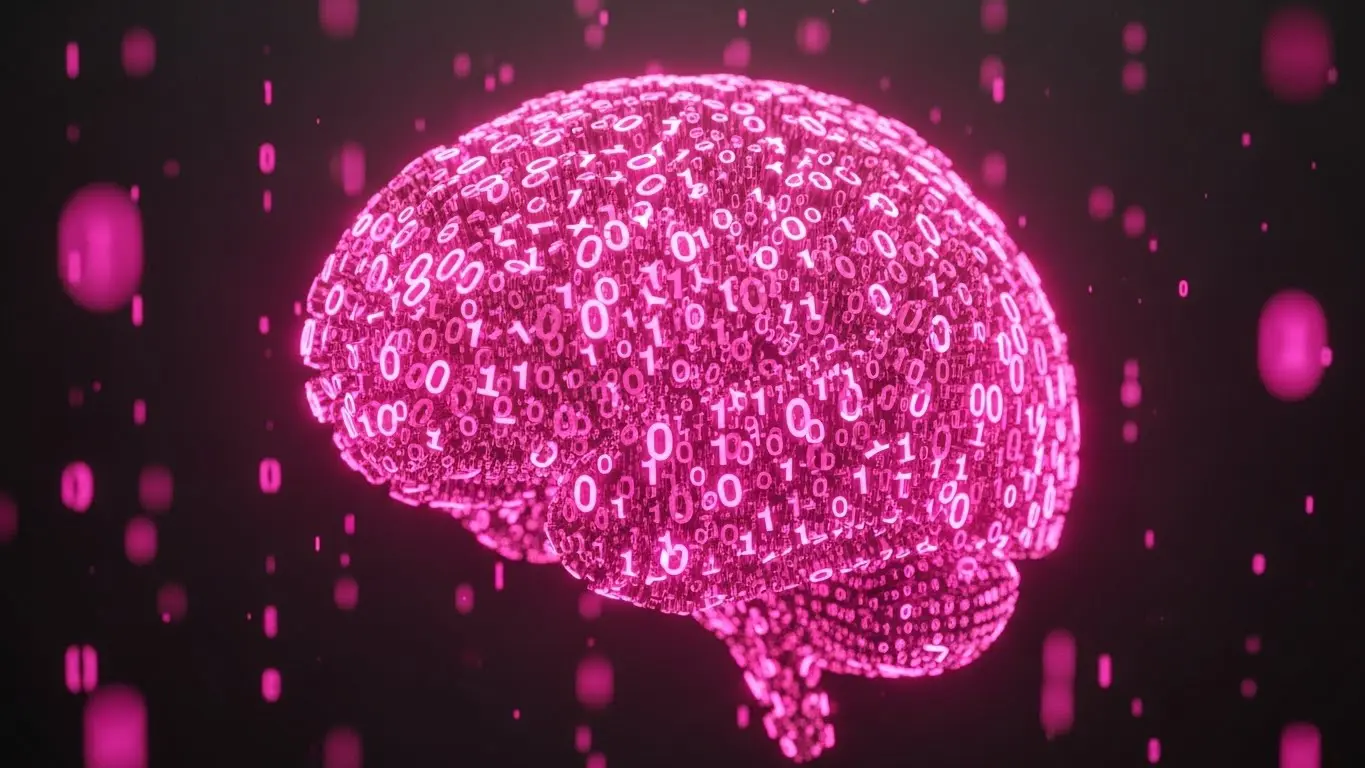
This leads to a troubling question: why do we find ourselves in one of the exceedingly rare, low-entropy states necessary for our existence? And, more disturbingly, what if our consciousness itself is merely a random fluctuation, a fleeting arrangement of particles indistinguishable from a “Boltzmann brain”, a self-aware entity spontaneously arising from thermal noise? This is the unsettling realm of statistical cosmology, where the very foundations of our reality are challenged.
The concept of entropy, first formalized by Rudolf Clausius in the 19th century, describes the tendency of systems to move from order to disorder. Ludwig Boltzmann, an Austrian physicist at the University of Vienna, further refined this idea, connecting entropy to the number of possible microscopic arrangements that correspond to a given macroscopic state. The more arrangements, the higher the entropy. Boltzmann’s statistical interpretation of the second law of thermodynamics, that entropy always increases, is crucial. It doesn’t forbid local decreases in entropy, but dictates that these must be outweighed by larger increases elsewhere. This opens the door to the possibility, however improbable, of localized order arising from chaos. The sheer scale of the universe, coupled with the vastness of its possible states, makes even the most improbable events inevitable somewhere.
Boltzmann Brains: A Cosmic Thought Experiment
The Boltzmann brain thought experiment, named after Ludwig Boltzmann himself, highlights the bizarre implications of statistical cosmology. Boltzmann, grappling with the low-entropy initial conditions of the universe, considered the possibility that the observed order wasn’t a result of a long, ordered past, but rather a rare fluctuation in an otherwise disordered system. He proposed that, given enough time, random fluctuations could assemble complex structures, even functioning brains, complete with memories and perceptions. These “Boltzmann brains” would be fleeting, existing for only a short time before dissolving back into chaos. The problem, as pointed out by contemporary cosmologists, is that if the universe is truly governed by statistical fluctuations, Boltzmann brains should vastly outnumber “ordinary” brains, brains that evolved through a long, causal history. If that’s the case, the probability of you being an ordinary brain is vanishingly small, and you’re far more likely to be a spontaneously generated illusion.
The Measure Problem and the Multiverse
The prevalence of Boltzmann brains isn’t just a philosophical curiosity; it’s a serious problem for inflationary cosmology and the multiverse. Alan Guth, a cosmologist at MIT, proposed the theory of cosmic inflation in the 1980s, suggesting that the early universe underwent a period of exponential expansion. This inflation, while explaining many observed features of the universe, also predicts the existence of an infinite number of “pocket universes” branching off from our own. Each pocket universe could have different physical constants and initial conditions. However, calculating probabilities in an infinite multiverse requires a “measure”, a way to compare the volumes of different types of universes. Different measures lead to different predictions, and some measures predict that Boltzmann brains dominate the multiverse, rendering our observations meaningless. This is known as the “measure problem, ” and it remains one of the biggest challenges in modern cosmology.
Anthropic Reasoning: Why We Observe What We Do
To address the Boltzmann brain problem, many cosmologists invoke the anthropic principle. This principle, championed by Brandon Carter, a British astrophysicist, and later refined by John Barrow and Frank Tipler, states that our observations are necessarily biased by the fact that we are observers. In other words, we can only observe universes that are compatible with our existence. A universe dominated by Boltzmann brains wouldn’t have observers like us, because those brains wouldn’t have the time or stability to develop complex thought. Therefore, even if Boltzmann brains are more numerous overall, we shouldn’t be surprised to find ourselves in a rare universe where ordinary brains are prevalent. However, the anthropic principle is often criticized for being a tautology, it explains nothing because it simply restates the fact that we exist.
The Role of Initial Conditions and Low Entropy
The low entropy of the early universe is a crucial piece of the puzzle. If the universe began in a high-entropy state, there would be no direction for time, no arrow of increasing disorder, and no possibility of structure formation. The fact that the early universe was remarkably smooth and uniform suggests that it started in a highly improbable state. Roger Penrose, a mathematical physicist at Oxford University, argues that this low-entropy initial state is not a random fluctuation, but rather a consequence of a deeper, yet unknown, physical law. He proposes a theory called Conformal Cyclic Cosmology (CCC), which suggests that the universe undergoes cycles of expansion and contraction, with each cycle inheriting the low entropy of the previous one. CCC is highly speculative, but it offers a potential solution to the initial condition problem and the Boltzmann brain paradox.
The Limits of Statistical Prediction
Even if we accept the anthropic principle and the low-entropy initial conditions, statistical cosmology still faces limitations. Predicting the probability of rare events requires accurate knowledge of the underlying probability distribution. However, our understanding of the universe is incomplete, and we may be missing crucial factors that influence the likelihood of different outcomes. Furthermore, the very act of observation can alter the system being observed, introducing uncertainties into our calculations. As David Deutsch, a physicist at Oxford University, has pointed out, quantum mechanics introduces fundamental limits to predictability, even in principle. The universe may be inherently unpredictable, and our attempts to impose statistical order on it may be misguided.
Beyond Boltzmann: The Problem of Simulated Realities
The concerns extend beyond spontaneously arising brains. Nick Bostrom, a philosopher at Oxford University, proposed the “simulation hypothesis” in 2003. Bostrom argues that if civilizations are capable of creating realistic simulations of their ancestors, then we are likely living in one. The reasoning is simple: if simulations are possible, there would be vastly more simulated realities than base realities. Therefore, the probability of us being in the base reality is extremely low. While the simulation hypothesis is untestable, it raises profound questions about the nature of reality and our place in the cosmos. Like the Boltzmann brain problem, it challenges our assumptions about the reliability of our perceptions and the meaning of existence.
The Search for a Consistent Cosmological Model
Resolving the Boltzmann brain problem and the measure problem requires a consistent cosmological model that can explain the observed low entropy of the universe, the prevalence of ordinary brains, and the absence of overwhelming numbers of Boltzmann brains. This model must also be compatible with the laws of physics and the available observational data. Several approaches are being explored, including modifications to inflationary cosmology, alternative measures for calculating probabilities in the multiverse, and new theories of quantum gravity. Lee Smolin, a theoretical physicist at the Perimeter Institute, proposes a cosmological natural selection model, where universes “reproduce” through black hole formation, favoring universes that are more likely to produce black holes. This is a radical idea, but it offers a potential mechanism for selecting universes with favorable properties.
The Fine-Tuning Problem and the Multiverse Revisited
The apparent fine-tuning of the universe, the fact that physical constants seem to be precisely tuned for life, is closely related to the Boltzmann brain problem. If the constants were even slightly different, life as we know it would be impossible. The multiverse offers a potential explanation for fine-tuning: if there are enough universes with different constants, it’s inevitable that some of them will be suitable for life. However, this explanation relies on the measure problem being solved, and it doesn’t necessarily eliminate the Boltzmann brain problem. Furthermore, it raises the question of why we happen to live in one of the life-permitting universes. The search for a satisfactory answer continues.
The Limits of Knowledge and the Mystery of Existence
Ultimately, the Boltzmann brain problem and the challenges of statistical cosmology remind us of the limits of our knowledge. We may never be able to definitively prove that we are not Boltzmann brains or that we are not living in a simulation. The universe is vast and complex, and our understanding of it is still incomplete. Perhaps the most profound lesson is that the very act of asking these questions forces us to confront the fundamental mysteries of existence and our place in the cosmos. The improbability of our existence, whether due to random fluctuations or fine-tuned constants, should inspire awe and wonder, reminding us that we are, in a sense, incredibly lucky to be here at all.