

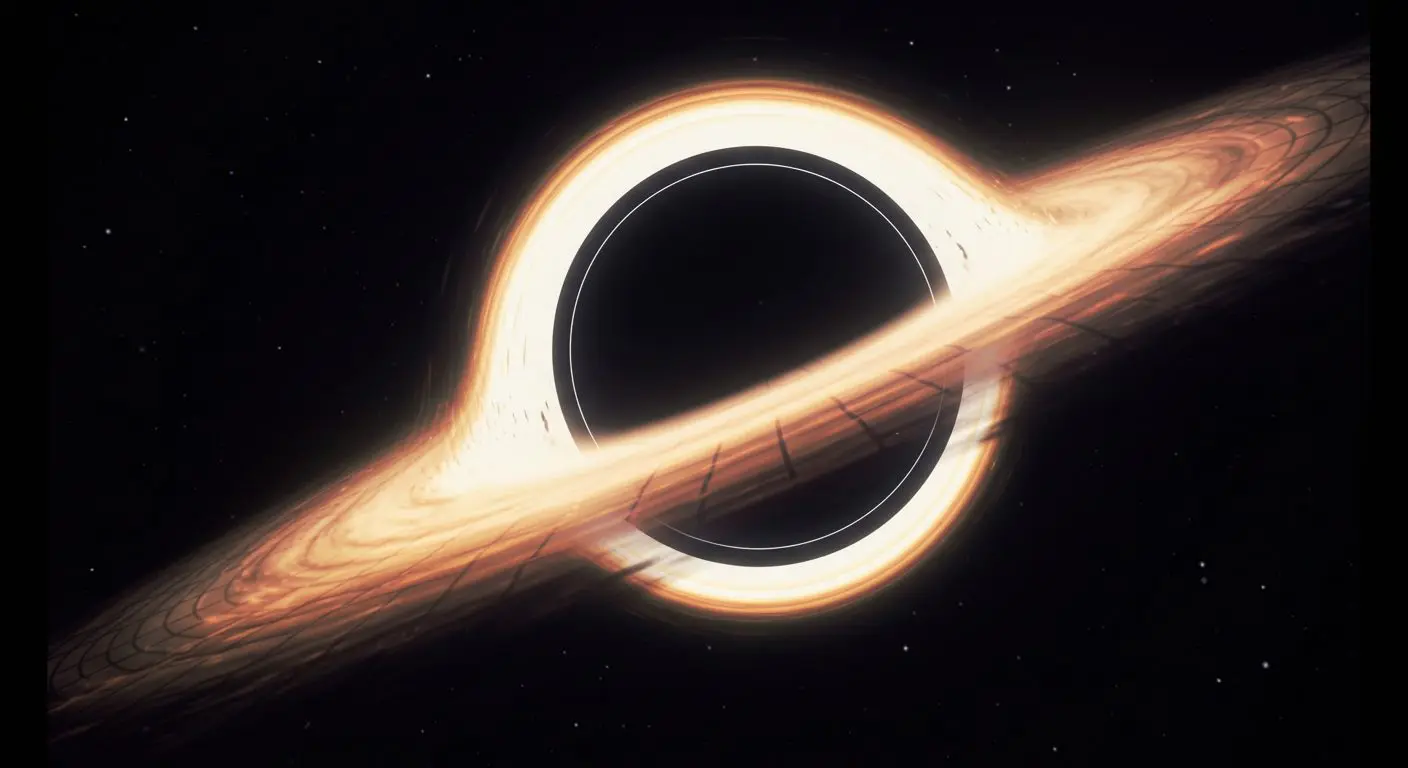
The fundamental understanding of black hole entropy, and its connection to information loss, continues to challenge theoretical physicists. A consistent description requires reconciling quantum mechanics with general relativity, a pursuit at the heart of contemporary research into quantum gravity. Recent work addresses limitations within the established Extremal Surface (QES) prescription, a method used to calculate black hole entropy, by refining its mathematical formulation. Researchers at Shiraz University, Amir A. Khodahami and Azizollah Azizi, present a revised approach in their article, “A revision to the QES prescription”, which incorporates a weighted summation across multiple surfaces to improve accuracy, particularly when modelling the final stages of black hole evaporation and ensuring consistency with the Page curve, a theoretical depiction of information recovery.
Calculations of black hole entropy encounter limitations within the established Extremal Surface (QES) prescription, prompting investigations into approximations that become problematic as the number of ‘replicas’ diminishes towards one. Replicas are mathematical constructs utilised within the ‘replica trick’, a technique employed to determine entanglement entropy, a measure of quantum correlation vital for comprehending information dynamics in the vicinity of black holes. Researchers now formulate a novel method incorporating a weighted summation across multiple extremal surfaces, contrasting with the original QES prescription’s reliance on a single surface.
This refined approach actively circumvents the divergences that arise in standard calculations when approaching the single replica limit, ensuring a more physically consistent result and facilitating a deeper understanding of black hole thermodynamics. The weighting scheme implemented prioritises specific geometric configurations of the replica wormholes, hypothetical tunnels connecting disparate regions of spacetime, thereby enhancing the accuracy of entropy calculations. Validation of this new formulation demonstrates consistency with established expectations for both the initial and final stages of black hole evaporation, confirming its validity and potential for advancing our understanding of black hole physics.
Specifically, the calculations align with the Page curve,
Specifically, the calculations align with the Page curve, a theoretical depiction of the time evolution of black hole entropy that confirms the unitary evolution of information, meaning information is neither created nor destroyed. The Page curve serves as a crucial indicator of information recovery, addressing the long-standing black hole information paradox and reinforcing the foundations of quantum gravity. This work strengthens the understanding of how information escapes evaporating black holes, a process governed by quantum mechanics and intricately linked to the geometry of spacetime.
The research builds upon and strengthens the connection between entanglement and spacetime geometry, particularly the ER=EPR correspondence, which posits that entangled particles are connected by wormholes, offering a profound insight into the fundamental nature of reality. By refining the calculation of entanglement entropy, the research provides further evidence for this deep relationship, suggesting that spacetime itself may emerge from quantum entanglement. Furthermore, the research contributes to the ongoing investigation of ‘islands’, regions in spacetime thought to contain the information released during evaporation, and their role in the entropy calculation, offering a potential pathway to resolving the information paradox.
Future research will explore the implications of these
Future research will explore the implications of these findings for understanding the nature of quantum gravity and the ultimate fate of information in the universe, potentially leading to a deeper understanding of the fundamental laws of physics.
🗞 A revision to the QES prescription
🧠 DOI: https://doi.org/10.48550/arXiv.2506.14071


