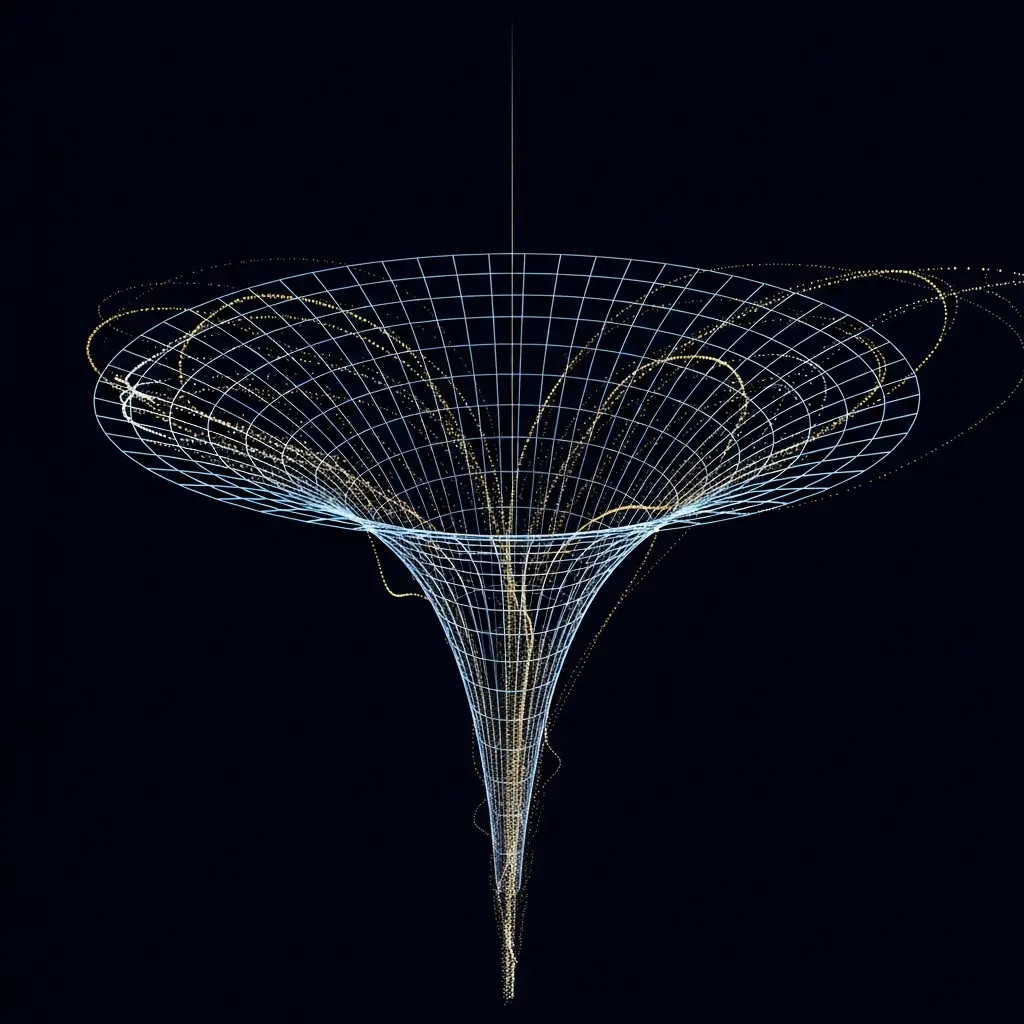
The search for dark matter continues to drive innovation in theoretical physics, and axions remain compelling candidates due to their predicted weak interactions. Amedeo M. Favitta from Università degli Studi di Palermo, along with colleagues, investigates the behaviour of these hypothetical particles within the complex environments of the early Universe and curved spacetime. This research advances our understanding of axion cosmology and electrodynamics, combining techniques from non-equilibrium quantum field theory to model axion production and interactions. By exploring the dynamics of self-interacting axion fields, the team reveals new insights into potential cosmological scenarios and establishes preliminary constraints on axion properties, offering a crucial step towards identifying this elusive dark matter component.
Axions are a class of hypothetical fundamental particles initially introduced as a solution to the Strong CP problem of Quantum Chromodynamics (QCD), but also appear in several low-energy compactification models of String Theory. Various astronomical and experimental constraints imply that the axion is ‘invisible’ in the sense that its interactions with Standard Model (SM) particles are significantly weak.
Axions, Neutrinos and Early Universe Cosmology
Scope of Research: Cosmology and Theoretical Intersections
The provided text is a categorized overview of a long list of citations primarily drawn from astrophysics, cosmology, and particle physics. Overall, the bibliography represents research at the intersection of these fields, with a strong emphasis on understanding the fundamental composition and evolution of the universe through both theoretical and observational studies.
A major core subject area covered by the citations is cosmology. Many references focus on the Cosmic Microwave Background (CMB), particularly analyses based on data from the Planck satellite. These studies aim to refine cosmological parameters such as the Hubble constant, dark matter density, and the conditions of the early universe. Within this context, there is significant attention given to the effective number of neutrinos (Neff) and how variations in this parameter influence cosmological models and interpretations of observational data.
Astrophysical Observations and Cosmological Constraints
Astrophysics is closely intertwined with the cosmological focus, as many of the cited works deal with observational studies of the universe, including CMB measurements and related astrophysical phenomena. These works support and complement cosmological modeling by providing empirical data and observational constraints.
Particle physics forms another major pillar of the cited literature, with particular emphasis on physics beyond the Standard Model. A recurring and dominant theme within this area is the study of axions, which are hypothetical particles proposed both as a solution to the strong CP problem in quantum chromodynamics and as viable dark matter candidates. The citations cover a wide range of axion-related topics, including production mechanisms such as freeze-in, axion interactions, and experimental and observational searches. Closely related to this is the broader theme of dark matter, with multiple studies addressing different candidates, theoretical frameworks, and detection strategies.
Precision Measurements and Beyond the Standard Model
In addition, several citations focus on precision tests of the Standard Model, including high-accuracy measurements of the muon anomalous magnetic moment (g−2) and calculations of the fine-structure constant. Electroweak physics and precision electroweak measurements also appear, highlighting efforts to probe potential deviations from Standard Model predictions. Neutrino physics is another recurring topic, particularly in relation to cosmology and the impact of neutrino properties on early-universe dynamics.
Source Material and Scientific Review Landscape
The types of documents included in the list are predominantly peer-reviewed research articles published in well-known scientific journals such as Physical Review D, Astronomy and Astrophysics, and the Journal of Cosmology and Astroparticle Physics. The list also includes references to major experimental data releases and analyses, notably from the Planck mission. In addition, some entries refer to widely used software and computational tools, such as micrOMEGAs, which are employed for dark matter and particle physics calculations. A smaller number of references consist of reports or monographs, including publications such as CERN Yellow Reports.
Overall, the bibliography reflects an active and interconnected research landscape focused on cosmological observations, dark matter and axion physics, neutrino properties, and precision measurements aimed at testing and extending the Standard Model. The recurring themes and keywords underscore a sustained effort to bridge observational cosmology with fundamental particle physics in order to deepen our understanding of the universe.
Axion Electrodynamics and Early Universe Production
This research delivers significant new insights into the nature of axions, hypothetical particles considered prime candidates for dark matter and originally proposed as a solution to a longstanding problem in particle physics. The work, spanning three years of investigation, focuses on axion cosmology and axion electrodynamics, exploring both the production of axions in the early universe and their interactions with ordinary matter. Researchers employed advanced methods from quantum field theory, including non-equilibrium approaches and calculations in curved spacetime, to model these complex phenomena., A key achievement of this study lies in the detailed analysis of axion electrodynamics, investigating how a classical axion field modifies Maxwell’s equations and electromagnetic properties. This work is particularly relevant to ongoing axion detection experiments, which often utilize strong magnetic fields, and predicts potentially observable effects on electromagnetic Casimir forces and thermal friction.
Specifically, the team investigated the impact of a spatially dependent axion field on Casimir physics, revealing connections to cosmological thermal friction and providing a framework for potential experimental verification., Furthermore, the research extends beyond static properties, delving into the non-equilibrium dynamics of self-interacting axion fields. Using the two-particle-irreducible effective action, scientists modeled axion behavior in both pre- and post-inflationary cosmological scenarios. In the pre-inflationary case, the team placed constraints on the parameter space for high-mass axion-like particles, specifically examining their contribution to the effective number of neutrino species, ΔNeff, for axions with masses exceeding 10 keV. For post-inflationary scenarios, the study addressed the domain wall problem associated with axions and analyzed the dynamics of topological defects using an extended moduli space quantization method, building upon the velocity-one scale framework. These advancements provide new theoretical tools and preliminary constraints for future experimental investigations into the nature of dark matter and the fundamental properties of the universe.
Axion Cosmology and Modified Electromagnetism
This research presents original contributions to the understanding of axions, hypothetical particles proposed as both a solution to a fundamental problem in particle physics and a potential component of dark matter. The work investigates axion cosmology and electrodynamics, combining methods from non-equilibrium field theory to explore axion production and interactions in the early universe. A key achievement lies in the analysis of axion dynamics coupled to both the Standard Model and a potential dark sector, applied to cosmological scenarios before and after inflation, yielding new theoretical constraints., The research further develops theoretical models for axion electrodynamics, demonstrating how a classical axion background modifies Maxwell’s equations and impacts electromagnetic observables. By focusing on condensed and kinetic regimes, and employing the two-particle-irreducible effective action, the team provides insights into axion behaviour across different cosmological settings. The authors acknowledge limitations stemming from the assumption of a fixed background metric, restricting the analysis to energy scales below the Planck scale. Future work, building on these findings, will likely explore the implications of these results for the design of axion detection experiments and further refine cosmological models incorporating axions.
🗞 Non-equilibrium Quantum Field Theory and Axion Electrodynamics in curved spacetimes
🧠 ArXiv: https://arxiv.org/abs/2512.20521