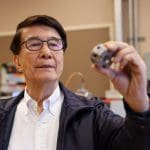
An alarming decline in high school physics students has sparked concerns that Australia may lose its competitive edge as an advanced economy. According to David Blair, a renowned physicist from the University of Western Australia and winner of the Prime Minister’s Science Prize, if current trends continue, there will be no female physics students by 2032 and no male students by 2035.
This would have far-reaching consequences, including losing medical physicists, astronomers, and climate scientists. Blair and fellow scientist Susan Scott from the Australian National University lead the Einstein First program, which aims to revitalize school science education by teaching modern physics topics, such as black holes, to students in years 3-10. The program has shown promising results, with 80% of students expressing interest in physics after participating.
A $1.5 million Australian Research Council grant will support the expansion of Einstein First, while the University of Western Australia and the Australian Academy of Science are also launching initiatives to improve science and math education in schools.
The Decline of Physics Students: A Threat to Australia’s Future
The number of students studying physics in senior high school is experiencing a catastrophic decline, ringing alarm bells among scientists and educators. According to David Blair, a renowned physicist from the University of Western Australia, if this trend continues, no female school leavers will be qualified to study physics at university by 2032 and no males by 2035. This decline has far-reaching implications for various industries that rely heavily on physicists, including medicine, astronomy, energy transition, nuclear industry, and climate science.
The data from Western Australia, which is representative of the entire country, shows a significant drop in year 12 physics enrolments from 3868 in 2015 to 2436 in 2023. The number of girls studying physics has fallen even faster over the same period, with girls making up only 31% of the year 12 physics cohort in 2023, down from 42% in 2015. This decline is not limited to physics; it reflects a broader issue with science education in Australian schools.
Revitalizing School Science Education
To address this decline, Professor Blair and Susan Scott from the Australian National University are pushing for a rethink of school science education. They are leading the Einstein First program, which aims to keep children interested in science by teaching modern physics topics that engage their curiosity. The program has already shown promising results, with 14-year-olds demonstrating a significant increase in interest in physics after participating in the course.
The Einstein First team has received a $1.5 million Australian Research Council grant to further develop and implement their program, which will focus on revitalizing school science education and improving teacher training. Additionally, they have launched 12 Quantum Explorer STEM clubs, specifically designed to spark the interest of girls in physics.
The Role of Teachers in Science Education
Teachers play a critical role in inspiring students to pursue careers in science. However, many teachers lack the necessary training and resources to effectively teach modern science concepts. To address this gap, the Australian Academy of Science has launched two free online “toolboxes” for primary school teachers: Primary Connections (science kit) and reSolve (maths kit). These resources cater to teachers with varying levels of science understanding and provide them with effective ways to teach science and maths, regardless of their students’ starting points.
The academy’s CEO, Anna-Maria Arabia, emphasized that while it would be ideal for all teachers to receive comprehensive training in science and maths, this is a long-term goal. In the meantime, these toolboxes will help fill the gap and support teachers in their critical role of inspiring the next generation of scientists.
The Importance of Science Education
Science education is essential for Australia’s future as an advanced economy. Physicists play a vital role in various industries, including medicine, astronomy, energy transition, nuclear industry, and climate science. Without a steady supply of skilled physicists, these industries will struggle to innovate and remain competitive. Moreover, hospitals rely on medical physicists to produce short-life radioactive isotopes for medical diagnoses and PET scans, while the mineral industry depends heavily on physicists.
The decline in physics students is not just a problem for the education sector; it has far-reaching implications for Australia’s economic future. It is essential that policymakers, educators, and scientists work together to address this issue and ensure that Australian schools produce a steady supply of skilled science graduates who can drive innovation and growth in various industries.
External Link: Click Here For More