
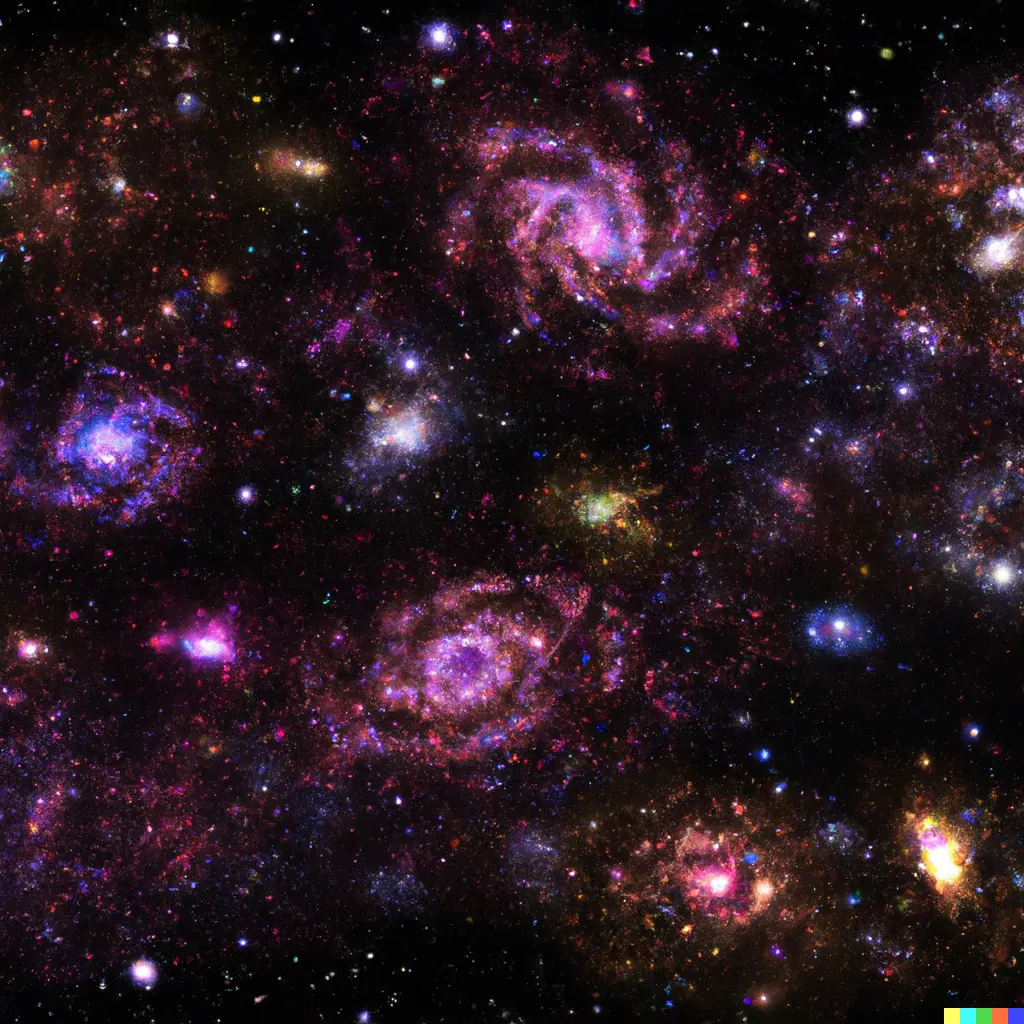
Inspired by the topic of the Simulation Hypothesis after seeing this book brought to me by a good friend. Rizwan Virk’s book is aimed squarely at the simulation hypothesis, not dressed up among other philosophical topics. It is direct and to the point. Scientists, computer engineers, and physicists who study quantum mechanics mainly support the ‘simulation hypothesis’ today. Thus, it is not in the realm of science fiction anymore.
Even Elon Musk says we have a one-in-a-billion chance that we’re NOT living in a simulation. In this book, the author is a game developer and a computer engineer. We expound why the simulation hypothesis is gaining strength in physics, computer science, and philosophy.
Today’s video games are developing quickly. If this pace of development continues, simulations will soon be able to reproduce our reality. In short, video games are advancing rapidly. The simulated characters living in it will be able to develop vivid simulations. They do not even know they are a simulation. The author calls the ‘simulation point’ that makes it possible to implement such a ‘simulation’. If we can achieve that level of development, paradoxically, it means advanced life forms before us run our simulation. This is a highly advanced technology that we cannot even suspect.

Oxford philosopher Nick Bostrom, in his 1993 paper. Are you living in a Computer simulation? Considering the technology, it is said that running hundreds of thousands of simulations is possible. It is also said that this is instead of just one or two. If so, they have shown a kind of thought experiment. This experiment suggests that probabilistically we are more likely to be ‘simulated’ rather than ‘real’. (Nick even proved it by using math with difficulty – who said that if you go out with philosophy, you will starve to death?)
From the first chapter to the ‘simulation point‘, the author introduces technologies step-by-step. Humanity has already prepared these technologies. The author also explains what more skills are needed in the future. The game progressed like a kind of mind map. The computer writes the worldview. The player types Yes/No and then moves on to the next stage. This was because it was impossible to implement the game with graphics in the early days of the computer.
Then, two-dimensional RPGs (Role Playing Games) were introduced in the 1980s when some basic graphics became possible. The adventure format is popular. Different scenarios are performed according to the worldview, state of character, or character selection. This format has become the basis of more complex MMORPG games in the future.
Early Computer Games offered limited graphical realism

In particular, it was the first-person shooting game called Doom that brought about a dramatic change in graphics. I was happy to remember playing a Wolfenstein (Nazi-killing game). Having played a trial version from the same company before that. He said it was groundbreaking. He started rendering in 3D from a first-person perspective (like Super Mario). Until then, he worked with 2D. Also, Doom allowed two players to participate in a shooting game simultaneously, later referred to as an MMORPG game. (MMORPG Massive Multiplayer Online Role Playing Game – Like Wow).
It is said that non-playing NPC characters in the game are also meaningful in the simulation hypothesis. The Nazis shot are not players in the game. They are characters created in the game. This is said to be AI in a sense. If there is a simulation point that enables the technology to bring people and the world to life like in real life, then this person in front of me is a ‘playing character’. They could be a ‘real human’, or a ‘non-playing character’ NPC. It is said that it will not be able to distinguish whether it is a virtual human or an AI.
His (Virk’s) curiosity about games started in his childhood. His interest in the world began when he was playing F1 (Formula 1) games. Racing cars can’t get off the track, but who lives in the city over the mountains? What’s the name of the woman in the game crowd?
I have a feeling that the topic is leaking. This happens because I am talking about the game rather than some of the wider concepts. Today, like CG (computer-generated) scenes in movies, graphics are developing tremendously. However, it is said that video games or online games are not easy because graphics must adjust to the player’s real-time movements. Unlike with movies, graphics do not appear at a fixed time from a woven angle. The development of VR and augmented reality AR is also said to be approaching the simulation point.
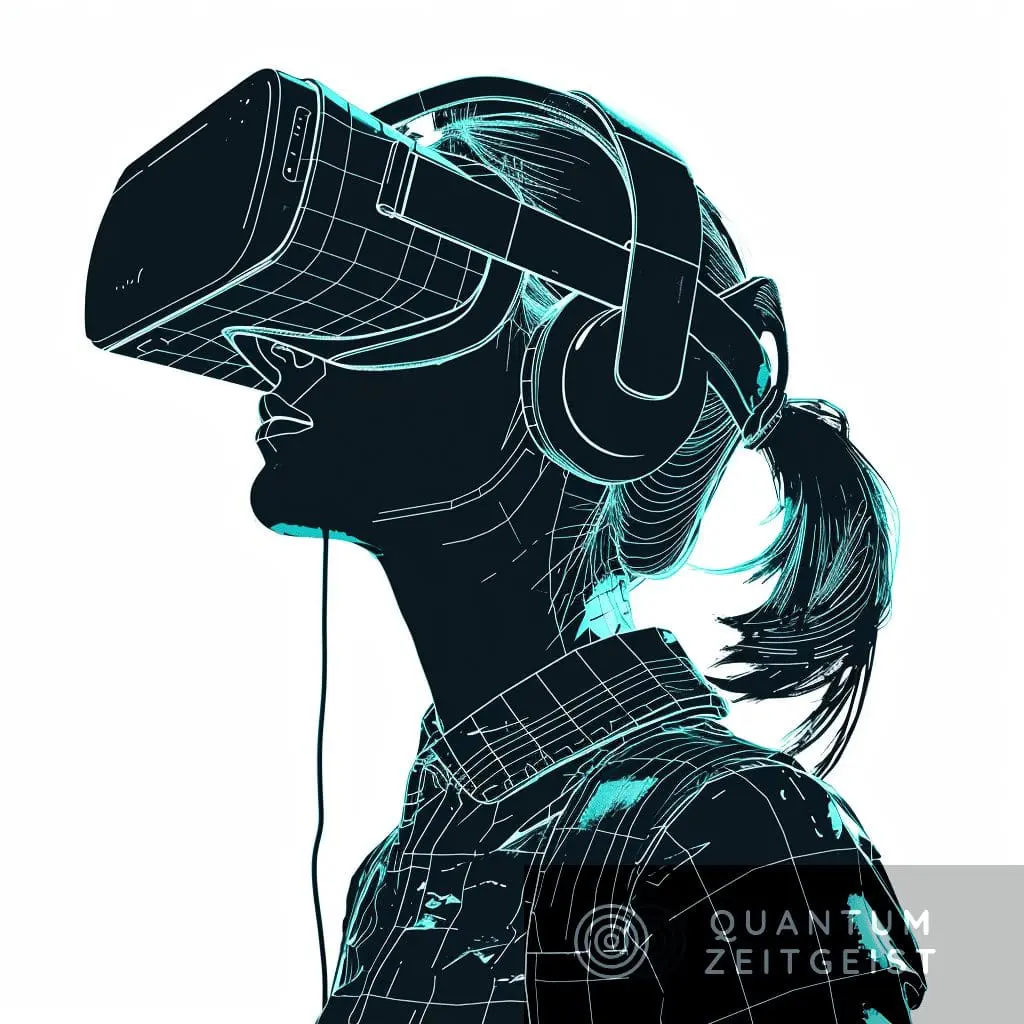
Virk also talked about the possibility of downloading our realm of ‘consciousness’ in digital form. It could be stored on silicon or USB. This concept appears in a comedy series called Upload. I watched it on Amazon. It was interesting to note that the ‘information’ and ‘data’ of our consciousness ultimately relate to neuroscience. They even connect to the realm of religion, despite differences in language.
We know that quantum mechanics addresses how the laws of physics work well in the macro world. However, these laws do not apply in the micro world of atoms and electron nuclei. In the double slit experiment to determine whether a substance is a particle or a wave, a conclusion is drawn based on the ‘phase’ that comes out of passing the material through a certain plate.
The phase shows that the substance is a
The phase shows that the substance is a wave wave, but a ‘detector’ is installed If we check this, we conclude that the substance is a ‘particle’. The fact that the very act of ‘observing’, ‘detecting’, and ‘recognizing’ something determines whether the properties of matter are particles or waves must have been a great shock to modern physicists of the 20th century who have studied Newtonian physics, and it is true for me as well.
Modern intellectuals might believe that science, logic, and reason rule the world. However, in the quantum world, we know very little. Why does matter react this way in the quantum level? What physics we know is limited. It raises the original question. Is it based on the simulation hypothesis? This hypothesis emerged from the struggle of modern physics. It is based on quantum mechanics and developed alongside ultra-high-level video games.
It may still sound absurd to some. Haven’t we always come up with a theory to explain the world first? Then, we adopt a new theory that best explains the world. Then, it seems the time has come to actively consider the simulation hypothesis.
In particular, the fact that our act of ‘recognition’ determines the properties of matter is that when a user plays a game today, only the image and world that appears in front of him are realized on the screen, and the world beyond that is the user’s ability to reach or Proponents of the simulation hypothesis say that it is similar to rendering in which images are not realized until the screen is turned and ‘looked at’.
One of the many hypotheses that explain the particle-wave riddle of quantum mechanics is the multiverse, so at every decision moment, the universe physically branches and creates infinitely many physical worlds, isn’t it too inefficient? Rather, everything exists as probabilities and information of possibilities, and when we perceive and make certain observations, the world is realized in front of us. It is as if the wavefunction of matter is broken down into particles through the act of observation.
The author (Rizwan Virk) uses Zeno’s paradox as an example. He explains that the concepts of time and space are not continuous as we have thought. Instead, they are discrete units. Einstein’s Quanta A small unit of light… It was interesting to compare this story to the segmental pixels of an online game.
DNA contains our individual information
DNA contains our individual information. Similarly, everything in the world is now becoming ‘information-based digital’. This shift moves away from ‘physical’ due to the rapid development of digital. if it is condensed. We will be able to download and play consciousness and history at any time. There is no reason not to assume that we are now avatars running simulations. After all, we are information.
And it was interesting to have a 3D printer as one of the examples that showed the possibility. After all, doesn’t a 3D printer implement a physical/three-dimensional object with only ‘information’ about the object? Now, of course, there are limits to what 3d printers can implement.
3D printing technology is advancing rapidly. If it continues at this pace, it could one day create even the units of ‘atoms and electron nuclei’. It will eventually be possible to create everything in this world. If so, the saying that in the end, everything exists only as information comes to mind.
If we look at the examples of leaves and crystals resembling fractal principles in our natural world. Based on this fractal principle, computer graphics implement graphics similar to nature. Is this a coincidence? Isn’t the fractal principle coded in someone’s computer being implemented in our natural world?